
Entry
Reader's guide
Entries A-Z
Subject index
Robbery
Robbery is the taking or attempted taking of anything of value from the care, custody, or control of a person by force or threat of force. In addition to the element of larceny (taking the property of another with the intent to permanently deprive the person of ownership), robbery includes two other elements: The property must be taken from the person or in the person's presence, and force or the threat of immediate force must be used in the taking. Though robbery is a crime motivated by the desire to obtain money or goods, because it involves the use of force, it is generally classified as a violent offense. It is the element of force that distinguishes robbery from property crimes such as shoplifting, pickpocketing, and motor vehicle theft. Based on national data, robbers took more than $477 million dollars from their targets in the United State in 2000, with an average dollar loss of $1,170. More important, more than 1,000 murders occurred during the commission of robberies in 2000.
Robbery Trends
Two major sources of national crime data provide information on the incidence, nature, and rate of robberies, as well as other major criminal offenses that occur annually in the United States. The best known and most widely cited is the Uniform Crime Report (UCR). Compiled and published by the FBI since 1930, the UCR is based on monthly reports of known crimes submitted by state and local law enforcement agencies. The report is limited to crimes that have come to the attention of law enforcement through citizen complaints or police patrols. The second source of crime statistics is the National Crime Victimization Survey (NCVS). Information in the NCVS comes from a survey of households in the United States conducted annually since 1973 by the Bureau of Justice Statistics in conjunction with the U.S. Census Bureau. Based on interviews with household members aged 12 years and older, the NCVS is able to provide information on unreported as well as reported criminal incidents.
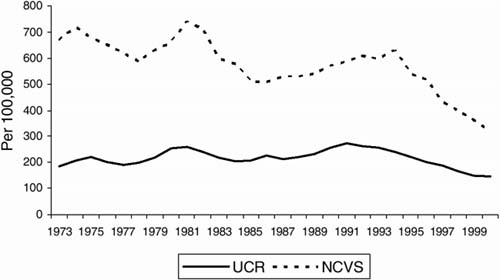
According to the UCR, in 2000, there were 407,842 robberies reported to or observed by police, representing a rate of 145 robberies per 100,000 inhabitants. The NCVS reports that 732,000 robberies occurred that year, constituting a rate of 320 per 100,000 persons. The discrepancy between the two reports is due primarily to the inclusion of unreported robberies in the NCVS. Indeed, according to the NCVS, less than half of all robbery victims reported their victimization to police in 2000.
Robbery is completed or attempted theft of property or cash directly from a person by force or threat of force, with or without a weapon, and with or without injury. According to the Bureau of Justice Statistics (2002), since 1994, robbery rates have declined, reaching the lowest levels recorded in 2001.
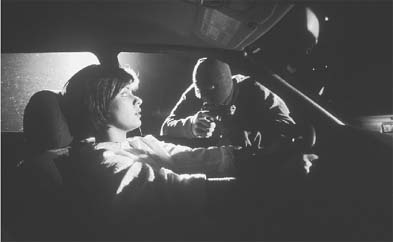
Figure 1 Trends in Robbery Rates
Figure 1 presents trends in robbery rates from 1973 to 2000 as reported by the UCR and NCVS. Despite differences in their methodology, there is a striking similarity in robbery trends provided by the two sources. Both show that robbery rates declined in the mid-1970s and then increased sharply later that decade, peaking in 1981 with robbery rates for the UCR and NCVS at 258.7 and 740.0, respectively. Robbery rates declined during the early 1980s, but then both sources show steep increases during the late 1980s that continued through the early 1990s. UCR robbery rates were the highest in 1991, at 272.7 robberies per 100,000. According to both the UCR and NCVS, robbery rates have dramatically declined since the early 1990s.
...
- Aggression
- Aggression: Biological Theories
- Aggression: Evolutionary and Anthropological Theories
- Aggression: Feminist Perspective
- Aggression: Sociological Theories
- Alcohol and Aggression
- Antisocial Personality Disorder
- Batterers and Abusive Partners
- Cycle Theory of Violence
- Elder Abuse
- Family Violence
- Homicide
- Mass Violence
- Media, Violence in the
- Motives for Murder
- Paraphilia
- Pedophilia
- Police Brutality
- Predicting Violent Behavior
- Psychopaths
- Rape
- Road Rage
- Robbery
- Serial Murder
- Sexual Offenses
- Stalking
- Violent Behavior: A Psychological Case Study
- Violent Behavior: Personality Theories
- Violent Behavior: Psychoanalytic Theories
- Women and Violence
- Criminal Investigation
- Ballistics
- Criminal Justice Practitioner
- Criminalistics
- Cyberstings
- False Confessions
- False Memory Syndrome
- FBI Top 10 Most Wanted List
- Federal Bureau of Investigation (FBI)
- Forensic Science
- Geographic Profiling
- Predicting Violent Behavior
- Prevention of Crime and Violent Behavior
- Profiling
- Signature Killers
- Threat Assessment
- Uniform Crime Reports (UCR)
- ViCLAS
- Victimology
- Cults
- Death Penalty
- Family Violence
- Battered Child Syndrome
- Battered Woman's Syndrome
- Batterers and Abusive Partners
- Child Abuse
- Child Killers
- Children as Victims of Sex Crimes
- Cycle Theory of Violence
- Elder Abuse
- Exploitation of Children
- Family Homicide
- Family Violence
- Gender Violence
- Homicide
- MacDonald, Jeffery Robert
- Methods of Murder
- Munchausen Syndrome by Proxy
- Murder-Suicide
- Poisoners
- Rape
- Simpson, O. J.
- Victimology
- Violent Behavior
- Women and Violence
- Yates, Andrea
- Forensic Science
- Gangs
- Government-Sanctioned Violence
- Homicide
- Aeronautical Mass Murder
- Arson
- Assassins
- Child Killers
- Death Penalty
- Family Homicide
- Homicide
- Homicide, Motivation for Murder
- Homicide, Perceptions of
- Homicide: Types of, and Degrees of Murder
- Juvenile Killers
- Lust Murder
- Mass Murder
- Mass Violence
- Medical Murders
- Motives for Murder
- Paraphilia
- Poisoners
- Poisoning: Medical Settings
- Product Tampering
- Psychopaths
- Rippers
- School Shootings
- Serial Murder
- Signature Killers
- Spree Murders
- Stalking
- Trophy Taking
- Vampires, Werewolves, and Witches
- Vehicular Homicide
- Victimology
- Workplace Violence and Homicide
- Juvenile Crime
- Kidnapping
- Legal Response to Violent Crime
- Brady Bill
- Brawner Test
- Court-Mandated Treatment
- Court-Ordered Psychological Assessments
- Courts, Organization of
- Cyberstings
- Gun Control
- Homicide, Types of, and Degrees of Murder
- Jurisdiction
- M'Naughten Rule
- Megan's Law
- Not Guilty by Reason of Insanity (NGRI)
- Prevention of Crime and Violent Behavior
- Self-Defense, Actions Taken in
- Sex Offender Registry
- Tarasoff Decision
- Three Strikes and You're Out!
- Victim and Witness Protection Act of 1982 (VWPA)
- Victim Compensation for Violent Crimes
- Victimology
- Victims of Crime Act, 1984 (VOCA)
- Mass Murder
- Aeronautical Mass Murder
- Arson
- Bin Laden, Osama
- Columbine/Littleton School Shooting
- Ethnic Cleansing
- Ferguson, Colin
- Genocide
- History of Violence in Religions
- Huberty, James Oliver
- In Cold Blood
- Jonesboro, Arkansas School, Shooting
- Kinkel, Kipland (Kip)
- MacDonald, Jeffrey
- Manson, Charles/The Manson Family
- Mass Murder
- Mass Violence
- McVeigh, Timothy
- Media, Violence in the
- Nichols, Terry
- Oklahoma City Bombing
- School Shootings
- St. Valentine's Day Massacre
- Terrorism
- War Atrocities
- Workplace Homicide/Violence
- Yates, Andrea
- Motives for Violence
- Aggravating and Mitigating Circumstances
- Aggression
- Alcohol and Aggression
- Batterers and Abusive Partners
- Beltway Snipers
- Cycle Theory of Violence
- Drug Trade
- Family Violence
- Gender Violence
- Helter-Skelter
- Homicide, Motivation for Murder
- Less-Dead
- Medical Murders
- Motives for Murder
- Munchausen Syndrome by Proxy
- Paraphilia
- Pedophilia
- Predicting Violent Behavior
- Profiling
- Rape
- Road Rage
- Robbery
- Serial Murder
- Sexual Offenses
- Substance Abuse and Homicide
- Vehicular Homicide
- Vigilantism
- Organized Crime
- Police and Violence
- Psychological Theories and Diagnoses for Violent Behavior
- Aggression: Psychological Theories
- Antisocial Personality Disorder
- Arsonist's Portrait
- Attachment Deficiency and Violence
- Brawner Test
- Court-Ordered Psychological Assessment
- Diagnostic and Statistical Manual of Mental Disorders (DSM)
- Jekyll and Hyde Syndrome
- Juvenile Firesetters
- Less-Dead
- M'Naughten Rule
- MacDonald Triad
- Mentally Disordered Offenders
- Motives for Murder
- Paraphilia
- Pedophilia
- Predicting Violent Behavior
- Psychopathology Checklist-Revised (PCL-R)
- Psychopaths
- Psychosocial Risk Factors for Violent Behavior
- Violence: Phenomenology
- Violent Behavior: A Psychological Case Study
- Violent Behavior: Personality Theories
- Violent Behavior: Psychoanalytic Theories
- XYY Syndrome
- Serial Murder
- Serial Murderers
- Albright, Charles
- Bathory, Countess Elizabeth
- Beck, Martha, and Ray Fernandez
- Beltway Snipers
- Berkowitz, David Richard
- Bernardo, Paul, and Karla Homolka
- Bundy, Theodore “Ted”
- Chikatilo, Andrei
- Dahmer, Jeffrey
- DeSalvo, Albert Henry
- Dodd, Westley Allan
- Gray, Dana Sue
- Hoch, Johann Otto (Bluebeard)
- Hog Trail Killings
- Jack the Ripper
- Jones, Genene
- Kaczynski, Theodore
- Kevorkian, Jack
- Lake, Leonard, and Charles Ng
- Landru, Henri Desiré
- Manson, Charles
- Milat, Ivan
- Parker, Bonnie, and Clyde Barrow
- Ramirez, Richard
- Sells, Tommy Lynn
- Williams, Wayne
- Zebra Killings
- Zodiac Murders
- Sex Crimes
- Terrorism
- Victimology
- Aggression: Feminist Perspective
- Battered Child Syndrome
- Battered Woman's Syndrome
- Batterers and Abusive Partners
- Elder Abuse
- Family Violence
- Gender Violence
- Predicting Violent Behavior
- Prevention of Crime and Violent Behavior
- Profiling
- Rape
- Robbery
- Threat Assessment
- Victim and Witness Protection Act (1984)
- Victim Compensation for Violent Crimes
- Victimology
- Victims of Crime Act (1984)
- Vigilantism
- Violent Crime
- Aeronautical Mass Murder
- Aggression
- Air Rage
- Antisocial Personality Disorder
- Arson
- Battered Child Syndrome
- Battered Woman's Syndrome
- Batterers and Abusive Partners
- Child Abuse
- Child Killers
- Community Attitudes Toward Violent Crime
- Cycle Theory of Violence
- Death Penalty
- Drug Trade
- Elder Abuse
- Family Homicide
- Family Violence
- Gangs
- Gender Violence
- Homicide
- Juvenile Firesetters
- Juvenile Killers
- Juvenile Offenders
- Lust Murder
- Mass Murder
- Mass Violence
- Media, Violence in the
- Medical Murders
- Methods of Murder
- Motives for Murder
- Murder-Suicide
- Neo-Nazi Skinheads
- Organized Crime
- Paraphilia
- Pedophilia
- Poisoners
- Poisoning: Medical Settings
- Police Brutality
- Predicting Violent Behavior
- Product Tampering
- Psychopaths
- Psychosocial Risk Factors for Violent Behavior
- Rape
- Rippers
- Road Rage
- Robbery
- School Shootings
- Serial Murder
- Sex Offenders
- Sexual Offenses
- Signature Killers
- Stalking
- Stranger Violence
- Suicide by Cop
- Team Killers
- Terrorism
- Trophy Taking
- Uniform Crime Reports (UCR)
- Vampires, Werewolves, and Witches
- ViCLAS
- Victimology
- Vigilantism
- Violent Behavior
- Violent Female Juvenile Offenders
- War Atrocities
- White Supremacists
- Women and Violence
- Workplace Violence and Homicide
- XYY Syndrome
- Loading...
Get a 30 day FREE TRIAL
-
 Watch videos from a variety of sources bringing classroom topics to life
 -
Read modern, diverse business cases
-
Explore hundreds of books and reference titles

Read next

More like this
Sage Recommends
We found other relevant content for you on other Sage platforms.
Have you created a personal profile? Login or create a profile so that you can save clips, playlists and searches