
Entry
Reader's guide
Entries A-Z
Subject index
Criminalistics
Criminalistics involves the application of science to law-related matters. It is a specialty that combines many disciplines: the efforts of chemists, biologists, toxicologists, and latent-print and questioneddocument examiners, among others. Different from criminologists, who address the causes, correction, and prevention of criminal behavior, criminalists analyze materials, or physical evidence, recovered from crime scenes. They work with police, lawyers, and probation officers in a combined effort to solve crimes.
Criminalists use scientific techniques and procedures in the laboratory, documented as good science practice within the scientific community, to analyze physical evidence, which is eventually used in a court of law to determine the guilt or innocence of a suspect. Possession of the evidence must be properly documented, with the dates and times the items were handled, and by whom. This is defined as the chain of possession, and it is imperative that this chain not be broken. If it is broken, the court will decide whether the evidence can be used or whether its integrity has been compromised. If the evidence is found to have been compromised, it cannot be used in a court of law.
From the Crime Scene to the Laboratory: Collection and Analysis of Physical Evidence
Preserving the Scene
The first step in properly processing a crime scene is to take swift and sure steps to see that the area is properly secured against any kind of disturbance. The police must then obtain a search warrant before anything else is done. Nothing should be touched, and no one should be allowed to enter except crime scene personnel trained in such investigations. A record should be kept of all persons entering the crime scene. If questions arise later, this record can be used to determine who was present.
Photographs show everything that is present at the crime scene. They should be taken from as many angles as possible to correctly convey relationships of evidence at the scene to items such as a body or weapon. Sometimes, crime scenes are too cluttered to be useful in pointing out specific items. In this case, sketches are used to show the important details and physical relationships.
The search for evidence is next. A drop of blood, a paper match, a fired bullet, a piece of paper, a thread of fiber, or strand of hair can all be physical evidence. Anything that is found is photographed and sketched for later use. Evidence that is transitory in nature should be collected first, such as gasoline that could evaporate. Then, the items are collected, tagged, and placed in proper containers, all packaged separately, to prevent the loss or contamination of evidence samples. A record is kept of all items collected at the crime scene before they are transported to the crime laboratory. All items must be marked by the person collecting them so that a proper chain of evidence can be maintained.
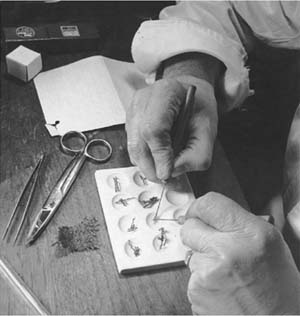
A forensic scientist or criminalist in a crime laboratory examines fragments of cloth from a car and clothing found at a scene of a hit-and-run incident. Criminalistics are increasingly more sophisticated in the use of technologies to examine physical evidence. Today, one of the cutting edges of forensic science is the examination of DNA evidence.
...
- Aggression
- Aggression: Biological Theories
- Aggression: Evolutionary and Anthropological Theories
- Aggression: Feminist Perspective
- Aggression: Sociological Theories
- Alcohol and Aggression
- Antisocial Personality Disorder
- Batterers and Abusive Partners
- Cycle Theory of Violence
- Elder Abuse
- Family Violence
- Homicide
- Mass Violence
- Media, Violence in the
- Motives for Murder
- Paraphilia
- Pedophilia
- Police Brutality
- Predicting Violent Behavior
- Psychopaths
- Rape
- Road Rage
- Robbery
- Serial Murder
- Sexual Offenses
- Stalking
- Violent Behavior: A Psychological Case Study
- Violent Behavior: Personality Theories
- Violent Behavior: Psychoanalytic Theories
- Women and Violence
- Criminal Investigation
- Ballistics
- Criminal Justice Practitioner
- Criminalistics
- Cyberstings
- False Confessions
- False Memory Syndrome
- FBI Top 10 Most Wanted List
- Federal Bureau of Investigation (FBI)
- Forensic Science
- Geographic Profiling
- Predicting Violent Behavior
- Prevention of Crime and Violent Behavior
- Profiling
- Signature Killers
- Threat Assessment
- Uniform Crime Reports (UCR)
- ViCLAS
- Victimology
- Cults
- Death Penalty
- Family Violence
- Battered Child Syndrome
- Battered Woman's Syndrome
- Batterers and Abusive Partners
- Child Abuse
- Child Killers
- Children as Victims of Sex Crimes
- Cycle Theory of Violence
- Elder Abuse
- Exploitation of Children
- Family Homicide
- Family Violence
- Gender Violence
- Homicide
- MacDonald, Jeffery Robert
- Methods of Murder
- Munchausen Syndrome by Proxy
- Murder-Suicide
- Poisoners
- Rape
- Simpson, O. J.
- Victimology
- Violent Behavior
- Women and Violence
- Yates, Andrea
- Forensic Science
- Gangs
- Government-Sanctioned Violence
- Homicide
- Aeronautical Mass Murder
- Arson
- Assassins
- Child Killers
- Death Penalty
- Family Homicide
- Homicide
- Homicide, Motivation for Murder
- Homicide, Perceptions of
- Homicide: Types of, and Degrees of Murder
- Juvenile Killers
- Lust Murder
- Mass Murder
- Mass Violence
- Medical Murders
- Motives for Murder
- Paraphilia
- Poisoners
- Poisoning: Medical Settings
- Product Tampering
- Psychopaths
- Rippers
- School Shootings
- Serial Murder
- Signature Killers
- Spree Murders
- Stalking
- Trophy Taking
- Vampires, Werewolves, and Witches
- Vehicular Homicide
- Victimology
- Workplace Violence and Homicide
- Juvenile Crime
- Kidnapping
- Legal Response to Violent Crime
- Brady Bill
- Brawner Test
- Court-Mandated Treatment
- Court-Ordered Psychological Assessments
- Courts, Organization of
- Cyberstings
- Gun Control
- Homicide, Types of, and Degrees of Murder
- Jurisdiction
- M'Naughten Rule
- Megan's Law
- Not Guilty by Reason of Insanity (NGRI)
- Prevention of Crime and Violent Behavior
- Self-Defense, Actions Taken in
- Sex Offender Registry
- Tarasoff Decision
- Three Strikes and You're Out!
- Victim and Witness Protection Act of 1982 (VWPA)
- Victim Compensation for Violent Crimes
- Victimology
- Victims of Crime Act, 1984 (VOCA)
- Mass Murder
- Aeronautical Mass Murder
- Arson
- Bin Laden, Osama
- Columbine/Littleton School Shooting
- Ethnic Cleansing
- Ferguson, Colin
- Genocide
- History of Violence in Religions
- Huberty, James Oliver
- In Cold Blood
- Jonesboro, Arkansas School, Shooting
- Kinkel, Kipland (Kip)
- MacDonald, Jeffrey
- Manson, Charles/The Manson Family
- Mass Murder
- Mass Violence
- McVeigh, Timothy
- Media, Violence in the
- Nichols, Terry
- Oklahoma City Bombing
- School Shootings
- St. Valentine's Day Massacre
- Terrorism
- War Atrocities
- Workplace Homicide/Violence
- Yates, Andrea
- Motives for Violence
- Aggravating and Mitigating Circumstances
- Aggression
- Alcohol and Aggression
- Batterers and Abusive Partners
- Beltway Snipers
- Cycle Theory of Violence
- Drug Trade
- Family Violence
- Gender Violence
- Helter-Skelter
- Homicide, Motivation for Murder
- Less-Dead
- Medical Murders
- Motives for Murder
- Munchausen Syndrome by Proxy
- Paraphilia
- Pedophilia
- Predicting Violent Behavior
- Profiling
- Rape
- Road Rage
- Robbery
- Serial Murder
- Sexual Offenses
- Substance Abuse and Homicide
- Vehicular Homicide
- Vigilantism
- Organized Crime
- Police and Violence
- Psychological Theories and Diagnoses for Violent Behavior
- Aggression: Psychological Theories
- Antisocial Personality Disorder
- Arsonist's Portrait
- Attachment Deficiency and Violence
- Brawner Test
- Court-Ordered Psychological Assessment
- Diagnostic and Statistical Manual of Mental Disorders (DSM)
- Jekyll and Hyde Syndrome
- Juvenile Firesetters
- Less-Dead
- M'Naughten Rule
- MacDonald Triad
- Mentally Disordered Offenders
- Motives for Murder
- Paraphilia
- Pedophilia
- Predicting Violent Behavior
- Psychopathology Checklist-Revised (PCL-R)
- Psychopaths
- Psychosocial Risk Factors for Violent Behavior
- Violence: Phenomenology
- Violent Behavior: A Psychological Case Study
- Violent Behavior: Personality Theories
- Violent Behavior: Psychoanalytic Theories
- XYY Syndrome
- Serial Murder
- Serial Murderers
- Albright, Charles
- Bathory, Countess Elizabeth
- Beck, Martha, and Ray Fernandez
- Beltway Snipers
- Berkowitz, David Richard
- Bernardo, Paul, and Karla Homolka
- Bundy, Theodore “Ted”
- Chikatilo, Andrei
- Dahmer, Jeffrey
- DeSalvo, Albert Henry
- Dodd, Westley Allan
- Gray, Dana Sue
- Hoch, Johann Otto (Bluebeard)
- Hog Trail Killings
- Jack the Ripper
- Jones, Genene
- Kaczynski, Theodore
- Kevorkian, Jack
- Lake, Leonard, and Charles Ng
- Landru, Henri Desiré
- Manson, Charles
- Milat, Ivan
- Parker, Bonnie, and Clyde Barrow
- Ramirez, Richard
- Sells, Tommy Lynn
- Williams, Wayne
- Zebra Killings
- Zodiac Murders
- Sex Crimes
- Terrorism
- Victimology
- Aggression: Feminist Perspective
- Battered Child Syndrome
- Battered Woman's Syndrome
- Batterers and Abusive Partners
- Elder Abuse
- Family Violence
- Gender Violence
- Predicting Violent Behavior
- Prevention of Crime and Violent Behavior
- Profiling
- Rape
- Robbery
- Threat Assessment
- Victim and Witness Protection Act (1984)
- Victim Compensation for Violent Crimes
- Victimology
- Victims of Crime Act (1984)
- Vigilantism
- Violent Crime
- Aeronautical Mass Murder
- Aggression
- Air Rage
- Antisocial Personality Disorder
- Arson
- Battered Child Syndrome
- Battered Woman's Syndrome
- Batterers and Abusive Partners
- Child Abuse
- Child Killers
- Community Attitudes Toward Violent Crime
- Cycle Theory of Violence
- Death Penalty
- Drug Trade
- Elder Abuse
- Family Homicide
- Family Violence
- Gangs
- Gender Violence
- Homicide
- Juvenile Firesetters
- Juvenile Killers
- Juvenile Offenders
- Lust Murder
- Mass Murder
- Mass Violence
- Media, Violence in the
- Medical Murders
- Methods of Murder
- Motives for Murder
- Murder-Suicide
- Neo-Nazi Skinheads
- Organized Crime
- Paraphilia
- Pedophilia
- Poisoners
- Poisoning: Medical Settings
- Police Brutality
- Predicting Violent Behavior
- Product Tampering
- Psychopaths
- Psychosocial Risk Factors for Violent Behavior
- Rape
- Rippers
- Road Rage
- Robbery
- School Shootings
- Serial Murder
- Sex Offenders
- Sexual Offenses
- Signature Killers
- Stalking
- Stranger Violence
- Suicide by Cop
- Team Killers
- Terrorism
- Trophy Taking
- Uniform Crime Reports (UCR)
- Vampires, Werewolves, and Witches
- ViCLAS
- Victimology
- Vigilantism
- Violent Behavior
- Violent Female Juvenile Offenders
- War Atrocities
- White Supremacists
- Women and Violence
- Workplace Violence and Homicide
- XYY Syndrome
- Loading...
Get a 30 day FREE TRIAL
-
 Watch videos from a variety of sources bringing classroom topics to life
 -
Read modern, diverse business cases
-
Explore hundreds of books and reference titles

Read next

More like this
Sage Recommends
We found other relevant content for you on other Sage platforms.
Have you created a personal profile? Login or create a profile so that you can save clips, playlists and searches