
Entry
Reader's guide
Entries A-Z
Subject index
Battered Child Syndrome
In 1962, Dr. C. Henry Kempe and his associates published a paper on physical abuse of children and introduced the term battered child syndrome. It describes injuries resulting from repetitive nonaccidental trauma to and maltreatment of children. The publicity that has developed around this term has been critical in focusing interest in child physical abuse. It has provided the basis of many laws for reporting child abuse throughout the country. Mandated reporters, including doctors, nurses, social workers, and teachers, are required by law to report suspicious injuries in children. They are protected by law from liability if these reports are made in good faith.
Child physical abuse is a serious problem in the United States today. Reports of abused children reach about 3 million each year. About a third of these are substantiated on further investigation. About 1,200 children die of abuse or neglect each year. It can take many forms. In early infancy, the most common form of severe child abuse is shaken baby syndrome, a term that applies to brain injuries that result when a baby is violently shaken. In older children, blunt abdominal trauma is a more typical injury in fatal abuse cases. Fractures can also be part of the battered child syndrome. When evaluating fractures as part of abuse, one must look at whether the description of the trauma fits the type and severity of the fractures. Burns, although not generally considered battering, can be part of battered child syndrome. Bruises may be the only visual evidence of trauma. Without intervention, battery often escalates to the death of the child.
Shaken Baby Syndrome
Special note should be made of shaken baby syndrome, a form of battered child syndrome that occurs mainly in children under 3 years of age, with peak incidence at about 4 months of age. The primary injury is brain damage due to shaking, often combined with an impact of the head against a surface. Fractures are found in about one third of the infants with shaken baby syndrome, indicative of the extreme violence of the shaking. It is not uncommon to find additional injuries that predate those from the shaking that brings the child to the hospital.
Rotational forces that occur with shaking lead to a number of injuries, including intracranial hemorrhage from breaking of the bridging veins and diffuse axonal injury from shearing forces, which break the fragile axons from the nerve cells. In addition, shaking leads to injury to the blood vessels of the retinas of the eyes, with hemorrhaging and occasional dislocation of the retinas.
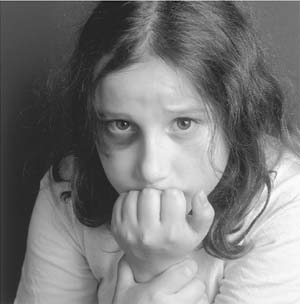
Child abuse is a pervasive problem in many societies and cultures. Children become the targets of abuse and killing when parents and guardians exercise poor parenting skills. Long after the scars have healed, abused children remember how they were made to feel, feelings that may haunt them throughout their lives and increase the likelihood of victimization as adults.
Sequelae of severe shaking can include death, severe brain damage, and blindness. Within a group of 31 shaken babies seen over a 20-month period, 6 (20%) died, and an additional 4 suffered severe permanent brain damage. Less data are available regarding the long-term effects of the shaking on learning.
...
- Aggression
- Aggression: Biological Theories
- Aggression: Evolutionary and Anthropological Theories
- Aggression: Feminist Perspective
- Aggression: Sociological Theories
- Alcohol and Aggression
- Antisocial Personality Disorder
- Batterers and Abusive Partners
- Cycle Theory of Violence
- Elder Abuse
- Family Violence
- Homicide
- Mass Violence
- Media, Violence in the
- Motives for Murder
- Paraphilia
- Pedophilia
- Police Brutality
- Predicting Violent Behavior
- Psychopaths
- Rape
- Road Rage
- Robbery
- Serial Murder
- Sexual Offenses
- Stalking
- Violent Behavior: A Psychological Case Study
- Violent Behavior: Personality Theories
- Violent Behavior: Psychoanalytic Theories
- Women and Violence
- Criminal Investigation
- Ballistics
- Criminal Justice Practitioner
- Criminalistics
- Cyberstings
- False Confessions
- False Memory Syndrome
- FBI Top 10 Most Wanted List
- Federal Bureau of Investigation (FBI)
- Forensic Science
- Geographic Profiling
- Predicting Violent Behavior
- Prevention of Crime and Violent Behavior
- Profiling
- Signature Killers
- Threat Assessment
- Uniform Crime Reports (UCR)
- ViCLAS
- Victimology
- Cults
- Death Penalty
- Family Violence
- Battered Child Syndrome
- Battered Woman's Syndrome
- Batterers and Abusive Partners
- Child Abuse
- Child Killers
- Children as Victims of Sex Crimes
- Cycle Theory of Violence
- Elder Abuse
- Exploitation of Children
- Family Homicide
- Family Violence
- Gender Violence
- Homicide
- MacDonald, Jeffery Robert
- Methods of Murder
- Munchausen Syndrome by Proxy
- Murder-Suicide
- Poisoners
- Rape
- Simpson, O. J.
- Victimology
- Violent Behavior
- Women and Violence
- Yates, Andrea
- Forensic Science
- Gangs
- Government-Sanctioned Violence
- Homicide
- Aeronautical Mass Murder
- Arson
- Assassins
- Child Killers
- Death Penalty
- Family Homicide
- Homicide
- Homicide, Motivation for Murder
- Homicide, Perceptions of
- Homicide: Types of, and Degrees of Murder
- Juvenile Killers
- Lust Murder
- Mass Murder
- Mass Violence
- Medical Murders
- Motives for Murder
- Paraphilia
- Poisoners
- Poisoning: Medical Settings
- Product Tampering
- Psychopaths
- Rippers
- School Shootings
- Serial Murder
- Signature Killers
- Spree Murders
- Stalking
- Trophy Taking
- Vampires, Werewolves, and Witches
- Vehicular Homicide
- Victimology
- Workplace Violence and Homicide
- Juvenile Crime
- Kidnapping
- Legal Response to Violent Crime
- Brady Bill
- Brawner Test
- Court-Mandated Treatment
- Court-Ordered Psychological Assessments
- Courts, Organization of
- Cyberstings
- Gun Control
- Homicide, Types of, and Degrees of Murder
- Jurisdiction
- M'Naughten Rule
- Megan's Law
- Not Guilty by Reason of Insanity (NGRI)
- Prevention of Crime and Violent Behavior
- Self-Defense, Actions Taken in
- Sex Offender Registry
- Tarasoff Decision
- Three Strikes and You're Out!
- Victim and Witness Protection Act of 1982 (VWPA)
- Victim Compensation for Violent Crimes
- Victimology
- Victims of Crime Act, 1984 (VOCA)
- Mass Murder
- Aeronautical Mass Murder
- Arson
- Bin Laden, Osama
- Columbine/Littleton School Shooting
- Ethnic Cleansing
- Ferguson, Colin
- Genocide
- History of Violence in Religions
- Huberty, James Oliver
- In Cold Blood
- Jonesboro, Arkansas School, Shooting
- Kinkel, Kipland (Kip)
- MacDonald, Jeffrey
- Manson, Charles/The Manson Family
- Mass Murder
- Mass Violence
- McVeigh, Timothy
- Media, Violence in the
- Nichols, Terry
- Oklahoma City Bombing
- School Shootings
- St. Valentine's Day Massacre
- Terrorism
- War Atrocities
- Workplace Homicide/Violence
- Yates, Andrea
- Motives for Violence
- Aggravating and Mitigating Circumstances
- Aggression
- Alcohol and Aggression
- Batterers and Abusive Partners
- Beltway Snipers
- Cycle Theory of Violence
- Drug Trade
- Family Violence
- Gender Violence
- Helter-Skelter
- Homicide, Motivation for Murder
- Less-Dead
- Medical Murders
- Motives for Murder
- Munchausen Syndrome by Proxy
- Paraphilia
- Pedophilia
- Predicting Violent Behavior
- Profiling
- Rape
- Road Rage
- Robbery
- Serial Murder
- Sexual Offenses
- Substance Abuse and Homicide
- Vehicular Homicide
- Vigilantism
- Organized Crime
- Police and Violence
- Psychological Theories and Diagnoses for Violent Behavior
- Aggression: Psychological Theories
- Antisocial Personality Disorder
- Arsonist's Portrait
- Attachment Deficiency and Violence
- Brawner Test
- Court-Ordered Psychological Assessment
- Diagnostic and Statistical Manual of Mental Disorders (DSM)
- Jekyll and Hyde Syndrome
- Juvenile Firesetters
- Less-Dead
- M'Naughten Rule
- MacDonald Triad
- Mentally Disordered Offenders
- Motives for Murder
- Paraphilia
- Pedophilia
- Predicting Violent Behavior
- Psychopathology Checklist-Revised (PCL-R)
- Psychopaths
- Psychosocial Risk Factors for Violent Behavior
- Violence: Phenomenology
- Violent Behavior: A Psychological Case Study
- Violent Behavior: Personality Theories
- Violent Behavior: Psychoanalytic Theories
- XYY Syndrome
- Serial Murder
- Serial Murderers
- Albright, Charles
- Bathory, Countess Elizabeth
- Beck, Martha, and Ray Fernandez
- Beltway Snipers
- Berkowitz, David Richard
- Bernardo, Paul, and Karla Homolka
- Bundy, Theodore “Ted”
- Chikatilo, Andrei
- Dahmer, Jeffrey
- DeSalvo, Albert Henry
- Dodd, Westley Allan
- Gray, Dana Sue
- Hoch, Johann Otto (Bluebeard)
- Hog Trail Killings
- Jack the Ripper
- Jones, Genene
- Kaczynski, Theodore
- Kevorkian, Jack
- Lake, Leonard, and Charles Ng
- Landru, Henri Desiré
- Manson, Charles
- Milat, Ivan
- Parker, Bonnie, and Clyde Barrow
- Ramirez, Richard
- Sells, Tommy Lynn
- Williams, Wayne
- Zebra Killings
- Zodiac Murders
- Sex Crimes
- Terrorism
- Victimology
- Aggression: Feminist Perspective
- Battered Child Syndrome
- Battered Woman's Syndrome
- Batterers and Abusive Partners
- Elder Abuse
- Family Violence
- Gender Violence
- Predicting Violent Behavior
- Prevention of Crime and Violent Behavior
- Profiling
- Rape
- Robbery
- Threat Assessment
- Victim and Witness Protection Act (1984)
- Victim Compensation for Violent Crimes
- Victimology
- Victims of Crime Act (1984)
- Vigilantism
- Violent Crime
- Aeronautical Mass Murder
- Aggression
- Air Rage
- Antisocial Personality Disorder
- Arson
- Battered Child Syndrome
- Battered Woman's Syndrome
- Batterers and Abusive Partners
- Child Abuse
- Child Killers
- Community Attitudes Toward Violent Crime
- Cycle Theory of Violence
- Death Penalty
- Drug Trade
- Elder Abuse
- Family Homicide
- Family Violence
- Gangs
- Gender Violence
- Homicide
- Juvenile Firesetters
- Juvenile Killers
- Juvenile Offenders
- Lust Murder
- Mass Murder
- Mass Violence
- Media, Violence in the
- Medical Murders
- Methods of Murder
- Motives for Murder
- Murder-Suicide
- Neo-Nazi Skinheads
- Organized Crime
- Paraphilia
- Pedophilia
- Poisoners
- Poisoning: Medical Settings
- Police Brutality
- Predicting Violent Behavior
- Product Tampering
- Psychopaths
- Psychosocial Risk Factors for Violent Behavior
- Rape
- Rippers
- Road Rage
- Robbery
- School Shootings
- Serial Murder
- Sex Offenders
- Sexual Offenses
- Signature Killers
- Stalking
- Stranger Violence
- Suicide by Cop
- Team Killers
- Terrorism
- Trophy Taking
- Uniform Crime Reports (UCR)
- Vampires, Werewolves, and Witches
- ViCLAS
- Victimology
- Vigilantism
- Violent Behavior
- Violent Female Juvenile Offenders
- War Atrocities
- White Supremacists
- Women and Violence
- Workplace Violence and Homicide
- XYY Syndrome
- Loading...
Get a 30 day FREE TRIAL
-
 Watch videos from a variety of sources bringing classroom topics to life
 -
Read modern, diverse business cases
-
Explore hundreds of books and reference titles

Read next

More like this
Sage Recommends
We found other relevant content for you on other Sage platforms.
Have you created a personal profile? Login or create a profile so that you can save clips, playlists and searches