
Entry
Reader's guide
Entries A-Z
Subject index
Santa Fe, New Mexico
Santa Fe, New Mexico, is located in the upper Rio Grande Valley of the southwestern United States. The state capital and an important tourist, arts, and culture center, it has a population of approximately 63,000 people and is part of a metropolitan area of more than 140,000. The present site of Santa Fe has been home to human beings for longer than 12,000 years, and initial Spanish settlements began there in the early seventeenth century. The community officially recognizes 1610 as the year Governor Don Pedro de Peralta founded the new capital city of La Villa Real de la Santa Fé de San Francisco de Asís.
Annexed to the United States in 1848, Santa Fe has a long history of cultural, economic, and political importance. It is often noted for its role as the center of the Pueblo Revolt (1680—1692), an important trading community on the Camino Real and Santa Fe Trail, and as America's longest-serving governmental capital. But it is Santa Fe's history from the late nineteenth century onward that is often studied by researchers of cities for its prototypical examples of tourism development, culture and art-centered economic development, historic restoration and design regulation, and lifestyle marketing. It was then that northern New Mexico began to attract boosters, artists, scientists, and a growing American intelligentsia.
Early Attractions
In the late 1800s professionals and amateurs came to study the native peoples of the region. There was particular interest in the Pueblos, whose terraced, multistoried earthen and stone buildings were often erected into, or reflected, grand landscape forms—as evidenced at locations such as Taos and mesa-top Ácoma. Numerous archeologi-cal sites, and particularly the Ancestral Puebloans' large abandoned complexes at Chaco Canyon and Mesa Verde, were attractions as well. The work of individuals such as ethnologist Frank Cushing and archeologist Adolph Bandelier, and institutions such as the joint Museum of New Mexico/School of American Archeology (1909), headed by Edgar Hewett, and the Laboratory of Anthropology (1927), funded by John D. Rockefeller, Jr., turned Santa Fe into an early center for archeological and Native American research.
Native peoples, the distinct local Hispanic culture, Santa Fe's dramatic natural setting, and a climate thought to be healthy, also attracted artists, intellectuals, the affluent, and developers of health resorts and sanatoriums. By the 1920s, preceded by Taos, Santa Fe emerged as a full artist colony, home to photographers, painters, sculptors, writers, and many more who came for the creative environment, came to convalesce, or were brought by patrons. Of the painters, early pioneers such as Carlos Vierra were followed by countless others, from visiting modernists such as Marsden Hartley, to groups that established themselves locally such as Los Cinco Pintores, to contemporary icons such as Georgia O'Keeffe (who lived in Abiquiu). Of the writers, Mary Austin made her home in Santa Fe, Willa Cather used it as a setting for her novel Death Comes for the Archbishop, Governor Lew Wallace wrote BenHur there, and D. H. Lawrence used the region as a retreat.
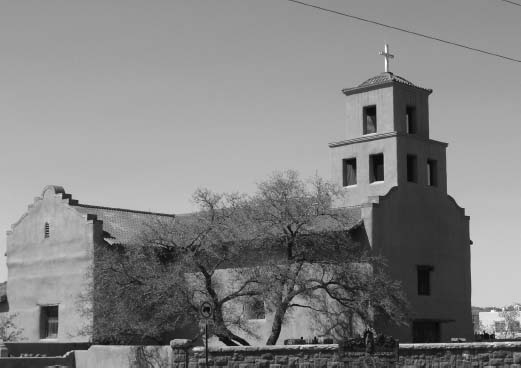
Santuario de Guadalupe is an adobe-style mission in Santa Fe built in 1781 that is now a museum.
...
- Cities: Historical Overviews
- Allegory of Good Government
- Capitalist City
- Chinatowns
- Colonial City
- Divided Cities
- Global City
- Heritage City
- Historic Cities
- Ideal City
- Informational City
- Islamic City
- Mediterranean City
- Megalopolis
- Multicultural Cities
- Other Global Cities
- Primate City
- Progressive City
- Renaissance City
- Revanchist City
- Situationist City
- World City
- Cities: Specific Cities
- Amsterdam, the Netherlands
- Berlin, Germany
- Bilbao, Spain
- Cairo, Egypt
- Canberra, Australia
- Chicago, Illinois
- Damascus, Syria
- Delhi, India
- Florence, Italy
- Hiroshima, Japan
- Hong Kong, China
- Istanbul, Turkey
- Kolkata (Calcutta), India
- Lagos, Nigeria
- Las Vegas, Nevada
- London, United Kingdom
- Los Angeles, California
- Manchester, United Kingdom
- Manila, Philippines
- Mexico City, Mexico
- Moscow, Russian Federation
- Mumbai (Bombay), India
- New York City, New York
- Paris, France
- Rome, Italy
- São Paulo, Brazil
- Santa Fe, New Mexico
- Santiago de Compostela, Spain
- Savannah, Georgia
- Shanghai, China
- Singapore
- Tokyo, Japan
- Venice, Italy
- Persons
- Alinsky, Saul
- Alonso, William
- Benjamin, Walter
- Berry, Brian J. L.
- Castells, Manuel
- Childe, V. Gordon
- Davis, Mike
- De Certeau, Michel
- Dickens, Charles
- Downs, Anthony
- Du Bois, W. E. B.
- Fujita, Masahisa
- Geddes, Patrick
- Gottdiener, Mark
- Hall, Peter
- Harvey, David
- Haussmann, Baron Georges-Eugène
- Hawley, Amos
- Isard, Walter
- Jackson, Kenneth T.
- Jacobs, Jane
- Kracauer, Siegfried
- Le Corbusier
- Lefebvre, Henri
- LLöschsch, August
- Lynch, Kevin
- Moses, Robert
- Mumford, Lewis
- Riis, Jacob
- Sassen, Saskia
- Sert, Josep Lluís
- Simmel, Goerg
- Soja, Edward W.
- Wren, Sir Christopher
- Places
- Airports
- Béguinage
- Banlieue
- Barrio
- Bazaar
- Caravanserai
- Convention Centers
- Discotheque
- Ethnic Enclave
- Favela
- Forum
- Fourth World
- Gated Community
- Ghetto
- Heterotopia
- Metropolitan
- Necropolis
- Night Spaces
- Piazza
- Placemaking
- Resort
- Shopping Center
- Sports Stadiums
- Suburbanization
- Technoburbs
- Technopoles
- Themed Environments
- Toilets
- Utopia
- World Trade Center (9/11)
- Zoöpolis
- Urban Culture
- Bohemian
- Cinema (Movie House)
- City Club
- City Users
- Creative Class
- Flaâneur
- Graffiti
- Hip Hop
- Intellectuals
- Landscapes of Power
- Loft Living
- Metropolis
- Museums
- Nightlife
- Parks
- Photography and the City
- Placemaking
- Public Art
- Shopping
- Simulacra
- Skateboarding
- Society of the Spectacle
- Stranger
- Urban
- Urban Health
- Urban Life
- Urban Novel
- Urban Economics
- Urban Geography
- Urban History
- Urban Issues
- Urban Planning
- Urban Politics
- Urban Sociology
- Urban Studies—Topical Areas: Architecture
- Urban Studies—Topical Areas: Gender and Sex – Béguinage
- Urban Studies—Topical Areas: Gender and Sex – Social Space
- Urban Studies—Topical Areas: Sustainable Development
- Urban Theory
- Urban Transportation
- Loading...
Get a 30 day FREE TRIAL
-
 Watch videos from a variety of sources bringing classroom topics to life
 -
Read modern, diverse business cases
-
Explore hundreds of books and reference titles

Read next

More like this
Sage Recommends
We found other relevant content for you on other Sage platforms.
Have you created a personal profile? Login or create a profile so that you can save clips, playlists and searches