
Entry
Entries A-Z
Secession
In a speech on March 6, 1860, Abraham Lincoln identified the cause of the impending secession of the nation’s slave-owning states in the South the following year. “What ever endangered this Union save and except slavery? Did any other thing cause a moment’s fear? All men must agree that this thing alone has ever endangered the perpetuity of the Union” (see Slavery). The South’s secession from the Union and the formation of the Confederate States of America brought on the Civil War (1861–65), the most destructive war on American soil.
Most national constitutions, even those of federal nations like the United States, do not raise the specter that states or provinces will separate themselves from the federal system of government (see Federalism). In fact, the constitutions of many federal governments emphasize just the opposite. Australia’s (1901), for example, begins: “Whereas the people of New South Wales, Victoria, South Australia, Queensland, and Tasmania…have agreed to unite in one indissoluble federal common-wealth.” In contrast, the constitution of the Soviet Union (1977), before its dissolution in 1991, contained a unique provision permitting secession.
The U.S. Constitution speaks of the “Union” of the states of the United States (in Article I, section 2, for example) and addresses the admission of new states but is silent regarding whether states might withdraw from the Union. Movements that contemplated secession began in America as early as 1794, after the signing of the Jay Treaty (1794) patching up differences with the British. Before the Civil War, when the slave states decided to secede, some abolitionists (antislavery activists) themselves argued for “disunion,” or the withdrawal of the free states from the slave states.

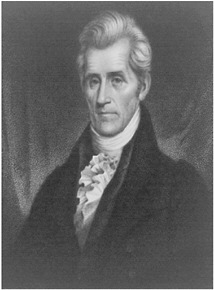
Andrew Jackson Library of Congress
President Andrew Jackson, a native of Tennessee, sympathized with southerners who objected to high tariffs in the 1820s and 1830s. But he also contended that individual states had to recognize federal laws.
When South Carolina in 1832 claimed the right to ignore, or “nullify,” a national tariff act, Jackson reacted by threatening to send in troops. He warned that South Carolina was on the brink of treason, and declared, “To say that any State may at pleasure secede from the Union is to say that the United States is not a nation.”
The crisis ended in 1833 when Congress agreed to a reduced tariff. But Congress, in a warning to secessionists, also gave Jackson the authority to use military action.
The nullification crisis set a precedent for the Civil War. After the election of Abraham Lincoln in 1860, South Carolina became the first state to secede. Faced with other states seceding as well, Lincoln followed Jackson’s precedent and turned to the military.
For many political leaders in the slave states of the South, the American Union was merely a voluntary association of sovereign states (see Sovereignty). They even pointed to the language of the Declaration of Independence (1776), which validated the right of the people to alter or abolish a form of government that was destructive of their rights—in this case, the right to own slaves. John C. Calhoun (1782–1850)—a South Carolina U.S. representative, senator, cabinet officer, and vice president of the United States—argued for the concepts of “interposition” and “nullification” by states when faced with what were viewed as unconstitutional acts of the federal government. For example, in 1832 South Carolina’s legislature objected to national tariffs by passing a “nullification ordinance” that allowed damages to be claimed by any person arrested by federal officials for failing to pay the tariff. According to Calhoun, because the Constitution was merely a compact among the sovereign states, they could interpose their authority between the people and the national government and nullify federal legislation within their territory.
...
Get a 30 day FREE TRIAL
-
 Watch videos from a variety of sources bringing classroom topics to life
 -
Read modern, diverse business cases
-
Explore hundreds of books and reference titles

Read next

More like this
Sage Recommends
We found other relevant content for you on other Sage platforms.
Have you created a personal profile? Login or create a profile so that you can save clips, playlists and searches