
Entry
Reader's guide
Entries A-Z
Subject index
United Nations Development Programme
The United Nations Development Programme (UNDP) is the United Nations’ global development network. It was established in 1966, and is headquartered in New York City. The UNDP is funded by voluntary contributions from its members. To cooperate with governments to meet the challenges of development in various dimensions, it has 177 country offices across the globe. Fighting poverty is the overarching goal at the center of UNDP’s mandate. Although started with a wider focus, the UNDP gradually evolved into a more poverty-focused organization. During 1990s, the UNDP defined a set of priorities, poverty at the top. This prioritization was triggered during an annual meeting of the UNDP Executive Board in 1995. The following year, the UNDP started to publish a series of reports on poverty, and in 1997, published the “Human Development Report” on poverty. The Human Poverty Index (HPI) was also introduced by the UNDP in 1997, but with limited coverage. The 2000 to 2003 Multi-Year Funding Framework (MYFF) contributed to UNDP by making it a “more focused and result-oriented” institution. A second MYFF was adopted for 2004 to 2007. Finally, a Strategic Plan replaced the MYFF, covering 2008 to 2013. The UNDP now has a new Strategic Plan that was adopted for 2014 to 2017. The UNDP is also one of the major actors working on the Post-2015 Development Agenda.
The first MYFF identified priorities all aiming at poverty reduction: promote pro-poor macroeconomic and sectoral policies and national antipoverty plans; promote entrepreneurship and access of the poor to microfinance, promote employment and foster skills among the poor, support the capacity of the poor and civil society for self-organization and the development of alliances, and strengthen the capacity of governments and vulnerable groups to take preventative measures to reduce the impact of health epidemics, such as human immunodeficiency virus/acquired immunodeficiency syndrome (HIV/AIDS). The second MYFF not only declared an across-the-board goal for poverty reduction (i.e., “to eradicate extreme poverty and reduce substantially overall poverty”), but it also defined two subtargets to reach this goal: promote poverty-focused development and reduce vulnerability, and promote the livelihoods of the poor through strengthened self-organization and access to assets and resources.
The Strategic Plan (2008–2013) integrated new elements for promoting inclusive growth, gender equality, and achievement of the MDGs; fostering inclusive globalization; and mitigating the impact of HIV/AIDS on human development. These activities would promote the overall goal to strengthen national and local capacities to achieve inclusive growth, reduce poverty and inequality, and stop the spread of HIV/AIDS. From the development perspective, in 1990, the UNDP took a step forward and published its first “Human Development Report” (HDR). HDRs adopted a new concept of development, which is defined as “a process of enlarging people’s choices.” These choices cover a wide range of issues pertaining to human dignity: to live a long and healthy life, be educated and have access to resources needed for a decent standard of living, political freedom, guaranteed human rights, and personal self-respect.
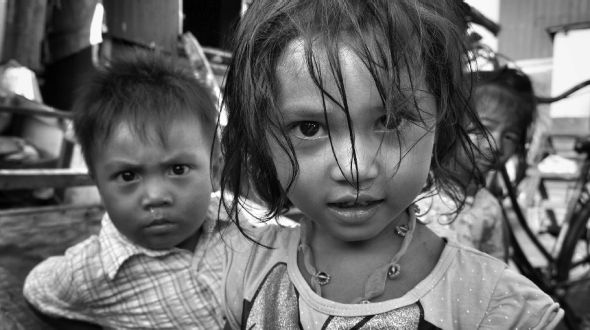
The faces of children in a slum in Phnom Penh, Cambodia, on August 8, 2012, express the urgent need for their country to meet the Millennium Development Goals (MDGs) as set forth by the United Nations Development Programme (UNDP) for countries around the globe. The primary goal of the MDG is to eradicate poverty and extreme hunger. In the case of Cambodia, according to the UNDP, the goals of poverty reduction are apparently achievable, although child labor and malnutrition needs more attention. (Flickr/N.D.
...
- Antipoverty Organizations
- African Development Foundation
- American Friends Service Committee
- Big Brothers Big Sisters
- Biodiversity International
- Campus Compact
- CARE
- Center for the Study of Urban Poverty
- Center on Budget and Policy Priorities
- Center on Hunger and Poverty
- Charity Organization Society
- Comic Relief
- Development Gateway
- Earth Institute
- Employment Policies Institute
- Engineers Without Borders
- Feinstein Foundation
- Food First
- Food for the Hungry
- Food Research and Action Center
- Foods Resource Bank
- Global Poverty Project
- Habitat for Humanity
- Haig Fund
- Hull House
- Institute for Research on Poverty
- Institute for the Study of Homelessness and Poverty
- International Food Policy Research Institute
- International Labor Organization
- International Monetary Fund
- International Rescue Committee
- Lawyers Without Borders
- Médecins Sans Frontières
- National Alliance to End Homelessness
- National Association for the Advancement of Colored People
- National Coalition for the Homeless
- National Coalition of Barrios Unidos
- National Coalition on Health Care
- National Conference for Community and Justice
- National Low Income Housing Coalition
- National Poverty Center
- New Partnership for Africa’s Development
- Nongovernmental Organizations
- Salvation Army
- Second Harvest
- Southern Poverty Law Center
- Spotlight on Poverty and Opportunity
- UNICEF
- United Students Against Sweatshops
- World Bank
- World Health Organization
- World Trade Organization
- Causes of Poverty
- Age Discrimination
- Apartheid
- Bankruptcy
- Class Structure
- Colonialism and Imperialism
- Conflict
- Corruption
- Drought
- Economic Liberalization
- Feudalism
- Fraud
- Gender Discrimination
- Globalization
- Great Recession (2007–8)
- Income Inequality
- Industrial Revolution
- Inflation
- Irish Famine
- Migration
- Neoliberalism
- Outsourcing/Offshoring
- Privatization
- Recession
- Segregation, School and Housing
- Unemployment
- Children and Poverty
- Child Immunization and Vaccination
- Child Malnutrition
- Child Mortality
- Child Soldiers
- Child Trafficking
- Child Welfare League of America
- ChildLine
- Children’s Aid Society
- Children’s Defense Fund
- Children’s Hunger Relief
- Church of England
- Docs for Tots
- Education
- International Forum for Child Welfare
- Lingap Children’s Foundation
- National Association for the Education of Young Children
- National Center for Children in Poverty
- National Education Association
- National Fatherhood Initiative
- Nutrition
- Street Children
- Consumption and Poverty
- Countries: Africa
- Algeria
- Angola
- Benin
- Botswana
- Brunei Darussalam
- Burkina Faso
- Burundi
- Côte d’Ivoire
- Cameroon
- Cape Verde
- Central African Republic
- Chad
- Comoros
- Congo
- Congo, Democratic Republic of the
- Djibouti
- Egypt
- Equatorial Guinea
- Eritrea
- Ethiopia
- Gabon
- Gambia
- Guinea
- Guinea-Bissau
- Kenya
- Lesotho
- Liberia
- Libya
- Madagascar
- Malawi
- Mali
- Mauritania
- Mauritius
- Morocco
- Mozambique
- Namibia
- Niger
- Nigeria
- Rwanda
- São Tomé and Príncipe
- Senegal
- Sierra Leone
- Somalia
- South Africa
- South Sudan
- Sudan
- Swaziland
- Tanzania
- Togo
- Tunisia
- Uganda
- Zambia
- Zimbabwe
- Countries: Americas
- Antigua and Barbuda
- Argentina
- Bahamas
- Barbados
- Belize
- Bolivia
- Brazil
- Canada
- Chile
- Colombia
- Costa Rica
- Cuba
- Dominica
- Dominican Republic
- Ecuador
- El Salvador
- Grenada
- Guatemala
- Guyana
- Haiti
- Honduras
- Jamaica
- Mexico
- Nicaragua
- Panama
- Paraguay
- Peru
- Saint Kitts and Nevis
- Saint Lucia
- Saint Vincent and the Grenadines
- Suriname
- Trinidad and Tobago
- United States
- Uruguay
- Venezuela
- Countries: Asia
- Afghanistan
- Azerbaijan
- Bahrain
- Bangladesh
- Bhutan
- Cambodia
- China
- Georgia (Country)
- India
- Indonesia
- Iran
- Iraq
- Israel
- Japan
- Jordan
- Kazakhstan
- Kuwait
- Kyrgyzstan
- Laos
- Lebanon
- Malaysia
- Maldives
- Moldova
- Mongolia
- Myanmar
- Nepal
- North Korea
- Oman
- Pakistan
- Palestine
- Philippines
- Qatar
- Russia
- Saudi Arabia
- Seychelles
- Singapore
- South Korea
- Sri Lanka
- Syria
- Tajikistan
- Thailand
- Timor-Leste (East Timor)
- Turkmenistan
- Ukraine
- United Arab Emirates
- Uzbekistan
- Vietnam
- Yemen
- Countries: Europe
- Albania
- Andorra
- Armenia
- Austria
- Belarus
- Belgium
- Bosnia and Herzegovina
- Bulgaria
- Croatia
- Cyprus
- Czech Republic
- Denmark
- Estonia
- Finland
- France
- Germany
- Greece
- Hungary
- Iceland
- Ireland
- Italy
- Kosova
- Latvia
- Liechtenstein
- Lithuania
- Luxembourg
- Macedonia (FYROM)
- Malta
- Monaco
- Netherlands
- Norway
- Poland
- Portugal
- Romania
- San Marino
- Serbia and Montenegro
- Slovakia
- Slovenia
- Spain
- Sweden
- Switzerland
- United Kingdom
- Countries: Pacific
- Economics of Poverty
- Agriculture
- Agriculture-Nutrition Advantage
- Area Deprivation
- Basic Income
- Basic Needs
- Basic Security
- Capitalism
- Civic Society
- Class Analysis of Poverty
- Class Structure
- Communism
- Corporate Responsibility
- Cost of Living
- Credit
- Debt
- Debt Relief
- Debt Swap
- Dependency School
- Deprivation
- Deprivation, Relative
- Destitution
- Disability Insurance
- Distribution
- Drought
- Economic Distance
- Economic Growth
- Employment
- Employment Theory
- Environmental Degradation
- Equity and Efficiency Tradeoff
- Equivalence Scales
- Family Budgets
- Famine
- Financial Markets
- Fiscal Policy
- Food Shortages
- Foreign Direct Investment
- Free Trade Agreement of the Americas
- Fuel Poverty
- Green Economy Initiative
- Household Consumption
- Household Employment
- Household Income
- Human Capital
- Human Development
- Income
- Income Distribution Theories
- Income Inequality
- Income Poverty
- Inflation
- International Trade
- Intrahousehold Transfers
- Joint Center for Political and Economic Studies
- Labor Market
- Laissez-Faire
- Lumpenproletariat
- Macroeconomic Policies
- Macroeconomics
- Market Efficiency
- Microeconomics
- Millennium Promise Alliance
- Millennium Villages Project
- Monetary Policy
- Myrdal’s Theory of Cumulative Causation
- Needs
- Neoclassical Thought
- Nonincome Poverty
- North American Free Trade Agreement
- Pension Programs
- Physiocrats
- Planning
- Poverty Traps
- Primary Poverty
- Privatization
- Public Goods
- Public Policy
- Recession
- Redistribution
- Scarcity
- Sequestration
- Social and Solidarity Economy
- Social Budgeting
- Social Democracy
- Socialism
- Stabilization
- Structural Dependency
- Structuralist School
- Supply-Side Economics
- Wage Slavery
- War on Poverty
- Water
- Welfare State
- Education and Poverty
- Absenteeism and Child Poverty
- Achievement Gap
- Adolescent Girls Initiative
- Adult Literacy Programs
- Alliance for Excellent Education
- American Graduate
- Children Out of School
- Donor Aid to Education
- Dropout Rates
- Education and Opportunity
- Education and Sustainable Development
- Education and Training, Technical and Vocational
- Education Equity
- Education Millennium Development Goals
- Education Premium
- Education Theories
- Education, Early Childhood
- Education, Primary
- Education, Private and Public
- Education, Secondary
- Education, Tertiary
- Educational Praxis
- Financial Aid
- Gender-Parity Index
- Girl Effect Dividend, The
- Global Education First Initiative
- Literacy and Illiteracy Rates
- National Policies for Education
- Resilience and Education
- School Feeding Programs
- Student Attrition Rate
- Systems Approach for Better Education Results
- Transition Rate
- Universal Primary Education
- World Bank New Education Strategy
- Effects of Poverty
- Crime
- Destitution
- Disease
- Economic Insecurity
- Exclusion
- Exploitation
- Family Desertion
- HIV/AIDS
- Homelessness
- Malnutrition
- Nonworking Poor
- Representation
- Rural Deprivation
- Social Disqualification
- Social Exclusion
- Social Inequality
- Social Insecurity
- Starvation
- Stigmatization
- Structural Dependency
- Underclass
- Vulnerability
- Welfare Dependence
- Health and Poverty
- Aboriginal Health
- Affordable Care Act
- Catastrophic Health Expenditure
- Communicable Diseases
- Contraceptive Prevalence
- Dengue Fever
- Disease Eradication and Elimination Programs
- Doha Declaration
- Equity in Health
- Gastroenteritis
- Global Health Initiatives
- Health-Related Millennium Development Goals
- Health, Investment in
- Malaria
- Measles
- Mortality Rate
- National Health Accounts
- Neglected Diseases
- Oral Health Care
- Pneumonia
- Polio
- Poverty Reduction Strategies
- Tuberculosis
- History of Poverty
- Les Misérables
- Adams, John (Administration)
- Adams, John Quincy (Administration)
- Almshouses
- Ancient Thought
- Arthur, Chester (Administration)
- Buchanan, James (Administration)
- Bush, George H. W. (Administration)
- Bush, George W. (Administration)
- Carter, Jimmy (Administration)
- Cleveland, Grover (Administration)
- Clinton, William (Administration)
- Cold War
- Coolidge, Calvin (Administration)
- Eisenhower, Dwight (Administration)
- Fabian Society
- Feudalism
- Fillmore, Millard (Administration)
- Ford, Gerald (Administration)
- French Revolution
- Garfield, James (Administration)
- Grant, Ulysses (Administration)
- Great Depression
- Harding, Warren (Administration)
- Harrison, Benjamin (Administration)
- Harrison, William Henry (Administration)
- Hayes, Rutherford (Administration)
- Hoover, Herbert (Administration)
- Industrial Revolution
- Industrialization
- Jackson, Andrew (Administration)
- Jefferson, Thomas (Administration)
- Johnson, Andrew (Administration)
- Johnson, Lyndon (Administration)
- Kennedy, John F. (Administration)
- Lincoln, Abraham (Administration)
- Madison, James (Administration)
- McKinley, William (Administration)
- Medieval Thought
- Mercantilism
- Monroe, James (Administration)
- Nixon, Richard (Administration)
- Pierce, Franklin (Administration)
- Polk, James (Administration)
- Poor Laws
- Poverty, History of
- Reagan, Ronald (Administration)
- Roosevelt, Franklin (Administration)
- Roosevelt, Theodore (Administration)
- Taft, William Howard (Administration)
- Taylor, Zachary (Administration)
- Truman, Harry (Administration)
- Tyler, John (Administration)
- Utopian Socialists
- War on Poverty
- Washington, George (Administration)
- Wilson, Woodrow (Administration)
- World War I
- World War II
- Measurements and Definitions of Poverty
- Arab Definition of Poverty
- Australian Definition of Poverty
- Axiom of Monotonicity and Axiom of Transfers
- Beveridge Scheme
- Brazilian Definition of Poverty
- Bureau of Labor Statistics, U.S.
- Chinese Definition of Poverty
- Comparative Research Program on Poverty
- Contextual Poverty
- Cyclical Poverty
- Demographics
- Dependency Ratio
- Deprivation Index
- Duration of Poverty
- Economic Definitions of Poverty
- Endemic Poverty
- Engel Coefficient
- European Relative-Income Standard of Poverty
- European Union Definition of Poverty
- Extended Poverty Minimum
- Extreme Poverty
- Food-Ratio Poverty Line
- Foster, Greer, and Thorbecke Index
- Gini Coefficient
- Headcount Index
- Human Poverty Index
- Indicators of Poverty
- Joint Center for Poverty Research
- Living Standards Measurement Study
- Luxembourg Employment Study
- Luxembourg Income Study
- Mapping Poverty
- Means Testing
- Measures of Poverty, Absolute-Income-Based
- Measures of Poverty, Capability
- Measures of Poverty, Consumption-Based
- Measures of Poverty, Cost-of-Living-Based
- Measures of Poverty, Direct and Indirect
- Measures of Poverty, Relative-Income-Based
- Measures of Poverty, Subjective
- Measures of Poverty, Totally Fuzzy and Relative
- National Research Council, United States
- Normative Standards
- Overall Poverty
- Peripheral Poverty
- Permanent (Collective) Poverty
- Poverty Assessment
- Poverty Clock
- Poverty Gap
- Poverty Gap Index
- Poverty Rate
- Poverty Research
- Poverty Threshold
- Relative Welfare Index
- Rural Poverty Research Center
- Scientific Definitions of Poverty
- Secondary Poverty
- Sen Index
- Sen-Shorrocks-Thon Index
- Standard Food Basket
- Standard Food Basket Variant
- Standard of Living
- TIP Curves
- Traumatic Poverty
- UBN-PL Method
- Ultimate Poverty
- University of Kentucky Center for Poverty Research
- USDA Poverty Line
- Voluntary Poverty
- Working Poor
- World Bank Poverty Lines
- People
- Aquinas, Thomas
- Bellamy, Edward
- Black, Hugo L.
- Brandeis, Louis D.
- Bryan, William Jennings
- Calvin, John
- Carnegie, Andrew
- Coughlin, Charles
- de Soto, Hernando
- Donnelly, Ignatius
- Engels, Friedrich
- Evans, George Henry
- Foucault, Michel
- Francis of Assisi
- Frank, Andre Gunder
- Franklin, Benjamin
- Friedman, Milton
- Galbraith, John Kenneth
- Gandhi, Mahatma
- George, Henry
- Giddens, Anthony
- Gilder, George
- Greeley, Horace
- Harrington, Michael
- Heilbroner, Robert
- Hobbes, Thomas
- Hobson, John
- Lewis, Arthur
- Locke, John
- Luxemburg, Rosa
- Malthus, Thomas
- Marshall, Alfred
- Marx, Karl
- Mill, John Stuart
- Mother Teresa
- Owen, Robert
- Polanyi, Karl
- Prebisch, Raúl
- Rawls, John
- Ricardo, David
- Sen, Amartya
- Smith, Adam
- Thompson, T. Phillips
- Wallerstein, Immanuel
- Weber, Max
- Politics and Poverty
- Poverty Relief Initiatives
- Access-to-Enterprise Zones
- Adjustment Programs
- Aid to Families with Dependent Children
- Antipoverty Programs, Asset-Based
- Antipoverty Programs, Means-Tested Government
- Antipoverty Programs, Rural
- Antipoverty Programs, Urban
- Bolsa Família
- Congressional Hunger Center
- Earned-Income Tax Credit
- Economic Growth and Poverty Reduction Strategy
- Eliminate Project, The
- End Hunger Network
- Federal Targeted Training
- Food Stamps
- G-8 Africa Action Plan
- Great Society Programs
- Guaranteed Assistance
- Head Start
- Heifer Project
- Help the Aged
- Housing Assistance
- Inter-American Development Bank
- Living Wage Campaign
- Low-Income Cutoffs
- Medicaid
- Medicare
- Microcredit
- Millennium Development Goals
- Minimum Wage
- Pro-Poor Growth
- Rationing
- Regulation
- Religious and Secular Charities
- Africa Faith and Justice Network
- Antipoverty Programs, Community-Based
- Brotherhood of St. Laurence
- Catholic Campaign for Human Development
- charity: water
- Christian Antipoverty Campaigns
- Christian Community Health Fellowship
- Christmas Seals
- Church World Services
- Feeding America
- Franciscan Order
- God’s Child Project
- Goodwill Industries
- Interfaith Worker Justice
- International Red Cross and Red Crescent Societies
- Jesuits
- Jubilee 2000
- Judaism
- Leadership Conference on Civil and Human Rights, The
- Living Waters for the World
- March of Dimes
- Mendicant Orders
- Missionaries
- National Economic and Social Rights Initiative
- New Hope Program (Milwaukee)
- Oxfam
- Partnership to Cut Hunger and Poverty in Africa
- Polish Humanitarian Organization
- Presbyterian Hunger Project
- Protestant Churches
- Rebuilding Together
- Roy Wilkins Center
- Samaritans
- Save the Children
- Share Our Strength
- Society of St. Vincent de Paul
- United Methodist Church Initiatives
- United Methodist Committee on Relief
- United Way
- World Concern
- World Food Programme
- YMCA and YWCA
- Social Assistance
- Supplemental Security Income
- Temporary Assistance for Needy Families
- Unemployment Insurance
- United Nations Development Programme
- United Nations Development Programme Regional Project for Overcoming Poverty
- Wealth Tax
- Work–Welfare Programs
- Workers’ Compensation
- Workforce
- World Economic Forum
- World Social Forum
- Sustainability and Poverty
- Environmental Economics
- Environmental Federalism
- Environmental Health
- Environmental Refugees
- Environmentalism of the Poor and Economic Justice
- Environmentalism, American Radical
- Environmentalism, Civic and Nongovernmental
- Environmentalism, Corporate
- Environmentalism, International
- Environmentalism, Modern
- Greenhouse Gas Emissions
- Natural Resource Management
- Pollution
- Solar Energy
- Sustainable Development, Measurement of
- Technology and Poverty
- Agricultural Technology
- Economic Growth and Technology
- Education and Technology
- Financing New Technology
- Genetically Modified Organisms
- Grameenphone and Telecom
- Information and Communication Technology
- Intellectual Property Rights
- International Trade, High Technology and
- Knowledge Poverty
- Medical Technology
- Mobile Phones
- Mobile Technology
- Natural Disaster Refugees
- New Technology: Risks and Gains
- Poverty Traps
- Technological Unemployment
- Technology Absorption and Appropriate Technology
- Technology and Poverty Alleviation
- Technology and Public Policy
- Technology and Replenishable Energy
- Technology Diffusion
- Technology Divide
- Technology Expenditure
- Technology Transfer
- Water Technology
- U.S. States and Territories
- Alabama
- Alaska
- American Samoa
- Arizona
- Arkansas
- California
- Colorado
- Connecticut
- Delaware
- Florida
- Georgia (U.S. State)
- Guam
- Hawai‘i
- Idaho
- Illinois
- Indiana
- Iowa
- Kansas
- Kentucky
- Louisiana
- Maine
- Maryland
- Massachusetts
- Michigan
- Minnesota
- Mississippi
- Missouri
- Montana
- Nebraska
- Nevada
- New Hampshire
- New Jersey
- New Mexico
- New York
- North Carolina
- North Dakota
- Northern Mariana Islands
- Ohio
- Oklahoma
- Oregon
- Pennsylvania
- Puerto Rico
- Rhode Island
- South Carolina
- South Dakota
- Tennessee
- Texas
- Utah
- Vermont
- Virgin Islands
- Virginia
- Washington
- Washington, D.C.
- West Virginia
- Wisconsin
- Wyoming
- Women and Poverty
- Alliance for International Women’s Rights
- Center for American Progress
- Child Care
- Family Desertion
- Family Size and Structure
- Feminist Approaches to Poverty
- Feminization of Poverty
- Gender and Allocation of Time
- Gender and Food Security
- Gender and Land Rights
- Gender Discrimination
- Gender Division of Labor
- Gender Gap in Agriculture
- Gender Poverty Gap
- Institute for Women’s Policy Research
- Maternal Mortality and Morbidity
- National Campaign to Prevent Teen Pregnancy
- Pro Mujer
- Race, Ethnicity, Immigration and Women
- Reproductive Health and Rights
- Women
- Women, Missing
- Women’s Empowerment
- Women’s Global Empowerment Fund
- WomenWatch
- Loading...
Get a 30 day FREE TRIAL
-
 Watch videos from a variety of sources bringing classroom topics to life
 -
Read modern, diverse business cases
-
Explore hundreds of books and reference titles

Read next

More like this
Sage Recommends
We found other relevant content for you on other Sage platforms.
Have you created a personal profile? Login or create a profile so that you can save clips, playlists and searches