
Entry
Reader's guide
Entries A-Z
Subject index
Developmental Continuity and Stability
Across the life span, or parts of it, some characteristics change but others are constant. Although development is often identified with change and transformation over time, not all individual or group characteristics alter in development, and development equally includes consistency over time. Consistency in development is tracked at the group average level (continuity) and at the individual order level (stability). Group average and individual order consistencies are both developmentally informative, and consistency is found in characteristics of child, adult, dyad, and environment. This entry distinguishes the two types of consistency, their measurement, importance, moderation, sources, and implications and challenges to interpretation.
Continuity and Stability
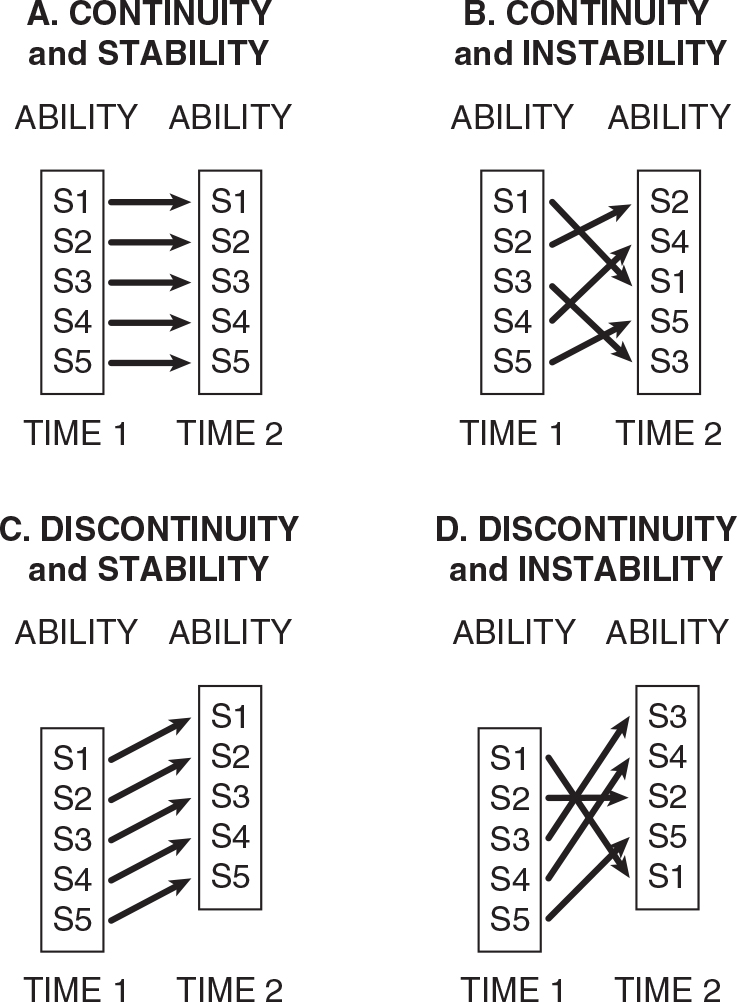
Continuity is consistency in the group average level of a characteristic through time (Figure 1) and conventionally indexed by similarity in the group average between times. The extant life span development literature supports short-term and long-term continuity of many biological and psychological characteristics. For example, human bodies work constantly and throughout development to maintain homeostasis, the organism’s internal consistency. Thus, the average temperature of human bodies should keep a constant 36.5°C and regulation of pH of the blood (a measure of alkalinity and acidity) a constant 7.365. Stability is consistency in the relative order, standing, or rank of individuals in a group on a characteristic through time (Figure 2) and is conventionally indexed by correlation. A stable characteristic is one that some individuals display at high levels relative to others in a group at one point in time and again display at relatively high levels at a later point in time. Personality and many aspects of context are relatively stable over time. Measuring continuity and stability demands longitudinal within-subject social and behavioral science designs.
Figure 1 Group mean and individual order consistency
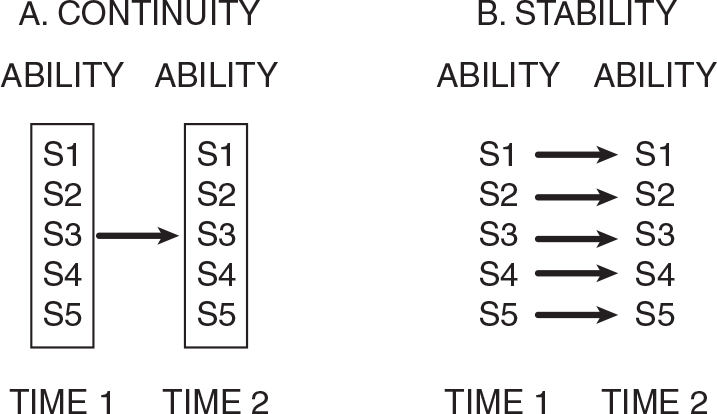
Figure 2 Correlations between continuity and stability
Why Is Developmental Consistency Important?
Consistency in development is significant for several reasons. First, consistency is basic to survival and the normal function of living organisms and organizations. Diverse organismic systems strive to maintain a state of dynamic and adaptive equilibrium, and consistency—physical, chemical, biological, psychological, and environmental—is often a sign of robustness and health. Many interior forces conserve homeostasis in the individual and allostasis (the process of achieving stability through physiological or behavioral change) across development, and consistent social networks in which much of development normally transpires likewise contribute to constancy. It has been asserted that consistency is a basic psychological need, and that lovers, markets, and nation-states abhor inconstancy.
Second, consistency provides key information about development. Developmental science is concerned with description, explanation, and prediction. Continuity and stability describe the developmental courses of a characteristic, insofar as the group maintains its average level and individuals maintain their order relative to one another in their cohort. It is often observed that a major predictor of a characteristic at a given age is the expression of that characteristic at an earlier age (which is only true, of course, for consistent characteristics). Personality is believed to be meaningful because it is considered consistent and consequently prognostic. Consistency therefore provides insights to a practical understanding of individuals when younger and older.
...
- Aging
- Adult Capacity and Legal Guardianship
- Adult Children
- Adult Day Services
- Age Discrimination
- Age-Irrelevant Society
- Ageism
- Aging
- Alzheimer’s Disease
- Assisted Living
- Bereavement
- Bridge Employment
- Caregivers of Older Adults
- Centenarian
- Closure and Grief
- College Education, Long-Term Benefits of
- Death Rates, Leading Causes by Developmental Period
- Defined Benefit and Defined Contribution Pensions
- Do Not Resuscitate (DNR) Order
- Driving and Mobility in Late Life
- Elder Abuse
- Empty Nest
- End-of-Life Care
- Evolutionary Theories of Aging
- Frailty
- Generativity
- Gerontology
- Good Death
- Grandparents
- Grief
- Hospice Care
- Integrity Versus Despair
- Late Versus Early Parenthood
- Life Expectancy
- Life Narrative
- Life Review
- Life-Span Research Projects
- Living Will
- Longevity
- Mandatory Retirement
- Mastery Across Adulthood
- Menopausal Hormone Therapy
- Menopause
- Middle Age/Midlife
- Nursing Homes and Skilled Nursing Facilities
- Old Age
- Oldest Old
- Palliative Care
- Physician Orders for Life Sustaining Treatment (POLST)
- Pivot Generation
- Population Aging
- Positivity Effect
- Presbyopia and Diseases of the Eye in Late Life
- Programmed Theories of Aging
- Retirement
- Senescence
- Skill Attainment and Loss
- Stereotype Threat
- Stereotypes of Aging
- Successful Aging
- Supercentenarian
- Technology and Aging
- Terminal Decline
- Visual Disorders: Age-Related Macular Degeneration, Cataracts
- Widow, Widower
- Wisdom
- Behavior
- Activities
- Adaptive Functioning
- Agency
- Alcohol Use
- Alcohol Use Disorders
- Anger and Aggression
- Antisocial/Conduct Disorder, Externalizing Behaviors
- Attachment
- Attention
- Attention-Deficit/Hyperactivity Disorder
- Attributions
- Behavior Genetics
- Behavior Therapy
- Behavioral Inhibition (Shyness)
- Binge Drinking
- Bulimia
- Bullying
- Cliques and Social Groups
- Conformity
- Cooperation
- Creativity
- Cyberbullying
- Dating
- Deception
- Decision-Making
- Delinquency
- Eating Disorders
- Exercise
- Extracurricular Activities
- Gestures
- Goals
- Habit
- Habituation and Novelty
- Honesty and Lying
- Imitation
- Impulsivity
- Inhibition
- Intentionality
- Maltreatment
- Meditation
- Nonverbal Communication
- Perfectionism
- Phobias
- Play
- Praise
- Pretense
- Prosocial Behavior
- Reward Sensitivity
- Risk-Taking
- Ritual
- Role Taking
- Self-Deception
- Self-Regulation
- Sensation Seeking
- Sexual Behavior
- Sexual Risk Behaviors
- Social and Emotional Behavior
- Social Referencing
- Social Withdrawal/Solitude
- Speech
- Stranger Wariness
- Substance Use
- Suicidal Ideation and Behavior
- Trust
- Cognitive Development
- Academic Achievement
- Ages and Stages
- Analogical Reasoning
- Art
- Assisted Imitation
- Attention
- Attention-Deficit/Hyperactivity Disorder
- Attributions
- Autobiographical Memory
- Automaticity
- Awareness
- Beliefs
- Bilingual Education
- Bilingualism
- Categorization
- Classrooms
- Cognitive Atypicality
- Cognitive Development
- Cognitive Schemas
- Cognitive Training and Cognitive Intervention
- College Education, Long-Term Benefits of
- Competence Versus Performance
- Consciousness
- Creativity
- Critical Thinking
- Cross-Pollination in Cognitive Development
- Curriculum
- Decision-Making
- Developmental Plasticity
- Dreaming
- Educational Attainment
- Effortful Control
- Executive Control
- Executive Functioning
- Eyewitness Testimony
- Facial Expressions, Perception of
- Fantasy–Reality Distinction
- Flow
- Future Orientation (Time)
- Gender Identity Development
- Guided Participation
- Head Start
- Hearing
- Imagination
- Imitation
- Information Processing
- Intellectual Disabilities
- Intersensory Perception
- Joint Attention
- Knowledge
- Language
- Learning
- Learning Disabilities
- Literacy
- Logical Thinking
- Mathematical Thinking
- Meditation
- Memory
- Metacognition
- Mind-Mindedness
- Mind-Set
- Mindfulness
- Multiple Intelligences
- Neurocognitive Disorders
- Nonverbal Communication
- Numeracy
- Olfaction
- Perception
- Perspective Taking
- Planning Skills
- Poverty and Brain Development
- Praise
- Pretense
- Problem-Solving
- Prosocial Reasoning
- Psychological Control
- Reasoning
- Scaffolding
- School Dropout
- School Readiness
- Science, Technology, Engineering, and Mathematics
- Scientific Reasoning
- Scripts
- Social Cognition
- Social Information Processing
- Specificity Principle
- Speech
- Spirituality
- Storytelling
- Symbolic Representation
- Taste
- Teachers
- Technology Use
- Theory of Mind
- Thinking
- Touch
- Universal Education
- Vision
- Community and Culture
- Acculturation
- Advertising
- Age-Irrelevant Society
- Animism
- Art
- Beliefs
- Capacity Building
- Civic Engagement
- Civic Socialization
- Classrooms
- Climate and Environment
- Cliques and Social Groups
- Community
- Community Violence
- Computer Science
- Computers and the Internet
- Conflict-Affected Countries, Children and Adolescents in
- Conformity
- Conservation
- Conservatism
- Consumption
- Cooperation
- Corporal Punishment
- Cosleeping
- Crime
- Crisis
- Cults
- Cultural Socialization
- Culture
- Curriculum
- Dance
- Death Rates, Leading Causes by Developmental Period
- Demographic Transition
- Demography
- Differential Treatment
- Digital Divide
- Disasters, Civil and Natural
- Dissent
- Dual-Earner Family
- Ecology
- Entrepreneurship
- Ethnic-Racial Socialization
- Ethnicity
- Eyewitness Testimony
- Film
- Finances
- Foster Care
- Gang Involvement
- Gay, Lesbian, Bisexual, Transgender Issues
- Gender
- Gender Socialization
- Geography
- Global Developmental Science
- God
- Head Start
- History
- Homelessness
- Human Rights
- Human Trafficking
- Humor
- Immigration
- Incarceration, Parental
- Inequality
- Informal Labor Market
- Inheritance
- Institutions/Orphanages
- International Child Welfare
- Justice
- Language
- Liberalism
- Lifestyles
- Low- and Middle-Income Countries
- Magic
- Mattering
- Migration
- Military Families
- Museums
- Music
- Mysticism
- Neighborhoods
- Ostracism
- Political Violence
- Poverty
- Prevention Programs
- Prison
- Property
- Public Programs for Children and Families
- Refugees
- Religion and Faith
- Rites of Passage
- Ritual
- Second-Career Pattern
- Slavery
- Social Contagion
- Social Exclusion
- Social Justice
- Social Strife
- Socialization
- Sports
- Street Life
- Teachers
- Technology Use
- Television
- Toys and Games
- Unions
- Urban and Rural Living
- Violence
- Volunteerism
- Developmental Issues
- Accommodation and Assimilation
- Adolescence
- Adult Development
- Age Periods or Stages
- Bioecological Model
- Birth Order
- Birth, Biological Perspective
- Birth, Evolutionary Perspective
- Brain Development
- Cognitive Development
- Contexts of Development
- Continuity–Discontinuity Issue
- Cross-Pollination in Cognitive Development
- Cumulative Advantage and Risk
- Development
- Developmental Cascades
- Developmental Continuity and Stability
- Developmental Niche
- Developmental Origins
- Developmental Plasticity
- Developmental Psychopathology
- Developmental Science
- Developmental Tasks
- Developmental Theory
- Developmental Timetables
- Developmental Trajectories
- Early Childhood Development
- Early Deprivation
- Early Intervention
- Embodiment
- Emerging Adulthood
- Equifinality Versus Multifinality
- Experience-Dependent, Experience-Expectant Processes
- Fetal Origins Hypothesis
- Gender Development
- Gender Identity Development
- Gender Socialization
- Gene-Environment Interplay
- Guided Participation
- Identity Development
- Infancy
- Initiative Versus Guilt
- Integrity Versus Despair
- Intellectual Disabilities
- Interventions
- Intraindividual Variability Across the Life Span
- Late Versus Early Parenthood
- Life Span
- Maturation
- Maturity
- Microgenetic Analysis
- Middle Age/Midlife
- Nature–Nurture
- Newborn Assessment
- Norms
- Observational Data
- Plasticity
- Positive Adaptations in Development
- Positive Youth Development
- Poverty and Brain Development
- Prenatal Development
- Risk and Protective Factors
- Rites of Passage
- Sensitive Period
- Set Point
- Shared and Nonshared Environment
- Socialization
- Specificity Principle
- Transition to Adulthood
- Transition to Parenthood
- Genetics and Biology
- Appetite
- Autonomic Nervous System
- Behavior Genetics
- Brain
- Brain Development
- Cancer
- Cardiovascular System
- Central Nervous System
- Circadian Rhythms
- Connectome
- Cortisol
- Down Syndrome
- Epigenetics
- Evolution
- Fertility
- Fragile X Syndrome
- Gene–Environment Correlations
- Gene–Environment Interplay
- Genetic Anomalies
- Genetics
- Genomics
- Handedness
- Hearing
- Hemispheric Lateralization
- Heredity
- Hormones
- Hypothalamic–Pituitary–Adrenal (HPA) Axis
- Menopause
- Mirror Neurons
- Molecular Genetics
- Motor Development
- Multiple Partner Fertility
- Neural Connectivity
- Neuroendocrinology
- Neurogenesis
- Neuroimaging
- Olfaction
- Pregnancy
- Prenatal Development
- Pubertal Timing
- Reflexes
- Secondary Sex Characteristics
- Sensory Systems
- Set Point
- Sexual Reproduction
- Sleep
- Tanner Stages
- Taste
- Telomere
- Teratogens
- Testosterone
- Touch
- Twins
- Vision
- Health and Illness
- Adaptive Functioning
- Addiction
- Advance Directive
- Alcohol Use
- Alcohol Use Disorders
- Allergy
- Allostatic Load
- Alzheimer’s Disease
- Androgen Insensitivity Syndrome
- Anemia
- Anorexia Nervosa
- Assisted Reproductive Technologies
- Asthma
- Attention-Deficit/Hyperactivity Disorder
- Autism Spectrum Disorders
- Autoimmune Disease
- Binge Drinking
- Blindness
- Body Image
- Body Mass Index
- Bulimia
- Caloric Restriction
- Cancer
- Cardiovascular Disease
- Caregiver Stress
- Chronic Illnesses
- Chronic Stressors
- Cognitive Health
- Comorbidity/Multiple Diseases
- Compression of Morbidity
- Deafness
- Death and Dying, Children’s Understanding of
- Death With Dignity Acts
- Depression
- Developmental Origins of Health and Disease
- Developmental Psychopathology
- Diabetes
- Diet
- Disability
- Disease
- Do Not Resuscitate (DNR) Order
- Down Syndrome
- Dyslexia
- Eating Disorders
- Epidemiology
- Erectile Dysfunction
- Exercise
- Fertility
- Fetal Alcohol Syndrome
- Fragile X Syndrome
- Global Child and Maternal Health
- Health
- Health and Development in the Context of Family Relationships/Family Stress
- Health Care
- Health Literacy
- HIV/AIDS
- Hormones
- Hospice Care
- Hypertension
- Illness
- Immune System
- Immunization
- Individuals with Disabilities Education Act
- Infectious Diseases
- Injury
- Intellectual Disabilities
- Learning Disabilities
- Longevity
- Maltreatment
- Maturing Out
- Medical Settings
- Menopausal Hormone Therapy
- Mental Health
- Mental Illness
- Mood Disorders
- Mortality
- Neurocognitive Disorders
- Nutrition
- Obesity
- Pain
- Palliative Care
- Patienthood
- Physical Activity
- Physical Development and Growth
- Physical Disability
- Physical Environment
- Physical Health
- Physician Orders for Life Sustaining Treatment (POLST)
- Post-Traumatic Stress Disorder
- Poverty and Brain Development
- Prenatal Development
- Presbyopia and Diseases of the Eye in Late Life
- Preterm Birth
- Schizophrenia
- Self-Care
- Sexual Development
- Sexual Maturation
- Sexually Transmitted Infections
- Stress
- Substance Use
- Suicide
- Telehealth
- Teratogens
- Thriving
- Traumatic Stress
- Visual Disorders
- Methods
- Adoption Design
- Assessment and Testing
- Big Data
- Biometric Data
- Case Study
- Causality
- Causation
- Cohort
- Correlational Study
- Cross-Sequential Design
- Crowdsourcing
- Debriefing
- Diary Studies/Methods
- Dyadic Data
- Dynamic Systems Theory
- Ecological Validity
- Empirical Evidence
- Ethics in Research
- Ethnographic Study
- Ethology
- Field Experiments
- Focus Groups
- Goodness of Fit
- Growth Curve Modeling and Longitudinal Factor Analysis
- Hypothesis Testing
- Individual Differences in Life-Span Development
- Informed Consent
- Intensive Measurement Designs
- Interviewing Children
- Life-Span Research Projects
- Longitudinal Versus Cross-Sectional Design, Analysis
- Measurement
- Meta-Analysis
- Microgenetic Analysis
- Mixed Method Study
- Multilevel Modeling: Application for Life-Span Research
- Naturalistic Methods
- Norms
- Observational Data
- Panel Studies
- Participant Observation
- Qualitative Methods
- Quasi-Experimental Methods
- Questionnaires
- Randomized Controlled Trials
- Reliability
- Replication
- Representativeness
- Sampling
- Secondary Data Analysis
- Self-Report Assessments
- Sleeper Effect
- Sociometric Techniques
- Standardized Tests
- Structural Equation Modeling
- Structured Observation
- Survey Research
- Survival Analysis
- Telehealth
- Time Sampling
- Twin Studies
- Validity
- Personal Characteristics
- Ability
- Achievement
- Aptitude
- Attractiveness
- Behavioral Inhibition (Shyness)
- Big Five Personality Traits
- Career Choice
- Character Strengths and Virtues
- Competence Versus Performance
- Creativity
- Dismissive-Avoidant Individuals
- Ego Development
- Egocentrism
- Ethnicity
- Expertise
- Fearful-Avoidant Individuals
- Giftedness
- Grit
- Handedness
- Identity
- Insight
- Intelligence
- Jealousy and Envy
- Joviality
- Kindness
- Motivation (Intrinsic, Extrinsic)
- Narcissism
- Optimism
- Organization
- Perfectionism
- Personality
- Physical Appearance
- Planning Skills
- Playfulness
- Pride
- Purpose
- Resilience
- Security
- Self-Esteem
- Self-Worth
- Sensation Seeking
- Sexual Identity
- Sexuality
- Skill
- Social Identity
- Temperament
- Temperament and Personality
- Tolerance
- Trustworthiness
- Well-Being
- Wisdom
- Relationships and the Social World
- Adolescent–Parent Relationships
- Adoption
- Adult Attachment
- Aggression
- Attachment
- Attraction, Interpersonal
- Autonomy-Supportive Parenting
- Beanpole Family
- Blended Family
- Caregiver Stress
- Close Relationships
- Coaching
- Cohabitation
- Convoy Model
- Coparenting
- Dating
- Diverse Families/Stepfamilies
- Divorce
- Domestic Violence/Partner Violence
- Dyadic Regulation
- Ethnic-Racial Socialization
- Familism
- Family Chaos
- Family Contexts
- Family Life Cycle
- Family Rituals
- Family Synchrony
- Family Systems
- Fathering
- Filial Anxiety
- Filial Piety
- Friendships
- Gay, Lesbian, Bisexual, Transgender Issues
- Gender Socialization
- Glass Ceiling
- Grandchildren
- Grandparents
- Homophily
- Household Chaos
- Household Economics
- Indirect Aggression
- Indiscriminate Social Responsiveness
- Interactions, Interpersonal
- Intergenerational Programs
- Intergenerational Relationships
- Intergenerational Transmission
- Internal Working Model
- Interpersonal Relationships
- Intersubjectivity
- Kinship
- Marital Conflict
- Marital Relationships
- Marriage
- Mattering
- Mentoring
- Multigenerational Family
- Neurobiology of Affiliation
- Neurobiology of Mothering
- Nuclear Family
- Online Communication
- Organization of Relationships: Messiness and Reparation
- Ostracism
- Parent–Child Conflict
- Parent–Child Interactions
- Parent–Child Synchrony
- Parental Authority
- Parental Conditional Regard
- Parenting
- Parenting by Lesbians and Gay Men; Outcomes for Children and Youth
- Parenting Style
- Peer Rejection
- Peer Victimization
- Peers
- Pets
- Popularity
- Public Engagement
- Remarriage
- Romantic Relationships
- School–Family Links
- Siblings, Sibling Relationships
- Single Parenthood
- Social Capital
- Social Competence
- Social Exclusion
- Social Groups
- Social Information Processing
- Social Isolation
- Social Networks
- Social Relationships
- Social Support
- Stepfamilies
- Stepfamilies and Blended Families
- Street Life
- Teen Parenthood
- Transactions
- Victimization
- Work/Family Conflict
- Services
- Adult Day Services
- Assisted Living
- Child Care
- Continuing Care Retirement Communities
- Early Child Care
- End-of-Life Care
- Government
- Hospice Care
- Medicaid
- Medicare
- Nurse Home Visiting
- Nursing Homes and Skilled Nursing Facilities
- Palliative Care
- Prevention Programs
- Public Policy
- Public Programs for Children and Families
- Social Safety Net Programs
- Social Security
- Sociocultural Constructs
- Accidents
- Adaptation
- Adversity
- Aesthetics
- Altruism
- Art
- Asceticism
- Athletics
- Attitudes
- Authority
- Awe
- Beauty
- Causality
- Census
- Conformity
- Conscience
- Dance
- Deception
- Discipline
- Dissent
- Empathy
- Ethics
- Familism
- Forgiveness
- Free Will
- Gender
- Generosity
- Glass Ceiling
- Human Rights
- Identity Development
- Ideology
- Inequality
- Insurance
- Justice
- Law
- Leadership
- Leisure
- Liberalism
- Materialism
- Mattering
- Media
- Morality
- Negotiation
- Norms
- Organizations
- Ownership
- Paradox
- Philanthropy
- Politics
- Property
- Public Engagement
- Reciprocity
- Rejection Versus Acceptance
- Sin
- Social Capital
- Social Categorization
- Social Inequality
- Social Status
- Socioeconomic Status
- Specificity Principle
- Status Hierarchy
- Stereotype (Stereotyping)
- Symbolic Representation
- Time
- Universal Education
- Values
- War
- Work
- Socioemotional Development
- Affective Forecasting
- Aggression
- Anger
- Anxiety
- Bullying
- Character Strengths and Virtues
- Child Abuse and Neglect
- Child Maltreatment
- Closure and Grief
- Compassion
- Coping
- Crying
- Cyberbullying
- Difficult Children
- Discriminating Sociability
- Discrimination/Prejudice
- Disgust
- Doubt
- Emotion Regulation
- Emotion Socialization
- Emotion-Focused Coping
- Emotional Expression
- Emotional Intelligence
- Emotions
- Empathy
- Fear
- Gender Development
- Gender Identity Development
- Gratitude
- Grief
- Guilt
- Happiness
- Hope
- Jealousy and Envy
- Life Goals
- Life Satisfaction
- Loneliness
- Love
- Parent–Child Interaction
- Persuasion
- Phobias
- Prosociality
- Psychological Needs
- Psychosexual Stages of Development
- Psychosocial Development
- Psychosocial Moratorium
- Regret
- Sadness
- Self
- Self-Actualization
- Self-Deception
- Self-Esteem
- Self-Perceptions
- Self-Regulation
- Self-Worth
- Sensation Seeking
- Sex Differences
- Sex Education
- Sexual Assault
- Sexual Attitudes
- Sexual Identity
- Sexual Risk Behaviors
- Shame
- Smile
- Social and Emotional Behavior
- Social Anxiety
- Social Development
- Social Understanding
- Sympathy
- Theory of Mind
- Trust
- Theory
- Activity Theory
- Developmental Theory
- Diathesis–Stress Model
- Dynamic Systems Theory
- Eriksonian Theory
- Ethnotheories
- Evolutionary Theories of Aging
- Information Processing
- Life History Theory
- Piaget’s Theory
- Programmed Theories of Aging
- Psychoanalytic Theory
- Relational Developmental Systems
- Social Cognitive Theory
- Social Equity Theory
- Socioemotional Selectivity Theory
- Solidarity Theory
- Specificity Principle
- Universals
- Vygotsky’s Sociocultural Theory
- Loading...
Get a 30 day FREE TRIAL
-
 Watch videos from a variety of sources bringing classroom topics to life
 -
Read modern, diverse business cases
-
Explore hundreds of books and reference titles

Read next

More like this
Sage Recommends
We found other relevant content for you on other Sage platforms.
Have you created a personal profile? Login or create a profile so that you can save clips, playlists and searches