
Entry
Reader's guide
Entries A-Z
Subject index
Team-Based Learning
To facilitate learning, team-based learning (TBL) relies on small-group interactions, perhaps more heavily than any other instructional strategy in postsecondary education. This conclusion is based on three facts. First, with TBL, group work is central to both exposing students to and enhancing their ability to apply the course content. Second, with TBL, the vast majority of class time is used for group work. Third, courses taught with TBL typically involve multiple group assignments that are specifically designed and sequenced to promote both learning and the development of self-managed learning teams.
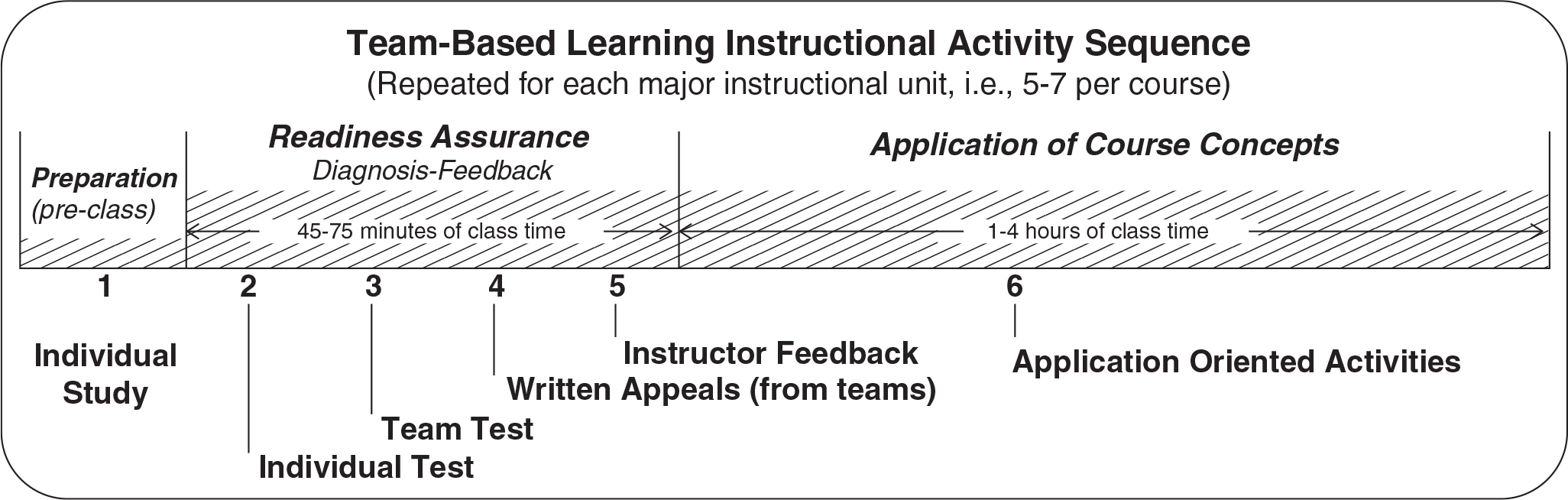
Figure 1 Team-Based Learning Instructional Activity Sequence (Repeated for Each Major Instructional Unit, i.e., 5–7 per course)
Source: The earliest version of Figure 1 originally appeared in Michaelsen, L. K., Knight, A. B., & Fink, L. D. (2004). Team-based learning: A transformative use of small groups in higher education. Sterling, VA: Stylus, p. 41.
The primary learning objective in TBL is to go beyond simply “covering” content and focus on ensuring that students have the opportunity to practice using course concepts to solve problems. Although, some time in the TBL classroom is spent on ensuring that students master the course content, the vast majority of class time is used for team assignments that focus on using course content to solve the kinds of problems that students are likely to face at some point in the future. Figure 1 outlines how time is typically organized in each unit of a TBL course.
In a TBL course, students are strategically organized into groups of five to seven members who work together for at least an entire term. The content is organized into major units (typically five to seven) and TBL courses are “flipped” (i.e., before any in-class content work, students must complete a pre-class study assignment for the unit). The in-class work for each unit begins with the Readiness Assurance Process (RAP). In the RAP, students first take a short individual test and hand in their answer sheets, and next, they immediately retake the exact same test again as a team, coming to consensus on each question, and receive immediate feedback on their team answers. They then have the opportunity to refer to their pre-class study materials and write evidence-based appeals if they feel they can make valid arguments on questions that were marked as being incorrect. The final step in the RAP is a “lecture” (usually very short and always very specific) through which the instructor clarifies any misperceptions that become apparent during the RAP. The remainder (and the vast majority) of the class periods in each learning unit are used for in-class activities and assignments that require students to practice using the course content.
Making the shift from simply familiarizing students with course concepts to requiring that students actually use those concepts to solve problems requires changes in the roles of both instructors and students. The instructor’s primary role shifts from dispensing information to designing and managing the overall instructional process and the students’ role shifts from being passive recipients of information to one of accepting responsibility for the initial exposure to the course content, so that they will be prepared for the in-class teamwork. Changes of this magnitude do not happen automatically and, based on many faculty members’ past experience, may even seem to be dreams rather than achievable realities. They are, however, highly reliable outcomes when the four essential elements of TBL are successfully implemented. These essential elements
...
- Analysis of Higher Education
- Education at a Glance
- Academic Capitalism
- Academic Capitalism, Conceptualizations of
- Academic Mobility and Migration
- Academic Writing
- Africa, Higher Education in
- Analysis of Curriculum and Pedagogies
- Analysis of Global Higher Education
- Australia, Higher Education in
- Bologna Process and European Higher Education Area
- Brazil, Evaluation of Higher Education in
- Canada, Higher Education in
- China, Higher Education in
- China, Higher Education Reform in
- Completion Agenda
- Comprehensive Internationalization of Higher Education Institutions
- Copyright
- Erasmus Mundus
- European Higher Education Area
- European Research Area
- European Union, Higher Education in
- France, Higher Education in
- Germany, Higher Education in
- Global University Rankings
- Higher Education Strategy
- Historical Analysis of Higher Education
- India, Higher Education in
- Institutional Analysis
- Iran, Higher Education in
- Israel, Higher Education in
- Japan, Higher Education in
- Key Performance Indicators
- Latin America, Higher Education in
- Legal Issues
- Middle East: Higher Education in the Arab Countries
- National Center for Education Statistics
- Netherlands, Higher Education in
- New Institutionalism in Higher Education
- New Models of Higher Education
- Nordic Countries, Higher Education in
- Open Access
- Organisation for Economic Co-operation and Development
- Philanthropic Foundations, U.S.
- Public Good of Higher Education
- Public Perceptions of Higher Education
- Research Excellence Framework
- Risk Management
- South African Higher Education Reform
- South Korea, Higher Education in
- Southeast Asia, Higher Education in
- Student Data Systems
- Student Mobility
- UNESCO
- United Kingdom, Higher Education in
- United States, Higher Education in
- University Rankings
- University–Community Partnerships
- USAID
- World Bank
- Appendix: Some Key Organizations Involved With Higher Education
- Academy of Social Sciences
- ACPA—College Student Educators International
- Alliance for Higher Education and Democracy
- American Educational Research Association
- American Psychological Association
- Association for the Study of Higher Education
- Association of Commonwealth Universities
- British Academy
- British Council
- British Sociological Association
- Brookings Institution
- Cara (the Council for At-Risk Academics)
- Consortium of Higher Education Researchers
- EAIR—The European Higher Education Society
- European Educational Research Association
- European Science Foundation
- European University Continuing Education Network
- Feminist and Women’s Studies Association
- Gender and Education Association
- Higher Education Policy Institute
- Higher Education Research Institute
- Institute of International Education
- Leadership Foundation for Higher Education
- Lumina Foundation
- NAFSA: Association of International Educators
- NASPA—Student Affairs Administrators in Higher Education
- National Association of Diversity Officers in Higher Education
- National Student Clearinghouse
- Newton Fund
- Nuffield Foundation
- RAND Corporation
- Royal Institution
- Royal Society
- Society for Research into Higher Education
- State Higher Education Executive Officers Association
- UK Council for Graduate Education
- World Education Research Association
- Curriculum
- Academic Calendar
- Academic Plan
- Arts
- Associate Degrees
- Baccalaureate
- Biology
- Bologna Process: Curriculum
- Botany
- Capstone Projects
- Career Pathways
- Carnegie Foundation for the Advancement of Teaching
- Carnegie Project on the Education Doctorate
- Certificates, Educational
- Co-Curricular Programs
- Creationism
- Credit for Experience
- Curriculum
- Curriculum Versus Disciplines
- Curriculum, History of
- Developmental Education
- Disciplines and Fields of Study
- Distance Education, History of
- Doctoral Degrees
- Dual Enrollment
- Economics
- Education, Study of
- Electives, U.S.
- English Language Training for International Faculty
- English Learners: Transition to Higher Education
- Ethnic Studies, U.S.: Curriculum
- Feminist and Women’s Studies
- Gender Studies
- General Education
- Geosciences
- Graduate Education: Curriculum
- Humanities
- Interdisciplinary Studies
- International Joint and Dual Degrees
- Internships and Co-Ops
- Leaving Certification
- Legal Education, U.S.
- Massive Open Online Courses
- Master’s Degrees
- Medical Education
- Meta-Majors
- Open Educational Resources
- Political Science
- Professional Degrees
- Professional Fields
- Psychosocial Studies
- Small Private Online Courses
- Social Policy and Social Sciences
- Social Work
- Sociology
- STEM
- STEM Ambassadors
- Student Transfer, Curriculum Articulation in
- Textbooks
- Transnational Higher Education
- Undergraduate Degrees
- Vocationalism
- Zoology
- Equity
- Brown v. Board of Education
- Fisher v. University of Texas
- Regents of University of California v. Bakke
- Aboriginal People
- Access and Accountability Outcomes
- Access Policies, U.S.
- Access to Higher Education
- Accommodation
- Affirmative Action
- African Americans in Higher Education
- Americans with Disabilities Act
- Asian American Critical Race Studies
- Asian Americans in Higher Education
- Assimilation and Integration in Higher Education
- Black Feminist Thought
- Black Student Organizations
- Campus Climate, U.S.
- Campus Security, Safety, and Screening
- Caregiver Supports
- Centers Focused on Equity and Inclusion
- China, Higher Education Reform in
- Class Differences and Impact on Student Access and Outcomes
- Clery Act
- Crime Alerts: Racialization
- Critical Race Feminism
- Critical Race Research
- Critical Race Theory
- Critical Whiteness Studies
- Critically Reflective Teaching
- Culturally Relevant Pedagogy
- Culturally Responsive Leadership
- Disability and Ability, U.S.
- Diversity Committees, U.S.
- Diversity Discourses, U.S.
- DREAM Act
- English Learners: Transition to Higher Education
- Environmental Justice
- Equity
- Ethnic Studies, U.S.: Curriculum
- Ethnicity in Higher Education
- Faculty of Color
- Family-Friendly Policies
- Feminism
- Feminist Analysis
- Feminist and Women’s Studies
- Feminist Leadership
- Feminist Policy Analysis
- Feminist Research
- Feminist Teaching
- First-Generation College Students
- Formerly Incarcerated People in Higher Education
- Gender and Leadership
- Gender Equality Policy
- Gender Equality Policy: Austria, Germany, and Switzerland
- Gender Equity
- Gender Equity Policy: Africa
- Gender Equity Policy: New Zealand and Australia
- Gender Equity Policy: United Nations
- Gender Equity Policy: United States
- Gender Expression
- Gender Identity
- Gender in Higher Education
- Gender Studies
- Gender, Influence on Teaching
- Gender: Law Reform and Feminist Politics
- Global University Rankings
- Higher Education and Social Mobility
- Hispanic-Serving Institutions
- Historically Black Colleges and Universities
- Immigration and Higher Education
- Inclusion in Higher Education
- Initiatives to Widen Access and Participation
- Intercultural Competence
- Intercultural Competence Development
- International Faculty
- Intersectionality
- Islamic Critical Theory
- Latina/o Critical Race Theory
- Latinas/os in Higher Education
- Leadership in Support of Equity, Diversity, and Inclusion
- LGBT Centers
- Low-Income Students
- Microaggressions
- Minority Students
- Minority Students in Australia
- Minority Students in Brazil
- Minority Students in the United Kingdom
- Multiculturalism
- Native Americans in Higher Education
- Pacific Islanders in Higher Education, U.S.
- Persons With Disabilities: Personnel
- Persons With Disabilities: Students
- Poverty and Student Access to Higher Education
- Power
- Race in Higher Education
- Race in U.S. Higher Education Leadership
- Race, Influence on Teaching
- Racial Violence and Stress in U.S. Higher Education
- Racism and Decolonizing Higher Education
- Regionalism in Higher Education
- Religion and Spirituality
- Restorative Justice
- Salary Equity, U.S.
- Sexual Harassment and Assault
- Sexual Orientation and Sexuality
- Social Class and Student Experiences
- South African Higher Education Reform
- Title IX
- Title VII
- Transgender People in Higher Education
- Tribal Colleges and Universities
- Underrepresented Populations in U.S. Higher Education, Support for
- Undocumented Students
- Universal Design for Learning
- University Rankings
- Women in STEM
- Women in STEM, U.S.
- Women Leaders: Moving the Needle
- Women’s Centers
- Women’s Colleges and Universities
- Women’s Issues
- Governance
- Academic Boards
- Boards of Trustees, Systems
- Community College Governing Boards
- Department of Education, U.S.
- Faculty Governance
- Faculty Unions
- Governance of Higher Education
- Higher Education Governance Systems
- Higher Education Governance Systems: Middle East
- Higher Education Governing Boards: Oversight and Accountability
- Higher Education Governing Boards: Student Board Members
- Higher Education Institution Governance: Accountability
- Higher Education Institution Governing Boards
- Higher Education Institution Governing Boards and Shared Governance
- Higher Education Institution Governing Boards, Culture of
- Higher Education Institution Governing Boards: Appointed Board Members
- Higher Education Institution Governing Boards: Difference of Role Across Institution Type
- Higher Education Institution Governing Boards: Effective Trustee Governance
- Higher Education Institution Governing Boards: Evaluation of Institutional Risk
- Higher Education Institution Governing Boards: Mission and Vision
- Higher Education Institution Governing Boards: Presidential Appointment Process
- Higher Education Institution Governing Boards: Rogue Members
- Higher Education Institution Governing Boards: Training of Members
- Organizational Operations and Governance
- Private University Governing Boards
- Religiously Affiliated Institutions, U.S.
- Shared Governance
- State-Level Governance, U.S.
- Student Governance
- Student Unions
- Impact
- Access and Accountability Outcomes
- Accommodation
- Admissions
- Alumni Associations
- Class Differences and Impact on Student Access and Outcomes
- Economic Impact of Higher Education
- Effects of College on Students
- Employer Skills Needs
- Human Capital
- Impact of Higher Education
- International Relations and Higher Education
- Labor Market Outcomes
- Learning Outcomes: Typologies
- Neoliberalism and Higher Education
- New Public Management
- Public Understanding of Science
- Student Choice of Higher Education
- Student Debt
- Student Learning Outcomes
- Student Learning Outcomes Assessment
- Town–Gown Relations
- Value for Money
- Institutional Organization
- Academic Culture
- Academic Structure
- Accreditation
- Athletic Administration
- Athletics: Student–Athletes
- Branding of Higher Education Institutions
- Campus Climate, U.S.
- Campus Life, U.S.
- Campus Security, Safety, and Screening
- Class Size
- Clery Act
- Confucius Institutes
- Continuing Education: Organizational Structure
- Cooperative Extension
- Curriculum Versus Disciplines
- Enculturation and Socialization of New Faculty and Staff
- Endowments
- Ethics Review Teams
- Graduate Education: Organization
- Grant Funding
- Higher Education Department Structures: China
- Higher Education Department Structures: Norway
- Higher Education Finance
- Housing and Residential Life
- Institution Type
- Institutional Advancement and Development
- Libraries
- Marketing Higher Education
- Organizational Structure
- Organizational Structure, Models of
- Orientation
- Outreach
- Outsourcing, U.S.
- Performance-Based Funding
- Performance-Based Funding, U.S.
- Professional Bureaucracy
- Protection of Human Subjects
- Publish or Perish
- Quality Assurance and Control
- Research Ethics: Conduct and Misconduct
- Roles and Functions of Universities
- Selectivity of Higher Education Institutions, U.S.
- Social Media
- Student Services
- Student Services, U.S.
- Tertiary Education: Teaching and Learning
- Underrepresented Populations in U.S. Higher Education, Support for
- University Presses
- Workforce Development
- Leadership
- Academic Administration, U.S.
- Academic Leadership
- Administrative Leadership
- Ambiguity of Leadership
- Chair Leadership
- Chief Executive Leadership Competencies, U.S.
- Collaborative Leadership
- Community Colleges, Leadership of
- Conflict in Organizations
- Dean Leadership
- Decision-Making
- Distributed Leadership
- Enhancing Leadership Learning
- Ethics and Leadership
- Faculty Leadership
- Followership
- Gender and Leadership
- Grassroots Leadership
- Individual Leaders
- Intellectual Leadership
- Leadership and Change
- Leadership Development, U.S.
- Leadership in Higher Education
- Leadership in Support of Equity, Diversity, and Inclusion
- Leadership Research, Periods of
- Leadership Roles
- Leadership Style
- Leadership Theory Over Time
- Leadership Versus Management
- Leadership, Management, and Governance
- Leading From the Middle
- Leading in Cross-Cultural Contexts
- Liberal Arts Colleges, Leadership of
- Organizational Communication
- Participatory Leadership
- Race in U.S. Higher Education Leadership
- Research Universities, Leadership of
- Servant Leadership
- Social Construction and Leadership
- Special Mission Colleges, Leadership of
- Team Leadership
- Transformational Leadership
- Universities, Leadership of
- Personnel
- Academic Administration, U.S.
- Academic Freedom
- Academic Mobility and Migration
- Academic Profession
- Academic Staff
- Academic Workforce and Precarity
- Administrative and Support Staff Unions, U.S.
- Chief Executive Leadership Competencies, U.S.
- Collegiality
- Conferences
- Contingent Faculty
- Enculturation and Socialization of New Faculty and Staff
- Faculty of Color
- Faculty Unions
- Faculty, Rights and Responsibilities of
- Fulbright Program
- Graduate Student Unions
- Higher Education Institution Personnel: Administrative Staff
- Higher Education Institution Personnel: Faculty Evaluation, U.S.
- Human Resources Policies in Higher Education
- International Faculty
- Mental Health Personnel
- Mentoring
- New Faculty
- Nobel Prizes
- Personnel Policies
- Professionalization
- Professoriate
- Public Intellectual
- Residential Education Staff
- Retirement and Link to Emeritus/a Status
- Salary Equity, U.S.
- Staff Development
- Talent Development
- Tenure, Rank, and Promotion
- Threats to Scholars
- University and Academic Administration, UK
- Policy
- Browne Report (2010, England)
- Campaign for the Public University, UK
- Common Core State Standards
- Dearing Report (1997, UK)
- Hazing: Abusive Initiations
- Higher Education Funding: Policies
- Human Resources Policies in Higher Education
- Institutional Research
- Institutional Research Data Systems
- Key Institutional Policies
- Key State Policies
- Performance-Based Funding
- Performance-Based Funding, U.S.
- Policy and Policy Processes in Higher Education
- Public Funding for Higher Education
- Research Policy
- Robbins Report (1963, Great Britain)
- State Articulation Agreements, U.S.
- State Funding for Higher Education, U.S.
- Tuition
- Tuition Discounting, U.S.
- United Nations Sustainable Development Goals
- Workplace Bullying
- Students
- Athletics: Student–Athletes
- Civic Engagement
- College Choice
- Doctoral Student Socialization
- Effects of College on Students
- First-Generation College Students
- First-Year Experience
- Fraternity and Sorority Life
- Graduate Student Socialization
- Graduate Student Unions
- Helicopter Parenting
- Intercollegiate Athletics in Higher Education
- Intercollegiate Athletics: Impacts on Student–Athletes
- International Student Mobility Programs
- Internationalization and International Students
- Mature Students, Women as
- Mentoring
- Minority Students
- Minority Students in Australia
- Minority Students in Brazil
- Minority Students in the United Kingdom
- Parent Involvement in Postsecondary Choices and Higher Education Experience
- Second-Year Experience
- Sponsored International Students
- Student Activism and Organizations
- Student Development Theory
- Student Engagement
- Student Experience Surveys, UK
- Student Governance
- Student Government
- Student Life and Activities
- Student Mobility
- Student Movements: Latin America
- Student Organizations: Africa
- Student Organizations: Europe
- Student Power
- Student Retention, U.S.
- Student Union Facilities
- Student Unions
- Student Well-Being
- Student–Athletes
- Students
- System Design
- American Educational Research Association
- Assessment of Higher Education Learning Outcomes Feasibility Study
- Association for the Study of Higher Education
- British Sociological Association
- Budgeting Processes in Higher Education Institutions
- Carnegie Classification
- Community Colleges
- EAIR—The European Higher Education Society
- Elite Universities
- English as Language of Teaching and Research
- Enrollment Targets and Management
- European Educational Research Association
- Faith-Based Institutions
- Feminist and Women’s Studies Association
- For-Profit Colleges and Universities
- Fundraising and Friendraising
- Further Education Colleges: UK and Ireland
- Further Education: Germany
- Further Education: Organizational Structure
- Further Education: United Kingdom
- Gender and Education Association
- GI Bill
- Globalization
- Group of Eight
- Growth of Higher Education Systems
- Higher Education Authority: Ireland
- Higher Education Institutions, Mergers of
- Hispanic-Serving Institutions
- Historically Black Colleges and Universities
- Institution Type
- International Branch Campuses
- Internationalization and International Students
- Internationalization at Home
- Internationalization of Higher Education
- Internationalization of Higher Education: Impacts
- Ivy League
- Land-Grant Colleges and Universities
- Liberal Arts Colleges
- Liberal Arts Colleges, Organization of
- Lisbon Treaty
- Master Plan
- Medieval Universities
- Minister of Basic Education and Minister of Higher Education and Training: South Africa
- Ministerial Systems of Higher Education: Brazil
- Modern Universities, UK
- NAFSA: Association of International Educators
- NASPA—Student Affairs Administrators in Higher Education
- National Association of Diversity Officers in Higher Education
- Privatization
- Professional and Research Associations
- Projects 211 and 985
- Public Versus Private Higher Education Institutions
- Religiously Affiliated Institutions, U.S.
- Responsibility Centered Budgeting
- Rural Settings, Higher Education in
- Russell Group
- Secretary of State for Education, UK
- Society for Research into Higher Education
- State and National Higher Education Coordinating Boards, U.S.
- State Higher Education Executive Officers Association
- Student Retention, U.S.
- Technical and Further Education: Australia
- Technical Institutes
- Technological Universities, UK
- Tribal Colleges and Universities
- UN Convention on the Elimination of All Forms of Discrimination against Women
- UN Conventions on Human Rights and Children’s Rights
- Urban Settings, Higher Education in
- Wisconsin Idea
- Women’s Colleges and Universities
- Teaching and Learning
- Active Learning
- Adaptive Learning Modules
- Adult Basic Education
- Adult Learners
- Adult Learning Theories
- Assessment
- Assessment of Learning
- Authentic Learning
- Badges
- Carnegie Foundation for the Advancement of Teaching
- Classroom Civility and Incivility
- Classroom Observation of Teaching
- Classroom Practices
- Cognitive Dissonance
- Collaborative Learning
- Collaborative Learning Strategies
- Competency-Based Education
- Cooperative Learning
- Copyright
- Course Design
- Critically Reflective Teaching
- Culturally Relevant Pedagogy
- Democratic and Co-Constructed Classes
- Didacticism
- Disciplinary Differences in Teaching
- Education Abroad
- Education Abroad, U.S.
- Educational Technology
- Educational Technology Tools
- Emotions in Learning
- Experiential Learning
- Faculty Development
- Hybrid Instruction
- Integrated Learning
- Intercultural Competence Development
- International Joint and Dual Degrees
- Laboratory Instruction
- Learning Organizations
- Learning Outcomes: Typologies
- Learning Spaces
- Learning Theories
- Lecture Method
- Liberal Arts: Teaching and Learning
- Liberal Education
- Liberal Education and America’s Promise
- Lifelong Learning
- Noncognitive Assessment
- Online Education
- Online Education: Teaching and Assessment
- Osher Lifelong Learning Institutes
- Plagiarism
- Problem-Based Learning
- Problem-Based Learning: Use in Engineering Disciplines
- Scholarship of Teaching and Learning
- Self-Directed Learning
- Service Learning
- Socratic Method
- Student Learning Outcomes
- Student Learning Outcomes Assessment
- Student Motivation
- Student-Centered Learning
- Teaching Academically Diverse Students
- Teaching and Learning Centers
- Teaching and Learning, U.S.: Organization
- Teaching Approaches
- Teaching Critical Thinking
- Teaching Ethics
- Teaching Excellence Framework
- Teaching in U.S. Higher Education
- Teaching Online, Strategies for
- Teaching Perspectives
- Teaching Portfolios
- Teaching Strategies
- Teaching Students With Disabilities
- Teaching That Empowers Students
- Team-Based Learning
- Tertiary Education: Teaching and Learning
- Testing and Grading
- Transformative Learning Theory
- Undergraduate Research
- University Extension Courses
- University of the Third Age, UK
- Virtual Learning Environments
- Loading...
Get a 30 day FREE TRIAL
-
 Watch videos from a variety of sources bringing classroom topics to life
 -
Read modern, diverse business cases
-
Explore hundreds of books and reference titles

Read next

More like this
Sage Recommends
We found other relevant content for you on other Sage platforms.
Have you created a personal profile? Login or create a profile so that you can save clips, playlists and searches