
Entry
Entries A-Z
Burr, Aaron
Aaron Burr (1756–1836) served as vice president during Thomas Jefferson’s first term, from 1801 to 1805. He was the first vice president who was not eventually elected president in his own right. Burr was one of the most colorful and complex political figures of his era. While vice president he killed Alexander Hamilton in a duel and began to develop a treasonous plot to create a vast empire in western North America.
Burr graduated with honors from Princeton University in 1772. He began studying law but joined the continental army in 1775 after receiving a commission. He served until 1779, rising to the rank of lieutenant colonel.
Burr was admitted to the bar in 1782. After practicing law in New York City, he was elected to the New York legislature in 1784 as a Democratic-Republican. He was appointed the state’s attorney general in 1789, and two years later he was elected to the U.S. Senate. Burr served in the Senate until 1797. His reputation for political intrigue and romantic affairs made him a controversial figure, but his intelligence, charm, and service to the Democratic-Republicans led to his nomination for vice president by that party in 1800.
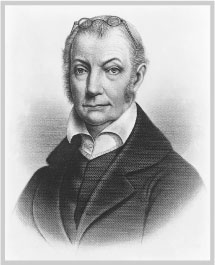
Library of Congress
Under the electoral procedure in effect through the 1800 election, the candidate who received the second highest number of electoral votes for president became vice president. Each elector voted for two candidates, with no distinction made between a vote for president and a vote for vice president. Although the parties named presidential and vice-presidential candidates, nothing prevented a vice-presidential candidate from being elected president if he received more electoral votes than his presidential running mate.

In the election of 1800 this voting procedure resulted in a tie between the Democratic-Republican Party’s presidential candidate, Thomas Jefferson, and his vice-presidential running mate, Burr. Both men received seventy-three electoral votes, and the ambitious Burr refused to concede the election. The responsibility for selecting a president then fell to the House of Representatives, where the Federalist Party had a majority. After a week and thirty-six ballots, the weary representatives elected Jefferson president. (The confusion of the 1800 election led to the Twelfth Amendment to the Constitution, ratified in 1804, which separated the voting for president and vice president.)
Because of Alexander Hamilton’s reputation as one of the most important framers of the U.S. Constitution and the unusual circumstance of a vice president killing a man while in office, Burr will always be remembered as the man who shot Hamilton in a duel on July 11, 1804, at Weehawken, New Jersey. Burr had challenged Hamilton for making negative remarks about him during the 1804 New York gubernatorial campaign, which Burr lost to Hamilton’s candidate. After mortally wounding Hamilton, Burr fled south to avoid the warrants that had been issued for his arrest in New York and New Jersey. Because federal law did not yet provide for the extradition of wanted criminals from the District of Columbia, Burr returned to the capital. Incredibly, he resumed his duties as presiding officer of the Senate as if nothing had happened.
...
Get a 30 day FREE TRIAL
-
 Watch videos from a variety of sources bringing classroom topics to life
 -
Read modern, diverse business cases
-
Explore hundreds of books and reference titles

Read next

More like this
Sage Recommends
We found other relevant content for you on other Sage platforms.
Have you created a personal profile? Login or create a profile so that you can save clips, playlists and searches