
Entry
Reader's guide
Entries A-Z
Subject index
Anarchism
Anarchism is a theory of human governance that rejects any coercive form of central authority and offers a view of the future based on the voluntary cooperation between free individuals and groups forming the backbone of the social order. External authority—laws, government, police, church, and so forth—would be eliminated as they would be unnecessary; crime would not exist, and, should an offense occur, psychological methods of discipline such as shaming, for example, would suffice. Anarchists have divergent views on the level of community cooperation, ranging from individualism to mutualism and from syndicalism to communism, and on how these ideals can be achieved. Known tactics of anarchism range between the extremes of terrorism and pacifism.
Although anarchists have developed various methods of accomplishing social change since the French philosopher Pierre-Joseph Proudhon (1809–1865) first introduced the term in 1840, the mass media and the general public continue to present and perceive anarchists as unruly, usually angry, individuals hiding a knife, a pistol, or a bomb awaiting the moment for violent action.
“Propaganda by Deed”
Anarchism was a product of the miserable social, economic, and political conditions of working people in the 19th century. Industrial development and significantly greater mobility brought rapid urban growth and the expansion of the gap in wealth and geography between social classes. Where working and living conditions were intolerable and hunger claimed many lives, anarchist ideas found adherents.
Anarchism was the first revolutionary movement in history that not only criticized authority but also agitated for immediate and radical social change. Anarchists, however, are stymied by their very concept of social relations—organizing is anathema. Thus, with a theoretical prohibition against large group action, Russian anarchist Mikhail Bakunin (1814–1876) made the proposal for “propaganda by deed,” the most extreme method of struggle. He thought that individuals or small groups of people should kill those who represented an existing social order, causing such dread and horror that the masses would spontaneously revolt and overthrow the state itself. Similarly, German radical thinker Karl Heinzen theorized in an 1848 essay called “Der Mord” (“Murder”) that all forms of violence (including not only murder but suicide) are both justified and necessary in revolutionary struggles.
Bakunin's ideas found many followers. During the last quarter of the 19th century and before the outbreak of World War I, an epidemic of terrorist attacks spread from Europe all over the world; the attacks included the attempted assassination of German emperor Wilhelm I in 1878; the attempt on the life of the German princess in 1883; the assassinations of General Martinez Campos in Barcelona, Spain, in 1892, of President Sari Carnot of France in 1894, of the Empress Elizabeth of Austria-Hungary in 1898, of King Humbert I of Italy in 1900, of U.S. president William McKinley in 1901, and of Prime Minister Canalejas y Mendez of Spain in 1912.
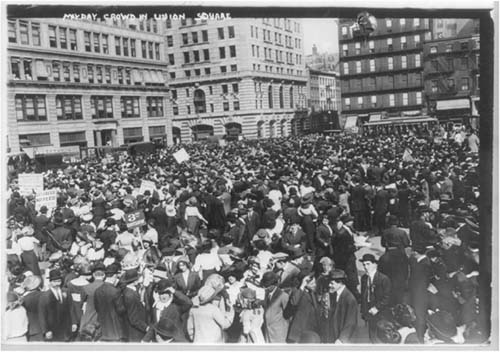
Anarchists demonstrate in Chicago on May Day, 1887.
To fulfill their wish to have the state wither away, some devoted anarchists began to attack institutions and organizations that represented the “false” values of bourgeois society. In 1882, a bomb exploded in a popular music hall in Lyons, France; in 1886 Charles Gallo threw a bottle of vitriol and fired a revolver into the crowd of brokers in the Paris stock exchange. Auguste Vaillante detonated a bomb in the Chamber of Deputies in Paris in 1893 (no one was killed); Vaillante was sentenced to death and executed. A year later, Emile Henry, in an act of retaliation for the execution of Vaillante, deposited a bomb in the Café Terminus, where shopkeepers, clerks, and even some workers were drinking and listening to a band. Twenty people were wounded, one of whom later died. The majority of anarchists condemned terrorist actions that would cause damage and death to so many people, but such uncompromising individuals as Henry would explain their position by their total disdain of the lives of the bourgeoisie.
...
- Abu Nidal Organization
- Agricultural Terrorist Activities
- Al Fatah
- Al Qaeda
- United States v. Usama Bin Laden et al. Indictment
- United States v. Zacarias Moussaoui Indictment
- Abullah, Abdullah Ahmed
- Aden-Abyan Islamic Army
- Al Qaeda
- Al-'Owhali, Mohamed Rashed
- Al-Adel, Saif
- Al-Liby, Anas
- Al-Mughassil, Ahmad Ibrahim
- Al-Nasser, Abdelkarim Hussein Mohamed
- Al-Yacoub, Ibrahim Salih Mohammed
- Al-Zawahiri, Ayman
- Ali, Ahmed Mohamed Hamed
- Atef, Muhammad
- Atta, Mohamed
- Atwah, Muhsin Musa Matwalli
- Bin Laden, Osama
- East African Embassy Bombings
- El-Hage, Wadih
- Fadhil, Mustafa Mohamed
- Fatwa
- Financing Terrorism
- Ghailani, Ahmed Khalfan
- Jihad
- Militant Islam
- Mohamed, Khalfan Khamis
- Mohammed, Fazul Abdullah
- Mohammed, Khalid Shaikh
- Moussaoui, Zacarias
- Msalam, Fahid Mohammed Ally
- Odeh, Mohamed Sadeek
- Reid, Richard
- September 11 Attacks
- Swedan, Sheikah Ahmed Salim
- Taliban
- Transnational Terrorism
- U.S.S. Cole Bombing
- War on Terrorism
- Yousef, Ramzi Ahmed
- Zubaydah, Abu
- Animal Rights Terrorist Activities
- Antiabortion Terrorist Activities
- Biological Terrorist Activities
- Bombings
- 15 May Organization
- Air India Flight 182 Bombing
- Birmingham Pub Bombings
- Bombings and Bomb Scares
- Canary Wharf Bombing
- Centennial Park Bombing
- Copeland, David
- East African Embassy Bombings
- FALN
- Fraunces Tavern Bombing
- Grand Central Station Bombing
- Khobar Towers Bombing
- King David Hotel Bombing
- La Belle Discotheque Bombing
- La Guardia Airport Bombing
- Metesky, George
- Oklahoma City Bombing
- Omagh Bombing
- Pan Am Flight 103 Bombing
- Puerto Rican Nationalist Terrorism
- Revolutionary People's Struggle
- Riyadh Saudi Arabia Bombing
- Sixteenth Street Baptist Church Bombing
- Statue of Liberty Bombing
- Subway Suicide Bombing Plot
- Tripoli and Benghazi Bombing
- U.S. Embassy Bombing, Beirut
- U.S. Marine Barracks Bombing, Beirut
- U.S.O. Club Bombing
- U.S.S. Cole Bombing
- Unabomber
- Wall Street Bombing
- World Trade Center Bombing (1993)
- Chemical Terrorist Activities
- Embassy Bombing in Beirut, Lebanon, April 1983
- Embassy Bombings in Dar Es Salaam, Tanzania, and Nairobi, Kenya, August 1998
- Environmental Terrorist Activities
- Government Responses to Terrorism
- United States v. Usama bin Laden et al. Indictment (United States)
- United States v. Zacarias Moussaoui Indictment (United States)
- Bureau of Alcohol, Tobacco and Firearms (United States)
- Central Intelligence Agency (United States)
- Counterterrorism
- Delta Force (United States)
- Department of Justice, U.S. (United States)
- Federal Bureau of Investigation (United States)
- Federal Emergency Management Agency (United States)
- FPCON Levels (United States)
- Grenzschutzgruppe 9 (Germany)
- Homeland Security, Office of (United States)
- Mossad (Israel)
- National Security Agency (United States)
- National Security Council (United States)
- Operation Eagle Claw (United States)
- Patriot Act (United States)
- Rewards for Justice (United States)
- Sayeret Matkal (Israel)
- SEAL Team Six (United States)
- Special Air Service Regiment (Great Britain and Australia)
- Special Operations Wing (United States)
- United Nations
- War on Terrorism (United States)
- Wrath of God (Israel)
- Hamas
- Hezbollah
- Hijackings
- Achille Lauro Hijacking
- Abu Nidal Organization
- Hezbollah
- Hijacking
- Palestine Liberation Front–Abu Abbas Faction
- Palestine Liberation Organization
- Pan Am Flight 73 Hijacking
- Popular Front for the Liberation of Palestine
- Stockholm Syndrome
- TWA Flight 355 Hijacking
- TWA Flight 840 Hijacking
- TWA Flight 847 Hijacking
- Hostage Taking/Kidnappings
- Jihad: Concept of Jihad
- Groups
- Khobar Towers Bombing in Dhahran, Saudi Arabia, June 1996
- Lebanon Hostage Crisis
- Marine Barracks Bombing in Beirut, Lebanon, October 1983
- Members of Terrorist Groups, Freelance Terrorists, and Terrorist Supporters
- Abbas, Muhammed “Abu”
- Al-'Owhali, Mohamed Rashed
- Al-Adel, Saif
- Al-Banna, Sabri
- Al-Liby, Anas
- Al-Mughassil, Ahmad Ibrahim
- Al-Nasser, Abdelkarim Hussein Mohamed
- Al-Yacoub, Ibrahim Salih Mohammed
- Al-Zawahiri, Ayman
- Ali, Ahmed Mohamed Hamed
- Arafat, Yasir
- Arocena, Eduardo
- Asahara, Shoko
- Atef, Muhammad
- Atta, Mohamed
- Atwa, Ali
- Atwah Muhsin Musa Matwalli
- Ayyash, Yahya
- Baader, Andreas
- Berenson, Lori
- Bin Laden, Osama
- Boudin, Katherine
- Chesimard, Joanne
- Copeland, David
- Coronado, Rodney
- Dohrn, Bernardine
- El-Hage, Wadih
- El-Hoorie, Ali Saed bin Ali
- Ellerman, Josh
- Ellison, James
- Fadhil, Mustafa Mohamed
- Fadlallah, Sheikh Muhammad Hussein
- Ghailani, Ahmed Khalfan
- Goldstein, Baruch
- Griffin, Michael
- Guevara, Ernesto (Che)
- Guzmán, Abimael
- Habash, George
- Hawetmeh, Najib
- Hearst, Patty
- Hill, Paul
- Hussein, Saddam
- Izz-al-Din, Hasan
- Jibril, Ahmed
- Kahane, Meir
- Kasi, Mir Aimal
- Khaled, Leila
- Kikumura, Yu
- Marighella, Carlos
- Marzook, Musa (Mousa) Mohammed Abu
- Mathews, Robert Jay
- McVeigh, Timothy
- Meinhof, Ulrike
- Metesky, George
- Miller, Frazier Glenn
- Mohamed, Khalfan Khamis
- Mohammed, Fazul Abdullah
- Mohammed, Khalid Shaikh
- Moussaoui, Zacarias
- Msalam, Fahid Mohammed Ally
- Mughniyah, Imad Fayez
- Nasrallah, Sheik Hassan
- Nichols, Terry Lynn
- Nosair, El Sayyid
- Ocalan, Abdullah
- Odeh, Mohamed Sadeek
- Qaddafi, Muammar el-
- Rahman, Omar Abdel
- Rajneesh, Bhagwan Shree
- Reid, Richard
- Ressam, Ahmed
- Rudolph, Eric
- Sánchez, Ilich Ramírez (Carlos the Jackal)
- Scutari, Richard
- Shallah, Ramadan Abdullah
- Shigenobu, Fusako
- Snell, Richard Wayne
- Swedan, Sheikah Ahmed Salim
- Unabomber
- Yasin, Abdul Rahman
- Younis, Fawaz
- Yousef, Ramzi Ahmed
- Zubaydah, Abu
- Methods Used by Terrorists
- Nationalistic and Religious Terrorist Groups
- Central America
- East Asia and Southeast Asia
- Europe
- Baader-Meinhof Gang (West Germany)
- Basque Fatherland and Liberty (Basque region of Spain)
- Basque Separatists (Basque region of Spain)
- First of October Antifascist Resistance Group (Spain)
- German Red Army Faction (Germany)
- Islamic Army for the Liberation of Holy Places
- Kosovo Liberation Army (Kosovo)
- National Liberation Front of Corsica (Corsica)
- Ordine Nuovo (Italy)
- Red Brigades (Brigades Rosse) (Italy)
- Revolutionary Organization 17 November (Greece)
- Revolutionary People's Struggle (Greece)
- Middle East, Central Asia, and South Asia
- 15 May Organization (Palestine, Iraq)
- Abu Nidal Organization (Iraq, Syria, Libya)
- Aden Abyan Islamic Army (Yemen)
- Al 'Asifa (Palestine)
- Al Aqsa Martyrs Brigades (Palestine)
- Al Fatah (Palestine)
- Al Qaeda (Afghanistan, Saudi Arabia, other Middle Eastern countries; North and South America; Europe; Philippines)
- Armenian Secret Army for the Liberation of Armenia (Turkey)
- Democratic Front for the Liberation of Palestine (Palestine)
- Force 17 (Palestine)
- Great Eastern Islamic Raiders' Front (Turkey)
- Grey Wolves (Turkey)
- Hamas (Palestine)
- Harakat ul-Mujahidin (India-Pakistan)
- Hezbollah (Lebanon)
- Hizb-ul-Mujahideen (India-Pakistan)
- Irgun Zvai Leumi (Israel)
- Islamic Movement of Uzbekistan (Uzbekistan)
- Jaish-e-Mohammed (Pakistan)
- Kahane Chai (Israel)
- Kurdistan Workers Party (Turkey)
- Lashkar-e-Tayyiba (India-Pakistan)
- Liberation Tigers of Tamil Eelam (Sri Lanka)
- Mujahedin-e-Khalq Organization (Iran)
- Mujahideen (Afghanistan)
- Palestine Liberation Front–Abu Abbas Faction (Lebanon, Tunisia, Iraq)
- Palestine Liberation Organization (Palestine)
- Palestinian Islamic Jihad (Palestine, Syria)
- Popular Front for the Liberation of Palestine (Palestine)
- Popular Front for the Liberation of Palestine–General Command (Palestine)
- Revolutionary People's Liberation Front (Turkey)
- Sikh Terrorism (India)
- Stern Gang (Israel)
- Taliban (Afghanistan)
- Turkish Hezbollah (Turkey)
- Wrath of God (Israel)
- North America and West Indies
- Black Panther Party (United States)
- El Rukns (United States)
- FALN (Puerto Rico, United States)
- Hanafi Muslim Movement (United States)
- Jamaat ul-Fuqra (United States, Kashmir, Pakistan)
- Jewish Terrorist Groups in the United States (United States)
- Macheteros (Puerto Rico)
- May 19 Communist Organization (United States)
- Omega 7 (Cuba)
- Puerto Rican Nationalist Terrorism (Puerto Rico)
- Symbionese Liberation Army (United States)
- United Freedom Front (United States)
- Weatherman (United States)
- South America
- Lautaro Youth Movement (Chile)
- Manuel Rodriquez Patriotic Front (Chile)
- Movement of the Revolutionary Left (Chile)
- National Liberation Army (Bolivia)
- National Liberation Army (Colombia)
- People's Liberation Army (Colombia)
- Revolutionary Armed Forces of Colombia (Colombia)
- Shining Path (Peru)
- Tupac Amaru Revolutionary Movement (Peru)
- Tupac Katari Guerrilla Army (Bolivia)
- United Self-Defense Forces of Colombia (Colombia)
- United Kingdom
- Al Muhajiroun (United Kingdom)
- Continuity Irish Republican Army (Northern Ireland)
- Irish National Liberation Army (Northern Ireland)
- Irish Republican Army (Northern Ireland)
- Loyalist Volunteer Force (Northern Ireland)
- Orange Volunteers (Northern Ireland)
- Real Irish Republican Army (Northern Ireland)
- Red Hand Defenders (Northern Ireland)
- Ulster Defense Association (Northern Ireland)
- Ulster Freedom Fighters (Northern Ireland)
- Ulster Volunteer Force (Northern Ireland)
- Oklahoma City Federal Building Bombing, April 1995
- Palestine Liberation Front–Abu Abbas Faction
- Right-Wing Militia Movements
- September 11, 2001, Attacks
- Terrorism and the Media
- Theoretical Perspectives on Terrorism
- Anarchism
- April 19
- Asymmetrical Warfare
- Bakunin, Michael
- Fatwa
- Financing Terrorism
- Freedom Fighters
- Freelance Terrorism
- Jihad
- Kropotkin, Peter
- Leaderless Resistance
- Militant Islam
- Persian Gulf War
- State Terrorism
- State-Sponsored Terrorism
- Stockholm Syndrome
- Suicide Bombers
- Terrorism, Definition and History of
- Transnational Terrorism
- United Nations
- War on Terrorism
- White Supremacist Terrorist Activities in the United States
- The Turner Diaries
- Aryan Nations
- Aryan Republican Army
- Covenant, the Sword, and the Arm of the Lord
- Ellison, James
- Fort Smith, Arkansas, Trial
- Ku Klux Klan
- Mathews, Robert Jay
- Miller, Frazier Glenn
- Scutari, Richard
- Sixteenth Street Baptist Church Bombing
- Skinheads
- Snell, Richard Wayne
- The Order
- White Patriot Party
- White Supremacy
- World Trade Center Bombing, February 1993
- Loading...
Get a 30 day FREE TRIAL
-
 Watch videos from a variety of sources bringing classroom topics to life
 -
Read modern, diverse business cases
-
Explore hundreds of books and reference titles

Read next

More like this
Sage Recommends
We found other relevant content for you on other Sage platforms.
Have you created a personal profile? Login or create a profile so that you can save clips, playlists and searches