
Entry
Reader's guide
Entries A-Z
Subject index
Wisconsin
Wisconsin, ranked 23rd in land area, has a population of approximately 5.6 million distributed over 72 counties, 190 cities, 402 villages, and 14 Native American tribal communities. Despite the commonly held perception that the state is predominantly rural, over 68 percent of the residents live in urban/suburban areas, with over one-third in the Greater Milwaukee area. Social networks at the state, county, city, and local level have formed based on their historical development, religious and cultural ancestry, and the economic and recreational opportunities afforded by the physical characteristics of the land. The majority (89.7 percent) of state residents identify themselves as Caucasian, followed by African American (6.1 percent), Asian (2 percent), and Native American (1 percent). Wisconsin social interaction, both physical and virtual, takes place during family and community events, in the rural or urban workplace, at church, during educational pursuits, at cultural festivals, and in support of the many national, collegiate, and local sports teams.
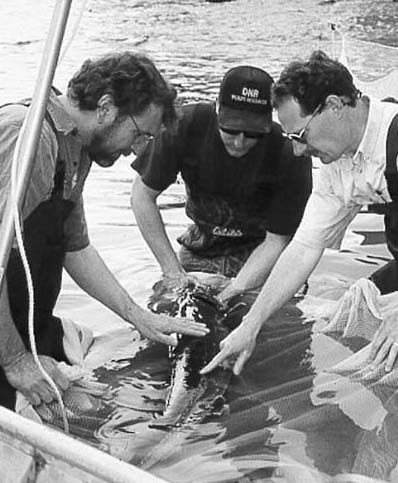
Because Wisconsin's fishing networks are so vital to the local economy, biologists work to manage lake fish such as sturgeon.
Ethnicity and Culture
Social networks based on cultural ancestry are very prevalent in Wisconsin. Over 85 percent of Wisconsin residents can trace their heritage to northern Europe. European immigrants from Germany began arriving in Wisconsin around 1850. They originally settled in areas with similar characteristics to their homeland, establishing communities based on both agriculture and industry. They have formed social networks based on their religion, family-based interaction, and cultural heritage events. In Milwaukee, these early immigrants played a major part in developing the brewing industry and introduced taverns and beer gardens not only for refreshment but also as community meeting places. This tradition of social gathering continues, as over 42 percent of state residents in 69 counties identified their ancestry as German in 2008. Germanfest and Oktoberfest are major annual festivals held in Milwaukee and several other counties to celebrate German music, food, and drink. Religious social networks have also formed within both the Roman Catholic and Lutheran churches. Membership of the Wisconsin Evangelical Lutheran Synod, whose close-knit congregation observes a strictly traditional religious belief, provides another religious network.
Eleven Native American tribes in Wisconsin have established communities within the state. They have preserved many aspects of their traditional way of life and community tribal networks, often using technology to relay information and promote their businesses through their Websites. Since casino gaming took off in the early 1980s, most tribes have established at least one casino on their reservation, creating opportunities for new social connections with visitors who provide revenue for tribal services and businesses.
In keeping with the “Wisconsin idea” established at the turn of the century by the Progressive movement in politics, an all-encompassing state educational system provides many opportunities for social networks to be formed. The Free High School Law of 1875 initiated a system of free public education administered at the state level by the Department of Public Instruction, while boards supervise local districts. The University of Wisconsin system has 26 campuses and enrolls 178,000 students, of whom approximately 75 percent are residents of the state or neighboring Minnesota. In addition, there are extensive networks of educational outreach. Each year 120,000 people participate in continuing education programs, which include media presentations from Wisconsin public radio and public television stations. The nonprofit Wisconsin Cultural Coalition has formed an active online http://community-PortalWisconsin.org—in partnership with state educational, cultural, historical, and literary organizations in support of history, culture, arts, and humanities. In addition, long-established private schools, including Marquette University and Beloit College, have their own networks of student, faculty, and alumni. Northland College in Ashland specializes in providing liberal arts with an environmental focus, drawing students and faculty to its unique mission.
...
- History of Social Networking
- American Revolutionary War
- Ancient China
- Ancient Egypt
- Ancient Greece
- Ancient India
- Ancient Rome
- Civil War, U.S.
- Colonial America
- Earliest Civilizations
- History of Social Networks 1865–1899
- History of Social Networks 1900–1929
- History of Social Networks 1930–1940
- History of Social Networks 1941–1945
- History of Social Networks 1946–1959
- History of Social Networks 1960–1975
- History of Social Networks 1976–1999
- History of Social Networks 2000–Present
- Industrial Revolution
- Internet History and Networks
- Middle Ages
- Native Americans
- Renaissance
- World-Systems Networks
- Local U.S. Social Networks by State
- Alabama
- Alaska
- Arizona
- Arkansas
- California
- Colorado
- Connecticut
- Delaware
- District of Columbia
- Florida
- Georgia (State)
- Hawaii
- Idaho
- Illinois
- Indiana
- Iowa
- Kansas
- Kentucky
- Louisiana
- Maine
- Maryland
- Massachusetts
- Michigan
- Minnesota
- Mississippi
- Missouri
- Montana
- Nebraska
- Nevada
- New Hampshire
- New Jersey
- New Mexico
- New York
- North Carolina
- North Dakota
- Ohio
- Oklahoma
- Oregon
- Pennsylvania
- Rhode Island
- South Carolina
- South Dakota
- Tennessee
- Texas
- Utah
- Vermont
- Virginia
- Washington
- West Virginia
- Wisconsin
- Wyoming
- Privacy and Rights in Social Networks
- Social Network Analysis and Issues
- Affiliation Networks
- Agent-Based Models
- Bipartite networks
- Blockmodeling
- Cohesion Networks
- Complexity
- Cooperation/Coordination
- Dating
- Egocentric Networks
- Embeddedness
- Exchange Networks
- Exponential Randon Graph Models (ERGM/p*)
- Graph Theory
- Homophily
- Longitudinal Networks
- Multiplexed Networks
- Network Analysis Software
- Network Evolution
- Network Indicators
- Network Simulations
- Network Theory
- Network Visualization
- Paths/Walks/Cycles
- Pornography Networks
- Power Law Networks
- Preferential Attachment
- Prominence
- Proximity/Space
- Q-Analysis
- Random Graph Models
- Reciprocity
- Self-Organizing Networks
- Semantic Networks
- Small World
- Social Capital
- Social Influence
- Social Support
- Stalking
- Structural Equivalence
- Structural Holes
- Structural Theory
- Tie Length
- Tie Strength
- Tie Utility
- Tipping Point
- Triads
- Trust and Networks
- Two-Mode Networks
- Word Networks
- Social Networking around the World
- Afghanistan
- Algeria
- Angola
- Argentina
- Armenia
- Australia
- Austria
- Azerbaijan
- Bangladesh
- Belarus
- Belgium
- Benin
- Bolivia
- Brazil
- Bulgaria
- Burkina Faso
- Burundi
- Côte d'Ivoire
- Cambodia
- Cameroon
- Canada
- Central African Republic
- Chad, Republic of
- Chile
- China
- Colombia
- Congo, Democratic Republic of the
- Costa Rica
- Croatia
- Cuba
- Czech Republic
- Denmark
- Dominican Republic
- Ecuador
- Egypt
- El Salvador
- Eritrea
- Estonia
- Ethiopia
- Finland
- France
- Georgia (Country)
- Germany
- Ghana
- Greece
- Guatemala
- Guinea
- Haiti
- Honduras
- Hungary
- India
- Indonesia
- Iran
- Iraq
- Ireland
- Israel
- Italy
- Japan
- Jordan
- Kazakhstan
- Kenya
- Kurdistan
- Kyrgyzstan
- Laos
- Latvia
- Libya
- Lithuania
- Malawi
- Malaysia
- Mali
- Mexico
- Morocco
- Mozambique
- Myanmar
- Nepal
- Netherlands
- New Zealand
- Nicaragua
- Niger
- Nigeria
- North Korea
- Norway
- Pakistan
- Papua New Guinea
- Paraguay
- Peru
- Philippines
- Poland
- Portugal
- Romania
- Russia
- Rwanda
- Saudi Arabia
- Senegal
- Serbia
- Sierra Leone
- Singapore
- Slovakia
- Somalia
- South Africa
- South Korea
- Spain
- Sri Lanka
- Sudan
- Sweden
- Switzerland
- Syria
- Tajikistan
- Tanzania
- Thailand
- Togo
- Tunisia
- Turkey
- Turkmenistan
- Uganda
- Ukraine
- United Arab Emirates
- United Kingdom
- United States
- Uzbekistan
- Venezuela
- Vietnam
- Yemen
- Zambia
- Zimbabwe
- Social Networking Communities
- Adults-Only Communities
- Artists Communities
- Blogs and Networks
- Books Communities
- Classmates
- College Students Communities
- CouchSurfing
- Deviant Communities
- Elitist Communities
- Games Communities
- Investing Communities
- Local Political Activism Communities
- Mothers Communities
- Movie and TV Series Communities
- Music Communities
- MySpace
- Newsgroups
- People with Disabilities Communities
- Religious Communities
- Scientific Communities
- Teen Communities
- Wikipedia
- Yahoo!
- YouTube and Video Exchange
- Social Networking Organizations
- AARP (American Association of Retired Persons)
- Alcoholics Anonymous (AA)
- American Civil Liberties Union (ACLU)
- Charity Organizations
- Conservative Organizations
- Government Networks
- Greenpeace
- International Network for Social Network Analysis (INSNA)
- Liberal Organizations
- National Association for the Advancement of Colored People (NAACP)
- Neighborhood Organizations
- Nongovernmental Organizations (NGOs)
- Unions
- United Nations
- United Service Organizations (USO)
- Social Science of Networking
- Alumni Networks
- Anthropological Networks
- Bibliometrics/Citation Networks
- Cancer Networks
- Children's Networks
- Cognitive Networks
- Communication Networks
- Conspiracy Theory and Gossip Networks
- Corporate Networking
- Diet Networks
- Diffusion/Contagion Networks
- Economic Networks
- Educational Networks
- Employment Networks
- Entrepreneurial Networks
- Environmental Activism
- Ethnicity and Networks
- Fan Networks
- Fraternities
- Game Theory and Networks
- Gangs
- Gender and Networks
- Health Networks
- Hobby Networks
- Human Rights Networks
- Infectious Disease Networks
- Innovation Networks
- Interdepartmental Networks
- International Networks
- Interorganizational/Interlocks
- Kinship Networks
- Knowledge Networks
- Leadership Networks
- Letter-Writing
- Military Networks
- Neighborhood Organizations
- Network Psychology
- Network Visualization
- Organizational Networks
- Policy Networks
- Religious Communities
- Scholar Networks
- Senior Networks
- Small Group Networks
- Sororities
- Sports Networks
- Telecommunication Networks
- Twelve-Step Programs
- Urban Networks
- War and Networks
- Women's Networks
- Technology and Social Networking
- Loading...
Get a 30 day FREE TRIAL
-
 Watch videos from a variety of sources bringing classroom topics to life
 -
Read modern, diverse business cases
-
Explore hundreds of books and reference titles

Read next

More like this
Sage Recommends
We found other relevant content for you on other Sage platforms.
Have you created a personal profile? Login or create a profile so that you can save clips, playlists and searches