
Entry
Reader's guide
Entries A-Z
Subject index
Racism
Throughout U.S. history, people of color have been arrested, charged, convicted, and incarcerated at far higher rates than the general population. Racial disparities in the use of imprisonment as a means of social control took root in the North in response to the abolition of slavery and in the South in response to emancipation. Racism in prisons manifested itself not only in disproportionate rates of incarceration of people of color, but also in racial stratification within the prison world. Until the 1960s, nonwhites were barred from employment in many prison systems, and white inmates were treated as belonging to a superior caste inside prisons.
At the beginning of the 21st century, race continues to play a key role in prisons, where two-thirds of all inmates are people of color, yet two-thirds of their keepers are white. Inmate social structure is to a considerable extent defined by race, especially in men's prisons, where raced-based groups vie for power. Prisons, in turn, play an important role in racial dynamics in the nation as a whole. They provide fertile grounds for the inculcation and eventual exportation of racist ideologies among both inmates and employees. Furthermore, by locating hundreds of new prisons in rural areas, the prison boom of the late 20th century has helped bring about the depopulation of young black men from urban areas and a concomitant revitalization of white rural economies. This forced migration, combined with disenfranchisement of inmates, creates an advantage for rural areas at the expense of urban areas in allocation of federal funds and electoral power.
Prisons and Abolition in the North
Overrepresentation of people of color, especially women of color, has been a defining feature of U.S. prisons at least since the birth of the modern penitentiary in the late 18th century. In 1790, Walnut Street Jail was transformed from Philadelphia's city jail into what is generally considered to be the first state prison. Ten years earlier, the Pennsylvania legislature had passed An Act for the Gradual Abolition of Slavery, the first such enactment in the nation. Even though Philadelphia was home to a vibrant free black community, the largest at that time in the country, many white Philadelphians continued to view their fellow citizens of African descent as inferiors.
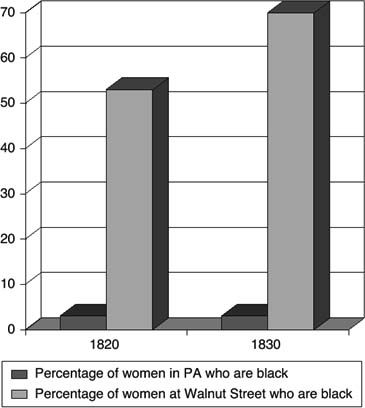
Blacks constituted less than 3% of the population in Pennsylvania, and never more than 6% of the population in Philadelphia throughout the 45 years that Walnut Street served as a state prison. Yet, as abolition progressed in the state, their proportion of the prison population rose steadily from 15% to nearly 50% (reaching 70% among female inmates) by the time Walnut Street was closed in 1835. (See Figures 1 and 2.)
Figure 1 Percentage of Blacks in Pennsylvania and in Walnut Street Jail, 1790–1830
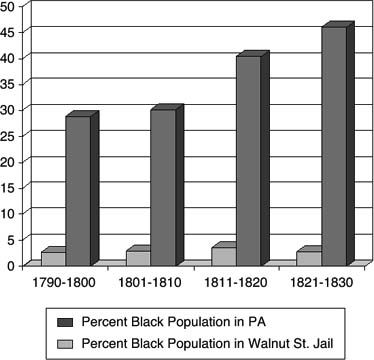
Figure 2 Percentage of Black Women out of all Women in Pennsylvania and at Walnut Street Jail, 1820, 1830
Eastern State Penitentiary, a successor to Walnut Street Jail, was perhaps the most important of all early prisons in the United States. One observer at the time reported that the first inmate admitted to the prison was a “light skinned Negro…born of a degraded and depressed race” (quoted in Mauer, 1999, p. 3). Not only was the first male inmate admitted to the prison black, but so were all four of the first women. During the 19th century, the inmate population at Eastern State Penitentiary ranged between 20% and 50% black. The keepers, meanwhile, remained entirely white. Throughout the North, prisons and abolition advanced in step during the early years of the republic.
...
- Authors
- Angela Y. Davis
- Anthony Platt
- Cesare Beccaria
- Constitutive Penology
- Convict Criminology
- David Garland
- David Rothman
- Donald Clemmer
- Elizabeth Frye
- George Jackson
- Gresham Sykes
- Jack Henry Abbott
- Jeremy Bentham
- Jerome Miller
- John Howard
- John Irwin
- John J. DiIulio, Jr.
- Meda Chesney-Lind
- Michel Foucault
- Nicole Hahn Rafter
- Norval Ramsden Morris
- Robert Martinson
- Rose Giallombardo
- Health
- History
- Alcatraz
- Alexander Maconochie
- Attica Correctional Facility
- Auburn System
- Bedford Hills Correctional Facility
- Bridewell Prison and Workhouse
- Cesare Beccaria
- Convict Lease System
- Dorothea Dix
- Elmira Reformatory
- History of Correctional Officers
- History of Prisons
- History of Religion in Prison
- History of Women's Prisons
- Irish (or Crofton) System
- Jeremy Bentham
- Josephine Shaw Lowell
- Juvenile Reformatories
- Katharine Bement Davis
- Labor
- Mabel Walker Willebrant
- Massachusetts Reformatory
- Medical Experiments
- Panopticon
- Parchman Farm, Mississippi State Penitentiary
- Pennsylvania Prison Society
- Pennsylvania System
- Plantation Prisons
- Prison Ships
- Slavery
- Zebulon Reed Brockway
- Inmates
- Institutions
- ADX (Administrative Maximum): Florence
- Alcatraz
- Alderson, Federal Prison Camp
- Angola Penitentiary
- Attica Correctional Facility
- Auburn Correctional Facility
- Bedford Hills Correctional Facility
- Bridewell Prison and Workhouse
- Co-correctional Facilities
- Community Corrections Centers
- Corcoran, California State Prison
- Eastern State Penitentiary
- Elmira Reformatory
- Framingham, MCI
- Huntsville Penitentiary
- INS Detention Facilities
- Leavenworth, U.S. Penitentiary
- Lexington High Security Unit
- Marion, U.S. Penitentiary
- Massachusetts Reformatory
- New Maxico Penitentiary
- Newgate Prison
- Norfolk Prison
- Oak Park Heights, Minnesota Correctional Facility
- Panopticon
- Parchman Farm, Mississippi State Penitentiary
- Patuxent Institution
- Pelican Bay State Prison
- Rikers Island Jail
- San Quentin State Prison
- Sing Sing Correctional Facility
- Stateville Correctional Center
- Terre Haute U.S. Penitentiary Death Row
- Walla Walla Washington State Penitentiary
- Walnut Street Jail
- Juvenile Justice
- Anthony Platt
- Boot Camp
- Child Savers
- Children
- Cook County, Illinois
- Detained Youth and Committed Youth
- Group Homes
- Jerome G. Miller
- Juvenile Death Penalty
- Juvenile Detention Centers
- Juvenile Justice and Delinquency Prevention Act
- Juvenile Justice System
- Juvenile Offenders: Race, Class, and Gender
- Juvenile Reformatories
- Meda Chesney-Lind
- Mens Rea
- Parens Patriae
- Patuxent Institution
- Status Offenders
- Waiver of Juveniles Into the Adult Court System
- Youth Corrections Act
- Labor
- Penal Systems
- Australia
- Bureau of Justice Statistics
- Canada
- Co-correctional Facilities
- Community Corrections Centers
- District of Columbia Corrections System
- England and Wales
- Federal Prison System
- High-Rise Prisons
- INS Detention Facilities
- Irish (or Crofton) System
- Jails
- Juvenile Justice System
- Lockup
- Military Prisons
- New Zealand
- Prison Ships
- Prisoner of War Camps
- Relocation Centers
- Slavery
- State Prison System
- Supermax Prisons
- Women's Prisons
- Prison Architecture
- Prison Life
- Argot
- Cell Search
- Chaplains
- Children's Visits
- Commissary
- Conjugal Visits
- Contact Visits
- Contract Ministers
- Convict Criminology
- Deprivation
- Food
- Gangs
- Hip Hop
- Homosexual Relationships
- Hooch
- Importation
- Inmate Code
- Inmate Volunteers
- Islam in Prison
- Jailhouse Lawyers
- Judaism in Prison
- Lawyer's Visits
- Lesbian Relationships
- Parenting Programs
- Prison Culture
- Prison Literature
- Prison Movies
- Prison Music
- Prison Nurseries
- Prisoner Pay
- Rape
- Resistance
- Riots
- Santería
- Satanism
- Sex—Consensual
- Sexual Relations With Staff
- Snitch
- Strip Search
- Tattooing
- Termination of Parental Rights
- Trustee
- Violence
- Visits
- Prison Population
- African American Prisoners
- Aryan Brotherhood
- Aryan Nations
- Asian American Prisoners
- Bisexual Prisoners
- Black Panther Party
- Bloods
- Celebrities in Prison
- Children
- Crips
- Cuban Detainees
- Disabled Prisoners
- Draft Resisters
- Drug Offenders
- Elderly Prisoners
- Enemy Combatants
- Fathers in Prison
- Foreign Nationals
- Hispanic/Latino(a) Prisoners
- Homosexual Prisoners
- Immigrants/Illegal Aliens
- Increase in Prison Population
- Juvenile Offenders: Race, Class, and Gender
- Lesbian Prisoners
- Lifer
- Mothers in Prison
- Native American Prisoners
- Overcrowding
- Political Prisoners
- Politicians
- Puerto Rican Nationalists
- Race, Class, and Gender of Prisoners
- Sex Offenders
- Status Offenders
- Transgender and Transsexual Prisoners
- WITSEC
- Wives of Prisoners
- Women Prisoners
- Young Lords
- Prison Reform
- “Stop Prisoner Rape”
- Abolition
- Activism
- American Civil Liberties Union
- Angela Y. Davis
- Attica Brothers Defense Fund
- Benjamin Rush
- Citizens United for Rehabilitation of Errants
- Critical Resistance
- Dorothea Lynde Dix
- Elizabeth Fry
- Elizabeth Gurley Flynn
- Faith-Based Initiatives
- Families Against Mandatory Minimums
- Fay Honey Knopp
- Felon Disenfranchisement
- George Jackson
- Hospice
- John Howard
- Kate Richards O'Hare
- Miriam Van Waters
- National Prison Project
- November Coalition
- Pennsylvania Prison Society
- Philadelphia Society for Alleviating the Miseries of Public Prisons
- Prison Monitoring Organizations
- Quakers
- Women's Advocate Ministry
- Privatization
- Programs
- Accreditation
- Adult Continuing Education
- Alcohol Treatment Programs
- Alcoholics Anonymous
- Art Programs
- Bedford Hills Correctional Facility
- Bureau of Justice Statistics
- Chaplains
- College Courses in Prison
- Creative Writing Programs
- Deathwatch
- Drama Programs
- Drug Treatment Programs
- Education
- English as a Second Language
- Furlough
- General Educational Development (GED) Exam and General Equivalency Diploma
- Group Therapy
- Individual Therapy
- Music Programs in Prison
- Narcotics Anonymous
- Parenting Programs
- Pell Grants
- Prerelease Programs
- Psychological Services
- Recreation Programs
- Religion in Prison
- Sex Offender Programs
- Therapeutic Communities
- Vocational Training Programs
- Work-Release Programs
- Race, Class, and Gender
- Security and Classification
- Accreditation
- ADX (Administrative Maximum): Florence
- Civil Commitment of Sexual Predators
- Classification
- Clemency
- Community Corrections Centers
- Compassionate Release
- Contraband
- Electronic Monitoring
- Escapes
- Gangs
- Good Time Credit
- Home Arrest
- Life Without Parole
- Managerialism
- Maximum Security
- Medium Security
- Minimum Security
- Parole
- Prison Farms
- Prisoner Reentry
- Probation
- Rape
- Security and Control
- Supermax Prisons
- U.S. Marshals Service
- WITSEC
- Sentencing Policy and Legislation
- Ashurst-Sumners Act 1935
- Clemency
- Compassionate Release
- Determinate Sentencing
- Discipline System
- Dothard v. Rawlinson
- Eighth Amendment
- Estelle v. Gamble
- First Amendment
- Fourteenth Amendment
- Fourth Amendment
- Freedom of Information Act
- Furman v. Georgia
- Good Time Credit
- Habeas Corpus
- Hawes Cooper Act 1929
- Indeterminate Sentencing
- Jailhouse Lawyers
- Juvenile Justice and Delinquency Prevention Act 1989
- Life Without Parole
- Megan's Law
- Mens Rea
- Parens Patriae
- Politicians
- President's Commission on Law Enforcement and Administration of Justice
- Prison Industry Enhancement Certification Program
- Prison Litigation and Reform Act (PLRA) 1996
- Prisoner Litigation
- Rehabilitation Act 1973
- Ruiz v. Estelle
- Section 1983 of the Civil Rights Act
- Sentencing Reform Act 1984
- Thirteenth Amendment
- Three Prisons Act 1891
- Three-Strikes Legislation
- Truth in Sentencing
- USA PATRIOT Act 2001
- Violent Crime Control and Law Enforcement Act 1994
- Volstead Act 1918
- War on Drugs
- Wilson v. Seiter
- Youth Corrections Act 1950
- Staff
- Alexander Maconochie
- American Correctional Association
- Benjamin Rush
- Correctional Officer Pay
- Correctional Officer Unions
- Correctional Officers
- Dothard v. Rawlingson
- Governance
- History of Correctional Officers
- James V. Bennett
- Joseph E. Ragen
- Katharine Bement Davis
- Kathleen Hawk Sawyer
- Legitimacy
- Mabel Walker Willebrandt
- Managerialism
- Mary Belle Harris
- Miriam Van Waters
- National Institute of Corrections
- Officer Code
- Professionalization of Staff
- Psychologists
- Sanford Bates
- Sexual Relations With Staff
- Staff Training
- U.S. Marshals Service
- Unit Management
- Volunteers
- Zebulon Reed Brockway
- Theories of Punishment
- Types of Punishment
- Loading...
Get a 30 day FREE TRIAL
-
 Watch videos from a variety of sources bringing classroom topics to life
 -
Read modern, diverse business cases
-
Explore hundreds of books and reference titles

Read next

More like this
Sage Recommends
We found other relevant content for you on other Sage platforms.
Have you created a personal profile? Login or create a profile so that you can save clips, playlists and searches