
Entry
Reader's guide
Entries A-Z
Subject index
Taft, Robert A. (1889–1953)
ROBERT A. TAFT was the son of President William H. Taft, a major figure within the Republican Party and a presidential contender in 1952. Robert Alphonso Taft was born in Cincinnati, Ohio, the firstborn of the three children of William Howard Taft and Helen (Nellie) (Herron) Taft. Will Taft was then a judge, and Robert's maternal grandfather was U.S. attorney. Young Robert accompanied his father to the Philippines when the senior Taft was governor general. While his father was president, Taft graduated first in his class at Yale University in 1910, and he was also first in his class at Harvard Law School in 1913. Taft married Martha Wheaton Bowers, daughter of the solicitor general in his father's administration, on October 17, 1914. The couple settled in Cincinnati. They had four sons, William Howard III, Robert, Jr., Lloyd, and Horace. Taft tried to enlist in World War I but was rejected due to his eyesight. He served as a lawyer under Herbert Hoover in the predecessor to the Food and Drug Administration (FDA). He also worked as a lawyer for a relief organization in Europe and was decorated by the governments of Belgium, Finland, and Poland. Hoover functioned as a mentor to Taft for the rest of his life.
Taft was elected to the Ohio House of Representatives in 1920 and was reelected in 1922 and 1924. He served as majority leader and speaker of the house in his last term. Taft followed Hoover's lead in embracing initiatives for modernizing state government and fostering efficiency in the economic arena. He was elected to the Ohio Senate in 1930 but lost in the Democratic landslide of 1932 along with his mentor. In defeat, Taft returned to the law but was outspoken in the national arena in opposition to Franklin Roosevelt's New Deal program. Taft was the leader of many economic conservatives who viewed the New Deal's economic centralization as anathema to free-enterprise capitalism.
Robert A. Taft's isolationist stance drew Dwight Eisenhower into the Republican 1952 presidential nomination race.
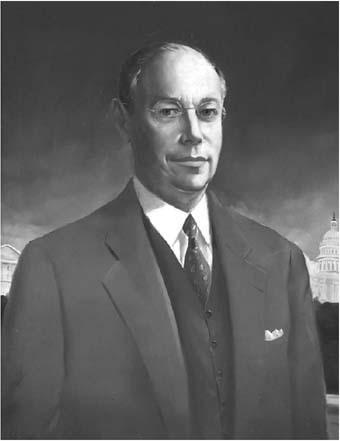
He was elected a U.S. senator from Ohio in 1938, defeating a Democratic incumbent, and was reelected in 1944 and 1950. He acquired a reputation as an isolationist for opposing U.S. entry into World War II. Taft is best known as the Senate sponsor of the Taft-Hartley Labor Relations Act of 1947, which prohibits jurisdictional strikes and secondary boycotts and closed shops, and allows states to pass “right-to-work” laws. The act was passed only by overriding the veto of President Harry S Truman. He entered the Republican presidential race in 1948 after serving as Ohio's favorite son in 1936 and 1940. (A favorite son is a local leader whom the state's delegates agree to support on the first ballot so the state and its leader may have leverage in subsequent ballots.) He came in second to New York Governor Thomas E. Dewey, who was nominated on the second ballot. Taft's central message was “Peace at any cost, except at the threat to the country's freedom.” Taft, by this time known as “Mr. Republican,” again ran for the nomination in 1952. According to some sources, Dwight D. Eisenhower, who had been either apolitical or a Democrat before then, chose to run for president as a Republican expressly to defeat Taft's isolationist stance. Technically, there was only one ballot, but Eisenhower won the nomination as a result of a substantial number of vote changes only after the preliminary results had been announced. Taft became majority leader of the Senate in January 1953.
...
- People on the Left
- Anthony, Susan B.
- Bellamy, Edward
- Bentham, Jeremy
- Breitman, George
- Browder, Earl
- Carmichael, Stokely
- Carter, James E.
- Carville, James
- Cleaver, Eldridge
- Clinton, William J.
- Coxey, Jacob
- Croly, Herbert
- Debs, Eugene V.
- Deng Xiaoping
- Douglass, Frederick
- Du Bois, W.E.B.
- Duclos, Jacques
- Dunayevskaya, Raya
- Engels, Friedrich
- Flynn, Elizabeth Gurley
- Foster, William Z.
- Freidan, Betty
- Fromm, Erich
- Ghandi, Mahatma
- Gilman, Charlotte Perkins
- Gitlow, Benjamin
- Goldman, Emma
- Gorbachev, Mikhail
- Guevara, Che
- Hall, Gus
- Hammett, Dashiell
- Harrington, Michael
- Hayden, Tom
- Haywood, William D
- Hillman, Sidney
- Hillquit, Morris
- Hobbes, Thomas
- Hollywood Ten
- Hopkins, Harry
- Hume, David
- Humphrey, Hubert H.
- Jefferson, Thomas
- Johnson, Lyndon B.
- Kefauver, Estes
- Kennedy, John F.
- King, Martin Luther, Jr.
- La Follette, Robert
- Lenin, Vladimir I.
- Lincoln, Abraham
- Lippmann, Walter
- Lloyd, Henry Demarest
- Locke, John
- Long, Huey
- Lovestone, Jay
- Malcolm X
- Marcuse, Herbert
- Marx, Karl
- Moore, Michael
- Mott, Lucretia
- Muste, Abraham J.
- Nader, Ralph
- Nearing, Scott
- O'Neil, Thomas P.
- Orwell, George
- Paul, Alice
- Randolph, A. Philip
- Reed, John
- Roosevelt, Eleanor
- Roosevelt, Franklin D.
- Rousseau, Jean-Jacques
- Sacco and Vanzetti
- Schlesinger, Arthur M., Jr.
- Stanton, Elizabeth Cady
- Steinem, Gloria
- Stevenson, Adlai E.
- Thomas, Norman M.
- Thompson, Hunter S.
- Trotsky, Leon
- Truman, Harry
- Wallace, Henry A.
- Washington, George
- Wilson, Woodrow
- Wright, Frances
- People on the Right
- Ali, Noble Drew
- Bennett, William J.
- Bilbo, Theodore G.
- Borah, William E.
- Buchanan, Patrick J.
- Buckley, William F., Jr.
- Burke, Edmund
- Bush, George H.W.
- Bush, George W.
- Churchill, Sir Winston
- Coolidge, Calvin
- Coughlin, Charles E.
- Coulter, Ann H.
- Dewey, Thomas E.
- Dos Passos, John
- Drudge, Matt
- Eisenhower, Dwight D.
- Ford, Gerald R.
- Garvey, Marcus
- Gingrich, Newt
- Goldwater, Barry
- Harding, Warren G.
- Hearst, William Randolph
- Hitler, Adolf
- Hoover, Herbert
- Hoover, J. Edgar
- Khomeini, Ruhollah
- La Guardia, Fiorello H.
- Landon, Alfred M.
- Limbaugh, Rush
- Lincoln, Abraham
- Lind, Michael
- Lindbergh, Charles A.
- Luce, Henry R.
- Mises, Ludwig von
- Nietzsche, Friedrich
- Nixon, Richard M.
- Rand, Ayn
- Reagan, Ronald
- Roosevelt, Theodore
- Shockley, William B.
- Sowell, Thomas
- Taft, Robert A.
- Taft, William H.
- Thatcher, Margaret
- Washington, Booker T.
- Will, George F.
- Willkie, Wendell
- Countries/Regions: Left Politics
- Africa
- Argentina
- Asia
- Australia
- Austria
- Brazil
- Canada
- Chile
- China
- Czech Republic
- Egypt
- France
- Greece
- India
- Indonesia
- Iran
- Ireland
- Israel
- Italy
- Japan
- Korea, North
- Korea, South
- Mexico
- Middle East
- Nigeria
- Peru
- Poland
- Russia, Post-Soviet
- Saudi Arabia
- Singapore
- South Africa
- South America
- Soviet Union
- Spain
- Sweden
- Switzerland
- Turkey
- Uganda
- Ukraine
- United Kingdom
- United States
- Countries/Regions: Right Politics
- Africa
- Argentina
- Asia
- Australia
- Austria
- Brazil
- Canada
- Chile
- China
- Czech Republic
- Egypt
- France
- Greece
- India
- Iran
- Iraq
- Ireland
- Israel
- Italy
- Japan
- Korea, South
- Mexico
- Middle East
- Nigeria
- Peru
- Poland
- Russia, Post-Soviet
- Saudi Arabia
- Singapore
- South Africa
- South America
- Soviet Union
- Spain
- Sweden
- Switzerland
- Turkey
- Uganda
- Ukraine
- United Kingdom
- United States
- Leftist “Isms”
- Abolitionism
- Anarchism
- Anarcho-Syndicalism
- Bicameralism
- Bolshevism
- Communism
- Communitarianism
- Despotism
- Environmentalism
- Fabianism
- Feminism
- Fourierism
- Liberalism
- Maoism
- Market Socialism
- Marxist Humanism
- Populism
- Postmodernism
- Québec Separatism
- Saint-Simonism
- Socialism
- Socialist Realism
- Stalin and Stalinism
- Syndicalism
- Third Worldism
- Titoism
- Zionism
- Rightist “Isms”
- Agrarianism
- Black Nationalism
- Black Separatism
- Capitalism
- Colonialism
- Conservatism
- Corporatism
- Corsican Separatism
- Darwinism
- Despotism
- Elitism
- Falangism
- Fascism
- Feudalism
- Fundamentalism
- Imperialism
- Isolationism
- Libertarianism
- McCarthyism
- Monarchism
- Nationalism
- Orientalism
- Pan-Africanism
- Patriotism
- Peronism
- Prohibitionism
- Sabbatarianism
- Totalitarianism
- Ultramontanism
- Unilateralism
- Zionism
- Leftist Political Issues
- Abolitionism
- Alienation
- Anarchism
- Anarcho-Syndicalism
- Anti-Globalization
- Bicameralism
- Campaign Finance
- Communism
- Communitarianism
- Cultural Diversity
- Democracy
- Desegregation
- Environmentalism
- Human Rights
- Ideology
- Liberalism
- Lobbying
- Market Socialism
- Media Bias, Left
- Political Economy
- Politically Correct
- Polls and Pollsters
- Social Democracy
- Socialism
- Socialist Realism
- Stalin and Stalinism
- Vietnam War
- Voting, Unrestricted
- Welfare and Poverty
- Rightist Political Issues
- Balance of Power
- Capitalism
- Censorship
- Conservatism
- Corporatism
- Darwinism
- Despotism
- Education
- Ethnic Cleansing
- Fascism
- Foreign Policy, U.S.
- Fundamentalism
- Globalization
- Healthcare
- Ideology
- Isolationism
- Laissez-Faire
- Libertarianism
- Lobbying
- Manifest Destiny
- Media Bias, Right
- Polls and Pollsters
- Realpolitik
- Segregation
- States' Rights
- Technocracy, Inc.
- Theocracy
- Totalitarianism
- Unilateralism
- Vietnam War
- Welfare and Poverty
- Xenophobia
- Leftist Laws
- Abortion/Pro-Choice
- American Civil Liberties Union
- Animal Rights
- Bill of Rights
- Censorship
- Church and State Separation
- Civil Liberties
- Civil Rights
- Constitutional Amendments
- Consumer Rights
- Death Penalty Elimination
- Desegregation
- First Amendment
- Freedom of Information
- Gun Control
- Healthcare
- Human Rights
- Immigration
- Lobbying
- New Deal
- Social Security
- Supreme Court
- Voting, Unrestricted
- Welfare and Poverty
- Rightist Laws
- Leftist Political Parties
- African National Congress
- American Civil Liberties Union
- Black Panthers
- Catholic Worker
- Christian Democracy
- Communist Party, Soviet
- Democratic Party
- Green Party
- Greenback Party
- Labour Party, UK
- Liberal Party, Australia
- Liberal Party, Canada
- Liberal Party, Hong Kong
- Liberal Party, UK
- PRI (Mexico)
- Progressive Party
- Socialist Party, U.S.
- Socialist Workers' Party, UK
- Suffragists
- Workers Party
- Workingmen's Party
- Rightist Political Parties
- Leftist Political Movements
- Abortion/Pro-Choice
- Affirmative Action
- Anarcho-Syndicalism
- Animal Rights
- Anti-Globalization
- Bolshevism
- Civil Rights
- Consumer Rights
- Death Penalty Elimination
- Democracy
- Desegregation
- Environmentalism
- Feminism
- Gay and Lesbian Movements
- Gun Control
- Human Rights
- Niagara Movement
- Palestine Liberation Organization
- Postmodernism
- Protests
- Solidarity
- Students for a Democratic Society
- Suffragists
- Zionism
- Rightist Political Movements
- Loading...
Get a 30 day FREE TRIAL
-
 Watch videos from a variety of sources bringing classroom topics to life
 -
Read modern, diverse business cases
-
Explore hundreds of books and reference titles

Read next

More like this
Sage Recommends
We found other relevant content for you on other Sage platforms.
Have you created a personal profile? Login or create a profile so that you can save clips, playlists and searches