
Entry
Reader's guide
Entries A-Z
Subject index
O'Neill, Thomas P. (1912–1994)
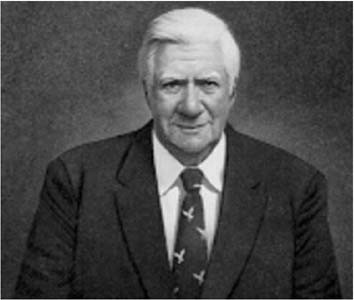
TIP O'NEILL served as Speaker of the U.S. House of Representatives for 10 years and was the leading Democrat in Washington, D.C., for the first six years of the presidency of Ronald Reagan, a time when the Senate was controlled by Republicans. Thomas Philip O'Neill, Jr., was born on in Cambridge, Massachusetts, the son of Thomas P. and Rose Ann (Tolan) O'Neill. His father ran the water department and had served on the city council. Tip's nickname derived from James O'Neill, a player with the St. Louis Browns baseball team who was reputed for his foul “tips.” O'Neill's first foray into politics was in 1928, when at age 13, he campaigned for Democratic presidential candidate Alfred E. Smith.
O'Neill graduated from Boston College in 1936. While still a senior there, he ran for Cambridge city council and lost. This would be his only electoral defeat. The next year, 1936, he ran for and was elected to the lower house of the Massachusetts legislature. O'Neill married Mildred Anne Miller on June 17, 1941. To this marriage were born five children: Rosemary, Thomas III (who also served in the Massachusetts legislature and went on to be lieutenant-governor of the state), Susan, Christopher, and Michael O'Neill.
Speaker of the House Tip O'Neill provided a liberal counterweight to President Ronald Reagan's conservatism.
O'Neill served eight terms in the legislature, becoming minority leader in 1947 and speaker following the Democratic victory the next year. He was the youngest speaker of the house in state history to that time. When U.S. Representative John F. Kennedy chose to run for the U.S. Senate in 1952, O'Neill ran for his house seat, which he won and held for 17 Congresses. O'Neill benefitted both from being a former state legislative speaker and from the tutelage of the Congressman from the neighboring district, John W. McCormick, who would also go on to be speaker. O'Neill was one of the few members of Congress who did not move his spouse and family to Washington, D.C., a practice that did not change until O'Neill became speaker 20 years later.
O'Neill was a loyal foot-soldier to the Democratic leadership and presidents Kennedy and Lyndon B. Johnson. His first major break with the leadership came over the Vietnam War. Owing in part to urging from his children (and in no small part to the liberal academic communities in his district, which included Harvard University and the Massachusetts Institute of Technology), O'Neill concluded that the Vietnam War was really a civil war, and that American interests were ill-served by American military participation. He supported Eugene J. McCarthy, the anti-war presidential candidate, in 1968.
O'Neill's rise to leadership began with his support of Hale Boggs of Louisiana for majority leader in 1971. Boggs appointed O'Neill majority whip. Boggs died in a plane crash the next year, and O'Neill was elected majority leader. When Speaker Carl Albert retired after the 1976 election, O'Neill was elected speaker without opposition. Jimmy Carter had become president by running as an outsider, against the Washington, D.C., establishment. O'Neill found the new president often unwilling to defer to O'Neill's advice about winning in the federal legislative process. When Carter and the Democratic Senate were defeated in 1980, O'Neill blamed Carter's ineptitude.
...
- People on the Left
- Anthony, Susan B.
- Bellamy, Edward
- Bentham, Jeremy
- Breitman, George
- Browder, Earl
- Carmichael, Stokely
- Carter, James E.
- Carville, James
- Cleaver, Eldridge
- Clinton, William J.
- Coxey, Jacob
- Croly, Herbert
- Debs, Eugene V.
- Deng Xiaoping
- Douglass, Frederick
- Du Bois, W.E.B.
- Duclos, Jacques
- Dunayevskaya, Raya
- Engels, Friedrich
- Flynn, Elizabeth Gurley
- Foster, William Z.
- Freidan, Betty
- Fromm, Erich
- Ghandi, Mahatma
- Gilman, Charlotte Perkins
- Gitlow, Benjamin
- Goldman, Emma
- Gorbachev, Mikhail
- Guevara, Che
- Hall, Gus
- Hammett, Dashiell
- Harrington, Michael
- Hayden, Tom
- Haywood, William D
- Hillman, Sidney
- Hillquit, Morris
- Hobbes, Thomas
- Hollywood Ten
- Hopkins, Harry
- Hume, David
- Humphrey, Hubert H.
- Jefferson, Thomas
- Johnson, Lyndon B.
- Kefauver, Estes
- Kennedy, John F.
- King, Martin Luther, Jr.
- La Follette, Robert
- Lenin, Vladimir I.
- Lincoln, Abraham
- Lippmann, Walter
- Lloyd, Henry Demarest
- Locke, John
- Long, Huey
- Lovestone, Jay
- Malcolm X
- Marcuse, Herbert
- Marx, Karl
- Moore, Michael
- Mott, Lucretia
- Muste, Abraham J.
- Nader, Ralph
- Nearing, Scott
- O'Neil, Thomas P.
- Orwell, George
- Paul, Alice
- Randolph, A. Philip
- Reed, John
- Roosevelt, Eleanor
- Roosevelt, Franklin D.
- Rousseau, Jean-Jacques
- Sacco and Vanzetti
- Schlesinger, Arthur M., Jr.
- Stanton, Elizabeth Cady
- Steinem, Gloria
- Stevenson, Adlai E.
- Thomas, Norman M.
- Thompson, Hunter S.
- Trotsky, Leon
- Truman, Harry
- Wallace, Henry A.
- Washington, George
- Wilson, Woodrow
- Wright, Frances
- People on the Right
- Ali, Noble Drew
- Bennett, William J.
- Bilbo, Theodore G.
- Borah, William E.
- Buchanan, Patrick J.
- Buckley, William F., Jr.
- Burke, Edmund
- Bush, George H.W.
- Bush, George W.
- Churchill, Sir Winston
- Coolidge, Calvin
- Coughlin, Charles E.
- Coulter, Ann H.
- Dewey, Thomas E.
- Dos Passos, John
- Drudge, Matt
- Eisenhower, Dwight D.
- Ford, Gerald R.
- Garvey, Marcus
- Gingrich, Newt
- Goldwater, Barry
- Harding, Warren G.
- Hearst, William Randolph
- Hitler, Adolf
- Hoover, Herbert
- Hoover, J. Edgar
- Khomeini, Ruhollah
- La Guardia, Fiorello H.
- Landon, Alfred M.
- Limbaugh, Rush
- Lincoln, Abraham
- Lind, Michael
- Lindbergh, Charles A.
- Luce, Henry R.
- Mises, Ludwig von
- Nietzsche, Friedrich
- Nixon, Richard M.
- Rand, Ayn
- Reagan, Ronald
- Roosevelt, Theodore
- Shockley, William B.
- Sowell, Thomas
- Taft, Robert A.
- Taft, William H.
- Thatcher, Margaret
- Washington, Booker T.
- Will, George F.
- Willkie, Wendell
- Countries/Regions: Left Politics
- Africa
- Argentina
- Asia
- Australia
- Austria
- Brazil
- Canada
- Chile
- China
- Czech Republic
- Egypt
- France
- Greece
- India
- Indonesia
- Iran
- Ireland
- Israel
- Italy
- Japan
- Korea, North
- Korea, South
- Mexico
- Middle East
- Nigeria
- Peru
- Poland
- Russia, Post-Soviet
- Saudi Arabia
- Singapore
- South Africa
- South America
- Soviet Union
- Spain
- Sweden
- Switzerland
- Turkey
- Uganda
- Ukraine
- United Kingdom
- United States
- Countries/Regions: Right Politics
- Africa
- Argentina
- Asia
- Australia
- Austria
- Brazil
- Canada
- Chile
- China
- Czech Republic
- Egypt
- France
- Greece
- India
- Iran
- Iraq
- Ireland
- Israel
- Italy
- Japan
- Korea, South
- Mexico
- Middle East
- Nigeria
- Peru
- Poland
- Russia, Post-Soviet
- Saudi Arabia
- Singapore
- South Africa
- South America
- Soviet Union
- Spain
- Sweden
- Switzerland
- Turkey
- Uganda
- Ukraine
- United Kingdom
- United States
- Leftist “Isms”
- Abolitionism
- Anarchism
- Anarcho-Syndicalism
- Bicameralism
- Bolshevism
- Communism
- Communitarianism
- Despotism
- Environmentalism
- Fabianism
- Feminism
- Fourierism
- Liberalism
- Maoism
- Market Socialism
- Marxist Humanism
- Populism
- Postmodernism
- Québec Separatism
- Saint-Simonism
- Socialism
- Socialist Realism
- Stalin and Stalinism
- Syndicalism
- Third Worldism
- Titoism
- Zionism
- Rightist “Isms”
- Agrarianism
- Black Nationalism
- Black Separatism
- Capitalism
- Colonialism
- Conservatism
- Corporatism
- Corsican Separatism
- Darwinism
- Despotism
- Elitism
- Falangism
- Fascism
- Feudalism
- Fundamentalism
- Imperialism
- Isolationism
- Libertarianism
- McCarthyism
- Monarchism
- Nationalism
- Orientalism
- Pan-Africanism
- Patriotism
- Peronism
- Prohibitionism
- Sabbatarianism
- Totalitarianism
- Ultramontanism
- Unilateralism
- Zionism
- Leftist Political Issues
- Abolitionism
- Alienation
- Anarchism
- Anarcho-Syndicalism
- Anti-Globalization
- Bicameralism
- Campaign Finance
- Communism
- Communitarianism
- Cultural Diversity
- Democracy
- Desegregation
- Environmentalism
- Human Rights
- Ideology
- Liberalism
- Lobbying
- Market Socialism
- Media Bias, Left
- Political Economy
- Politically Correct
- Polls and Pollsters
- Social Democracy
- Socialism
- Socialist Realism
- Stalin and Stalinism
- Vietnam War
- Voting, Unrestricted
- Welfare and Poverty
- Rightist Political Issues
- Balance of Power
- Capitalism
- Censorship
- Conservatism
- Corporatism
- Darwinism
- Despotism
- Education
- Ethnic Cleansing
- Fascism
- Foreign Policy, U.S.
- Fundamentalism
- Globalization
- Healthcare
- Ideology
- Isolationism
- Laissez-Faire
- Libertarianism
- Lobbying
- Manifest Destiny
- Media Bias, Right
- Polls and Pollsters
- Realpolitik
- Segregation
- States' Rights
- Technocracy, Inc.
- Theocracy
- Totalitarianism
- Unilateralism
- Vietnam War
- Welfare and Poverty
- Xenophobia
- Leftist Laws
- Abortion/Pro-Choice
- American Civil Liberties Union
- Animal Rights
- Bill of Rights
- Censorship
- Church and State Separation
- Civil Liberties
- Civil Rights
- Constitutional Amendments
- Consumer Rights
- Death Penalty Elimination
- Desegregation
- First Amendment
- Freedom of Information
- Gun Control
- Healthcare
- Human Rights
- Immigration
- Lobbying
- New Deal
- Social Security
- Supreme Court
- Voting, Unrestricted
- Welfare and Poverty
- Rightist Laws
- Leftist Political Parties
- African National Congress
- American Civil Liberties Union
- Black Panthers
- Catholic Worker
- Christian Democracy
- Communist Party, Soviet
- Democratic Party
- Green Party
- Greenback Party
- Labour Party, UK
- Liberal Party, Australia
- Liberal Party, Canada
- Liberal Party, Hong Kong
- Liberal Party, UK
- PRI (Mexico)
- Progressive Party
- Socialist Party, U.S.
- Socialist Workers' Party, UK
- Suffragists
- Workers Party
- Workingmen's Party
- Rightist Political Parties
- Leftist Political Movements
- Abortion/Pro-Choice
- Affirmative Action
- Anarcho-Syndicalism
- Animal Rights
- Anti-Globalization
- Bolshevism
- Civil Rights
- Consumer Rights
- Death Penalty Elimination
- Democracy
- Desegregation
- Environmentalism
- Feminism
- Gay and Lesbian Movements
- Gun Control
- Human Rights
- Niagara Movement
- Palestine Liberation Organization
- Postmodernism
- Protests
- Solidarity
- Students for a Democratic Society
- Suffragists
- Zionism
- Rightist Political Movements
- Loading...
Get a 30 day FREE TRIAL
-
 Watch videos from a variety of sources bringing classroom topics to life
 -
Read modern, diverse business cases
-
Explore hundreds of books and reference titles

Read next

More like this
Sage Recommends
We found other relevant content for you on other Sage platforms.
Have you created a personal profile? Login or create a profile so that you can save clips, playlists and searches