
Entry
Reader's guide
Entries A-Z
Subject index
Multidivisional Form
The concept of the multidivisional form of organization (M-form) was introduced with the work of Alfred Chandler on the divisional structure of the firm. According to Chandler, the M-form facilitates growth through diversification across products, industries, and markets and includes the notion of delegation of power and authority to divisional managers. It is contrasted with the “corrupt” M-form, where CEOs retain control within a multidivisional organization of operations, and with the “entrepreneurial” M-form, where CEOs delegate operational control but retain strategic control in order to lead strategic integration of operations across industries.
Conceptual Overview
The growth of the firm and its evolution from a national firm to a multinational corporation (MNC) includes a progressive vertical integration of downstream and upstream operations within individual product valuechains, as well as managed diversification of the initial product/service line. Part of this evolution is the internal structuring of units and operations and the positioning of these units vis-a-vis each other. The internal structuring includes operational and strategic integration of business functions that minimize costs and economize via internal coordination and control, and as such achieve governance economies.
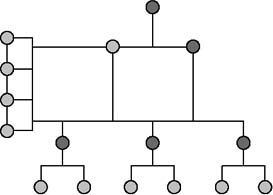
Among the leading archetypes of organizational structures that lead to the emergence of the M-form are hierarchies (with a single line of command and control), functional organizations (with decentralized decision making), and matrix types of structures (with dual lines of coordination and control—both horizontal and vertical). The M-form represents a combination of a divisional structure with hierarchical control and functional flexibility (See Figure 1).
The main distinction between the M-form and the U-form (unitary form) of organizing is that the subunits in the M-form comprise complementary tasks, while the U-form contains subunits that comprise similar tasks. Both types are based on unitary command.
The M-form of organizing was invented in the context of the General Motors Corporation in the United States to encompass central control and ownership; vertical integration of the production; formal internal coordination through vertical and horizontal linkages between decentralized divisions; and corporate head office function and specialized staff concentrated in departments and subunits. From a historical perspective, the M-form of structure represents an evolution and adaptation of organizational hierarchy under the conditions of complexity and uncertainty of operations. The M-form of structure enabled the internationalization of the firm and the emergence of the transnational corporation as a complex network with centralized governance at the headquarters and modular type of coordination of activities through subsidiary units. The application of the M-form for organizing corporate activities has been based on three modes of control used by the parent over its subsidiaries and subunits—hierarchy, socialization, and price. Hennart's research concludes that the most favored mode of interunit control in MNCs is the price mechanism under most circumstances. Interunit transactions are coordinated also by a transferpricing mechanism, where value is determined by inhouse accountancy rules and decisions and therefore is not subject to a market sanction.
Figure 1 The Multidivisional Form of Organization (M-form) Under Unitary Control
Critical Commentary and Future Directions
The application of the M-form concept has taken place in three different contexts: the literature on the evolution of intraorganizational complexity (or heterarchies), the internationalization of the firm (or the multinational corporation—MNC), and the macrocoordination and control of economic activities (or the M-form society). The MNC is the most distinctive example of an M-form, where the business headquarters and individual subsidiary units represent individual subunits (divisions) with different operational capabilities that integrate business operations across a number of value chains and across different industries and different countries. Ouchi argues that similar operational integration applied across institutions can tackle the structural deficiencies of the American economy and can improve the system's performance by providing a vehicle for optimization and coordination of efforts across various governmental departments, industrial associations, and organizations. Overall, the M-form concept is associated with high levels of internal specialization, bundling and grouping of complementary operations and assets, coordination of activities, and cooperation at system and subsystem level.
...
- Approaches to Management Theory
- Classical Management
- Critical Management Education
- Critical Management Studies
- Cross-Cultural Management
- Engineering-Managerial Discourse
- Entrepreneurship
- Hawthorne Studies
- High Involvement Management
- Human Relations School
- International Management
- Management and Organization of Local Governments
- Management and Public Policy
- Management Consultants
- Management Fashions and Fads
- Management Learning
- Managerial and Organizational Cognition
- Managerial Capitalism
- Managerial Rationality
- Managerial Revolution
- Managerialism
- Masculinities and Management
- New Public Management
- Scientific Management
- Strategic Management
- Theory X
- Theory Y
- Theory Z
- Total Quality Management
- Approaches to Organization Theory
- Actor-Network Theory
- Autopoiesis
- Behavioral Theory of the Firm
- Chaos Theory
- Classical Management
- Closed System Approach
- Collective Social Phenomena
- Complex Organizations
- Complexity Theory
- Configuration Theory
- Convergence Model
- Critical Management Studies
- Critical Modernists
- Cybernetics
- Deinstitutionalization
- Economic Sociology
- Engineering-Managerial Discourse
- Environmental Determinism
- Equity Theory
- Ergonomics
- Evolutionary Theory
- Expectancy Theory
- Formal Organizations
- Functionalism
- Gendered Organization
- General Systems Theory
- Hawthorne Studies
- Hermeneutics
- Historical Analysis of Organization Theory
- Human Relations School
- Institutional Isomorphism
- Institutional Legitimacy
- Institutional Theory
- Interaction Analysis
- Interactionism
- Interpretive Theory
- Life Cycle
- Literary Theory
- Long-Wave Theory
- Management Fashions and Fads
- Managerialism
- McDonaldization
- Metaphor and Organization
- Middle-Range Theory
- Narratives
- Neocontingency Model
- Neoinstitutional Theory
- New Institutionalism
- New Public Management
- Open Systems
- Organization Theory, Historical Analysis
- Organizational Adaptation
- Organizational Demography
- Organizational Ecology
- Organizational Economics
- Organizational Environments
- Organizational Field
- Organizational Rhetoric
- Organizational Theory
- Positive Organizational Scholarship
- Postcolonial Theory
- Public Choice Theory
- Radical Feminism
- Radical Humanism
- Rational Choice Theory
- Resource Dependence
- Resource-Based View of the Firm
- Social Constructionism
- Social Identity Theory
- Social System
- Social Theory
- Sociological Approach
- Sociology of Work and Employment
- Strategic Choice
- Structural Contingency Theory
- Structural Functionalism
- Structuration
- Symbolic Interactionism
- Theory X
- Theory Y
- Theory Z
- Time-Space Relations
- Transnational/Postcolonial Feminist Theorizing
- Viable System Model
- Culture and Symbolism
- Aesthetics of Organization
- Alterity (Otherness)
- Anthropology
- Archetypes
- Authenticity
- Consumer Culture
- Corporate Citizenship
- Corporate Culture
- Corporate Values
- Cross-Cultural Management
- Cultural Capital
- Cultural Intelligence
- Dramaturgy
- Enterprise Culture
- Ethnicity
- Fashion
- Humor
- Hypocrisy
- Identity
- Integrity
- Language and Organizations
- Liminality
- Magic in Organizing
- Management and Public Policy
- Managerial Cultural Capital
- Masculinities and Management
- Multiculturalism
- Music and Work
- Narcissism
- National Culture
- Organizational Culture
- Organizational Rituals
- Organizational Subcultures
- Organizational Symbolism
- Organizational Taboos
- Popular Culture
- Reverse Culture Shock
- Self-Employment Identities
- Sexuality
- Socialization
- Utopia
- Human Resource Management
- Balanced Scorecard
- Boundaryless Career
- Coaching
- Contingent Employment
- Contingent Workers
- Downsizing
- Employment Relations
- Glass Ceiling
- Human Resource Management
- Industrial Relations
- International Human Resources Management
- Job Evaluation
- Job Satisfaction
- Labor and Offshoring
- Labor Relations
- Outsourcing
- Performance Appraisal
- Performance-Driven Evaluation
- Professions
- Recruiting
- Reengineering
- Strategic Human Resource Management
- Training
- Unemployment
- Unionism
- Wage Inequities
- Work-Family Balance
- Worker Rights
- Working Time
- Workplace Incivility
- Innovation and Creativity
- International Approaches
- International Business
- International Human Resources Management
- International Management
- Internationalization School
- Japanese Management
- Organizational Literature, African
- Organizational Literature, Anglo-Saxon
- Organizational Literature, Arabic
- Organizational Literature, Asian
- Organizational Literature, Brazilian
- Organizational Literature, Eastern European
- Organizational Literature, Francophone
- Organizational Literature, Germanic
- Organizational Literature, Latin American
- Organizational Literature, Scandinavian
- Transnational Corporations
- Issues in Organizational Structure
- Absorptive Capacity
- Adhocracies
- Architecture and Organizations
- Bureaucracy
- Bureaucratization
- Decentralization
- Demographic Process
- Design Space Management
- Downsizing
- Ecological Change
- Fit
- Five Forces
- Hierarchy
- Locus of Control
- Loose Coupling
- Machine Bureaucracy
- Management and Organization of Local Governments
- Matrix Organization
- Mechanistic Organizations
- Military Organization
- Minimal Network
- Minimal Structure
- Multidivisional Form
- Multisubsidiary Form
- Nongovernmental Organizations
- Nonprofit Organizations
- Organic Organizations
- Organizational Design
- Organizational Evolution
- Organizational Rules
- Organizational Structure
- Post-Bureaucratic Organizations
- Small and Medium-Sized Enterprises
- Spatial Organization
- Structural Determinism
- Virtual Organization
- Virtual Reality
- Issues in Organization Practices
- Balanced Scorecard
- Boundaryless Career
- Complexity of Decision Making
- Contingent Employment
- Contingent Workers
- Control
- Conversation
- Coordination
- Corporate Branding
- Dehumanization
- Diversity
- Dynamic Capabilities
- Effectiveness
- Emotional Patterns in Organizations
- Gender Division
- Gender Stereotypes
- Human Resource Management
- Information
- Irrationality
- Job Evaluation
- Just-in-Time Management
- Karoshi
- Lean Production
- Managerial Revolution
- Normal Accidents
- Organizational Capabilities
- Organizational Citizenship Behaviors
- Organizational Discourse
- Organizational Identity
- Organizational Image
- Organizational Man
- Organizational Misbehavior
- Organizational Mortality
- Organizational Paradox
- Organizational Paranoia
- Ownership and Control
- Panopticism
- Participation
- Perceived Organizational Support
- Performance Appraisal
- Performance-Driven Evaluation
- Play
- Practice
- Procedural Justice
- Procrastination
- Project Management
- Recruiting
- Reengineering
- Risk Management
- Scenario Planning
- Scientific Management
- Strategic Human Resource Management
- Strategic Management
- Total Quality Management
- Vertical Integration
- Knowledge and Learning
- Action Learning
- Actionable Knowledge
- Adaptive Learning
- Adult Learning
- Business Journalism
- Coaching
- Communities of Practice
- Cultural Intelligence
- Dialogue
- Diffusion
- Emotional Intelligence
- Entrepreneurship
- Experiential Learning
- Explicit Knowledge
- Exploitation
- Information
- Information Processing
- Knowledge
- Knowledge Creation
- Knowledge Management
- Knowledge-Intensive Firms
- Learning
- Learning Organization
- Learning, Double-Loop
- Management Learning
- Managerial and Organizational Cognition
- Organizational Knowledge
- Organizational Learning
- Professional Service Firms
- Professions
- Skill
- Storytelling
- Tacit Knowledge
- Training
- Leadership Theory
- Organizational Behavior
- Action
- Affect
- Asset Specificity
- Attitudes
- Attribution Theory
- Bounded Emotionality
- Clinical Perspective
- Cohesion
- Emotion
- Followership
- Goal-Setting Theory
- High Involvement Management
- Identification
- Impression Management
- Individualism
- Influence
- Intergroup Conflict
- Job Satisfaction
- Leadership Theory
- Leadership, Charisma
- Leadership, Dispersed
- Leadership, Servant
- Leadership, Styles
- Leadership, Transactional
- Leadership, Transformational
- Morale
- Motivation
- Negotiation
- Operant Conditioning
- Opportunistic Behavior
- Organizational Behavior
- Organizational Climate
- Organizational Memory
- Organizational Performance
- Organizational Resilience
- Organizational Routines
- Organizational Spirituality
- Organizational Stigma
- Organizational Therapy
- Organizational Toxicity
- Personality, Five-Factor Model
- Self-Efficacy
- Subjectivity
- Trust
- Values
- Organizational Cognition, Change, and Communication
- Bounded Rationality
- Cognitive Approach
- Cognitive Dissonance
- Cognitive Mapping
- Communication
- Communicative Action
- Decision-Making Theory
- Garbage Can Model
- Institutional Entrepreneurship
- Managerial Rationality
- Organizational Change
- Organizational Communication
- Organizational Development
- Positive Psychology
- Prisoner's Dilemma
- Psychological Contract
- Psychological Safety
- Resistance to Change
- Sensemaking
- Organizational Economics
- Agency
- Agency Theory
- Business History
- Capital Markets
- Coase Theorem
- Competition
- Competitive Advantage
- Corporate Governance
- Economic Rationalism
- Free-Rider Problem
- Game Theory
- Joint-Stock Companies
- Law and Economics
- Market-Based Theory
- Moral Hazard
- Multinational Enterprises
- Neoclassical Economics
- Shareholders
- Transaction Cost Theory
- Utilitarianism
- Value Chains
- Organizational Power, Politics, and Conflict
- Alterity (Otherness)
- Authoritarianism
- Authority
- Coercion
- Compliance
- Conflict
- Cynicism
- Discipline
- Discrimination
- Domination
- Empowerment
- Glass Ceiling
- Governmentality
- Hegemony
- Human Rights
- Ideology
- Iron Law of Oligarchy
- Labor and Offshoring
- Labor Relations
- Oppression
- Organizational Democracy
- Organizational Justice
- Organizational Politics
- Political Economy of Organizations
- Politics
- Politics of Organizational Culture
- Power
- Punishment and Violence in Organizations
- Slavery
- Strategic Discourse
- Subordination
- Surveillance
- Sweatshops
- Violence
- Wage Inequities
- Worker Rights
- Workplace Incivility
- Organizational Relations
- Alliances
- Business Networks
- Buyer-Supplier Relationships
- Coalitions
- Collaboration and Cooperation
- Collectivism
- Communities of Practice
- Complex Adaptive Systems
- Employment Relations
- Guanxi
- Industrial Relations
- Interorganizational Relations and Collaboration
- Keiretsu
- Network Coevolution
- Network Society and Organizations
- Networks
- Organizational Strategy
- Outsourcing
- Stakeholders
- Strategic Alliances
- Philosophy of Organizations
- Agency-Structure Debate
- Analytical Empiricism
- Antirationalism
- Antirealism
- Constructivism
- Critical Realism
- Critical Theory
- Deconstruction
- Disorganization
- Epistemic Communities
- Epistemology
- Foucauldian Turn
- Frankfurt School
- Grand Narratives
- Humanism
- Improvisation
- Incommensurability
- Lacanian Psychoanalysis
- Logical Positivism
- Modernism
- Objectivity
- Ontology
- Organizational Existentialism
- Organizational Philosophy
- Paradigm Incommensurability
- Paradigms
- Phenomenology
- Philosophy of Science
- Positivism
- Postmodernism
- Poststructuralism
- Pragmatism
- Realism
- Relativism
- Theory Building
- Truth
- Research Practice and Methodology
- Action Research
- Arts and Organizations
- Behaviorism
- Critical Analysis
- Cross-Level Analysis
- Data
- Delphi Technique
- Discourse Analysis
- Emergent Theory
- Emic
- Ethnography
- Ethnomethodology
- Etic
- Genealogical Analysis
- Grounded Theory Building
- Measurement
- Meta-Analysis
- Organizational Anthropology
- Organizational Ethnography
- Paradox
- Prescriptive Theory
- Psychoanalytic Approach
- Qualitative Approaches
- Qualitative Interview
- Quantitative Models and Methods
- Reflexivity
- Replication Strategy
- Triangulation
- Value-Free Conception of Science
- Social Issues
- Accountability
- Accounting, Impact on Organizations and Society
- Activism
- Business Ethics
- Capital Movement, Migration, and Maquiladoras
- Capitalism, Models of
- Civil Society
- Class
- Clusters
- Community and Organizations
- Conservatism
- Corporate Crime and Corruption
- Corporate Social Responsibility
- Critical Management Education
- Environmentalism and Organizations
- Family Business
- Global Village
- Globalization
- Industrial Democracy
- Industrial Revolution
- Informal Economy
- Liberal Technologies of Regulation
- Liberalism
- Managerial Capitalism
- Marginalization
- Modernity
- Neoliberalism and Organization
- Post-Fordist Economy
- Postmodernity
- Protestant Ethic
- Regionalization and Capital Movement
- Social Capital
- Social Movements
- Sustainable Development
- Unemployment
- Unionism
- Virtue Ethics
- Work-Family Balance
- Working Time
- Teams
- Technologies
- Call Centers
- Computer-Based Learning
- Computer-Based Simulation Research
- Computer-Mediated Communication
- Digital Divide
- E-Commerce
- High-Risk Technologies and Organizations
- Human Engineering
- Human-Computer Interaction
- Information and Communication Technology
- Sociotechnical Systems
- Technological Determinism
- Technology
- Loading...
Get a 30 day FREE TRIAL
-
 Watch videos from a variety of sources bringing classroom topics to life
 -
Read modern, diverse business cases
-
Explore hundreds of books and reference titles

Read next

More like this
Sage Recommends
We found other relevant content for you on other Sage platforms.
Have you created a personal profile? Login or create a profile so that you can save clips, playlists and searches