
Entry
Reader's guide
Entries A-Z
Subject index
Breast Cancer
Carcinoma of the breast is the most common nonskin malignancy in women, exceeded only by lung cancer as the greatest cause of cancer deaths in women. The major known risk factors are hormonal and genetic (family history). Chronological age is the strongest predictor of nongenetic risk; a woman who lives to age 90 has a one in eight chance of developing the disease. Hormonally based risk factors include age of menarche, age of first live birth, and first-degree relatives with breast cancer. Of breast cancer with a genetic basis, about 25 percent can be attributed to two autosomal-dominant genes, BRCA1 and BRCA 2; however, inherited mutations at these loci account for only about 3 percent of all breast cancers. Thus, sporadic breast cancer is by far more common than familial, and risk increases with exposure to excess estrogen stimulation, especially in cells that express the estrogen receptor (ER).
Transformation from normal to malignant phenotype requires that the deoxyribonucleic acid (DNA) become damaged and unstable (initiation), and that damaged cells be exposed to growth stimulants in a permissive environment that allows unrestrained proliferation (promotion and progression). Estrogen plays at least two roles in this process: (1) metabolites of estrogen can cause DNA mutations and DNA damage, and (2) estrogens act as growth promoters, driving premalignant proliferation. A subset of breast carcinomas do not express the estrogen receptor (ER negative); however, it is not certain whether these cells were initially estrogen independent or became neoplastic under the influence of estrogens and converted to an ER-independent phenotype in a later phase.
Obesity, Circulating Hormones, and Postmenopausal Breast Cancer
Three major hypothesis have been advanced to explain the observed association between obesity and postmenopausal, but not premenopausal breast cancer. The first is that elevated concentrations of circulating estrogen metabolites found in obese women and men expose breast tissue to excess hormone. While ovarian estrogen synthesis is the major source of estrogen in the premenopausal women, estrogen metabolites are also formed by peripheral conversion of adrenal androgens in adipose tissue in the breast, abdomen, thighs, and buttocks. As indicated above, chronic estrogen exposure has potential both to initiate and promote breast cancer. Alternatively, metabolic syndrome, associated with obesity, elevated circulating concentrations of insulin, insulin-like growth factors, glucose, and triglyceride-rich lipoproteins can provide an anabolic environment conducive to neoplastic growth. Cross-talk potentiation between insulin and the estrogen receptor pathway has been postulated; increased signaling through this pathway can directly activate gene transcription and secondary signaling pathways within the cell. Because hyperinsulinemia has been associated with risk for recurrence and mortality from breast cancer regardless of its ER status, other pathways must also be involved.
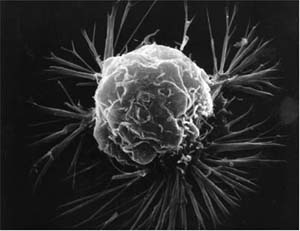
Magnified breast cancer: While breast cancer is often caused by genetic factors, doctors have discovered a link to obesity as well.
Adipocyte as Endocrine Tumor
Adipocyte metabolism has also been linked to the development of breast cancer. Adipocyte is an endocrine organ that secretes factors that both act locally in paracrine fashion, and enter the circulation. Mature adipocytes secrete leptin, known to regulate food intake and energy balance. Breast tissue does not normally express leptin receptors, but the presence of leptin receptors on a breast tumor is associated with lower survival and distant metastases. Inflammatory cytokines including tumor necrosis factor alpha (TNF-α) and interleukin-6 (IL-6) are also synthesized and secreted by adipocytes and adipose tissue-associated macrophages. These cytokines have diverse activities, including cell signaling and control of dendritic cell growth, which have potential to regulate connective tissue integrity and control the degree of tumor invasion. Undifferentiated preadipocytes secrete estrogen metabolites through the action of aromatase, an enzyme that converts adrenal androgens to estrogens. Control of this enzyme is poorly understood, but it is known to respond to signals from mature adipocytes, including TNF-α and IL-6. Aromatase activity can elevate the local estrogen concentration manyfold, increasing exposure of breast tissue to this potential carcinogen and growth promoter.
...
- Biological or Genetic Contributors to Obesity
- Adipocytes
- Adiponectin
- Adrenergic Receptors
- Agouti and Agouti Related Protein
- Animal Models of Obesity
- Animal QTLs (Quantitative Trait Locus)
- Bardet-Biedl Syndromes
- Cannabinoid Receptor
- CD36 and FAT (Fatty Acid Transporters)
- Cholecystokinin (CCK)
- Cortisol
- Cushing Syndrome
- Cytokines
- Db/Db Mouse
- Dopamine Receptor
- Down's Syndrome
- Epistatic Effects of Genes on Obesity
- Estrogen-Related Receptor
- Familial Lipodystrophies
- Fatty Acid Transport Proteins
- G-Protein Coupled Receptors
- Genetic Taste Factors
- Ghrelin
- Glucagon Receptor
- Glucocorticoids
- Glucokinase
- Growth Hormone
- HDL Receptors
- Histamine Receptor
- Hormone Sensitive Lipase
- Human QTLs
- Hypothyroidism
- Insulin and Insulin Resistance
- Insulin-Like Growth Factors
- Interleukins
- Intrauterine Growth Restriction
- LDL Receptors
- Leptin
- Leptin Receptors
- Lipoprotein Lipase
- Low Birth Weight
- Melanocortins
- Mendelian Disorders Related to Obesity
- Metabolic Rate
- Monogenic Effects that Result in Obesity
- Neuropeptides
- NPY (Neuropeptide Y)
- Ob/Ob Mouse
- Obesity and the Immune System
- Obesity Gene Map
- Opioid Receptor
- Perilipins
- POMC (Proopiomelanocortin)
- PPAR (Peroxisome Proliferator-Activated Receptors)
- Prader-Willi Syndrome
- Protein Kinase
- Set or Settling Point
- Steroids
- Thrifty Gene Hypothesis
- Thrifty Gene Hypothesis and Obesity
- Thyroid Hormone
- TNF (Tumor Nucrosis Factors)
- Transgenics and Knockouts for Obesity-Related Genes
- Tubby Candidate Gene
- Twin Studies and Genetics of Obesity
- Uncoupling Proteins
- Viral Causes of Obesity
- Children and Obesity
- Advertising
- Atherosclerosis in Children
- Bariatric Surgery in Children
- Behavioral Treatment of Child Obesity
- Beverage Choices in Children and Obesity
- Breastfeeding
- Changing Children's Food Habits
- Childhood Obesity as a Risk Factor for Adult Overweight
- Childhood Obesity Treatment Centers
- Children and Diets
- Ethnic Disparities in the Prevalence of Childhood Obesity
- Family Behavioral Interventions
- Family Therapy in the Treatment of Overweight Children
- Flavor Programming and Childhood Food Preferences
- Food Intake Assessments in Children
- Formation and Development of Food Preferences
- Genetic Taste Factors
- Hypertension in Children
- Implications of Restriction of Foods on Child Feeding Habits
- Medical Interventions for Children
- Metabolic Disorders and Childhood Obesity
- Morbid Obesity in Children
- National Weight Loss Efforts for Children
- Overweight Children and School Performance
- Overweight Children and the Media
- Peer Influences on Obesity in Children
- Pharmacological Treatment of Childhood Obesity
- Physical Activity in Children
- Prevalence of Childhood Obesity in Developing Countries
- Prevalence of Childhood Obesity in the United States
- Prevalence of Childhood Obesity Worldwide
- Prevention
- School-Based Interventions to Prevent Obesity
- Self-Esteem and Children's Weight
- Stigmas against Overweight Children
- Type 2 Diabetes
- Dietary Interventions to Treat Obesity
- Atkins Diet
- Calcium and Dairy Products
- Caloric Restriction
- Carbohydrate “Addictions”
- Chromium Picolinate
- Diet Myths
- Dietary Restraint
- Exercise
- Fast Foods
- Fiber and Obesity
- Fruits and Vegetables
- High-Carbohydrate Diets
- High-Protein Diets
- Jenny Craig
- L.A. Weight Loss
- Liquid Diets
- Low-Calorie Diets
- Low-Fat Diets
- Macrodiets
- Medifast
- Non-Diet Approaches
- Nutrisystem
- Nutrition Fads
- Optifast
- Physical Activity and Obesity
- Portion Control
- Slim-Fast
- South Beach Diet
- Supplements and Obesity
- Vegetarianism
- Very Low-Calorie Diets
- Volumetrics
- Water and Obesity
- Weight Watchers
- Zone, The
- Disordered Eating and Obesity
- Anorexia Nervosa
- Antidepressants
- Appetite Signals
- Binge Eating
- Body Dysmorphic Disorder
- Body Image
- Bulimia Nervosa
- Childhood Onset Eating Disorders
- Cognitive-Behavioral Therapy
- Depression
- Dieting: Good or Bad?
- Disinhibited Eating
- DSM-IV
- Eating Disorders and Athletes
- Eating Disorders and Gender
- Eating Disorders and Obesity
- Eating Disorders in School Children
- EDNOS
- Families of Eating Disorder Patients
- Feminist Perspective and Body Image Disorders
- Genetic Influences on Eating Disorders
- Hunger
- Neurotransmitters
- Night Eating Syndrome
- Physiological Aspects of Anorexia
- Physiological Aspects of Bulimia
- Prevalence of Disordered Eating
- Sexual Abuse and Eating Disorders
- Treatment Centers for Eating Disorders
- Weight Cycling and Yo-Yo Dieting
- Environmental Contributors to Obesity
- Accessibility of Foods
- Advertising of Foods to Children
- Children's Television Programming
- Economics of Food
- Energy Density
- Fast Foods
- Food Advertising
- Food Labeling
- Governmental Subsidizing of Energy Dense Foods
- Inaccessibility of Exercise
- Increased Reliance on Automobiles
- Increasing Portion Sizes
- Palatability
- Parental and Home Environments
- Safe Play Opportunities for Children
- School Lunch Programs
- Schools and Obesity
- Sodas and Soft Drinks
- Sugar and Fat Substitutes
- Supersizing
- Television
- Toxic Environment
- Health Implications of Obesity
- Appetite Control
- Asthma
- Atherosclerosis
- Back Pain
- Blood Lipids
- Body Image
- Breast Cancer
- Colon Cancer
- Congestive Heart Failure
- Depression
- Elevated Cholesterol
- Fatty Liver
- Fertility
- Fitness
- Gallbladder Disease
- Gastroesophageal Reflux (GERD)
- Gastrointestinal Disorders
- Gestational Diabetes
- Gout
- High-Density Lipoproteins
- Hormones
- Hypertension
- Impotence
- Kidney Failure
- Kidney Stones
- Low-Density Lipoproteins
- Menstrual Problems
- Mortality and Obesity
- Osteoarthritis
- Osteoporosis
- Ovarian Cancer
- Ovarian Cysts
- Overall Diet Quality
- Polycystic Ovary Disease
- Respiratory Problems
- Sexual Health
- Sleep Apnea
- Stroke
- Type 2 Diabetes
- Urinary Incontinence in Severe Obesity in Women
- Uterine Cancers
- Medical Treatments for Obesity
- American Medical Association
- American Obesity Association
- Amphetamines
- Caffeine
- Cost of Medical Obesity Treatments
- Dexatrim
- Dieting: Good or Bad?
- Ephedra
- Fenfluramine
- Future of Medical Treatments for Obesity
- Gastric Bypass
- Gastroplasty
- Health Coverage of Gastric Surgeries
- International Obesity Task Force
- Laparoscopy
- Liquid Diets
- Low-Calorie Diets
- Medical Interventions for Children
- Medications that Affect Nutrient Partitioning
- Multidisciplinary Bariatric Programs
- Noradrenergic Drugs
- North American Association for the Study of Obesity
- Orlistat (Xenical)
- Physician-Assisted Weight Loss
- Qualifications for Gastric Surgery
- Roux-en-y Gastric Bypass
- Serotonergic Medications
- Sibutramine (Meridia)
- Thyroid Medications
- Vertical Banded Gastroplasty
- Very Low-Calorie Diets
- New Research Frontiers on Obesity
- Acomplia
- Bioelectrical Impedance Analysis
- Bod Pod and Pea Pod
- CART Peptides
- Combined Approaches to Treatment
- Computerized Tomography
- DEXA (Dual Energy X-ray Absorptiometry)
- Dilution Techniques
- Doubly Labeled Water
- Drug Targets that Decrease Food Intake/Appetite
- Drugs that Block Fat Cell Formation
- Energy Expenditure Technologies
- Food Technology
- Frontiers in Maintenance and Prevention
- Functional Foods
- Functional Magnetic Resonance Imaging
- Genetic Mapping of Obesity-Related Genes
- Genomics
- Histamines
- Hormone Disorders
- Hydrodensitrometry
- Indirect Calorimetry
- Intestinal Microflora Concentrations
- Leptin Supplements
- Magnetic Resonance Imaging Scans for Viewing Body Composition
- Metformin
- Microarray Analysis
- New Candidate Obesity Genes
- New Drug Targets that Prevent Fat Absorption
- New Drug Targets to Improve Insulin Sensitivity
- New Drug Targets to Increase Metabolic Rate
- Non-Diet Approaches
- Obesity and Viruses
- Quantitative Trait Locus Mapping
- Rimonabant
- SNP Technologies
- Three-D Image Reconstruction
- Translational Research
- Whole-Body Potassium Counting
- Obesity and Ethnicity/Race
- African Americans
- Asian Americans
- Body Fat Distribution in African Americans
- Body Fat Distribution in Asian Americans
- Body Fat Distribution in Hispanic Americans
- Cardiovascular Disease in African Americans
- Cardiovascular Disease in Asian Americans
- Cardiovascular Disease in Hispanic Americans
- Caucasians
- Dominican Americans
- Ethnic Variations in Body Fat Storage
- Ethnic Variations in Obesity-Related Health Risks
- Genetics
- Health Disparities—NIH Strategic Plan
- Hispanic Americans
- Hypertension in African Americans
- Hypertension in Asian Americans
- Hypertension in Hispanic Americans
- Mexican Americans
- Native Americans
- Obesity and Socioeconomic Status
- Pima Indians
- Puerto Rican Americans
- Sisters Together
- Thrifty Gene Hypothesis
- U.S. Office of Minority Health
- Western Diets
- Obesity and the Brain or Obesity and Behavior
- Antidepressants
- Appetite Control
- Autonomic Nervous System
- Bombesin
- Cannabinoid System
- Central Nervous System
- Cholecystokinin
- Conditioned Food Preferences
- Corticotropin-Releasing Hormone
- Dopamine
- Drugs and Food
- Fat Taste
- Flavor: Taste and Smell
- Folic Acid and Neural Tube Defects
- Food “Addictions”
- Food Reward
- Gustatory System
- Habituation
- Hypothalamus
- Inherited Taste Preferences
- Insulin
- Liking vs. Wanting
- Medications that Increase Body Weight
- Mood and Food
- Neuropeptide-Y
- Neurotransmitters
- Norepinephrine
- Nutrient Reward
- Olfactory System
- Opioids
- Oxytocin and Food Intake
- Peripheral Nervous Sytem
- Pituitary Gland
- Satietin
- Sensory-Specific Satiety
- Sweet Taste
- Sympathetic Nervous System
- Taste Aversion Learning
- Taste Reactivity
- Thyroid Gland
- Tryptophan
- Obesity as a Public Health Crisis
- Access to Nutritious Foods
- American Academy of Pediatrics
- American College of Sports Medicine
- American Diabetes Association
- American Dietetic Association
- American Heart Association
- American Medical Association
- American Obesity Association
- American Society for Bariatric Surgery
- Built Environments
- Center for Maternal and Child Health
- Center for Nutrition Policy and Promotion
- Center for Science in the Public Interest
- Centers for Disease Control and Prevention
- Child Obesity Programs
- Community Level Initiatives to Prevent Obesity
- Community Programs to Prevent Obesity
- Council on Size and Weight Discrimination
- Economics of Obesity
- Expanded Food and Nutrition Program
- Federal Initiatives to Prevent Obesity
- Food and Drug Administration
- Food Guide Pyramid
- Food Labeling
- Food Marketing to Children
- Food Stamp Nutrition Education Program
- Government Agencies
- Head Start
- Healthy Eating Index
- Healthy People 2010
- National Association to Advance Fat Acceptance
- National Cancer Institute
- National Center for Health Statistics
- National Eating Disorders Association
- National Heart, Lung, and Blood Institute
- National Institutes of Health
- NIDDK
- North American Association for the Study of Obesity
- Obesity in Schools
- Office of Dietary Supplements
- Office of Minority Health
- Policy to Prevent Obesity
- President's Council on Physical Fitness and Sports
- Safety of Urban Environments
- School Initiatives to Prevent Obesity
- Shape-Up America!
- Social Marketing and Obesity
- State and Local Initiatives to Prevent Obesity
- Taxation of Unhealthy Foods
- Toxic Environment
- U.S. Department of Agriculture
- U.S. Department of Health and Social Services
- Weight Control Information Network
- Psychological Influences and Outcomes of Obesity
- Addictive Behaviors
- Anorexia Nervosa
- Anxiety
- Binge Eating
- Bulimia Nervosa
- Cognitive-Behavioral Therapy
- Compulsive Overeating
- Depression
- Disordered Eating
- Eating Disorders in School Children
- External Controls
- Loneliness
- Night Eating Syndrome
- Obsessive Compulsive Disorder
- Psychiatric Medicine and Obesity
- Self-Esteem and Obesity
- Stress
- Suicidality
- Well-Being
- Societal Influences and Outcomes of Obesity
- Alcohol
- Appearance
- Body Image
- Breastfeeding vs. Formula Feeding
- Built Environments
- Calcium Intake and Dairy Products
- Carbohydrate and Protein Intake
- Computers and the Media
- Eating Out in the United States
- Fat Acceptance
- Fat Intake
- Flavor Learning
- Food Advertising and Obesity
- Food Guide Pyramid
- Food Intake Patterns
- Food Labeling
- Food Preferences
- Governmental Policy and Obesity
- Income Level and Obesity
- Nutrition Education
- Obesity and Academic Performance
- Obesity and Drug Use
- Obesity and Sports
- Obesity and the Media
- Obesity in Schools
- Personal Relationships and Obesity
- Physical Activity Patterns in the Obese
- Smoking
- Soda and Soft Drink Intake
- Stereotypes and Obesity
- Supersizing
- Variety of Foods and Obesity
- Virtual Environments
- Weight Discrimination
- Western Diet
- Women and Dieting
- Women and Obesity
- Assessment of Obesity and Health Risks
- Bariatric Surgery in Women
- Body Image
- Breast Cancer
- Breastfeeding
- Colon Cancer
- Coronary Heart Disease in Women
- Early Onset Menarche and Obesity in Women
- Economic Disparities among Obesity in Women
- Endometrial and Uterine Cancers
- Estrogen Levels
- Ethnic Disparities among Obesity in Women
- Exercise and Physical Activity among Obese Women
- Fat Acceptance
- Fertility
- Food Preferences
- Gestational Diabetes
- Implications of Gestational Development
- Maternal Influences on Child Feeding
- Menopause and Obesity
- Morbid Obesity in Women
- Obese Women and Social Stigmatization
- Polycystic Ovary Disease
- Pregnancy Prevalence of Obesity in U.S. Women
- Self-Esteem in Obese Women
- Support Groups for Obese Women
- Waist-to-Hip Ratio
- Women and Diabetes
- Women and Dieting
- Worldwide Prevelance of Obesity
- Loading...
Get a 30 day FREE TRIAL
-
 Watch videos from a variety of sources bringing classroom topics to life
 -
Read modern, diverse business cases
-
Explore hundreds of books and reference titles

Read next

More like this
Sage Recommends
We found other relevant content for you on other Sage platforms.
Have you created a personal profile? Login or create a profile so that you can save clips, playlists and searches