
Entry
Reader's guide
Entries A-Z
Subject index
Foresight Institute
The Foresight Institute was founded in 1986 by K. Eric Drexler and Christine Peterson and is a nonprofit organization dedicated to promoting the development of nanotechnology. The organization has undergone a slight change in mission since its inception. Originally involved in attempting to promote awareness of nanotechnology it now is principally involved in public policy and research efforts to develop and promote specific nanotechnologies. The Institute's focus can be broken down into three principle areas: energy, security, and human enhancement. Foresight's focus on nanotechnology is, in part, an artifact of Drexler's founding role in the field of nanotechnology. Nanotechnology's assumed facilitative role in developing each of the other three convergent technologies—biotechnology, information technology, and cognitive science—is the remaining factor in driving Foresight's focus. The Institute is funded through a mixture of corporate sponsorship, philanthropic grants, and private membership dues and donations. The Foresight Institute began as an effort to educate the public and policy makers about nanotechnology's possibilities and, ostensibly, its dangers. This aspect of Foresight's work was critical in the early stages of nanotechnology's development as a field of research for the same reason such a public relations effort would have been immensely valuable to Monsanto as it began to develop and introduce genetically modified crops and food products.
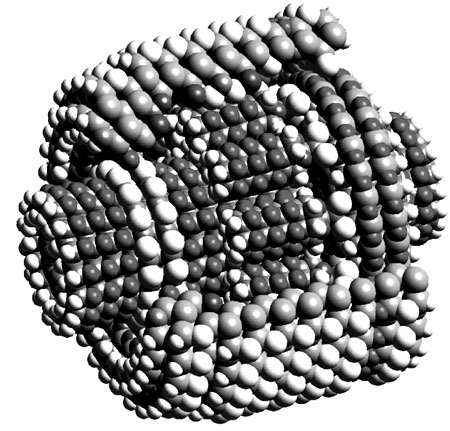
This planetary gear was designed by K. Eric Drexler, scaled down to the molecular size range (http://www.imm.org).
Public backlash based on a lack of knowledge and consultation and the seizure of narrative by issue-specific advocacy groups crippled the effort to use these products to ease the crisis of world hunger just as these technologies were reaching their maturity and have delayed the rollout of products that would have dramatically increased crop yields in places where such an increase in food production would be needed most. Further, the critical regulatory infrastructure necessary to mitigate many of the potential risks—real risks rather than those propagated by proponents of the “Frankenfood” mythology—has been late in coming and its development has been retarded by a forced focus on unrealistic hazards. It is likely the case that avoiding a similar outcome for nanotechnology was much on the minds of Drexler and Peterson when they founded the Foresight Institute and tasked it with increasing public awareness and knowledge of nanotechnology.
In the ensuing decades the results from the public relations work of organizations like Foresight have been mixed. Recent survey data indicate that public awareness of nanotechnology and its benefits and risks remains dismally low. On the other hand, the awareness of policy makers has been raised and this has resulted in the passage of significant funding and regulatory legislation with regard to nanotechnology. In his 2001 budget, President Bill Clinton made nanotechnology funding a federal initiative and the National Nanotechnology Initiative was the result.
This initiative has radically increased both the coordination and level of funding for nanotechnology research and development in the ensuing years. In addition, it has resulted in the creation of a number of institutes—such as the Center for Nanotechnology in Society—dedicated to studying the risks and social implications of nanotechnology and its concomitant research fields. With a federally funded network of social impact research institutes in place it seems natural for the Foresight Institute to have shifted their focus from awareness to advocacy, which they have, in fact, done.
...
- Art, Design, and Materials
- Bionanotechnology Centers
- Context
- Clinton, William J.
- Converging Technologies
- Feynman, Richard
- Fullerene
- Human Enhancement
- IPOs of Nanofirms
- Journal of Nanoparticle Research
- Microscopy, Atomic Force
- Microscopy, Electron (Including TEM and SEM)
- Microscopy, Exotic
- Microscopy, Optical
- Microscopy, Scanning Probe
- Microscopy, Scanning Tunneling
- Nanobiotechnology
- Nanohype
- Nanomaterials
- Nanotech Chronicles, The
- National Nanotechnology Coordination Office (U.S.)
- National Nanotechnology Infrastructure Network (U.S.)
- National Nanotechnology Initiative (U.S.)
- Nature Nanotechnology
- Prey
- Roco, Mihail
- Self-Replication
- Social Movements and Nanoscience
- Technology Assessment
- Technoscience
- Economics and Business
- Agrifood
- Artificial Intelligence
- Benny the Bear
- Commercial Incubators
- Commercialization
- Competitiveness and Technonationalism
- Computational Nanotechnology
- Consumer Products Inventory
- Corporate Research and Development
- Electronics and Information Technology
- Energy
- Entrepreneurs in Nanoscience
- Export Controls
- Food
- Food Packaging
- General Purpose Technology
- Globalization
- Intellectual Property Rights
- International Development
- iPod Nano
- IPOs of Nanofirms
- L'Oréal
- Lux Research
- Magic Nano
- Market Projections
- Market Resistance and Acceptance
- Nano-Bible
- NanoBusiness Alliance
- Nanoenabled Products in Commerce
- Nanogate (Tribological Coating for Automobiles)
- Nanointermediaries in Commerce
- Nanomanufacturing
- Nanomaterials in Commerce
- Nanophotovoltaics
- Nanotechnology in Manufacturing
- Nanotechnology Industries Association
- Nanotechnology Law and Business
- Nanotechnology Patent Class
- Patents
- Publicly Traded Nanofirms
- Titanium Dioxide
- Venture Capital
- Workers' Rights
- Workforce Development and Training
- Zinc Oxide
- Engagement and the Public
- Center for Nanotechnology in Society (ASU)
- Center for Nanotechnology in Society (UCSB)
- Center on Nanotechnology and Society (Kent School of Law)
- Centre for Applied Philosophy and Public Ethics (Australia)
- Centre for Bioethics and Public Policy
- Consensus Conference on Nanotechnology
- Democs
- Foresight Institute
- Friends of the Earth Nanotechnology Project
- Hyle
- International Council on Nanotechnology
- International Symposium on Nanotechnology, Occupational and Environmental Health
- Nanoforum
- Nanologues
- Nanoscale Undergraduate Education Program
- Nanotechnology Engagement Group (Involve)
- National Center for Learning and Teaching in Nanoscale Science and Engineering
- National Citizens' Technology Forum
- Popular Culture
- Public Attitudes Toward Nanotechnology
- Public Engagement
- Public Understanding of Nanotechnology
- Public Value Mapping
- Public Values
- Public Well-Being
- Science Cafés
- Environment and Risk
- “Grey Goo” Scenario
- Center for Biological and Environmental Nanotechnology
- Center for the Environmental Implications of NanoTechnology
- Department for Environment, Food and Rural Affairs (UK)
- Desalinization
- Environment Canada
- Environmental Benefits
- Environmental Defense Fund
- Environmental Ethics/Philosophy and Nanotechnology
- Environmental Protection Agency (U.S.)
- Ethics and Risk Analysis
- Federal Institute for Risk Assessment (Germany)
- Green Nanotechnology
- Health and Environmental Risks (Netherlands)
- Human Enhancement, Biological Risks
- International Risk Governance Council
- International Symposium on Nanotechnology, Occupational and Environmental Health
- Magic Nano
- Ministry of Environment (South Korea)
- Nano Risk Framework
- Nanomedicine, Toxicity Issues of
- Nanophotovoltaics
- Nanotech Environmental, Health, and Safety Roadmap
- Nanotoxicology
- Nanoweapons, Ethical Issues of
- National Institute of Environmental Health Sciences (U.S.)
- Occupational Safety and Health Administration (U.S.)
- Occupational Safety and Health Enforcement (U.S.)
- Risk Amplification
- Risk Assessment
- Risk Attenuation
- Risk Communication
- Risk Governance
- Risk Management
- Risk-Benefit Perceptions of Nanotechnology
- Water Purification
- Ethics and Values
- Access
- Bioethics
- Centre for Applied Philosophy and Public Ethics (Australia)
- Centre for Bioethics and Public Policy
- Codes of Conduct, Corporate
- Codes of Conduct, Professional
- Environmental Ethics/Philosophy and Nanotechnology
- Equity
- Ethics and Risk Analysis
- Human Enhancement, Biological Risks
- Journal of Lutheran Ethics
- Nano-Ethics
- NanoEthics
- Nanoethics Group
- NanoEthics Network
- NanoEthicsBank
- Nanomedicine, Ethical Issues of
- Nanoscientists as Moral Agents
- Nanoweapons, Ethical Issues of
- Neuroethics
- Privacy
- Public Attitudes Toward Nanotechnology
- Public Engagement
- Public Value Mapping
- Public Values
- Security
- Speculative Ethics
- United Nations Millennium Development Goals
- Geographies and Distribution
- Argentina
- Australia
- Berkeley, California, Local Regulatory Efforts
- Brazil
- California
- Cambridge, Massachusetts, Local Regulatory Efforts
- Canada
- China
- European Union
- France
- Geopolitical Implications
- Germany
- Global Value Chains
- Globalization
- Grenoble
- India
- Indigenous Nanotechnology
- International Development
- iPod Nano
- Iran
- Israel
- Italy
- Japan
- Mexico
- Nanodistricts
- Nanoenabled Products in Commerce
- Nanogate (Tribological Coating for Automobiles)
- Nanotechnology Foundation of Texas
- Nanotechnology Victoria
- Netherlands
- New York
- Regulation (Europe)
- Regulation (U.S.)
- Russia
- Singapore
- South Korea
- Switzerland
- Taiwan
- Trade Secrets and Nanotechnology
- United Kingdom
- United Nations Millennium Development Goals
- United States
- Governance
- 21st Century Nanotechnology Research and Development Act of 2003
- Anticipatory Governance
- Arms Control
- Berkeley, California, Local Regulatory Efforts
- Cambridge, Massachusetts, Local Regulatory Efforts
- Center for Nanotechnology in Society (ASU)
- Center for Nanotechnology in Society (UCSB)
- Center on Nanotechnology and Society (Kent School of Law)
- Congressional Nanotechnology Caucus
- Department for Environment, Food and Rural Affairs (UK)
- Department of Agriculture (U.S.)
- Department of Defense (U.S.)
- Department of Energy (U.S.)
- Department of Health (UK)
- Environmental Protection Agency (U.S.)
- Federal Institute for Occupational Safety and Health (Germany)
- Federal Ministry of Education and Research (Germany)
- Food and Consumer Goods Authority (Netherlands)
- Food and Drug Administration (U.S.)
- German Research Foundation
- Governance
- Intellectual Property Rights
- International Council on Nanotechnology
- Iran Nanotechnology Policy Studies Committee
- Joint Economic Committee, U.S. Congressional
- Korean Occupational Safety and Health Agency
- Law
- Ministry of Defence (UK)
- Ministry of Environment (South Korea)
- Ministry of Science and Technology (Brazil)
- Ministry of Science and Technology (South Korea)
- Monash Centre for Regulatory Studies
- Moratorium
- Nanotechnology Law and Business
- Nanotechnology Promotion Act of 2002 (South Korea)
- Nanotechnology Safety for Success Dialogue (Food Industry)
- National Academy of Sciences (U.S.)
- National Aeronautics and Space Administration (U.S.)
- National Cancer Institute (U.S.)
- National Institute for Occupational Safety and Health (U.S.)
- National Institutes of Health (U.S.)
- National Nanotechnology Advisory Panel (U.S.)
- National Nanotechnology Coordination Office (U.S.)
- National Nanotechnology Development Plan (South Korea)
- National Nanotechnology Infrastructure Network (U.S.)
- National Nanotechnology Initiative (U.S.)
- National Program of Nanotechnology (Brazil)
- National Research Council (Brazil)
- National Research Council (Canada)
- National Science Foundation (U.S.)
- National Toxicology Program (U.S.)
- Natural Science and Engineering Research Council (Canada)
- Occupational Safety and Health Administration (U.S.)
- Reflexive Governance
- Regulation (Europe)
- Regulation (U.S.)
- Risk Governance
- Sixth Framework Programme
- Technological Determinism
- Therapeutic Goods Administration (Australia)
- Toxic Substances Control Act and Nanotechnology
- Woodrow Wilson International Center
- History and Philosophy
- “Nano Culture”
- Bainbridge, William
- Control
- Converging Technologies
- Drexler, K. Eric
- Emergence
- Engines of Creation
- Feynman, Richard
- Future
- Historical Examples of Nanomaterials
- History-in-the-Making
- IBM
- Indigenous Nanotechnology
- Joy, Bill
- Kabbalah
- Kroto, Sir Harry
- Kurzweil, Ray
- L5 Society
- Nanophilosophy
- Nordmann, Alfred
- Novelty
- Roco, Mihail
- Smalley, Richard
- Taniguchi, Norio
- Transhumanism
- Integration and Interdisciplinarity
- Nanotechnology Companies
- Nanotechnology Organizations
- Asia Pacific Nanotechnology Forum
- Australia Nanobusiness Forum
- Australian Office of Nanotechnology
- Australian Research Council Nanotechnology Network
- Canadian NanoBusiness Alliance
- Center for Biological and Environmental Nanotechnology
- Center for Nanotechnology in Society (ASU)
- Center for Nanotechnology in Society (UCSB)
- Center for Responsible Nanotechnology
- Center for the Environmental Implications of NanoTechnology
- Center on Nanotechnology and Society (Kent School of Law)
- Commission for Atomic Energy (France)
- Commonwealth Scientific and Research Organization
- Community Research and Development Information Service
- Foresight Institute
- Friends of the Earth Nanotechnology Project
- International Council on Nanotechnology
- International Nanotechnology and Society Network
- International Symposium on Nanotechnology, Occupational and Environmental Health
- Iran Nanotechnology Policy Studies Committee
- Latin American Nanotechnology and Society Network (Mexico)
- Nanobase
- Nanoparticle Occupational Safety and Health Consortium
- Nanotechnology Business Alliance
- Nanotechnology Engagement Group (Involve)
- Nanotechnology Enterprise
- Nanotechnology Foundation of Texas
- Nanotechnology Group
- Nanotechnology Industries Association
- Nanotechnology Institute (ASME)
- Nanotechnology Issues Dialogue Group (UK)
- Nanotechnology Safety for Success Dialogue (Food Industry)
- NanoTrust Project (Austria)
- National Nanotechnology Advisory Panel (U.S.)
- National Nanotechnology Coordination Office (U.S.)
- National Nanotechnology Infrastructure Network (U.S.)
- National Nanotechnology Initiative (U.S.)
- National Program of Nanotechnology (Brazil)
- National Science Foundation (U.S.)
- Society for Nanoscience and Technology
- VISION Online
- Loading...
Get a 30 day FREE TRIAL
-
 Watch videos from a variety of sources bringing classroom topics to life
 -
Read modern, diverse business cases
-
Explore hundreds of books and reference titles

Read next

More like this
Sage Recommends
We found other relevant content for you on other Sage platforms.
Have you created a personal profile? Login or create a profile so that you can save clips, playlists and searches