
Entry
Reader's guide
Entries A-Z
Subject index
Asbestos
Asbestos characterizes different natural silicates, which form fibrous and flexible crystals. The term is derived from the ancient Greek adjective for durable, which refers to its specific thermal, mechanical, and chemical stability. These properties made asbestos especially attractive for the production of heat-resistant materials and inert components for construction, industry, and households. Since the last decades of the 20th century, the use of asbestos became increasingly criticized and banned because of health risks associated with exposure to asbestos, including asbestosis, mesothelioma, and other cancers. Corresponding pathogenic effects are likely after long-term exposure to its respirable tiny fibers during mining, processing, weathering, and demolition of the mineral or its products. The particle spectrum of the released fibers may even range down to the nanoscale.
The typical length of asbestos fibers varies between 200 nm and 200 μm, while their mean diameter ranges from 20 to 90 nm. The fibrous nature of asbestos reflects its internal structure, which is given by parallel alignment of either chains or bands of hydrated silicate molecules. The composition of the more abundant “chrysotile” type is Mg3Si2O5(OH)4. Asbestos from the amphibole group is variable, with different sets of cations (Mg, Fe, Na, Ca) bound to the complex [Si4O11(OH)]7-anion. Asbestos remains stable below temperatures from 1,350 to 1,750 K, depending upon its magnesium content. Inversely, its chemical inertness weakens with rising proportions of magnesium. Asbestos is an excellent thermal and electrical isolator, with high tensile strength and elasticity. It has a specific affinity to certain substances like benzopyrene, which might be adsorbed at the fibers' surfaces.
A typical appearance of asbestos on a site contaminated with asbestos-containing materials in Oregon.
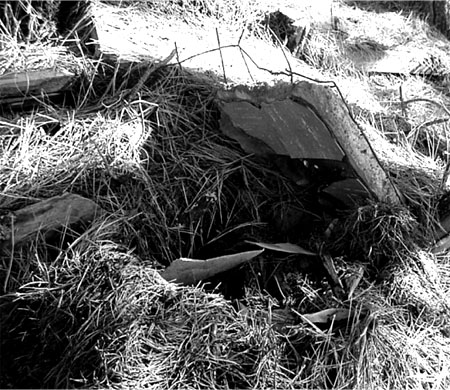
Asbestos has been known since ancient times. The era of its industrial use began in the 19th century. Main producers of asbestos are currently Russia, Kazakhstan, Brazil, Canada, and South Africa where it is mined from certain crystalline rocks. Its fibrous nature enables the production of fire-resistant clothes (e.g., for fire departments) and other woven fabrics for heat protection. Asbestos might be used for construction purposes, while being added to cement mixtures for fabrication of durable roof and facing tiles as well as for sewage pipes. It has been also utilized for manifold other products (floor covering, seals, brake pads, insulators) as well as for fire-resistant spray layers on steel constructions of large tower blocks. Overall, asbestos has been used in thousands of applications. However, recent research has demonstrated that exposure to asbestos increases risk for several serious diseases, and as a consequence, some uses of asbestos are now regulated or prohibited, and in some cases removal or containment of asbestos materials has been mandated in locations (such as schools and other public buildings) where they would expose humans to health risks.
The pathogen potential of asbestos is related to the specific size and shape of asbestos fibers. Fibers below 3 μm diameter may enter the respiratory organs as airborne dust after being mobilized by production, handling, and demolition of asbestos-bearing materials. Respired asbestos mostly accumulates on the lung tissues and may stimulate enhanced cell proliferation as well as chromosomal aberrations. Long-term exposure to inhaled asbestos fibers might induce bronchial tumors and malignant pleural diseases besides asbestosis, which results in an irreversible decrease of pulmonary function. Corresponding health effects come about after decades in a stochastic manner. The risk of malignant disease depends upon the concentration of fibers and duration of exposure. Moreover, individual risks rise extraordinarily in combination with loads from tobacco smoke or radon. In contrast, asbestos contaminated drinking water poses relatively low risks to human health compared to burdens from airborne particles. Permanently tied asbestos is even harmless.
...
- Art, Design, and Materials
- Bionanotechnology Centers
- Context
- Clinton, William J.
- Converging Technologies
- Feynman, Richard
- Fullerene
- Human Enhancement
- IPOs of Nanofirms
- Journal of Nanoparticle Research
- Microscopy, Atomic Force
- Microscopy, Electron (Including TEM and SEM)
- Microscopy, Exotic
- Microscopy, Optical
- Microscopy, Scanning Probe
- Microscopy, Scanning Tunneling
- Nanobiotechnology
- Nanohype
- Nanomaterials
- Nanotech Chronicles, The
- National Nanotechnology Coordination Office (U.S.)
- National Nanotechnology Infrastructure Network (U.S.)
- National Nanotechnology Initiative (U.S.)
- Nature Nanotechnology
- Prey
- Roco, Mihail
- Self-Replication
- Social Movements and Nanoscience
- Technology Assessment
- Technoscience
- Economics and Business
- Agrifood
- Artificial Intelligence
- Benny the Bear
- Commercial Incubators
- Commercialization
- Competitiveness and Technonationalism
- Computational Nanotechnology
- Consumer Products Inventory
- Corporate Research and Development
- Electronics and Information Technology
- Energy
- Entrepreneurs in Nanoscience
- Export Controls
- Food
- Food Packaging
- General Purpose Technology
- Globalization
- Intellectual Property Rights
- International Development
- iPod Nano
- IPOs of Nanofirms
- L'Oréal
- Lux Research
- Magic Nano
- Market Projections
- Market Resistance and Acceptance
- Nano-Bible
- NanoBusiness Alliance
- Nanoenabled Products in Commerce
- Nanogate (Tribological Coating for Automobiles)
- Nanointermediaries in Commerce
- Nanomanufacturing
- Nanomaterials in Commerce
- Nanophotovoltaics
- Nanotechnology in Manufacturing
- Nanotechnology Industries Association
- Nanotechnology Law and Business
- Nanotechnology Patent Class
- Patents
- Publicly Traded Nanofirms
- Titanium Dioxide
- Venture Capital
- Workers' Rights
- Workforce Development and Training
- Zinc Oxide
- Engagement and the Public
- Center for Nanotechnology in Society (ASU)
- Center for Nanotechnology in Society (UCSB)
- Center on Nanotechnology and Society (Kent School of Law)
- Centre for Applied Philosophy and Public Ethics (Australia)
- Centre for Bioethics and Public Policy
- Consensus Conference on Nanotechnology
- Democs
- Foresight Institute
- Friends of the Earth Nanotechnology Project
- Hyle
- International Council on Nanotechnology
- International Symposium on Nanotechnology, Occupational and Environmental Health
- Nanoforum
- Nanologues
- Nanoscale Undergraduate Education Program
- Nanotechnology Engagement Group (Involve)
- National Center for Learning and Teaching in Nanoscale Science and Engineering
- National Citizens' Technology Forum
- Popular Culture
- Public Attitudes Toward Nanotechnology
- Public Engagement
- Public Understanding of Nanotechnology
- Public Value Mapping
- Public Values
- Public Well-Being
- Science Cafés
- Environment and Risk
- “Grey Goo” Scenario
- Center for Biological and Environmental Nanotechnology
- Center for the Environmental Implications of NanoTechnology
- Department for Environment, Food and Rural Affairs (UK)
- Desalinization
- Environment Canada
- Environmental Benefits
- Environmental Defense Fund
- Environmental Ethics/Philosophy and Nanotechnology
- Environmental Protection Agency (U.S.)
- Ethics and Risk Analysis
- Federal Institute for Risk Assessment (Germany)
- Green Nanotechnology
- Health and Environmental Risks (Netherlands)
- Human Enhancement, Biological Risks
- International Risk Governance Council
- International Symposium on Nanotechnology, Occupational and Environmental Health
- Magic Nano
- Ministry of Environment (South Korea)
- Nano Risk Framework
- Nanomedicine, Toxicity Issues of
- Nanophotovoltaics
- Nanotech Environmental, Health, and Safety Roadmap
- Nanotoxicology
- Nanoweapons, Ethical Issues of
- National Institute of Environmental Health Sciences (U.S.)
- Occupational Safety and Health Administration (U.S.)
- Occupational Safety and Health Enforcement (U.S.)
- Risk Amplification
- Risk Assessment
- Risk Attenuation
- Risk Communication
- Risk Governance
- Risk Management
- Risk-Benefit Perceptions of Nanotechnology
- Water Purification
- Ethics and Values
- Access
- Bioethics
- Centre for Applied Philosophy and Public Ethics (Australia)
- Centre for Bioethics and Public Policy
- Codes of Conduct, Corporate
- Codes of Conduct, Professional
- Environmental Ethics/Philosophy and Nanotechnology
- Equity
- Ethics and Risk Analysis
- Human Enhancement, Biological Risks
- Journal of Lutheran Ethics
- Nano-Ethics
- NanoEthics
- Nanoethics Group
- NanoEthics Network
- NanoEthicsBank
- Nanomedicine, Ethical Issues of
- Nanoscientists as Moral Agents
- Nanoweapons, Ethical Issues of
- Neuroethics
- Privacy
- Public Attitudes Toward Nanotechnology
- Public Engagement
- Public Value Mapping
- Public Values
- Security
- Speculative Ethics
- United Nations Millennium Development Goals
- Geographies and Distribution
- Argentina
- Australia
- Berkeley, California, Local Regulatory Efforts
- Brazil
- California
- Cambridge, Massachusetts, Local Regulatory Efforts
- Canada
- China
- European Union
- France
- Geopolitical Implications
- Germany
- Global Value Chains
- Globalization
- Grenoble
- India
- Indigenous Nanotechnology
- International Development
- iPod Nano
- Iran
- Israel
- Italy
- Japan
- Mexico
- Nanodistricts
- Nanoenabled Products in Commerce
- Nanogate (Tribological Coating for Automobiles)
- Nanotechnology Foundation of Texas
- Nanotechnology Victoria
- Netherlands
- New York
- Regulation (Europe)
- Regulation (U.S.)
- Russia
- Singapore
- South Korea
- Switzerland
- Taiwan
- Trade Secrets and Nanotechnology
- United Kingdom
- United Nations Millennium Development Goals
- United States
- Governance
- 21st Century Nanotechnology Research and Development Act of 2003
- Anticipatory Governance
- Arms Control
- Berkeley, California, Local Regulatory Efforts
- Cambridge, Massachusetts, Local Regulatory Efforts
- Center for Nanotechnology in Society (ASU)
- Center for Nanotechnology in Society (UCSB)
- Center on Nanotechnology and Society (Kent School of Law)
- Congressional Nanotechnology Caucus
- Department for Environment, Food and Rural Affairs (UK)
- Department of Agriculture (U.S.)
- Department of Defense (U.S.)
- Department of Energy (U.S.)
- Department of Health (UK)
- Environmental Protection Agency (U.S.)
- Federal Institute for Occupational Safety and Health (Germany)
- Federal Ministry of Education and Research (Germany)
- Food and Consumer Goods Authority (Netherlands)
- Food and Drug Administration (U.S.)
- German Research Foundation
- Governance
- Intellectual Property Rights
- International Council on Nanotechnology
- Iran Nanotechnology Policy Studies Committee
- Joint Economic Committee, U.S. Congressional
- Korean Occupational Safety and Health Agency
- Law
- Ministry of Defence (UK)
- Ministry of Environment (South Korea)
- Ministry of Science and Technology (Brazil)
- Ministry of Science and Technology (South Korea)
- Monash Centre for Regulatory Studies
- Moratorium
- Nanotechnology Law and Business
- Nanotechnology Promotion Act of 2002 (South Korea)
- Nanotechnology Safety for Success Dialogue (Food Industry)
- National Academy of Sciences (U.S.)
- National Aeronautics and Space Administration (U.S.)
- National Cancer Institute (U.S.)
- National Institute for Occupational Safety and Health (U.S.)
- National Institutes of Health (U.S.)
- National Nanotechnology Advisory Panel (U.S.)
- National Nanotechnology Coordination Office (U.S.)
- National Nanotechnology Development Plan (South Korea)
- National Nanotechnology Infrastructure Network (U.S.)
- National Nanotechnology Initiative (U.S.)
- National Program of Nanotechnology (Brazil)
- National Research Council (Brazil)
- National Research Council (Canada)
- National Science Foundation (U.S.)
- National Toxicology Program (U.S.)
- Natural Science and Engineering Research Council (Canada)
- Occupational Safety and Health Administration (U.S.)
- Reflexive Governance
- Regulation (Europe)
- Regulation (U.S.)
- Risk Governance
- Sixth Framework Programme
- Technological Determinism
- Therapeutic Goods Administration (Australia)
- Toxic Substances Control Act and Nanotechnology
- Woodrow Wilson International Center
- History and Philosophy
- “Nano Culture”
- Bainbridge, William
- Control
- Converging Technologies
- Drexler, K. Eric
- Emergence
- Engines of Creation
- Feynman, Richard
- Future
- Historical Examples of Nanomaterials
- History-in-the-Making
- IBM
- Indigenous Nanotechnology
- Joy, Bill
- Kabbalah
- Kroto, Sir Harry
- Kurzweil, Ray
- L5 Society
- Nanophilosophy
- Nordmann, Alfred
- Novelty
- Roco, Mihail
- Smalley, Richard
- Taniguchi, Norio
- Transhumanism
- Integration and Interdisciplinarity
- Nanotechnology Companies
- Nanotechnology Organizations
- Asia Pacific Nanotechnology Forum
- Australia Nanobusiness Forum
- Australian Office of Nanotechnology
- Australian Research Council Nanotechnology Network
- Canadian NanoBusiness Alliance
- Center for Biological and Environmental Nanotechnology
- Center for Nanotechnology in Society (ASU)
- Center for Nanotechnology in Society (UCSB)
- Center for Responsible Nanotechnology
- Center for the Environmental Implications of NanoTechnology
- Center on Nanotechnology and Society (Kent School of Law)
- Commission for Atomic Energy (France)
- Commonwealth Scientific and Research Organization
- Community Research and Development Information Service
- Foresight Institute
- Friends of the Earth Nanotechnology Project
- International Council on Nanotechnology
- International Nanotechnology and Society Network
- International Symposium on Nanotechnology, Occupational and Environmental Health
- Iran Nanotechnology Policy Studies Committee
- Latin American Nanotechnology and Society Network (Mexico)
- Nanobase
- Nanoparticle Occupational Safety and Health Consortium
- Nanotechnology Business Alliance
- Nanotechnology Engagement Group (Involve)
- Nanotechnology Enterprise
- Nanotechnology Foundation of Texas
- Nanotechnology Group
- Nanotechnology Industries Association
- Nanotechnology Institute (ASME)
- Nanotechnology Issues Dialogue Group (UK)
- Nanotechnology Safety for Success Dialogue (Food Industry)
- NanoTrust Project (Austria)
- National Nanotechnology Advisory Panel (U.S.)
- National Nanotechnology Coordination Office (U.S.)
- National Nanotechnology Infrastructure Network (U.S.)
- National Nanotechnology Initiative (U.S.)
- National Program of Nanotechnology (Brazil)
- National Science Foundation (U.S.)
- Society for Nanoscience and Technology
- VISION Online
- Loading...
Get a 30 day FREE TRIAL
-
 Watch videos from a variety of sources bringing classroom topics to life
 -
Read modern, diverse business cases
-
Explore hundreds of books and reference titles

Read next

More like this
Sage Recommends
We found other relevant content for you on other Sage platforms.
Have you created a personal profile? Login or create a profile so that you can save clips, playlists and searches