
Entry
Reader's guide
Entries A-Z
Subject index
Agrifood
The term agrifood was coined as a way to refer broadly to the entire supply chain for production and processing of food and fiber commodities historically produced on farms, plantations, ranches, greenhouses, and other agricultural settings. Pre- and post-harvest modification of agricultural products, including food, is common and modification has long been far more than shallow. Technology-enabled modifications have long targeted fundamental components of both the products and the processes in agriculture. Cabbage, broccoli, and cauliflower, for example, do not exist in nature. Each of these closely related foods is the result of changes executed by farmers and plant breeders in the wild mustard plant (Brassica oleracea). The innovations involved in agrifood nanotechnology are responses, in most cases, to contemporary problems in agriculture, food processing, food delivery, and food safety. As always, solutions are always accompanied by some trade-off with either resources or risks.
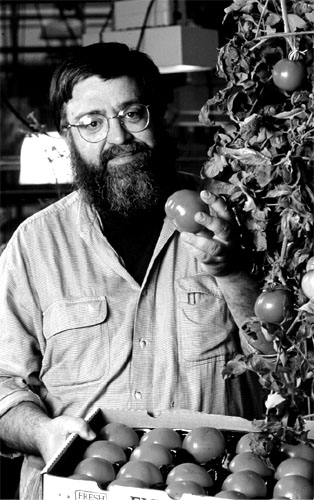
A U.S. plant physiologist compares tomato varieties containing the bioengineered ACC synthase gene.
Current agricultural practice suffers a diversity of efficiency problems which include environmental damage, food health and safety issues, and economic losses. Inefficiencies in agriculture are a result of the high-input methods of current agriculture. High inputs are required because land and water are limited, soil fertility is in decline, there are inherent genetic limits to crops and animals use of the inputs, and crop loss due to pathogens, insects, and weeds. The high-input nature of agriculture also contributes to environmental damage, such as species loss and soil degradation. Also, high input of chemicals especially contributes to the contamination of end-product foods, fruits, and vegetables. A growing body of evidence links the use of pesticides, for example, to chronic ill health in humans. High inputs and inefficiencies can mean economic losses, which affect farmers' abilities to recover from short-term crises while raising end-product prices.
Although there is rapid expansion in the ways in which nanotechnology is applied to farming, detection and management systems and delivery systems for pest control and growth augmentation represent the bulk of innovation and application for increased food production. Detection and management improvements using nanotechnology will further precision farming. Computers, global positioning systems (GPS), and devices that are able to monitor crops remotely are expected to enable near-optimal adjustments to maximize efficiency. Nanotechnology has a role both at the level of the computer, where nanotech enabled computer technology will far surpass current limits, and a role in the innovation and improvement of detection devices. These improvements will be to the sensitivity, size, and cost of existing devices through the use of nanocanti-levers small enough to detect individual molecules, for example. Food (fertilizers) and water supplies will be monitored for residues, trace chemicals, antibiotics, and toxins. Another sort of management that will be implemented will be passive control of contamination.
Nanotechnology will also change the content of the materials used as agricultural inputs. Pesticides, herbicides, fungicides, and fertilizers are being modified through nanotechnology to improve their effectiveness. Modifications to pesticides are intended to make them more efficient, thus reducing their negative environmental and human health impacts as well as improving cost-effectiveness. Nanoparticulate composites can be used to improve the bioadhesive properties of active agents, which are found in pesticides. Increased adhesion of pesticides could reduce the amount of applications and thereby reduce the amount of pesticide exposure to nontarget organisms and the environment generally. Extended release can also be accomplished using nanotechnology. Such an application would, again, increase effectiveness of pesticides and herbicides and decrease the need for multiple applications. Fertilizers, as well, can be improved through such applications as nano diatomite and zeolite ceramic crystal powder, for example. Multiple applications of fertilizers are necessary, at times, due to the runoff of the chemical before uptake by the target crop.
...
- Art, Design, and Materials
- Bionanotechnology Centers
- Context
- Clinton, William J.
- Converging Technologies
- Feynman, Richard
- Fullerene
- Human Enhancement
- IPOs of Nanofirms
- Journal of Nanoparticle Research
- Microscopy, Atomic Force
- Microscopy, Electron (Including TEM and SEM)
- Microscopy, Exotic
- Microscopy, Optical
- Microscopy, Scanning Probe
- Microscopy, Scanning Tunneling
- Nanobiotechnology
- Nanohype
- Nanomaterials
- Nanotech Chronicles, The
- National Nanotechnology Coordination Office (U.S.)
- National Nanotechnology Infrastructure Network (U.S.)
- National Nanotechnology Initiative (U.S.)
- Nature Nanotechnology
- Prey
- Roco, Mihail
- Self-Replication
- Social Movements and Nanoscience
- Technology Assessment
- Technoscience
- Economics and Business
- Agrifood
- Artificial Intelligence
- Benny the Bear
- Commercial Incubators
- Commercialization
- Competitiveness and Technonationalism
- Computational Nanotechnology
- Consumer Products Inventory
- Corporate Research and Development
- Electronics and Information Technology
- Energy
- Entrepreneurs in Nanoscience
- Export Controls
- Food
- Food Packaging
- General Purpose Technology
- Globalization
- Intellectual Property Rights
- International Development
- iPod Nano
- IPOs of Nanofirms
- L'Oréal
- Lux Research
- Magic Nano
- Market Projections
- Market Resistance and Acceptance
- Nano-Bible
- NanoBusiness Alliance
- Nanoenabled Products in Commerce
- Nanogate (Tribological Coating for Automobiles)
- Nanointermediaries in Commerce
- Nanomanufacturing
- Nanomaterials in Commerce
- Nanophotovoltaics
- Nanotechnology in Manufacturing
- Nanotechnology Industries Association
- Nanotechnology Law and Business
- Nanotechnology Patent Class
- Patents
- Publicly Traded Nanofirms
- Titanium Dioxide
- Venture Capital
- Workers' Rights
- Workforce Development and Training
- Zinc Oxide
- Engagement and the Public
- Center for Nanotechnology in Society (ASU)
- Center for Nanotechnology in Society (UCSB)
- Center on Nanotechnology and Society (Kent School of Law)
- Centre for Applied Philosophy and Public Ethics (Australia)
- Centre for Bioethics and Public Policy
- Consensus Conference on Nanotechnology
- Democs
- Foresight Institute
- Friends of the Earth Nanotechnology Project
- Hyle
- International Council on Nanotechnology
- International Symposium on Nanotechnology, Occupational and Environmental Health
- Nanoforum
- Nanologues
- Nanoscale Undergraduate Education Program
- Nanotechnology Engagement Group (Involve)
- National Center for Learning and Teaching in Nanoscale Science and Engineering
- National Citizens' Technology Forum
- Popular Culture
- Public Attitudes Toward Nanotechnology
- Public Engagement
- Public Understanding of Nanotechnology
- Public Value Mapping
- Public Values
- Public Well-Being
- Science Cafés
- Environment and Risk
- “Grey Goo” Scenario
- Center for Biological and Environmental Nanotechnology
- Center for the Environmental Implications of NanoTechnology
- Department for Environment, Food and Rural Affairs (UK)
- Desalinization
- Environment Canada
- Environmental Benefits
- Environmental Defense Fund
- Environmental Ethics/Philosophy and Nanotechnology
- Environmental Protection Agency (U.S.)
- Ethics and Risk Analysis
- Federal Institute for Risk Assessment (Germany)
- Green Nanotechnology
- Health and Environmental Risks (Netherlands)
- Human Enhancement, Biological Risks
- International Risk Governance Council
- International Symposium on Nanotechnology, Occupational and Environmental Health
- Magic Nano
- Ministry of Environment (South Korea)
- Nano Risk Framework
- Nanomedicine, Toxicity Issues of
- Nanophotovoltaics
- Nanotech Environmental, Health, and Safety Roadmap
- Nanotoxicology
- Nanoweapons, Ethical Issues of
- National Institute of Environmental Health Sciences (U.S.)
- Occupational Safety and Health Administration (U.S.)
- Occupational Safety and Health Enforcement (U.S.)
- Risk Amplification
- Risk Assessment
- Risk Attenuation
- Risk Communication
- Risk Governance
- Risk Management
- Risk-Benefit Perceptions of Nanotechnology
- Water Purification
- Ethics and Values
- Access
- Bioethics
- Centre for Applied Philosophy and Public Ethics (Australia)
- Centre for Bioethics and Public Policy
- Codes of Conduct, Corporate
- Codes of Conduct, Professional
- Environmental Ethics/Philosophy and Nanotechnology
- Equity
- Ethics and Risk Analysis
- Human Enhancement, Biological Risks
- Journal of Lutheran Ethics
- Nano-Ethics
- NanoEthics
- Nanoethics Group
- NanoEthics Network
- NanoEthicsBank
- Nanomedicine, Ethical Issues of
- Nanoscientists as Moral Agents
- Nanoweapons, Ethical Issues of
- Neuroethics
- Privacy
- Public Attitudes Toward Nanotechnology
- Public Engagement
- Public Value Mapping
- Public Values
- Security
- Speculative Ethics
- United Nations Millennium Development Goals
- Geographies and Distribution
- Argentina
- Australia
- Berkeley, California, Local Regulatory Efforts
- Brazil
- California
- Cambridge, Massachusetts, Local Regulatory Efforts
- Canada
- China
- European Union
- France
- Geopolitical Implications
- Germany
- Global Value Chains
- Globalization
- Grenoble
- India
- Indigenous Nanotechnology
- International Development
- iPod Nano
- Iran
- Israel
- Italy
- Japan
- Mexico
- Nanodistricts
- Nanoenabled Products in Commerce
- Nanogate (Tribological Coating for Automobiles)
- Nanotechnology Foundation of Texas
- Nanotechnology Victoria
- Netherlands
- New York
- Regulation (Europe)
- Regulation (U.S.)
- Russia
- Singapore
- South Korea
- Switzerland
- Taiwan
- Trade Secrets and Nanotechnology
- United Kingdom
- United Nations Millennium Development Goals
- United States
- Governance
- 21st Century Nanotechnology Research and Development Act of 2003
- Anticipatory Governance
- Arms Control
- Berkeley, California, Local Regulatory Efforts
- Cambridge, Massachusetts, Local Regulatory Efforts
- Center for Nanotechnology in Society (ASU)
- Center for Nanotechnology in Society (UCSB)
- Center on Nanotechnology and Society (Kent School of Law)
- Congressional Nanotechnology Caucus
- Department for Environment, Food and Rural Affairs (UK)
- Department of Agriculture (U.S.)
- Department of Defense (U.S.)
- Department of Energy (U.S.)
- Department of Health (UK)
- Environmental Protection Agency (U.S.)
- Federal Institute for Occupational Safety and Health (Germany)
- Federal Ministry of Education and Research (Germany)
- Food and Consumer Goods Authority (Netherlands)
- Food and Drug Administration (U.S.)
- German Research Foundation
- Governance
- Intellectual Property Rights
- International Council on Nanotechnology
- Iran Nanotechnology Policy Studies Committee
- Joint Economic Committee, U.S. Congressional
- Korean Occupational Safety and Health Agency
- Law
- Ministry of Defence (UK)
- Ministry of Environment (South Korea)
- Ministry of Science and Technology (Brazil)
- Ministry of Science and Technology (South Korea)
- Monash Centre for Regulatory Studies
- Moratorium
- Nanotechnology Law and Business
- Nanotechnology Promotion Act of 2002 (South Korea)
- Nanotechnology Safety for Success Dialogue (Food Industry)
- National Academy of Sciences (U.S.)
- National Aeronautics and Space Administration (U.S.)
- National Cancer Institute (U.S.)
- National Institute for Occupational Safety and Health (U.S.)
- National Institutes of Health (U.S.)
- National Nanotechnology Advisory Panel (U.S.)
- National Nanotechnology Coordination Office (U.S.)
- National Nanotechnology Development Plan (South Korea)
- National Nanotechnology Infrastructure Network (U.S.)
- National Nanotechnology Initiative (U.S.)
- National Program of Nanotechnology (Brazil)
- National Research Council (Brazil)
- National Research Council (Canada)
- National Science Foundation (U.S.)
- National Toxicology Program (U.S.)
- Natural Science and Engineering Research Council (Canada)
- Occupational Safety and Health Administration (U.S.)
- Reflexive Governance
- Regulation (Europe)
- Regulation (U.S.)
- Risk Governance
- Sixth Framework Programme
- Technological Determinism
- Therapeutic Goods Administration (Australia)
- Toxic Substances Control Act and Nanotechnology
- Woodrow Wilson International Center
- History and Philosophy
- “Nano Culture”
- Bainbridge, William
- Control
- Converging Technologies
- Drexler, K. Eric
- Emergence
- Engines of Creation
- Feynman, Richard
- Future
- Historical Examples of Nanomaterials
- History-in-the-Making
- IBM
- Indigenous Nanotechnology
- Joy, Bill
- Kabbalah
- Kroto, Sir Harry
- Kurzweil, Ray
- L5 Society
- Nanophilosophy
- Nordmann, Alfred
- Novelty
- Roco, Mihail
- Smalley, Richard
- Taniguchi, Norio
- Transhumanism
- Integration and Interdisciplinarity
- Nanotechnology Companies
- Nanotechnology Organizations
- Asia Pacific Nanotechnology Forum
- Australia Nanobusiness Forum
- Australian Office of Nanotechnology
- Australian Research Council Nanotechnology Network
- Canadian NanoBusiness Alliance
- Center for Biological and Environmental Nanotechnology
- Center for Nanotechnology in Society (ASU)
- Center for Nanotechnology in Society (UCSB)
- Center for Responsible Nanotechnology
- Center for the Environmental Implications of NanoTechnology
- Center on Nanotechnology and Society (Kent School of Law)
- Commission for Atomic Energy (France)
- Commonwealth Scientific and Research Organization
- Community Research and Development Information Service
- Foresight Institute
- Friends of the Earth Nanotechnology Project
- International Council on Nanotechnology
- International Nanotechnology and Society Network
- International Symposium on Nanotechnology, Occupational and Environmental Health
- Iran Nanotechnology Policy Studies Committee
- Latin American Nanotechnology and Society Network (Mexico)
- Nanobase
- Nanoparticle Occupational Safety and Health Consortium
- Nanotechnology Business Alliance
- Nanotechnology Engagement Group (Involve)
- Nanotechnology Enterprise
- Nanotechnology Foundation of Texas
- Nanotechnology Group
- Nanotechnology Industries Association
- Nanotechnology Institute (ASME)
- Nanotechnology Issues Dialogue Group (UK)
- Nanotechnology Safety for Success Dialogue (Food Industry)
- NanoTrust Project (Austria)
- National Nanotechnology Advisory Panel (U.S.)
- National Nanotechnology Coordination Office (U.S.)
- National Nanotechnology Infrastructure Network (U.S.)
- National Nanotechnology Initiative (U.S.)
- National Program of Nanotechnology (Brazil)
- National Science Foundation (U.S.)
- Society for Nanoscience and Technology
- VISION Online
- Loading...
Get a 30 day FREE TRIAL
-
 Watch videos from a variety of sources bringing classroom topics to life
 -
Read modern, diverse business cases
-
Explore hundreds of books and reference titles

Read next

More like this
Sage Recommends
We found other relevant content for you on other Sage platforms.
Have you created a personal profile? Login or create a profile so that you can save clips, playlists and searches