
Entry
Reader's guide
Entries A-Z
Subject index
Maternal Body
When discussing the maternal body, it is important to note that the ideas of what it is, what it is supposed to do, and what it looks like are deeply rooted in various customs and traditions, making attempts at broad generalities potentially inaccurate and uninformative. Bodies exist within and are constituted by cultures, which in turn are influenced by the kinds of bodies that happen to inhabit them.
In the past, expectant women hid their pregnant bodies by staying at home, wearing loose dresses, and limiting their activities. In more recent times, society is more accepting of the pregnant maternal body, but pregnant women still fear that they look “fat.”
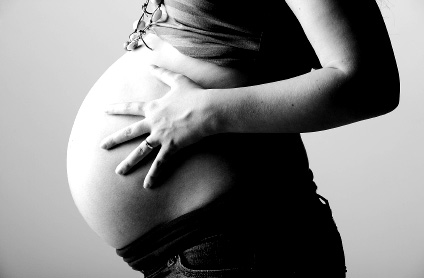
Different eras have marked maternal bodies in various ways: they have been viewed as a privileged, exalted symbols of religious teaching (as in the case of the Virgin Mary); as idealized womanhood; as subjects of study within science and medicine; and more recently, as polarizing focal points of political, social, and media attention. The following discussion addresses the notions of maternal bodies from Westernized and relatively modern (1600s to the present) perspectives, and no claim is being made about the importance or validity of other views or traditions.
Overview
There are no well-defined conceptual barriers that can be placed around the maternal body. When speaking of maternal bodies, what is often meant are forms of maternal embodiments. Given this rather broad meta-category, a number of bodies can count as maternal: pregnant female bodies, female bodies that have given birth, female bodies that can potentially become pregnant (or are assumed to have this ability), adoptive mothers, women who donate and adopt gametes, birth mothers who give their children up for adoption, women who care for children in a number of ways, infertile women, and so on. The following sections will offer several approaches to the concept of the maternal body from broadly cultural, medical, philosophical, and feminist perspectives. However, the focus will be less on what a maternal body is, and more on how it has been defined, and redefined, by the larger culture, and especially by the political and medical establishments.
The Maternal Body: The Ideal of Control
Historically viewed as unpredictable, chaotic, and intractable, maternal bodies were not easily defined, and, in various cultural guises, have been set against their perceived opposite—the stable, controlled, and well-ordered masculine corpus. However, it was still the maternal body that had the ability to produce all the subsequent generations, and thus its perceived weaknesses became social, political, and medical loci of not just social interest, but direct involvement. Most importantly, it was difficult to understand, and thus to control. It is not altogether too surprising, therefore, that a significant portion of the historical, political, philosophical, social and medical discourses about the maternal body focus on the question of how to construct and define, and in so doing, control it.
Thus, the maternal body came to be seen as not merely one that comports with the rules (of proper pregnancy preparation, pregnancy itself, or child-care, for example), but also one that is, according to Rebecca Kukla, properly governed and ordered by religious institutions, and later, by the state and medical sciences. An assumption that was common to all three sources of control was that the maternal body needed to comport with the laws of God, of man, and later, of science and child welfare. From as far back as the 17th century, public rules were beginning to appear in texts, sermons, and physician's recommendations regarding a pregnant woman's exercise, diet, amount of sexual activity, clothing, and self-care. To be properly maternal, these prescriptions insisted, a female body needed to comply, to submit, and to follow instructions from official sources.
...
- History of Motherhood
- Bible, Mothers in the
- Clytemnestra
- History of Motherhood: 1000 to 1500
- History of Motherhood: 1500 to 1750
- History of Motherhood: 1750 to 1900
- History of Motherhood: 1900 to Present
- History of Motherhood: 2000 B.C.E. to 1000 C.E.
- History of Motherhood: American
- History of Motherhood: Ancient Civilizations
- History of Motherhood: Middle Ages
- History of Motherhood: Renaissance
- Jocasta
- Medea
- Myth, Mothers in
- Issues in Motherhood
- “Bad” Mothers
- Abortion
- Anger
- Anxiety
- Attachment Parenting
- Bisexuality
- Body Image
- Celebrity Motherhood
- Child Poverty
- Class and Mothering
- Co-Parenting
- Code Pink
- Conflict Zones, Mothering in
- Cybermothering
- Employment and Motherhood
- Empowered Mothering
- Ethics of Care
- Ethics, Maternal
- Freud, Sigmund
- Girlhood and Motherhood
- Lone Mothers
- Maternal Absence
- Maternal Agency
- Media, Mothers in
- Momism Generation of Vipers
- Motherhood Denied
- Mothering as Work
- Mothering Versus Motherhood
- Mothers Who Leave
- Mothers' Pensions/Allowances
- Myths of Motherhood: Good/Bad
- New Momism
- Nonresidential Mother
- Older Mothers
- Opt-Out Revolution
- Peace and Mothering
- Planned Parenthood
- Poverty and Mothering
- Pronatalism
- Prostitution and Motherhood
- Race and Racism
- Refugee Mothers
- Reproductive Justice/Rights Movements
- Second Shift/Third Shift
- Security Mom
- SisterSong
- Slavery and Mothering
- Social Action and Motherhood
- Spock, Benjamin
- Taxation and Motherhood
- Technology and Motherhood
- Teen Mothers
- Terrorism and Mothering
- Third Wave Foundation
- Transgender Parenting
- Transracial Mothering
- Unions and Mothers
- Unpaid Work
- Unwed Mothers
- War and Mothers
- Welfare and Mothering
- Welfare Warriors
- Work and Mothering
- Working-Class Mothers
- Motherhood and Family
- Absentee Mothers
- Adolescent Children
- Adult Children
- African American Mothers
- Alpha Mom
- Beta Mom
- Birth Mothers
- Care Giving
- Child Abuse
- Child Custody and the Law
- Childcare
- Childhood
- Childlessness
- Children
- Co-Mothering
- Community Mothering
- Dating and Single Mothers
- Daughter-Centricity
- Daughters and Mothers
- Daycare
- Disabled Mothers
- Discipline of Children
- Divorce
- Education and Mothering
- Empty Nest
- Family
- Family Planning
- Family Values
- Father's Rights Movement
- Fathers and Fathering
- Foster Mothering
- Full-Time Mothering
- Grandmothers and Grandmothering
- Grief, Loss of Child
- Home Birth
- Home Schooling
- Homeplace
- Housework
- Humor and Motherhood
- Incarcerated Mothers
- Incest
- Infant Mortality
- Infanticide
- Infertility
- Intensive Mothering
- Internet and Mothering
- Lesbian Mothering
- LGBTQ Families and Motherhood
- Marriage
- Maternity Leave
- Matriarchy
- Mental Illness and Mothers
- Midlife Mothering
- Military Mothers
- Mother Role Versus Wife Role
- Mother-in-Law
- Motherless Daughters
- Motherline
- Mothers and Multiple Partners
- Mothers of Multiples
- Nannies
- Single Mothers
- Soccer Mom
- Stay-at-Home Mothers
- Stepmothers
- Young Mothers
- Motherhood and Health
- Advice Literature for Mothers
- AIDS/HIV and Mothering
- Alcoholism
- Anxiety
- Artificial Insemination
- Attention Deficit Disorder
- Autism
- Becoming a Mother
- Birth Control
- Birth Goddesses
- Breastfeeding
- Breastmilk
- Cancer and Motherhood
- Childbirth
- Depression
- Displacement
- Domestic Labor
- Doula
- Drug Abuse
- Eating Disorders
- Emotions
- Environments and Mothering
- Eugenics
- Fertility
- Fetal Alcohol Syndrome
- Guilt
- Learning Disabilities
- Maternal Alienation
- Maternal Bodies
- Maternal Desire
- Maternal Eroticism
- Maternal Feminism
- Maternal Health
- Maternal Power/Powerlessness
- Maternal Practice
- Miscarriage
- Mommy Brain
- Mother Blame
- Mothering and Creativity
- Mothering Children With Disabilities
- Munchausen Syndrome by Proxy
- Natural Mothering
- Nursing (Profession) and Motherhood
- Obesity and Motherhood
- Obstetrics and Gynecology
- Overwhelmed Mothers
- Postmaternity
- Postpartum Depression
- Pregnancy
- Prenatal Health Care
- Reproduction
- Reproduction of Mothering
- Reproductive Labor
- Reproductive Technologies
- Sexuality and Mothering
- Sons and Mothers
- Sterilization
- Stillbirth
- Sudden Infant Death Syndrome
- Surrogate Motherhood
- Violence Against Mothers/Children
- Wet Nursing
- Motherhood and Society
- Activist Mothers of the Disappeared
- Adoption
- Angel in the House
- Art and Mothering
- Autobiographies
- Brain, Child
- Buddhism and Mothering
- Carework
- Caribbean Mothers
- Chicana Mothering
- Christianity and Mothers
- Cultural Bearing
- Demeter Press
- DES Mothers
- Dramatic Arts, Mothers in
- Earth Mothers
- Equatorial Guinea
- Ethnic Mothers
- European Union
- Fairy Tales, Mothers in
- Film, Mothers in
- First Nations
- Gift Economy
- Hinduism
- Hip Mama
- Honduras
- Immigrant Mothers
- Islam and Motherhood
- Jewish Mothers
- Judaism and Motherhood
- La Leche League
- Latina Mami
- Law and Mothering
- Literary Mama
- Literature, Mothers in
- Mainstreet Moms
- Mamapalooza
- Mamazon
- Mammy
- Mask of Motherhood
- Maternal Wall
- Mexican Spirituality and Motherhood
- Midwifery
- Migration and Mothers
- Militarism and Mothering
- Million Mom March
- Modernism and Motherhood
- Mommy Blogs
- Mommy Lit
- Mommy Track
- Mommy Wars
- MomsRising
- Mother Centers International Network for Empowerment
- Mother Country
- Mother Earth
- Mother Goddess
- Mother Jones
- Mother Nature
- Mother Wit
- Mother-Daughter Project
- Mother's Day
- Motherhood Memoirs
- Motherhood Movement
- Motherhood Penalty
- Motherhood Poets
- Motherhood Project
- Motherhood Studies
- Mothers Acting Up (MAU)
- Mothers Against Drunk Driving (MADD)
- Mothers and More (MAM)
- Mothers Are Women (MAW)
- Mothers Movement Online (MMO)
- Mothers of the Intifada
- Mothers of the Plaza de Mayo
- Mothers Ought To Have Equal Rights (MOTHERS)
- Museum of Motherhood
- Music and Mothers
- National Association of Mothers' Centers
- National Organization for Women
- Native Americans
- Nazi Germany
- Organizations
- Other Mothering
- Peace Movements and Mothering
- Poetry, Mothers in
- Poland
- Politics and Mothers
- Popular Culture and Mothering
- Preschool Children
- Public Policy and Mothers
- Religion and Mothering
- Republican Motherhood
- Residential School and Mothers/First Nations
- Roman Mothers
- Royal Mothers
- Rural Mothers
- Save the Mothers
- Sociology of Motherhood
- South Asian Mothers/Mothering
- Spirituality and Mothering
- Sports and Mothers
- Starhawk
- Suffrage Movement and Mothers
- Teachers as Mothers
- TV Moms
- Wicca and Mothering
- Zines
- Motherhood around the World
- Afghanistan
- Albania
- Algeria
- Angola
- Argentina
- Armenia
- Australia
- Austria
- Azerbaijan
- Bahrain
- Bangladesh
- Belarus
- Belgium
- Belize
- Benin
- Bhutan
- Bolivia
- Bosnia and Herzegovina
- Botswana
- Brazil
- Bulgaria
- Burkina Faso
- Burundi
- Cambodia
- Cameroon
- Canada
- Cape Verde
- Central African Republic
- Chad
- Chile
- China
- Colombia
- Congo
- Congo, Democratic Republic of the
- Costa Rica
- Croatia
- Cuba
- Cyprus
- Czech Republic
- East Timor
- Ecuador
- Egypt
- El Salvador
- Eritrea
- Estonia
- Ethiopia
- Finland
- France
- Gabon
- Gambia
- Georgia (Nation)
- Germany
- Ghana
- Greece (and Ancient Greece)
- Guam
- Guatemala
- Guinea
- Guinea-Bissau
- Guyana
- Haiti
- Hungary
- Iceland
- Indonesia
- Iran
- Iraq
- Ireland
- Israel
- Italy
- Ivory Coast
- Jamaica
- Japan
- Jordan
- Kazakhstan
- Kenya
- Korea, North
- Korea, South
- Kuwait
- Kyrgyzstan
- Laos
- Latvia
- Lebanon
- Lesotho
- Liberia
- Libya
- Lithuania
- Macedonia
- Madagascar
- Malawi
- Malaysia
- Maldives
- Mali
- Mauritania
- Mexico
- Micronesia, Federated States of
- Moldova
- Mongolia
- Morocco
- Mozambique
- Myanmar
- Namibia
- Nauru
- Nepal
- Netherlands
- New Caledonia
- New Zealand
- Nicaragua
- Niger
- Nigeria
- Norway
- Oman
- Pakistan
- Palestine
- Panama
- Papua New Guinea
- Paraguay
- Peru
- Philippines
- Portugal
- Puerto Rico
- Qatar
- Romania
- Russia (and Soviet Union)
- Rwanda
- Samoa
- Saudi Arabia
- Senegal
- Sierra Leone
- Singapore
- Slovakia
- Slovenia
- Somalia
- South Africa
- Spain
- Sri Lanka
- Sudan
- Suriname
- Swaziland
- Sweden
- Switzerland
- Syria
- Tajikistan
- Tanzania
- Thailand
- Togo
- Tunisia
- Turkey
- Turkmenistan
- Uganda
- Ukraine
- United Kingdom
- Uruguay
- Uzbekistan
- Venezuela
- Vietnam
- Yemen
- Zambia
- Zimbabwe
- Motherhood in the United States
- Alabama
- Alaska
- Arizona
- Arkansas
- California
- Colorado
- Connecticut
- Delaware
- Florida
- Georgia
- Hawaii
- Idaho
- Illinois
- Indiana
- Iowa
- Kansas
- Kentucky
- Louisiana
- Maine
- Maryland
- Massachusetts
- Michigan
- Minnesota
- Mississippi
- Missouri
- Montana
- Nebraska
- Nevada
- New Hampshire
- New Jersey
- New Mexico
- New York
- North Carolina
- North Dakota
- Ohio
- Oklahoma
- Oregon
- Pennsylvania
- Rhode Island
- South Carolina
- South Dakota
- Tennessee
- Texas
- Utah
- Vermont
- Virginia
- Washington
- West Virginia
- Wisconsin
- Wyoming
- Motherhood Studies
- Aboriginal Mothering
- Academe and Mothering
- Activism, Maternal
- African Diaspora
- Ambivalence, Maternal
- Animal Species and Motherhood
- Anthropology of Mothering
- Anti-Racist Mothering
- Association for Research on Mothering
- Biography and Motherhood
- Birth Imagery, Metaphor, and Myth
- Capitalism and Motherhood
- Civil Rights Movement and Motherhood
- Communism and Motherhood
- Consumerism and Motherhood
- Cross-Cultural Perspectives on Motherhood
- Dialectics of Reproduction
- Ecofeminism and Mothering
- Economics of Motherhood
- Economy and Motherhood
- Ectogenesis
- Essentialism and Mothering
- Feminism and Mothering
- Feminist Mothering
- Feminist Theory and Mothering
- Future of Motherhood
- Genocide and Motherhood
- Globalization and Mothering
- Idealization of Mothers
- Infidelity and Motherhood
- Institution of Motherhood
- Intergenerational Trauma
- International Mothers Network
- Journal for the Association for Research on Mothering
- Maternal Abject (Kristeva)
- Maternal Authenticity
- Maternal Künstlerroman
- Maternal Mortality
- Maternal Pedogogy
- Maternal Subjectivities
- Maternal Thinking (Ruddick)
- Matricide
- Matrifocality
- Matrilineal
- Matrophobia
- Matroreform
- Mauritius
- Mother Outlaws (Group)
- Mother Outlaws (Rich)
- Mother/Daughter Plot (Hirsch)
- Motherhood Endowment (Rathbone)
- Motherself
- Nationalism and Motherhood
- New French Feminism and Motherhood
- Noncustodial Mother
- Paganism (New Paganism) and Mothering
- Patriarchal Ideology of Motherhood
- Philosophy and Motherhood
- Postcolonialism and Mothering
- Price of Motherhood (Crittenden)
- Psychoanalysis and Motherhood
- Psychology of Motherhood
- Scientific Motherhood
- Self-Identity
- Semiotic, Maternal (Kristeva)
- Sensitive Mothering (Walkerdine and Lucey)
- Social Construction of Motherhood
- Social Reproduction
- Transnationalism
- Waring, Marilyn
- Warner, Judith (Motherhood Religion)
- Prominent Mothers
- Adams, Abigail (Smith)
- Allende, Isabel
- Atwood, Margaret
- Benjamin, Jessica
- Bernard, Jesse
- Blakely, Mary Kay
- Bombeck, Erma
- Brooks, Gwendeolyn
- Buchanan, Andrea
- Bush, Barbara
- Caplan, Paula J.
- Chodorow, Nancy
- Cisneros, Sandra
- Clifton, Lucille
- Clinton, Hillary Rodham
- Collins, Patricia Hill
- Columbus, Christopher, Mother of
- Crittenden, Ann
- Da Vinci, Leonardo, Mother of
- Danticat, Edwidge
- de Beauvoir, Simone
- de Marneffe, Daphne
- Demeter, Goddess
- Dinnerstein, Dorothy
- DiQuinzio, Patrice
- Dove, Rita
- Edelman, Hope
- Edison, Thomas, Mother of
- Einstein, Albert, Mother of
- Eleanor of Aquitaine
- Elizabeth, “Queen Mum”
- Emecheta, Buchi
- Empress Matilda
- Erdrich, Louise
- Firestone, Shulamith
- Forcey, Linda Rennie
- Fox, Faulkner
- Freud, Sigmund, Mother of
- Friedan, Betty
- Gilman, Charlotte Perkins
- Gore, Ariel
- Harper, Frances E.W.
- Hays, Sharon
- Hemings, Sally
- Hitler, Adolf, Mother of
- Hochschild, Arlie Russell
- Hong Kingston, Maxine
- hooks, bell
- Hrdy, Sara Blaffer
- Jackson, Marni
- Jacobs, Harriet
- Jarvis, Anna
- Jefferson, Thomas, Mother of
- Johnson, Miriam
- Kennedy Onassis, Jacqueline
- Kincaid, Jamaica
- Kristeva, Julia
- Kumin, Maxine Winokur
- Lamott, Annie
- Laurence, Margaret
- Lazarre, Jane
- Lessing, Doris
- Lewin, Ellen
- Lincoln, Abraham, Mother of
- Lindbergh, Anne Morrow
- Lorde, Audre
- Mary, Queen of Scots
- Maushart, Susan
- Mead, Margaret
- Mink, Gwendolyn
- Moraga, Cherríe
- Morrison, Toni
- Mother Teresa of Calcutta
- O'Brien, Mary
- Oakley, Ann
- Obama, Michelle
- Olds, Sharon
- Olson, Tillie
- Ostriker, Alicia
- Paley, Grace Goodrich
- Palin, Sarah
- Parks, Rosa
- Pearson, Allison
- Plath, Sylvia
- Pollack, Sandra
- Pratt, Minnie Bruce
- Reagan, Nancy
- Rich, Adrienne
- Roberts, Dorothy
- Ross, Loretta
- Rothman, Barbara Katz
- Ruddick, Sara
- Sanger, Margaret
- Sexton, Anne
- Sheehan, Cindy
- Shelly, Mary
- Shriver, Lionel
- Solinger, Rickie
- Spencer, Anna Garlin
- Stalin, Joseph, Mother of
- Stanton, Elizabeth Cady
- Stone, Lucy
- Suleiman, Susan Rubin
- Tan, Amy
- Thurer, Shari
- Waldman, Ayelet
- Walker, Alice
- Warner, Judith
- Washington, George, Mother of
- Wollstonecraft, Mary
- Womanism
- Loading...
Get a 30 day FREE TRIAL
-
 Watch videos from a variety of sources bringing classroom topics to life
 -
Read modern, diverse business cases
-
Explore hundreds of books and reference titles

Read next

More like this
Sage Recommends
We found other relevant content for you on other Sage platforms.
Have you created a personal profile? Login or create a profile so that you can save clips, playlists and searches