
Entry
Reader's guide
Entries A-Z
Subject index
Whitman, Walt
1819–1892
American Poet
Walt Whitman devoted his work and his persona to constructing an American model of manhood in a changing cultural context. His Leaves of Grass (1855) is perhaps the most influential work of nineteenth-century American romantic poetry. Whitman revised Leaves continually, but retained a passage asking,“What is a man anyhow?” His written and lived answer was always complex and contradictory.
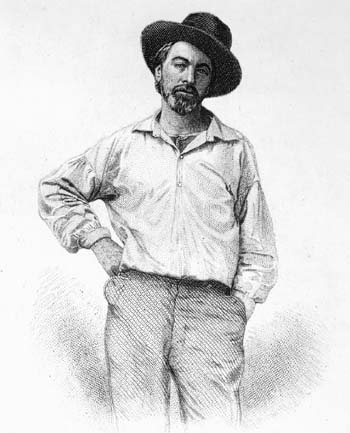
The son of a downwardly mobile house-builder, Whitman abandoned his father's trade to pursue journalism and poetry. From 1838 to 1855 he edited newspapers in New York City, Brooklyn, and New Orleans, wrote short stories, and drafted poems that he would later assemble into Leaves. During the Civil War, Whitman volunteered as a nurse in Washington, D.C., then moved to Camden, New Jersey, where he spent the remainder of his life in semiretirement, revising and expanding Leaves and nurturing his reputation as a poet.
Influenced by the transcendentalist Ralph Waldo Emerson, who defined American manhood in terms of inner spirituality and self-reliance, Whitman presented himself as an idealized American man, a rugged individualist softened by a vision of transcendental oneness. The frontispiece to the first edition of Leaves portrayed Whitman as “one of the roughs,” a working-class New Yorker who venerated the everyman and spurned florid language for plain English. Associating American manhood with nationalism and liberty and casting himself as the nation's “bard,” Whitman wrote poetry celebrating the United States as an empire of freedom. Yet his self-assertive rhetoric was intended to promote a spiritual and contemplative vision of manliness. Whitman sought liberation from capitalist individualism and the violence of empire-building, stating in “Song of Myself” that “every atom belonging to me as good belongs to you,” and summoning his readers to “loafe” with him on the grass. His service as a nurse during the Civil War involved an explicit and principled rejection of regular military duty. Moreover, Whitman rejected the gender and racial hierarchies by which Victorian men defined masculinity, proposing instead a radical equality for women, slaves, and Native Americans. In his final years, he led a life of genteel poverty, rejecting the materialism of the Gilded Age.
Whitman's challenge to Victorian mores was especially apparent in matters of sexuality, which he viewed as the primary means by which a culture maintains its solidarity. Accepting both opposite-sex and same-sex relationships, he explored the range of sexuality from the platonic to the erotic with a frankness remarkable for the Victorian era, particularly in “The Children of Adam” (1860) and “Calamus” (1860). Whitman's homoerotic passages were initially seen by most readers as expressions of a romanticized “male friendship” that was not unusual in Victorian culture, but as sexual behavior became increasingly categorized and policed by medical and legal discourse in the late nineteenth century, critics increasingly interpreted his work (and Whitman himself) as advocating homosexuality. In an 1882 article, the “muscular Christianity” advocate Thomas Wentworth Higginson charged that Whitman represented an “unmanly manhood.”
...
- Art and Literature
- Adventures of Huckleberry Finn
- Catcher in the Rye, The
- Common Sense Book of Baby and Child Care, The
- Contrast, The
- Death of a Salesman
- Grapes of Wrath, The
- Invisible Man
- Iron John: A Book About Men
- Jungle, The
- Moby Dick
- Organization Man, The
- Alger, Horatio, Jr.
- Art
- Arthur, Timothy Shay
- Beat Movement
- Crèvecoeur, J. Hector St. John
- Emerson, Ralph Waldo
- Fitzgerald, F. Scott
- Hemingway, Ernest
- Jesus, Images of
- Kerouac, Jack
- Lawrence, D.H.
- Leatherstocking Tales
- London, Jack
- Romanticism
- Sawyer, Tom
- Seduction Tales
- Slave Narratives
- Thoreau, Henry David
- Travel Narratives
- Twain, Mark
- Whitman, Walt
- Wright, Richard
- Body and Health
- Atlas, Charles
- Body
- Bodybuilding
- Darwinism
- Eugenics
- Fashion
- Freudian Psychoanalytic Theory
- Graham, Sylvester
- Gulick, Luther Halsey
- Hall, Granville Stanley
- Health
- Higginson, Thomas Wentworth
- Insanity
- James, William
- Kellogg, John Harvey
- Lawrence, D.H.
- Masturbation
- Medicine
- Muscular Christianity
- Old Age
- Reproduction
- Roosevelt, Theodore
- Sandow, Eugen
- Schwarzenegger, Arnold
- Self-Control
- Strenuous Life
- Temperance
- Class, Ethnic, and Racial Identities
- Grapes of Wrath, The
- Invisible Man
- Shaft
- Abolitionism
- African-American Manhood
- Apprenticeship
- Artisan
- Asian-American Manhood
- Beecher, Henry Ward
- Black Panther Party
- Breadwinner Role
- Business/Corporate America
- Civil Rights Movement
- Class
- Douglass, Frederick
- Ethnicity
- Graham, Sylvester
- Hall, Granville Stanley
- Immigration
- Irish-American Manhood
- Italian-American Manhood
- Jewish Manhood
- King, Martin Luther, Jr.
- Labor Movement and Unions
- Latino Manhood
- Malcolm X
- Middle-Class Manhood
- Minstrelsy
- Nation of Islam
- Native American Manhood
- Nativism
- Populism
- Race
- Slavery
- Southern Manhood
- Springsteen, Bruce
- Sunday, Billy
- White Supremacism
- Whiteness
- Work
- Working-Class Manhood
- Wright, Richard
- Concepts and Theories
- Agrarianism
- American Dream
- Breadwinner Role
- Capitalism
- Character
- Chivalry
- Citizenship
- Class
- Conscientious Objection
- Consumerism
- Cult of Domesticity
- Darwinism
- Democratic Manhood
- Emotion
- Ethnicity
- Eugenics
- Evangelicalism and Revivalism
- Fathers' Rights
- Feminism
- Freudian Psychoanalytic Theory
- Heroism
- Imperialism
- Individualism
- Manifest Destiny
- Market Revolution
- Masculine Domesticity
- Men's Studies
- Militarism
- Momism
- Muscular Christianity
- Nationalism
- Nativism
- Passionate Manhood
- Patriarchy
- Patriotism
- Populism
- Postmodernism
- Professionalism
- Property
- Race
- Republicanism
- Romanticism
- Self-Control
- Sentimentalism
- Strenuous Life
- White Supremacism
- Family and Fatherhood
- Common Sense Book of Baby and Child Care, The
- Father Knows Best
- Home Improvement
- Leave It to Beaver
- Mr. Mom
- Adolescence
- Bachelorhood
- Boyhood
- Breadwinner Role
- Cult of Domesticity
- Divorce
- Father's Day
- Fatherhood
- Fathers' Rights
- Freudian Psychoanalytic Theory
- Hall, Granville Stanley
- Marriage
- Masculine Domesticity
- Momism
- Mother–Son Relationships
- Noyes, John Humphrey
- Nuclear Family
- Old Age
- Patriarchy
- Promise Keepers
- Property
- Reproduction
- Suburbia
- Youth
- Historical Events and Processes
- Abolitionism
- American Revolution
- Antiwar Movement
- California Gold Rush
- Civil Rights Movement
- Civil War
- Cold War
- Emancipation
- Gilded Age
- Great Depression
- Immigration
- Imperialism
- Industrialization
- Manifest Destiny
- Market Revolution
- New Deal
- Politics
- Populism
- Progressive Era
- Reform Movements
- Sexual Revolution
- Spanish-American War
- Suffragism
- Urbanization
- Victorian Era
- Vietnam War
- War
- Western Frontier
- World War I
- World War II
- Icons and Symbols
- Lone Ranger, The
- Alger, Horatio, Jr.
- American Dream
- Atlas, Charles
- Automobile
- Bogart, Humphrey
- Boone, Daniel
- Brando, Marlon
- Confidence Man
- Cooper, Gary
- Cowboys
- Crockett, Davy
- Dean, James
- Detectives
- Eastwood, Clint
- Franklin, Benjamin
- Gangsters
- Grant, Cary
- Hoboes
- Hollywood
- Hudson, Rock
- Jesus, Images of
- Kerouac, Jack
- Lincoln, Abraham
- Malcolm X
- Marlboro Man
- Outdoorsmen
- Rambo
- Reagan, Ronald
- Sawyer, Tom
- Self-Made Man
- Sensitive Male
- Springsteen, Bruce
- Suburbia
- Superman
- Tarzan
- Uncle Sam
- Washington, George
- Wayne, John
- Leisure and Work
- Agrarianism
- Alcohol
- Apprenticeship
- Artisan
- Automobile
- Baseball
- Boxing
- Breadwinner Role
- Bureaucratization
- Business/Corporate America
- Consumerism
- Dueling
- Fashion
- Fishing
- Football
- Fraternal Organizations
- Fraternities
- Gambling
- Hunting
- Industrialization
- Labor Movement and Unions
- Leisure
- Male Friendship
- Medicine
- Men's Clubs
- Ministry
- Music
- Outdoorsmen
- Professionalism
- Self-Made Man
- Slavery
- Sports
- Suburbia
- Success Manuals
- Technology
- Travel
- Work
- Working-Class Manhood
- Young Men's Christian Association
- Media and Popular Culture
- Birth of a Nation
- Deliverance
- Easy Rider
- Father Knows Best
- Home Improvement
- Kramer vs. Kramer
- Leave It to Beaver
- Lone Ranger, The
- Mr. Mom
- Odd Couple, The
- Playboy Magazine
- Rebel Without a Cause
- Shaft
- Advertising
- Advice Literature
- Automobile
- Bogart, Humphrey
- Brando, Marlon
- Buddy Films
- Cooper, Gary
- Cop Action Films
- Cowboys
- Crockett, Davy
- Dean, James
- Detectives
- Eastwood, Clint
- Fashion
- Gangsters
- Grant, Cary
- Hollywood
- Hudson, Rock
- Marlboro Man
- Martial Arts Films
- Minstrelsy
- Music
- Rambo
- Reagan, Ronald
- Schwarzenegger, Arnold
- Seduction Tales
- Springsteen, Bruce
- Success Manuals
- Superman
- Tarzan
- Television
- Wayne, John
- Westerns
- Movements and Organizations
- Iron John: A Book About Men
- Abolitionism
- Antiwar Movement
- Beat Movement
- Black Panther Party
- Boy Scouts of America
- Civil Rights Movement
- Counterculture
- Eugenics
- Feminism
- Fraternal Organizations
- Fraternities
- Kerouac, Jack
- King, Martin Luther, Jr.
- Labor Movement and Unions
- Malcolm X
- Men and Religion Forward Movement
- Men's Clubs
- Men's Movements
- Military
- Muscular Christianity
- Nation of Islam
- Nationalism
- Nativism
- Populism
- Promise Keepers
- Reform Movements
- Sexual Revolution
- Social Gospel
- Sons of Liberty
- Suffragism
- Temperance
- White Supremacism
- Young Men's Christian Association
- People
- Alger, Horatio, Jr.
- Arthur, Timothy Shay
- Atlas, Charles
- Beecher, Henry Ward
- Bogart, Humphrey
- Boone, Daniel
- Brando, Marlon
- Cooper, Gary
- Crèvecoeur, J. Hector St. John
- Crockett, Davy
- Dean, James
- Douglass, Frederick
- Eastwood, Clint
- Emerson, Ralph Waldo
- Fitzgerald, F. Scott
- Franklin, Benjamin
- Graham, Sylvester
- Grant, Cary
- Gulick, Luther Halsey
- Hall, Granville Stanley
- Hemingway, Ernest
- Higginson, Thomas Wentworth
- Hudson, Rock
- Jackson, Andrew
- James, William
- Kellogg, John Harvey
- Kerouac, Jack
- King, Martin Luther, Jr.
- Lawrence, D.H.
- Lincoln, Abraham
- London, Jack
- Malcolm X
- Noyes, John Humphrey
- Reagan, Ronald
- Roosevelt, Theodore
- Sandow, Eugen
- Schwarzenegger, Arnold
- Springsteen, Bruce
- Sunday, Billy
- Thoreau, Henry David
- Twain, Mark
- Washington, George
- Wayne, John
- Whitman, Walt
- Wright, Richard
- Political and Social Issues
- Abolitionism
- Adolescence
- Antiwar Movement
- Citizenship
- Civil Rights Movement
- Class
- Conscientious Objection
- Crisis of Masculinity
- Darwinism
- Divorce
- Education
- Emotion
- Ethnicity
- Eugenics
- Fathers' Rights
- Feminism
- Gangs
- Gays in the Military
- Guns
- Health
- Immigration
- Imperialism
- Insanity
- Juvenile Delinquency
- Medicine
- Momism
- Nativism
- Old Age
- Pornography
- Promise Keepers
- Race
- Reform Movements
- Reverse Sexism
- Self-Control
- Sexual Harassment
- Social Gospel
- Temperance
- Violence
- War
- White Supremacism
- Religion and Spirituality
- Iron John: A Book About Men
- Beecher, Henry Ward
- Conscientious Objection
- Emerson, Ralph Waldo
- Evangelicalism and Revivalism
- Gulick, Luther Halsey
- Higginson, Thomas Wentworth
- Jesus, Images of
- Kerouac, Jack
- King, Martin Luther, Jr.
- Malcolm X
- Men and Religion Forward Movement
- Ministry
- Muscular Christianity
- Nation of Islam
- Noyes, John Humphrey
- Promise Keepers
- Religion and Spirituality
- Social Gospel
- Sunday, Billy
- Young Men's Christian Association
- Sexual Identities and Sexuality
- Loading...
Get a 30 day FREE TRIAL
-
 Watch videos from a variety of sources bringing classroom topics to life
 -
Read modern, diverse business cases
-
Explore hundreds of books and reference titles

Read next

More like this
Sage Recommends
We found other relevant content for you on other Sage platforms.
Have you created a personal profile? Login or create a profile so that you can save clips, playlists and searches