
Entry
Reader's guide
Entries A-Z
Subject index
Playboy Magazine
Launched by publisher Hugh Hefner in 1953, Playboy magazine became a huge commercial success by combining soft-core pornography and up-market lifestyle features for men in one magazine. Between the 1950s and the 1970s, its soaring circulation became the basis for an international business empire embracing publishing, movie production, and a chain of nightclubs, casinos, and hotels. Playboy's success marked not only a transformation in American sexual morals and a greater legitimacy of pornography within mainstream culture, but also the ascendance in U.S. society of masculine identities that eschewed moderation and the work ethic in favor of hedonistic consumption, recreation, and personal gratification. Its mascot, a white rabbit sporting a bowtie, symbolized this model of masculinity by connoting affluence, sophistication, lighthearted leisure, and sexual license.
Playboy was highly controversial throughout the 1950s and 1960s, facing opposition from moral crusaders, who viewed its nude pictorials as lewd and indecent, and from the growing feminist movement, which objected to what it considered to be sexual exploitation of women. Playboy was nonetheless a publishing triumph. Monthly sales climbed to nearly 1 million by 1959 and to more than 4.5 million by 1969 as Playboy became a totem of the Sexual Revolution. Primarily appealing to urban, white, middle-class men, its circulation was highest in the East, California, and metropolitan enclaves in between. Playboy also successfully pitched itself to a young market, with college students comprising over a quarter of its readership. Although Playboy posed as a champion of foot-loose bachelorhood, during the 1950s married men made up slightly more than half its readership, perhaps because they were attracted by the magazine's vicarious fantasies of independent hedonism.
In 1960 the first Playboy Club was opened in Chicago, and by 1967 Hefner owned seventeen nightclubs and hotels. Based in cosmopolitan cities such as New York, Miami, and San Francisco, and staffed by scantily costumed female “Bunnies,” the Playboy Clubs boasted a membership of half a million during the late 1960s and turned an annual profit of nearly $25 million. Merchandising items of stylish male consumption—including ties, cigarette lighters, golf clubs, and polo shirts, all emblazoned with Playboy's Bunny insignia—was another lucrative sideline.
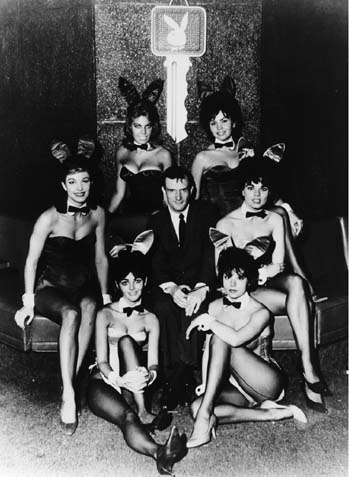
Much of Playboy's success lay in its appeal to a new generation of upwardly-mobile men whose gender identities were pre-eminently constructed around leisure and personal consumption. Playboy's inclusion of semi-pornographic content established it as an avowedly masculine and heterosexual magazine; its features and advertisements dealing with fashion, entertainment, foreign travel, and interior décor grounded masculine identity in the universe of modern consumerism; and its literary features, political commentary, investigative journalism, and interviews with major public figures were intended to infuse this new model of American manhood with cultural sophistication.
In September 1972, Playboy's circulation exceeded 7 million—its highest total ever. During the mid-1970s, however, its image began to look anachronistic as competing titles such as Penthouse (a British magazine launched in America in 1969) and Hustler (launched in 1974) offered more sexually explicit material. Playboy's dipping sales prompted marketing reappraisals and cost-cutting measures that ultimately led to the closing of the Playboy Clubs in the 1980s. During the late 1990s, however, Playboy's international circulation still totaled 4.5 million, while steady expansion into video sales, cable TV, and Internet services maintained the financial success of its parent company, Playboy Enterprises.
...
- Art and Literature
- Adventures of Huckleberry Finn
- Catcher in the Rye, The
- Common Sense Book of Baby and Child Care, The
- Contrast, The
- Death of a Salesman
- Grapes of Wrath, The
- Invisible Man
- Iron John: A Book About Men
- Jungle, The
- Moby Dick
- Organization Man, The
- Alger, Horatio, Jr.
- Art
- Arthur, Timothy Shay
- Beat Movement
- Crèvecoeur, J. Hector St. John
- Emerson, Ralph Waldo
- Fitzgerald, F. Scott
- Hemingway, Ernest
- Jesus, Images of
- Kerouac, Jack
- Lawrence, D.H.
- Leatherstocking Tales
- London, Jack
- Romanticism
- Sawyer, Tom
- Seduction Tales
- Slave Narratives
- Thoreau, Henry David
- Travel Narratives
- Twain, Mark
- Whitman, Walt
- Wright, Richard
- Body and Health
- Atlas, Charles
- Body
- Bodybuilding
- Darwinism
- Eugenics
- Fashion
- Freudian Psychoanalytic Theory
- Graham, Sylvester
- Gulick, Luther Halsey
- Hall, Granville Stanley
- Health
- Higginson, Thomas Wentworth
- Insanity
- James, William
- Kellogg, John Harvey
- Lawrence, D.H.
- Masturbation
- Medicine
- Muscular Christianity
- Old Age
- Reproduction
- Roosevelt, Theodore
- Sandow, Eugen
- Schwarzenegger, Arnold
- Self-Control
- Strenuous Life
- Temperance
- Class, Ethnic, and Racial Identities
- Grapes of Wrath, The
- Invisible Man
- Shaft
- Abolitionism
- African-American Manhood
- Apprenticeship
- Artisan
- Asian-American Manhood
- Beecher, Henry Ward
- Black Panther Party
- Breadwinner Role
- Business/Corporate America
- Civil Rights Movement
- Class
- Douglass, Frederick
- Ethnicity
- Graham, Sylvester
- Hall, Granville Stanley
- Immigration
- Irish-American Manhood
- Italian-American Manhood
- Jewish Manhood
- King, Martin Luther, Jr.
- Labor Movement and Unions
- Latino Manhood
- Malcolm X
- Middle-Class Manhood
- Minstrelsy
- Nation of Islam
- Native American Manhood
- Nativism
- Populism
- Race
- Slavery
- Southern Manhood
- Springsteen, Bruce
- Sunday, Billy
- White Supremacism
- Whiteness
- Work
- Working-Class Manhood
- Wright, Richard
- Concepts and Theories
- Agrarianism
- American Dream
- Breadwinner Role
- Capitalism
- Character
- Chivalry
- Citizenship
- Class
- Conscientious Objection
- Consumerism
- Cult of Domesticity
- Darwinism
- Democratic Manhood
- Emotion
- Ethnicity
- Eugenics
- Evangelicalism and Revivalism
- Fathers' Rights
- Feminism
- Freudian Psychoanalytic Theory
- Heroism
- Imperialism
- Individualism
- Manifest Destiny
- Market Revolution
- Masculine Domesticity
- Men's Studies
- Militarism
- Momism
- Muscular Christianity
- Nationalism
- Nativism
- Passionate Manhood
- Patriarchy
- Patriotism
- Populism
- Postmodernism
- Professionalism
- Property
- Race
- Republicanism
- Romanticism
- Self-Control
- Sentimentalism
- Strenuous Life
- White Supremacism
- Family and Fatherhood
- Common Sense Book of Baby and Child Care, The
- Father Knows Best
- Home Improvement
- Leave It to Beaver
- Mr. Mom
- Adolescence
- Bachelorhood
- Boyhood
- Breadwinner Role
- Cult of Domesticity
- Divorce
- Father's Day
- Fatherhood
- Fathers' Rights
- Freudian Psychoanalytic Theory
- Hall, Granville Stanley
- Marriage
- Masculine Domesticity
- Momism
- Mother–Son Relationships
- Noyes, John Humphrey
- Nuclear Family
- Old Age
- Patriarchy
- Promise Keepers
- Property
- Reproduction
- Suburbia
- Youth
- Historical Events and Processes
- Abolitionism
- American Revolution
- Antiwar Movement
- California Gold Rush
- Civil Rights Movement
- Civil War
- Cold War
- Emancipation
- Gilded Age
- Great Depression
- Immigration
- Imperialism
- Industrialization
- Manifest Destiny
- Market Revolution
- New Deal
- Politics
- Populism
- Progressive Era
- Reform Movements
- Sexual Revolution
- Spanish-American War
- Suffragism
- Urbanization
- Victorian Era
- Vietnam War
- War
- Western Frontier
- World War I
- World War II
- Icons and Symbols
- Lone Ranger, The
- Alger, Horatio, Jr.
- American Dream
- Atlas, Charles
- Automobile
- Bogart, Humphrey
- Boone, Daniel
- Brando, Marlon
- Confidence Man
- Cooper, Gary
- Cowboys
- Crockett, Davy
- Dean, James
- Detectives
- Eastwood, Clint
- Franklin, Benjamin
- Gangsters
- Grant, Cary
- Hoboes
- Hollywood
- Hudson, Rock
- Jesus, Images of
- Kerouac, Jack
- Lincoln, Abraham
- Malcolm X
- Marlboro Man
- Outdoorsmen
- Rambo
- Reagan, Ronald
- Sawyer, Tom
- Self-Made Man
- Sensitive Male
- Springsteen, Bruce
- Suburbia
- Superman
- Tarzan
- Uncle Sam
- Washington, George
- Wayne, John
- Leisure and Work
- Agrarianism
- Alcohol
- Apprenticeship
- Artisan
- Automobile
- Baseball
- Boxing
- Breadwinner Role
- Bureaucratization
- Business/Corporate America
- Consumerism
- Dueling
- Fashion
- Fishing
- Football
- Fraternal Organizations
- Fraternities
- Gambling
- Hunting
- Industrialization
- Labor Movement and Unions
- Leisure
- Male Friendship
- Medicine
- Men's Clubs
- Ministry
- Music
- Outdoorsmen
- Professionalism
- Self-Made Man
- Slavery
- Sports
- Suburbia
- Success Manuals
- Technology
- Travel
- Work
- Working-Class Manhood
- Young Men's Christian Association
- Media and Popular Culture
- Birth of a Nation
- Deliverance
- Easy Rider
- Father Knows Best
- Home Improvement
- Kramer vs. Kramer
- Leave It to Beaver
- Lone Ranger, The
- Mr. Mom
- Odd Couple, The
- Playboy Magazine
- Rebel Without a Cause
- Shaft
- Advertising
- Advice Literature
- Automobile
- Bogart, Humphrey
- Brando, Marlon
- Buddy Films
- Cooper, Gary
- Cop Action Films
- Cowboys
- Crockett, Davy
- Dean, James
- Detectives
- Eastwood, Clint
- Fashion
- Gangsters
- Grant, Cary
- Hollywood
- Hudson, Rock
- Marlboro Man
- Martial Arts Films
- Minstrelsy
- Music
- Rambo
- Reagan, Ronald
- Schwarzenegger, Arnold
- Seduction Tales
- Springsteen, Bruce
- Success Manuals
- Superman
- Tarzan
- Television
- Wayne, John
- Westerns
- Movements and Organizations
- Iron John: A Book About Men
- Abolitionism
- Antiwar Movement
- Beat Movement
- Black Panther Party
- Boy Scouts of America
- Civil Rights Movement
- Counterculture
- Eugenics
- Feminism
- Fraternal Organizations
- Fraternities
- Kerouac, Jack
- King, Martin Luther, Jr.
- Labor Movement and Unions
- Malcolm X
- Men and Religion Forward Movement
- Men's Clubs
- Men's Movements
- Military
- Muscular Christianity
- Nation of Islam
- Nationalism
- Nativism
- Populism
- Promise Keepers
- Reform Movements
- Sexual Revolution
- Social Gospel
- Sons of Liberty
- Suffragism
- Temperance
- White Supremacism
- Young Men's Christian Association
- People
- Alger, Horatio, Jr.
- Arthur, Timothy Shay
- Atlas, Charles
- Beecher, Henry Ward
- Bogart, Humphrey
- Boone, Daniel
- Brando, Marlon
- Cooper, Gary
- Crèvecoeur, J. Hector St. John
- Crockett, Davy
- Dean, James
- Douglass, Frederick
- Eastwood, Clint
- Emerson, Ralph Waldo
- Fitzgerald, F. Scott
- Franklin, Benjamin
- Graham, Sylvester
- Grant, Cary
- Gulick, Luther Halsey
- Hall, Granville Stanley
- Hemingway, Ernest
- Higginson, Thomas Wentworth
- Hudson, Rock
- Jackson, Andrew
- James, William
- Kellogg, John Harvey
- Kerouac, Jack
- King, Martin Luther, Jr.
- Lawrence, D.H.
- Lincoln, Abraham
- London, Jack
- Malcolm X
- Noyes, John Humphrey
- Reagan, Ronald
- Roosevelt, Theodore
- Sandow, Eugen
- Schwarzenegger, Arnold
- Springsteen, Bruce
- Sunday, Billy
- Thoreau, Henry David
- Twain, Mark
- Washington, George
- Wayne, John
- Whitman, Walt
- Wright, Richard
- Political and Social Issues
- Abolitionism
- Adolescence
- Antiwar Movement
- Citizenship
- Civil Rights Movement
- Class
- Conscientious Objection
- Crisis of Masculinity
- Darwinism
- Divorce
- Education
- Emotion
- Ethnicity
- Eugenics
- Fathers' Rights
- Feminism
- Gangs
- Gays in the Military
- Guns
- Health
- Immigration
- Imperialism
- Insanity
- Juvenile Delinquency
- Medicine
- Momism
- Nativism
- Old Age
- Pornography
- Promise Keepers
- Race
- Reform Movements
- Reverse Sexism
- Self-Control
- Sexual Harassment
- Social Gospel
- Temperance
- Violence
- War
- White Supremacism
- Religion and Spirituality
- Iron John: A Book About Men
- Beecher, Henry Ward
- Conscientious Objection
- Emerson, Ralph Waldo
- Evangelicalism and Revivalism
- Gulick, Luther Halsey
- Higginson, Thomas Wentworth
- Jesus, Images of
- Kerouac, Jack
- King, Martin Luther, Jr.
- Malcolm X
- Men and Religion Forward Movement
- Ministry
- Muscular Christianity
- Nation of Islam
- Noyes, John Humphrey
- Promise Keepers
- Religion and Spirituality
- Social Gospel
- Sunday, Billy
- Young Men's Christian Association
- Sexual Identities and Sexuality
- Loading...
Get a 30 day FREE TRIAL
-
 Watch videos from a variety of sources bringing classroom topics to life
 -
Read modern, diverse business cases
-
Explore hundreds of books and reference titles

Read next

More like this
Sage Recommends
We found other relevant content for you on other Sage platforms.
Have you created a personal profile? Login or create a profile so that you can save clips, playlists and searches