
Entry
Reader's guide
Entries A-Z
Subject index
Martial Arts Films
Although martial arts films have received comparatively little critical attention, they reflect widely shared American perceptions of a mysterious, and often stereotyped, Orient, and of Asian masculinity. Distinct from American action films in their focus on physical performance rather than characterization and narrative, martial arts films showcase near-mystical fighting skills that have been gradually separated from their original cultural context and associated with protagonists from different cultures. The martial arts hero's transition from Chinese revolutionary to American action star reflects evolving attitudes in the United States toward Asian manhood— and about masculinity in general.
Although American film and literature have traditionally constructed a feminized Asia that offers exotic delights to Western men, white Americans have been uneasy about Asian masculinity ever since their xenophobic reactions to the late-nineteenth-century influx of Chinese laborers. This reaction featured images of the so-called Yellow Peril, in which allegories of cultural contamination cast Asian males as rapists threatening white women (who embodied Western culture). Mainstream Americans were typically intrigued by Asian men as long as they were feminized, emasculated, and incapable of the cultural “rape” associated with the Yellow Peril. Thus, American films have generally represented Asian males either as demonized villains or as desexualized, amiable, and nonthreatening allies.
Although glimpses of the martial arts can be seen in American film since the 1940s, true martial arts movies made their first significant impact in the United States in 1973, when a wave of kung fu movies produced in Hong Kong met with unprecedented box-office success. Most scholars agree that their sudden popularity was a response to U.S. failure during the Vietnam War. The spectacle of a physically small Asian male defeating seemingly insurmountable odds—of an Asian masculinity characterized by quasi-mystical fighting prowess—represented a way of coming to terms with a perceived failure of American masculinity and military might in Vietnam. In an atmosphere increasingly open to Asian religions and philosophies and distrustful of the U.S. government, martial arts films of the 1970s offered disaffected American males a countercultural heroic model.
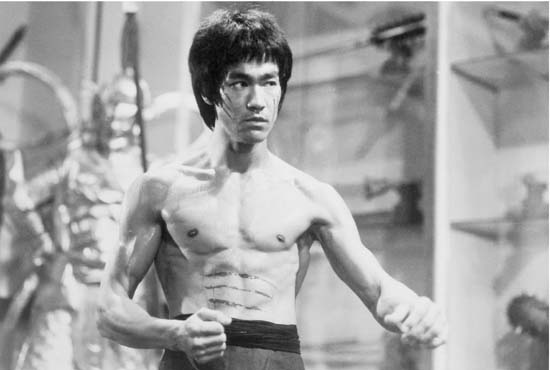
The early 1970s martial arts hero, embodied by Bruce Lee in films such as The Chinese Connection (1973) and Fists of Fury (1973), resembled the rebel males who dominated American films of the 1960s and 1970s in that he was hotheaded, impulsive, and resistant to tyranny. Martial arts films were at first marketed primarily to urban minority audiences, playing in inner-city theaters alongside blaxploitation films (a low-budget action genre featuring black protagonists and marketed to African-American audiences). The genre's appeal to minority viewers is understandable: it featured nonwhite protagonists battling imperialist or invading forces, and often defeating white opponents. Soon, blaxploitation films, such as Black Belt Jones (1974), began featuring kung fu fights, co-opting the martial arts genre to provide audiences the fantasy of individual martial prowess overcoming cultural oppression.
...
- Art and Literature
- Adventures of Huckleberry Finn
- Catcher in the Rye, The
- Common Sense Book of Baby and Child Care, The
- Contrast, The
- Death of a Salesman
- Grapes of Wrath, The
- Invisible Man
- Iron John: A Book About Men
- Jungle, The
- Moby Dick
- Organization Man, The
- Alger, Horatio, Jr.
- Art
- Arthur, Timothy Shay
- Beat Movement
- Crèvecoeur, J. Hector St. John
- Emerson, Ralph Waldo
- Fitzgerald, F. Scott
- Hemingway, Ernest
- Jesus, Images of
- Kerouac, Jack
- Lawrence, D.H.
- Leatherstocking Tales
- London, Jack
- Romanticism
- Sawyer, Tom
- Seduction Tales
- Slave Narratives
- Thoreau, Henry David
- Travel Narratives
- Twain, Mark
- Whitman, Walt
- Wright, Richard
- Body and Health
- Atlas, Charles
- Body
- Bodybuilding
- Darwinism
- Eugenics
- Fashion
- Freudian Psychoanalytic Theory
- Graham, Sylvester
- Gulick, Luther Halsey
- Hall, Granville Stanley
- Health
- Higginson, Thomas Wentworth
- Insanity
- James, William
- Kellogg, John Harvey
- Lawrence, D.H.
- Masturbation
- Medicine
- Muscular Christianity
- Old Age
- Reproduction
- Roosevelt, Theodore
- Sandow, Eugen
- Schwarzenegger, Arnold
- Self-Control
- Strenuous Life
- Temperance
- Class, Ethnic, and Racial Identities
- Grapes of Wrath, The
- Invisible Man
- Shaft
- Abolitionism
- African-American Manhood
- Apprenticeship
- Artisan
- Asian-American Manhood
- Beecher, Henry Ward
- Black Panther Party
- Breadwinner Role
- Business/Corporate America
- Civil Rights Movement
- Class
- Douglass, Frederick
- Ethnicity
- Graham, Sylvester
- Hall, Granville Stanley
- Immigration
- Irish-American Manhood
- Italian-American Manhood
- Jewish Manhood
- King, Martin Luther, Jr.
- Labor Movement and Unions
- Latino Manhood
- Malcolm X
- Middle-Class Manhood
- Minstrelsy
- Nation of Islam
- Native American Manhood
- Nativism
- Populism
- Race
- Slavery
- Southern Manhood
- Springsteen, Bruce
- Sunday, Billy
- White Supremacism
- Whiteness
- Work
- Working-Class Manhood
- Wright, Richard
- Concepts and Theories
- Agrarianism
- American Dream
- Breadwinner Role
- Capitalism
- Character
- Chivalry
- Citizenship
- Class
- Conscientious Objection
- Consumerism
- Cult of Domesticity
- Darwinism
- Democratic Manhood
- Emotion
- Ethnicity
- Eugenics
- Evangelicalism and Revivalism
- Fathers' Rights
- Feminism
- Freudian Psychoanalytic Theory
- Heroism
- Imperialism
- Individualism
- Manifest Destiny
- Market Revolution
- Masculine Domesticity
- Men's Studies
- Militarism
- Momism
- Muscular Christianity
- Nationalism
- Nativism
- Passionate Manhood
- Patriarchy
- Patriotism
- Populism
- Postmodernism
- Professionalism
- Property
- Race
- Republicanism
- Romanticism
- Self-Control
- Sentimentalism
- Strenuous Life
- White Supremacism
- Family and Fatherhood
- Common Sense Book of Baby and Child Care, The
- Father Knows Best
- Home Improvement
- Leave It to Beaver
- Mr. Mom
- Adolescence
- Bachelorhood
- Boyhood
- Breadwinner Role
- Cult of Domesticity
- Divorce
- Father's Day
- Fatherhood
- Fathers' Rights
- Freudian Psychoanalytic Theory
- Hall, Granville Stanley
- Marriage
- Masculine Domesticity
- Momism
- Mother–Son Relationships
- Noyes, John Humphrey
- Nuclear Family
- Old Age
- Patriarchy
- Promise Keepers
- Property
- Reproduction
- Suburbia
- Youth
- Historical Events and Processes
- Abolitionism
- American Revolution
- Antiwar Movement
- California Gold Rush
- Civil Rights Movement
- Civil War
- Cold War
- Emancipation
- Gilded Age
- Great Depression
- Immigration
- Imperialism
- Industrialization
- Manifest Destiny
- Market Revolution
- New Deal
- Politics
- Populism
- Progressive Era
- Reform Movements
- Sexual Revolution
- Spanish-American War
- Suffragism
- Urbanization
- Victorian Era
- Vietnam War
- War
- Western Frontier
- World War I
- World War II
- Icons and Symbols
- Lone Ranger, The
- Alger, Horatio, Jr.
- American Dream
- Atlas, Charles
- Automobile
- Bogart, Humphrey
- Boone, Daniel
- Brando, Marlon
- Confidence Man
- Cooper, Gary
- Cowboys
- Crockett, Davy
- Dean, James
- Detectives
- Eastwood, Clint
- Franklin, Benjamin
- Gangsters
- Grant, Cary
- Hoboes
- Hollywood
- Hudson, Rock
- Jesus, Images of
- Kerouac, Jack
- Lincoln, Abraham
- Malcolm X
- Marlboro Man
- Outdoorsmen
- Rambo
- Reagan, Ronald
- Sawyer, Tom
- Self-Made Man
- Sensitive Male
- Springsteen, Bruce
- Suburbia
- Superman
- Tarzan
- Uncle Sam
- Washington, George
- Wayne, John
- Leisure and Work
- Agrarianism
- Alcohol
- Apprenticeship
- Artisan
- Automobile
- Baseball
- Boxing
- Breadwinner Role
- Bureaucratization
- Business/Corporate America
- Consumerism
- Dueling
- Fashion
- Fishing
- Football
- Fraternal Organizations
- Fraternities
- Gambling
- Hunting
- Industrialization
- Labor Movement and Unions
- Leisure
- Male Friendship
- Medicine
- Men's Clubs
- Ministry
- Music
- Outdoorsmen
- Professionalism
- Self-Made Man
- Slavery
- Sports
- Suburbia
- Success Manuals
- Technology
- Travel
- Work
- Working-Class Manhood
- Young Men's Christian Association
- Media and Popular Culture
- Birth of a Nation
- Deliverance
- Easy Rider
- Father Knows Best
- Home Improvement
- Kramer vs. Kramer
- Leave It to Beaver
- Lone Ranger, The
- Mr. Mom
- Odd Couple, The
- Playboy Magazine
- Rebel Without a Cause
- Shaft
- Advertising
- Advice Literature
- Automobile
- Bogart, Humphrey
- Brando, Marlon
- Buddy Films
- Cooper, Gary
- Cop Action Films
- Cowboys
- Crockett, Davy
- Dean, James
- Detectives
- Eastwood, Clint
- Fashion
- Gangsters
- Grant, Cary
- Hollywood
- Hudson, Rock
- Marlboro Man
- Martial Arts Films
- Minstrelsy
- Music
- Rambo
- Reagan, Ronald
- Schwarzenegger, Arnold
- Seduction Tales
- Springsteen, Bruce
- Success Manuals
- Superman
- Tarzan
- Television
- Wayne, John
- Westerns
- Movements and Organizations
- Iron John: A Book About Men
- Abolitionism
- Antiwar Movement
- Beat Movement
- Black Panther Party
- Boy Scouts of America
- Civil Rights Movement
- Counterculture
- Eugenics
- Feminism
- Fraternal Organizations
- Fraternities
- Kerouac, Jack
- King, Martin Luther, Jr.
- Labor Movement and Unions
- Malcolm X
- Men and Religion Forward Movement
- Men's Clubs
- Men's Movements
- Military
- Muscular Christianity
- Nation of Islam
- Nationalism
- Nativism
- Populism
- Promise Keepers
- Reform Movements
- Sexual Revolution
- Social Gospel
- Sons of Liberty
- Suffragism
- Temperance
- White Supremacism
- Young Men's Christian Association
- People
- Alger, Horatio, Jr.
- Arthur, Timothy Shay
- Atlas, Charles
- Beecher, Henry Ward
- Bogart, Humphrey
- Boone, Daniel
- Brando, Marlon
- Cooper, Gary
- Crèvecoeur, J. Hector St. John
- Crockett, Davy
- Dean, James
- Douglass, Frederick
- Eastwood, Clint
- Emerson, Ralph Waldo
- Fitzgerald, F. Scott
- Franklin, Benjamin
- Graham, Sylvester
- Grant, Cary
- Gulick, Luther Halsey
- Hall, Granville Stanley
- Hemingway, Ernest
- Higginson, Thomas Wentworth
- Hudson, Rock
- Jackson, Andrew
- James, William
- Kellogg, John Harvey
- Kerouac, Jack
- King, Martin Luther, Jr.
- Lawrence, D.H.
- Lincoln, Abraham
- London, Jack
- Malcolm X
- Noyes, John Humphrey
- Reagan, Ronald
- Roosevelt, Theodore
- Sandow, Eugen
- Schwarzenegger, Arnold
- Springsteen, Bruce
- Sunday, Billy
- Thoreau, Henry David
- Twain, Mark
- Washington, George
- Wayne, John
- Whitman, Walt
- Wright, Richard
- Political and Social Issues
- Abolitionism
- Adolescence
- Antiwar Movement
- Citizenship
- Civil Rights Movement
- Class
- Conscientious Objection
- Crisis of Masculinity
- Darwinism
- Divorce
- Education
- Emotion
- Ethnicity
- Eugenics
- Fathers' Rights
- Feminism
- Gangs
- Gays in the Military
- Guns
- Health
- Immigration
- Imperialism
- Insanity
- Juvenile Delinquency
- Medicine
- Momism
- Nativism
- Old Age
- Pornography
- Promise Keepers
- Race
- Reform Movements
- Reverse Sexism
- Self-Control
- Sexual Harassment
- Social Gospel
- Temperance
- Violence
- War
- White Supremacism
- Religion and Spirituality
- Iron John: A Book About Men
- Beecher, Henry Ward
- Conscientious Objection
- Emerson, Ralph Waldo
- Evangelicalism and Revivalism
- Gulick, Luther Halsey
- Higginson, Thomas Wentworth
- Jesus, Images of
- Kerouac, Jack
- King, Martin Luther, Jr.
- Malcolm X
- Men and Religion Forward Movement
- Ministry
- Muscular Christianity
- Nation of Islam
- Noyes, John Humphrey
- Promise Keepers
- Religion and Spirituality
- Social Gospel
- Sunday, Billy
- Young Men's Christian Association
- Sexual Identities and Sexuality
- Loading...
Get a 30 day FREE TRIAL
-
 Watch videos from a variety of sources bringing classroom topics to life
 -
Read modern, diverse business cases
-
Explore hundreds of books and reference titles

Read next

More like this
Sage Recommends
We found other relevant content for you on other Sage platforms.
Have you created a personal profile? Login or create a profile so that you can save clips, playlists and searches