
Entry
Reader's guide
Entries A-Z
Subject index
Humidity and Exercise
Many environmental factors can have either a positive or a negative impact on exercise. Humidity is a general term for various descriptions of the water vapor in the air and is usually seen as having a negative impact on physical activity. This is due to the effect it has as a barrier to cooling the body. The temperature of air is one factor that determines the amount of water vapor that it can hold. The colder the air, the less water vapor it is able to carry. Absolute humidity is the amount of water vapor per mass of dry air in a given volume at a certain air temperature. Relative humidity is the water vapor content of the air relative to its content at saturation. This is the ratio of the current absolute humidity to the highest possible absolute humidity (due to the air temperature). If the air has 100% relative humidity, sweat evaporation is severely limited if not eliminated.
Humidity also contributes to the wet bulb globe temperature (WBGT), which quantifies the level of heat stress. Therefore, a rise in humidity also increases the WBGT. An increase in heat stress is dangerous because of the linear relationship between rise in heat stress and exertional heat illnesses, such as exertional heat stroke, which may prove deadly. Low humidity in a hot environment may also be deceiving, as athletes do not always recognize that they are losing sweat because it evaporates so quickly. Overall, humidity is an important factor in determining the level of heat stress, the ability of humans to cool themselves appropriately, and the amount of fluids lost due to sweating.
Wet Bulb Globe Temperature
WBGT is an indication of the heat stress (and therefore risk) calculated from the ambient temperature, the wet bulb temperature, and the black globe temperature. For outdoor exercise, this is calculated by the following formula:
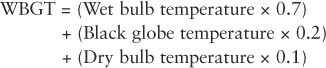
When exercise is conducted indoors, it is calculated by the following formula:

From this calculation, the wet bulb temperature makes up 70% of the WBGT. A WBGT above 90±F is considered extremely high, and exercise should not be conducted in this environment. Naturally, an environment with a high temperature and moderate humidity will be stressful to the body; however, the WBGT recognizes the importance of humidity and the extra stress it places on the body. Therefore, an environment that has a moderate temperature but a high humidity may have the same WBGT as the former environment. The main emphasis in this measurement is that a lower temperature environment with a high humidity may be equally stressful on the human body as a higher temperature environment with low humidity.
Heat Balance
With rising temperatures and humidity, the body must find a way to combat the stress imposed on it and cool itself in order to avoid overheating and consequential heat illnesses. There are 4 methods by which the body accomplishes this: (1) radiation, (2) convection, (3) conduction, and (4) evaporation. The heat balance equation includes all of these methods of heat gain and heat loss. The equation
...
- Aging
- Aerobic Capacity and Aging
- Aging and Immune Dysfunction
- Alzheimer's Disease
- Diet and Diseases of Aging
- Diet and Longevity
- Drug Interactions and Functional Status in Older Adults
- Elder Abuse
- End-of-Life Issues
- Flexibility and Flexibility Training
- Functional Fitness Exercise
- Injury Prevention in Older Adults
- Meaning and Health in Older Adults
- Memory Fitness
- Mobility and Health
- Nutrition for Older Adults
- Older Americans Act (1965)
- Osteoarthritis: Lifestyle Management
- Osteoporosis and Strength Training
- Physical Activity and Cognitive Functioning
- Physical Activity and Exercise for Older Adults
- Sarcopenia in Older Adults
- Social Connection and Relationships in Successful Aging
- Successful Aging
- Walking and Health
- Water Exercise
- Behavioral Medicine
- Adherence
- Anger, Hostility, and Disease
- Anxiety and Behavioral Treatment
- Appetite and Satiety
- Behavior Modification
- Behavioral Change Theories in Health Care Delivery
- Bereavement and Grief
- Biofeedback
- Coping
- Cravings for Alcohol During Recovery
- Eating Disorders
- Eating Disorders in Athletes
- Health Behaviors, Motivations and Barriers to Change in Older Adults
- Imagery in Sport Performance
- Mechanisms of Change and Adherence in Physical Activity and Exercise
- Motivational Interviewing
- Pain, Pain Perception, and Behavior
- Psychosocial Influences on Physical Activity and Exercise
- Religion, Health Benefits of
- Sleep
- Social Support, Relationships, and Health
- Stress, Immune Dysfunction, and Health
- Stress, Theory and Physiology of
- Volunteerism: Role in Health
- Cardiovascular Medicine
- Acute Coronary Syndrome
- Atherosclerosis
- Biofeedback
- Cardiac Rehabilitation
- Cardiovascular Fitness: Maximal Oxygen Intake Measurement and Its Significance
- Cardiovascular Health in Women
- Cardiovascular Health, Cardiovascular Disease, and Lifestyle
- Cardiovascular Response to Exercise Training
- Cholesterol, Dyslipidemia, and Lifestyle
- Diet, Nutrition, and Cardiovascular Disease
- Exercise Prescription
- Exercise Testing in Cardiovascular Disease
- Heart Rate Training Methods and Monitoring
- Hypertension: Lifestyle in Etiology, Prevention, and Management
- Plant Sterols and Plant Sterol Esters
- Sedentary Lifestyle and Cardiovascular Disease
- Statins
- Warfarin
- Water Exercise
- Chronic Disease, Disease Prevention, and Lifestyle Behaviors
- Ankylosing Spondylitis
- Anxiety, Depression, and Chronic Disease
- Arthralgia
- Asthma
- Breast Cancer: Lifestyle in Prevention and Treatment
- Cancer Screening and Prevention
- Cancer, Exercise, and Immunity
- Cholesterol, Dyslipidemia, and Lifestyle
- Chronic Disease and Contributing Lifestyle Behaviors, Epidemiology of
- Chronic Obstructive Pulmonary Disease
- Coagulation Disorders
- Cold Sore
- Colon Cancer: Lifestyle in Prevention and Treatment
- Diabetes Mellitus and Lifestyle
- Diabetes, Diet and Nutrition in Prevention and Management of
- Diabetes, Insulin Resistance, and Visceral Adiposity
- Diet and Diseases of Aging
- Diet and HIV
- Exercise and the Common Cold
- Exercise in Children and Risks of Adult Chronic Disease
- Gastroesophageal Reflux Disease
- Genetics, Lifestyle, and Chronic Disease
- Glycemic Index of Foods and Chronic Disease
- Headache, Tension-Type: Lifestyle and Pharmacotherapy Interventions
- Headache, Treatment of Chronic Benign in Primary Setting
- HIV: Role of Exercise in Promoting Health
- Hypertension: Lifestyle in Etiology, Prevention, and Management
- Irritable Bowel Syndrome
- Lifestyle Management of Type 2 Diabetes
- Lung Cancer: Lifestyle Factors in Risk, Prevention, and Treatment
- Musculoskeletal Fitness
- Myocardial Ischemia (Angina), Infarction (Heart Attack), and Lifestyle
- Nutrition and Cancer
- Oral Health and Nutrition
- Osteoarthritis: Lifestyle Management
- Osteoporosis and Strength Training
- Oxidative Stress
- Physical Activity, Barriers to
- Prostate Cancer: Lifestyle in Prevention and Treatment
- Relapse Prevention
- Sedentary Lifestyle and Cardiovascular Disease
- Sleep
- Stress, Immune Dysfunction, and Health
- Stress, Theory and Physiology of
- Systemic Inflammation and Chronic Diseases
- Concepts in Lifestyle Medicine
- Complementary and Alternative Medicine
- Culture, Evolution, and Obesity
- Health Literacy
- Immunology and Lifestyle Medicine
- Life Course: Concepts
- Lifestyle Medicine: History and Overview
- Medicalization of Lifestyle Health Issues
- Multidimensional Functional Assessment
- Social Support, Relationships, and Health
- Stress, Theory and Physiology of
- Traditional Medical Systems: Origin and Global Spread
- Epidemiology and Demographics of Lifestyle-Related Health Issues
- Alcohol and Injury
- Alcohol Use and Abuse, Epidemiology of
- Bias in Epidemiologic Studies
- Cancer, Behavior, Diet, and Exercise, Epidemiology of
- Cell Phone Use and Driving
- Child Abuse and Neglect
- Chronic Disease and Contributing Lifestyle Behaviors, Epidemiology of
- Drug Abuse, Epidemiology of
- Elder Abuse
- Family History
- Fetal Alcohol Syndrome
- Injuries in Children, Unintentional
- Injuries, Unintentional, Epidemiology of
- Injury Prevention in Older Adults
- Intimate Partner Violence
- Psychosocial Influences on Physical Activity and Exercise
- Tobacco Use and Disease, Epidemiology of
- Violence Against Children
- Exercise Physiology
- Adipose Tissue
- Aerobic Training
- Anti-Inflammatory Cytokine Response to Exercise
- Athletic Staleness Syndrome
- Blood Pressure Response to Exercise
- Body Composition in Exercise Physiology
- Body Temperature and Exercise
- Cardiovascular Fitness: Maximal Oxygen Intake Measurement and Its Significance
- Cardiovascular Response to Exercise Training
- Cold and Exercise
- Detraining
- Eating Before Competition
- Endurance Training
- Exercise and Drug Interactions
- Exercise and Immune Function in Children and Adolescents
- Exercise Prescription
- Functional Fitness Exercise
- Gender Differences in Exercise Responses
- Genes and Responses to Exercise
- Humidity and Exercise
- Hydration and Exercise
- J-Curve Model of Infection and Exercise
- Marathon Running and Immune Response
- Muscle Endurance and Strength: Exercises and Measurement
- Natural Killer-Cell Activity and Exercise
- Obesity, Lifestyle Management of
- Osteoporosis and Strength Training
- Overload Principle in Physical Therapy
- Physical Activity and Blood Lipids
- Physical Activity and Cognitive Functioning
- Physical Activity in Children and Adolescents, Measurements of
- Physical Activity, Fatigue, and Vigor
- Reactive Oxygen Species: Effect of Diet and Exercise on Oxidation
- Recreational Activity, Dietary Intake, and Weight Management
- Reserve Capacity
- Resistance Training
- Resistance Training and Immune Response
- Resting Energy Expenditure
- Salivary IgA Response to Exercise
- Walking and Health
- Water Exercise
- Exercise-Related Injuries
- Food and Nutrition
- Dietary Guidelines for Americans
- Adolescent Nutrition
- Amino Acids in Nutrition and Metabolism
- Antioxidants
- Beef
- Breakfast and Health
- Caloric Intake and Health
- Cereals, Breakfast
- Cheeses
- Chewing Gum
- Chicken and Poultry
- Cholesterol, Dyslipidemia, and Lifestyle
- Dairy Products
- Diabetes, Diet and Nutrition in Prevention and Management of
- Diet and Longevity
- Diet, Nutrition, and Cardiovascular Disease
- Dietary Reference Intakes
- Eggs
- Environmental Contaminants in Foods
- Fad Diets
- Fat Replacers
- Fiber in Food
- Folate
- Food Allergy
- Food Marketing Programs
- Food Safety
- Food, Drug, and Cosmetic Act (1938)
- Fructose
- Fruit Juices in Balanced Nutrition
- Fruits in Balanced Nutrition
- Fuels for Exercise
- Glycemic Index of Foods and Chronic Disease
- Grains, Whole and Refined
- Lactose Intolerance
- Legumes
- Low-Carbohydrate Diets
- Macronutrients
- Mediterranean Diet
- Natural Toxins in Food
- Nutrient Partitioning
- Nutrition and Cancer
- Nutrition and Epigenetics
- Nutrition Communications
- Nutrition for Children
- Nutrition for Infants and Toddlers
- Nutrition for Older Adults
- Nutrition in Emerging Adulthood
- Nutrition Labeling and Daily Values
- Nutrition Recommendations and Pregnancy
- Nutrition, Links to the Immune System
- Nutritional Countermeasures to Immune Dysfunction
- Nuts
- Omega-3 Fatty Acids
- Organic Foods
- Phytochemicals
- Plant Sterols and Plant Sterol Esters
- Portion Control
- Salt
- School Meals
- Snacks
- Soft Drinks and Sugared Beverages
- Starvation
- Vegan Diets
- Vegetable Oils
- Vegetables
- Vegetarian Diets
- Vitamins C and E, Immunity, and Exercise
- Health Policy, Public Health, and Health Education
- Guidelines for Exercise Testing and Prescription (ACSM)
- Adherence
- Augmentative and Alternative Communication
- Built Environment and Health
- Cancer Screening and Prevention
- Car Safety for Infants and Children
- Cell Phone Use and Driving
- Child Abuse and Neglect
- Community Prevention Programs
- Consumer Media: Coverage of Nutritional Information and Issues
- Cough and Cold Products
- Diet and HIV
- Dietary Reference Intakes
- Disabilities, Health Promotion for People With
- Elder Abuse
- Environmental Contaminants in Foods
- Environmental Exposures and Human Health
- Fetal Alcohol Syndrome
- Food Marketing Programs
- Food Safety
- Food, Drug, and Cosmetic Act (1938)
- Health Communication
- Health Literacy
- Health Promotion in Latinos
- Mobility and Health
- Multidimensional Functional Assessment
- Nutrition Communications
- Nutrition Education
- Nutrition for Children
- Nutrition Labeling and Daily Values
- Obesity and Cardiovascular Disease
- Obesity Risk Factors in Children and Adolescents
- Obesity, Lifestyle Management of
- Older Americans Act (1965)
- Oral Health and Nutrition
- Over-the-Counter Products, Issues in Use of
- Physical Activity Guidelines and Recommendations
- Physical Activity, Promoting in African Americans
- Physical Education
- Preventing Traffic Injuries
- Social Marketing in Health Promotion
- Violence Against Children
- Volunteerism: Role in Health
- Worksite Health Promotion and Interventions
- Youth Risk Behavior Surveillance System
- Immunology and Infectious Diseases
- Anxiety, Depression, and Chronic Disease
- Athlete's Foot
- Cancer, Exercise, and Immunity
- Carbohydrate Intake and Immunity
- Cold Sore
- Exercise and Immune Function in Children and Adolescents
- Exercise Immunology: Mechanisms of Action
- Exercise, Heavy Exertion, and Immune Dysfunction
- Food Allergy
- HIV: Role of Exercise in Promoting Health
- Immunology and Lifestyle Medicine
- Infectious Diseases and Lifestyle Medicine
- J-Curve Model of Infection and Exercise
- Marathon Running and Immune Response
- Natural Killer-Cell Activity and Exercise
- Nutrition, Links to the Immune System
- Nutritional Countermeasures to Immune Dysfunction
- Onychomycosis (Nail Fungus)
- Oxidative Stress
- Resistance Training and Immune Response
- Salivary IgA Response to Exercise
- Sexually Transmitted Diseases in Women
- Skin Disorders: Prevention and Treatment
- Sleep Deprivation and Immunity
- Stress, Immune Dysfunction, and Health
- Vaccines, Infectious Diseases, and Immunity in Adults
- Vaccines, Infectious Diseases, and Immunity in Children
- Vaccines, Travel
- Vitamins C and E, Immunity, and Exercise
- Internal Medicine
- Men's Health
- Obesity and Weight Management
- Bariatric Surgery in Obesity Treatment
- Culture, Evolution, and Obesity
- Energy Metabolism and Thermogenesis in Human Obesity
- Mediterranean Diet
- Metabolic Syndrome
- Obesity and Cardiovascular Disease
- Obesity in Adolescents
- Obesity in Children
- Obesity Risk Factors in Children and Adolescents
- Obesity, Lifestyle Management of
- Obesity, Management in Primary Care
- Obesity, the Brain, and Cognitive Function
- Recreational Activity, Dietary Intake, and Weight Management
- Weight Loss Diets and Programs, Efficacy of
- Weight Management in Children and Adolescents
- Pain Management
- Pediatric and Adolescent Medicine
- Adolescent Nutrition
- Advertising, Branding, and Pediatric Nutrition
- Child Abuse and Neglect
- Cognitive Function and Physical Activity in Children
- Eating Disorders in Adolescents
- Exercise and Immune Function in Children and Adolescents
- Exercise in Children and Risks of Adult Chronic Disease
- Fitness in Children, Development of
- Metabolic Syndrome in Youth and Physical Activity
- Nutrition for Children
- Nutrition for Infants and Toddlers
- Nutrition in Emerging Adulthood
- Obesity in Adolescents
- Obesity in Children
- Physical Activity in Children and Adolescents, Measurements of
- Physical Education
- Pregnancy in Adolescents: Lifestyle Management for Health
- Smoking and Youth
- Violence Against Children
- Weight Management in Children and Adolescents
- Youth Risk Behavior Surveillance System
- Physical Activity and Inactivity
- Addiction to Physical Activity
- Balance Exercises
- Balance, Coordination, and Gait
- Body Composition: Measurement Techniques
- Bone Health, Contribution of Physical Activity
- Cancer, Exercise, and Immunity
- Disabilities, Health Promotion for People With
- Exercise and Drug Interactions
- Exercise and Mental Health
- Exercise Prescription
- Exercise When Sick
- Exercise, Heavy Exertion, and Immune Dysfunction
- Flexibility and Flexibility Training
- Functional Fitness Exercise
- Mechanisms of Change and Adherence in Physical Activity and Exercise
- Metabolic Syndrome and Diet
- Metabolic Syndrome in Youth and Physical Activity
- Mobility and Health
- Musculoskeletal Fitness
- Physical Activity and Blood Lipids
- Physical Activity and Cognitive Functioning
- Physical Activity and Diabetes
- Physical Activity and Disability
- Physical Activity and Emotional Health
- Physical Activity and Exercise for Older Adults
- Physical Activity and Quality of Life
- Physical Activity Guidelines and Recommendations
- Physical Activity in Children and Adolescents, Measurements of
- Physical Activity Risks
- Physical Activity, Barriers to
- Physical Activity, Exercise, and Depression
- Physical Activity, Fatigue, and Vigor
- Physical Activity, Promoting in African Americans
- Physical Activity, Purposeful
- Physical Activity, Sport, and Self-Esteem
- Pregnancy, Fetal Health, and Lifestyle Issues
- Psychosocial Influences on Physical Activity and Exercise
- Range of Motion
- Recreational Activity, Dietary Intake, and Weight Management
- Sedentary Lifestyle and Cardiovascular Disease
- Sleep
- Walking and Health
- Water Exercise
- Physical Therapy
- Preventive Medicine
- Cancer, Behavior, Diet, and Exercise, Epidemiology of
- Car Safety for Infants and Children
- Cell Phone Use and Driving
- Child Abuse and Neglect
- Dental Health and Preventive Care
- Diabetes, Diet and Nutrition in Prevention and Management of
- Elder Abuse
- Exercise Prescription
- Health Promotion in Latinos
- Home Injuries, Preventing
- Injury Prevention in Exercise and Sport
- Injury Prevention in Older Adults
- Intimate Partner Violence
- Physical Education
- Phytochemicals
- Preventing Traffic Injuries
- Skin Disorders: Prevention and Treatment
- Violence Against Children
- Walking and Health
- Women's Health and Lifestyle
- Worksite Health Promotion and Interventions
- Substance use and Abuse
- Addiction
- Alcohol and Injury
- Alcohol Use and Abuse in Women
- Alcohol Use in Adolescents
- Alcohol Use, Abuse, and Dependence
- Caffeine
- Cravings for Alcohol During Recovery
- Fetal Alcohol Syndrome
- Hallucinogens
- Inhalant Abuse
- Narcotics, Opiates, and Opioids
- Over-the-Counter Products, Issues in Use of
- Psychoactive Drugs
- Smoking and Youth
- Smoking Cessation Therapies and Programs
- Tobacco and Nicotine Dependence
- Tobacco Use and Disease, Epidemiology of
- Tobacco, Smokeless
- Women's Health
- Alcohol Use and Abuse in Women
- Angina, Angina Pectoris, and Chest Pain Syndromes in Women
- Breast Cancer: Lifestyle in Prevention and Treatment
- Breastfeeding and Lactation
- Cardiovascular Health in Women
- Cervicitis
- Fibromyalgia
- Hormone Therapy
- Hot Flashes
- Nutrition Recommendations and Pregnancy
- Pregnancy in Adolescents: Lifestyle Management for Health
- Pregnancy, Fetal Health, and Lifestyle Issues
- Sexually Transmitted Diseases in Women
- Vaginal Health, Impact of Lifestyle Behaviors on
- Water Exercise
- Women's Health and Lifestyle
- Women's Health Initiative
- Loading...
Get a 30 day FREE TRIAL
-
 Watch videos from a variety of sources bringing classroom topics to life
 -
Read modern, diverse business cases
-
Explore hundreds of books and reference titles

Read next

More like this
Sage Recommends
We found other relevant content for you on other Sage platforms.
Have you created a personal profile? Login or create a profile so that you can save clips, playlists and searches