
Entry
Reader's guide
Entries A-Z
Subject index
Legitimacy
Among the resources for exercising power, legitimacy is of prime importance. Legitimacy provides an inner reason for a rule, an authority, or an order. The topic is centuries old. In feudal societies, for example, dynasties claimed legitimacy by God's will or by historic merits based mainly in wars. Today, legitimacy forms an important field of empirical research and political thought. Debates flourish between the poles of legitimation by procedures and legitimation by performance. Although the following principally deals with politics, law, and courts, legitimacy is also important for business, professions, and any kind of organization.
Max Weber (1864–1920) pointed out the function of legitimacy clearly in his sociology of dominance. Weber wrote that every power was concerned about its stability, which could not be guaranteed only by fears nor simply by hopes for rewards. Instead, each power wanted to nourish a belief in its legitimacy. On one hand, there was the quest for obedience, but on the other hand, the authority in its decisions was restricted by its ideological background. In Arab countries, for example, the ruling elites still count on a traditional religious legitimacy, while the public is upset about the elites' “un-Islamic” policies and lifestyle. Weber noted, some sixty years before Ayatollah Ruhollah Khomeini's triumph in 1979, that the Persian shah exercised an illegitimate rule measured by traditional religious values.
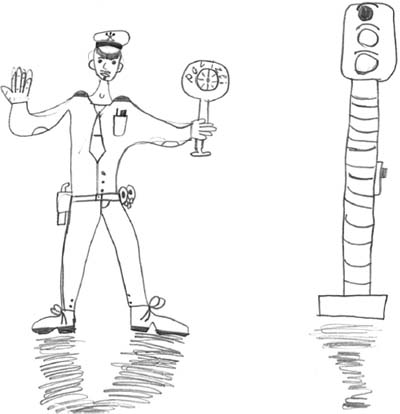
David Easton formulated the distinction of specific support and diffuse support of authorities. Specific support related to consent with particular decisions. Each authority would be fragile if there were only such agreements. Decision making involves favoring some and disfavoring others. Therefore, authorities survived by a cushion of general support. It was not related to particular outcomes but diffuse and allowed authorities to exercise discretion. Easton and Jack Dennis showed that people were socialized, beginning in early childhood, into trusting authorities such as the president, the police, or the courts (see Figure 1).
Often, people find themselves in a clash between different legitimate expectations. In this way, state laws sometimes are in conflict with local, religious, or ethnic rules that may be more powerful. Eugen Ehrlich's (1862–1922) concept of living law and his examples from Bukovina (today a region in Romania and Ukraine) easily illustrated these findings, as well as violent conflicts in numerous provinces of contemporary states. Conflicting laws are a factor in shaping personal and group identities.
Figure 1 Children and the Authority of the Police
The single most influential work on legitimacy is that of Max Weber. He formulated three ideal types (Idealtypen) of legitimate rule geared to individuals in power positions and four types of legitimate order. Charismatic authority rested on the belief of followers in their leader's extraordinary qualities, which could save them in desperate situations. Traditional authority bound rulers and ruled together in communities that were considered unbreakable. Legal-rational authority derived from rules that the ruler could alter when opportune. Modern legal positivism lurked in this latter concept. When it came to the legitimacy of social orders, there was a legal-rational and a traditional ideal type. They formed the institutional backgrounds of traditional and legal-rational rule. Weber added a legitimation based on affect and a value-rational type. Almost all institutional and authority-related aspects of modern societies revealed a legal-rational foundation to some degree. In reality, the types mix; which is why Weber called them Idealtypen. Weber trusted in charismatic leaders in business and politics to revitalize the perceived iron-like structures of modern society.
...
- I. Biographies in Law and Society
- Aristotle (384–322 BCE)
- Arnold, Thurman W. (1891–1969)
- Aubert, Vilhelm (1922–1988)
- Baratta, Alessandro (1933–2002)
- Beccaria, Cesare (1738–1794)
- Bentham, Jeremy (1748–1832)
- Bentley, Arthur F. (1870–1957)
- Bobbio, Norberto (1909–2004)
- Bodin, Jean (1530–1596)
- Bourdieu, Pierre (1930–2002)
- Braudel, Fernand (1902–1986)
- Carbonnier, Jean (1908–2003)
- Cattaneo, Carlo (1801–1869)
- Cohen, Felix (1907–1953)
- Commons, John R. (1862–1945)
- Comte, Auguste (1798–1857)
- Derrida, Jacques (1930–2004)
- Duguit, Léon (1859–1928)
- Durkheim, Émile (1858–1917)
- Ehrlich, Eugen (1862–1922)
- Engels, Friedrich (1820–1895)
- Evans-Pritchard, Edward E. (1902–1973)
- Filangieri, Gaetano (1752–1788)
- Foucault, Michel (1926–1984)
- Frank, Jerome (1889–1957)
- Fuchs, Ernst (1859–1929)
- Fuller, Lon L. (1902–1978)
- Gadamer, Hans-Georg (1900–2002)
- Gall, François Joseph (1758–1828)
- Geiger, Theodor (1891–1952)
- Gierke, Otto von (1841–1921)
- Ginsberg, Morris (1889–1970)
- Gluckman, Max (1911–1975)
- Graziani, Augusto (1865–1938)
- Grotius, Hugo (1583–1645)
- Gumplowicz, Ludwig (1838–1909)
- Gurvitch, Georges (1894–1965)
- Hägerström, Axel (1868–1939)
- Haar, Barend ter (1892–1941)
- Halbwachs, Maurice (1877–1945)
- Hale, Robert Lee (1884–1969)
- Hauriou, Maurice (1856–1929)
- Hayek, Friedrich August von (1899–1992)
- Heidegger, Martin (1889–1976)
- Hobbes, Thomas (1588–1679)
- Hoebel, E. Adamson (1906–1993)
- Holmes, Oliver Wendell, Jr. (1841–1935)
- Hostos, Eugenio María de (1839–1903)
- Hurst, J. Willard (1910–1997)
- Jellinek, Georg (1851–1911)
- Jhering, Rudolf von (1818–1892)
- Kant, Immanuel (1724–1804)
- Kantorowicz, Hermann (1877–1940)
- Kawashima, Takeyoshi (1909–1992)
- Kelsen, Hans (1881–1973)
- Kohlberg, Lawrence (1927–1987)
- Lévy-Bruhl, Henri (1884–1964)
- Lacassagne, Alexandre (1843–1924)
- Lambert, Edouard (1866–1947)
- Lasswell, Harold D. (1902–1978)
- List, Friedrich (1789–1846)
- Liszt, Franz von (1851–1919)
- Llewellyn, Karl (1893–1962)
- Locke, John (1632–1704)
- Lombroso, Cesare (1835–1909)
- Loria, Achille (1857–1943)
- Luhmann, Niklas (1927–1998)
- Ma Xiwu (1899–1962)
- Machiavelli, Niccolò (1469–1527)
- Maine, Henry Sumner (1822–1888)
- Malinowski, Bronislaw (1884–1942)
- Marx, Karl (1818–1883)
- McDougal, Myres S. (1906–1998)
- Menger, Anton (1841–1906)
- Menger, Carl (1840–1921)
- Merriam, Charles E. (1874–1953)
- Mills, C. Wright (1916–1962)
- Montesquieu, Charles-Louis de (1689–1755)
- Morgan, Lewis Henry (1818–1881)
- Mosca, Gaetano (1858–1941)
- Nussbaum, Arthur (1877–1964)
- Olivecrona, Karl (1897–1980)
- Olson, Mancur (1932–1998)
- Parsons, Talcott (1902–1979)
- Pashukanis, Evgeny B. (1891–1937)
- Petrazycki, Leon (1867–1931)
- Pigliaru, Antonio (1922–1969)
- Plato (428–347 BCE)
- Podgórecki, Adam (1925–1998)
- Polanyi, Karl (1886–1964)
- Pound, Roscoe (1870–1964)
- Radcliffe-Brown, A. R. (1881–1955)
- Rawls, John (1921–2002)
- Renner, Karl (1870–1950)
- Rheinstein, Max (1899–1977)
- Romano, Santi (1875–1947)
- Ross, Alf (1899–1979)
- Rousseau, Jean-Jacques (1712–1778)
- Saint-Simon, Henri (1760–1825)
- Savigny, Friedrich Carl von (1779–1861)
- Schelsky, Helmut (1912–1984)
- Schmitt, Carl (1888–1985)
- Schmoller, Gustav von (1838–1917)
- Smith, Adam (1723–1790)
- Sombart, Werner (1863–1941)
- Stigler, George J. (1911–1992)
- Sumner, William Graham (1840–1910)
- Sutherland, Edwin H. (1883–1950)
- Tönnies, Ferdinand (1855–1936)
- Tarde, Gabriel de (1843–1904)
- Tarello, Giovanni (1934–1987)
- Thurnwald, Richard (1869–1954)
- Timasheff, Nicholas S. (1886–1970)
- Tocqueville, Alexis de (1805–1859)
- Tomeo, Vincenzo (1930–1990)
- Treves, Renato (1907–1992)
- Vico, Giambattista (1688–1744)
- Vollenhoven, Cornelis van (1874–1933)
- Weber, Max (1864–1920)
- Westermarck, Edward (1862–1939)
- Wilson, Woodrow (1856–1924)
- Wolfgang, Marvin E. (1924–1998)
- Wollstonecraft, Mary (1759–1797)
- Zeisel, Hans (1905–1992)
- II. Law and Society Activities in Regions and Countries
- III. Law and Society Methodology and Research
- Centro Nazionale di Prevenzione e Difesa Sociale
- DGS Sektion Rechtssoziologie
- Dictionnaire Encyclopédique de Théorie et de Sociologie du Droit
- Red Latinoamericana de Antropología Jurídica
- Vereinigung für Rechtssoziologie
- Vereniging voor de Sociaal-Wetenschappelijke Bestudering van het Recht
- Agent-Based Models
- American Bar Foundation
- American Law and Economics Association
- American Psychology-Law Society
- American Society of Comparative Law
- American Society of Criminology
- Analysis of Variance
- APSA Law and Courts Section
- Association for Political and Legal Anthropology
- Australian and New Zealand Association of Psychiatry, Psychology and Law
- Australian and New Zealand Society of Criminology
- Baldy Center for Law and Social Policy
- Bioeconomics
- British Society of Criminology
- Canadian Law and Economics Association
- Canadian Law and Society Association
- Causal Inference
- Center for the Study of Law and Society
- Cognitivism
- Comparative Criminal Justice
- Comparative Law
- Content Analysis
- Conversation Analysis
- Cost-Benefit Analysis
- Critical Feminist Theory
- Critical Race Feminist Theory
- Critical Race Theory
- Databases
- Deconstruction
- Determinism
- Durkheim School
- Ecological Inference
- Economic Models
- Empirical Research Strategies
- Entropy
- Essentialism
- Ethnomethodology
- European Association of Law and Economics
- European Association of Psychology and Law
- European Network on Law and Society
- Experiments, Randomized
- Factor Analysis
- Feminist Legal Studies
- Frankfurt School
- Free Law School
- Game Theory
- Institute for Law and Society
- Institute for Legal Studies
- Institutional Economics
- Instrumentalism
- Intent in Norms
- International Institute for the Sociology of Law (Oñati)
- International Society for Criminology
- Interpretivism
- Interviews
- IPSA Research Committee for Comparative Judicial Studies
- ISA Research Committee on Sociology of Law
- IUAES Commission on Folk Law and Legal Pluralism
- Jurisprudence of Interests, American
- Jurisprudence of Interests, European
- Kelsen and Legal Sociology
- Kohlberg and Moral Development
- Latin American Network on Law and Society
- Law and Society Association, The
- Literature, Law and
- Longitudinal Research
- Marxism
- Mathematical Modeling
- Morality and Law
- MPI for Social Anthropology Project Group Legal Pluralism
- Multivariate Analysis
- Narrative
- NSF Law and Social Science Program
- Observation, Participant
- Policy Sciences
- Positivism and Legal Science
- Postmodernism
- Pragmatism
- Praxeology
- Prediction Studies
- Program in Law and Public Affairs
- Queer Theory
- Questionnaires and Surveys
- Rational Choice and the Rational Actor
- Realism, American Legal
- Reification
- Relativism, Philosophical
- Reliability and Validity
- Rhetoric
- Sampling
- Scandinavian Research Council for Criminology
- Semiotics
- Socio-Legal Studies Association
- Sociological Jurisprudence
- Statistical Inference
- Structural Functionalism
- Thick Description
- United Nations Office on Drugs and Crime
- Working Group on the Comparative Study of Legal Professions
- World Bank Thematic Group on Law and Justice Institutions
- IV. Demography of Law
- Aboriginal and Indigenous Peoples, Treatment of
- Abortion
- Adoption
- Affirmative Action Programs
- Aging
- Asylum, Refugees, and Immigration
- Caste
- Child Abuse
- Child Bride
- Children
- Cultural Identities
- Disabilities, People with
- Discrimination, Economics of
- Discrimination, Sociology of
- Divorce and Separation
- Elder Abuse
- Equality
- Eugenics
- European Integration
- Family Violence
- Female Infanticide
- Gender
- Genocide
- Group Defamation
- Gypsies and Travelers
- Hate Crimes
- Immigration and Citizenship
- Language Minorities
- Marriage and Civil Unions, Same-Sex
- Marriage and Informal Unions
- Nation Building
- North American Integration
- Poverty
- Race and Ethnicity
- Rape and Sexual Offenses
- Religious Minorities
- Sexual Harassment
- Sexual Orientation
- Social Status
- V. Sociology of Law
- Access to Justice
- Animal Rights
- Autonomy of Law
- Cause Lawyers
- Civil Disobedience
- Commodification
- Communications Revolution
- Communications Systems
- Comparative Legal Systems
- Conflict Pyramid
- Culture, Global Legal
- Culture, Legal
- Discretion in Legal Decision Making
- Education, Legal
- Ethics, Legal
- Functions of Law
- Gap Problem
- Globalization and Law in Everyday Life
- Government Lawyers
- Homelessness
- Honor
- Industrialization
- Informal Law
- Knowledge, Legal
- Labeling Theory
- Law Firms
- Lawyers
- Legitimation
- Mirror Theory
- Mixed Legal Systems
- Penetration of Law
- Politicians, Lawyers as
- Popular Culture and Law
- Professions, Developments in Legal
- Reciprocity
- Reflexive and Autopoietic Law
- Relativity, Legal
- Risk Society
- Sanctions
- Social Change and Law
- Social Conflict
- Socialization, Legal
- Sociological Theories of Law
- Sociology of Law
- Sports
- Symbols in Law
- Technology, Legal Practice and New
- Trade Unions
- Transplants, Colonization as Legal
- Transplants, Legal Borrowing and Reception as
- Transplants, Legal Exports as
- Urbanization
- Visual Communication in and about Law
- Voluntary Acts, Sociology of
- VI. Anthropology of Law
- Aboriginal and Indigenous Peoples, Legal Systems of
- Alternative Law
- Anthropology of Law
- Apology and Pardon
- Bride Burning
- Bride Capture
- Colonialism
- Conciliation
- Conflict
- Cultural Defense
- Custom and Law
- Customary Legal Norms
- Customary Legal Norms in India
- Dispute Avoidance
- Dispute Resolution, Alternative
- Dowry Customs
- Evolution, Social and Legal
- Female Genital Mutilation
- Gift Exchange
- Incest
- Inheritance, Customs of
- Kingship and Chieftaincy
- Kinship
- Land Tenure, Customs of
- Language, Law and
- Matrimonial Prestation
- Mediation
- Mediation in China
- Negotiation
- Pluralism, Legal
- Polygamy
- Private Legal Systems
- Relativism, Cultural
- Slavery
- Social Norms, Emergence of
- Son Preference
- Violence and Justice
- Witchcraft
- Wrongs, Customs of
- VII. Law and Economics
- Auction Theory
- Behavioral Economics
- Binary Economics
- Chicago School of Law and Economics
- Coase Theorem
- Competition
- Economic Development, Law and
- Economics, Law and
- Efficiency
- Evolutionary Economics
- Externalities and Social Costs
- Functional Law and Economics
- Inequality, Economic
- Information
- Market Failure
- Markets
- Monopoly
- Normative Economics
- Privatization
- Public Choice
- Resource Allocation
- Risk
- Social Choice and Judicial Decision Making
- Socioeconomics
- Transaction Costs
- Utility Maximization
- Value
- Waste
- VIII. Law and Political Science
- Administrative Decentralization
- Administrative Law and Agencies, Economics of
- Administrative Law and Agencies, Politics of
- Administrative Law and Agency Accountability
- Apology in Court
- Appellate Courts
- Arbitration, International
- Arbitration, National
- Arms Control
- Authoritarian Regimes and Courts
- Chinese Legalist School
- Civil Liberties
- Communitarianism
- Constitutional Courts
- Constitutional Law, Doctrinal Issues in
- Constitutional Law, Economics of
- Constitutional Law, Politics of
- Constitutionalism, Supranational
- Corruption
- Court Administration and Reform
- Court Caseload Statistics
- Courts
- Courts, Lawmaking by
- Courts, Supranational
- Cultural Heritage and Patrimony
- Customary Legal Norms, International
- Deregulation
- Elections
- Experts, Use in Civil Courts
- Expression, Freedom of
- Geography, Law and
- Globalization, Governance, and Democratic Participation
- Globalization, Nongovernmental
- Globalization, Processes of Judicial
- Globalization, Processes of Legislative
- Globalization, Resistance to Economic
- Harmonization, Legal
- Hindu Law
- Human Rights, Asian Perspectives on
- Human Rights, International
- Ideology, Law and
- Individualism
- International Courts
- International Trade
- Interpretation and Reasoning, Legal
- Islamic Law
- Judges
- Judges, Associations of
- Judicial Activism
- Judicial Decision Making
- Judicial Independence
- Judicial Inefficiency and Delay
- Judicial Politicization
- Judicial Selection
- Juries
- Lay Judges
- Legislatures and Lawmaking
- Legitimacy
- Litigiousness, Civil
- Nationalism
- Nongovernmental Organizations
- Ombudsperson
- People's Courts
- Political Dissent
- Political Participation and Rights
- Political Science, Law and
- Positive Law
- Power, Law and
- Privacy
- Regulatory Unreasonableness
- Religion, Law and
- Reparations for Past Harms
- Revolution, Law and
- Rule of Law
- Settlement
- Social Contract
- Socialist Justice
- Sovereignty and Jurisdiction
- State, Government, and Legal Order
- State, Law and the
- Talmudic Law
- Transparency
- Trials, Civil
- Truth Commissions
- War Crimes
- IX. Psychology and Law
- Attitude Formation and Change
- Attitudes and Behavior
- Compliance with Law
- Confessions and Interrogation
- Cultural Psychology
- Dementia
- Dispute Resolution, Psychology of
- Edgework
- Evolutionary Psychology
- Eyewitness Identification
- Investigative Psychology
- Juries, Psychology of
- Lie Detection
- Mental Disorders
- Moral Development
- Neuroscience and Law
- Obedience
- Procedural Justice
- Profiling
- Psychobiology of Crime
- Psychology and Law
- Psychology, Use in Courts
- Psychopathy and Sociopathy
- Public Opinion and Legal Consciousness
- Punishment, Psychology of
- Repressed Memory
- Therapeutic Jurisprudence
- Voluntary Acts, Psychology of
- Witness Testimony, Psychology of
- X. Criminology
- Amnesty and Pardon
- Consensual Penal Resolution
- Constitutive Criminology
- Crime Statistics
- Crime Trends
- Crime, Economics of
- Crime, International Response to
- Crime, Theories of the Definition of
- Criminology
- Critical Criminology
- Cybercrime
- Death Penalty
- Decriminalization
- Defense Lawyers
- Drugs, Criminology of Illegal
- Drugs, Economics of Illegal
- Emotions and Criminal Justice
- Environmental Crime
- Firearms, Use and Control of
- Forensic Experts
- Fraud
- Gambling
- Gangs
- Gangs, Female
- Genes and Crime
- Homicide
- Insanity and Crime
- Integrative Criminology
- International Criminal Tribunals
- Juvenile Crime, Courts, and Corrections
- Legal Aid, Criminal
- Legality and Discretion
- Lustration
- Mafia and Organized Crime
- Mass Murder
- Military Justice
- Parole
- Penal Court Procedures, Doctrinal Issues in
- Plea Bargaining
- Plea Bargaining, Economics of
- Police
- Political Crimes
- Pornography
- Preventive Incarceration
- Prisons and Jails, Criminology of
- Prisons and Jails, Economics of
- Prosecutorial Discretion
- Prosecutors
- Prostitution, Criminology of
- Prostitution, Economics of
- Punishment and Sentencing Alternatives
- Punishment, Economics of
- Restorative Justice
- Serial Killers
- Sex Offenders
- Situational Crime
- Terrorism
- Theft and Burglary
- Torture
- Transitional Justice in Asia and Latin America
- Transitional Justice in Post-Communist Nations
- Treatment and Rehabilitation
- Trials, Criminal
- Victimology and Victim Services
- Victims' Rights
- White-Collar Crime
- White-Collar Crime, Criminology of
- XI. Legal Subjects
- Agrarian Reform
- AIDS and HIV
- Alcohol
- Business Associations, Doctrinal Issues in
- Business Associations, Economics of
- Business Associations, Sociology of
- Business Bankruptcy
- Civil Court Procedures, Doctrinal Issues in
- Civil Court Procedures, Economics of
- Civil Court Procedures, Sociology of
- Consumer Bankruptcy, Doctrinal Issues in
- Consumer Bankruptcy, Economics of
- Consumer Bankruptcy, Sociology of
- Consumer Transactions
- Contracts, Doctrinal Issues in
- Contracts, Economics of
- Environmental Law, Doctrinal Issues in
- Environmental Law, Economics of
- Environmental Law, Sociology of
- Euthanasia and Assisted Suicide
- Evidence and Proof, Doctrinal Issues in
- Evidence and Proof, Economics of
- Evidence and Proof, Scientific
- Evidence and Proof, Sociology and Psychology of
- Family Relationships, Doctrinal Issues in
- Family Relationships, Economics of
- Family Relationships, Islamic Law of
- Family Relationships, Sociology of
- Financial Services Regulation
- Food Biotechnology
- Genomics and Human Genetics
- Health
- Human Resource Management
- Inheritance and Succession, Doctrinal Issues in
- Inheritance and Succession, Islamic Law of
- Inheritance and Succession, Sociology of
- Injury to Persons, Property, and Relations, Doctrinal Issues in
- Injury to Persons, Property, and Relations, Economics of
- Injury to Persons, Property, and Relations, Sociology of
- Insurance and Risk
- Intellectual Property, Doctrinal Issues in
- Intellectual Property, Economics of
- Intellectual Property, Sociology of
- Internet Law
- Labor Law and Industrial Relations
- Labor Law, Economics of
- Labor Law, Sociology of
- Mass Torts
- Nuclear Power
- Organ Transplants
- Property, Doctrinal Issues in
- Property, Economics of
- Property, Sociology of
- Securities Regulation and Financial Markets, Sociology and Politics of
- Securities Regulation, Economics of
- Taxes, Doctrinal Issues in
- Taxes, Economics of
- Taxes, Sociology of
- Tobacco
- Welfare
- Loading...
Get a 30 day FREE TRIAL
-
 Watch videos from a variety of sources bringing classroom topics to life
 -
Read modern, diverse business cases
-
Explore hundreds of books and reference titles

Read next

More like this
Sage Recommends
We found other relevant content for you on other Sage platforms.
Have you created a personal profile? Login or create a profile so that you can save clips, playlists and searches