
Entry
Reader's guide
Entries A-Z
Subject index
Death Penalty
Throughout U.S. history, the death penalty has been reserved almost entirely for the crimes committed by adult men. Fewer than 3 percent of the approximately 20,000 people executed under legal authority in the United States have been women, and fewer than 2 percent have been juveniles—that is, individuals who committed their capital crimes before their 18th birthdays. Most of the juveniles executed (about 70 percent) have been black, nearly 90 percent of their victims have been white, and approximately 65 percent of them have been executed in the South.
The first juvenile executed in America was Thomas Graunger in Plymouth colony in 1642 for the crime of bestiality. He was 16 at the time of his crime and execution. The youngest nonslave executed in the United States was Ocuish Hannah. On December 20, 1786, she was hanged at the age of 12 for a murder she had committed in New London County, Connecticut. Juveniles in America have been executed for sodomy with animals, arson, robbery, assault, rape, and murder.
Before the 1980s, the age of a capital offender received little public or legal scrutiny, probably in part because death sentences were rarely imposed on juveniles. Most death penalty states before the 1980s had statutes establishing a required minimum age at the time of the crime. Indiana's death penalty statute allowed juveniles as young as 10 years of age at the time of their crimes to be executed. Montana's statute provided the death penalty for juveniles as young as 12 years old. Mississippi's minimum age was 13, and other states had minimum age limits ranging from 14 to 18. Some death penalty states set no statutory minimum age limits.
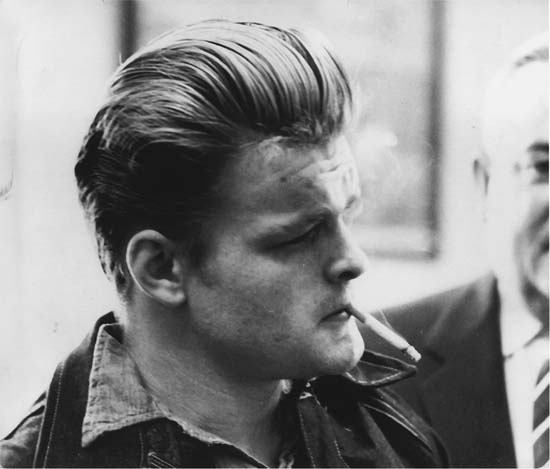
Photo 3. Charles Starkweather was executed in 1959 for a teen crime spree that included the murder of 11 people
Supreme Court Decisions
The U.S. Supreme Court first considered the issue of age in capital cases in Eddings v. Oklahoma (1982). Monty Eddings was sentenced to death for killing a highway patrol officer. He was 16 at the time of the crime. Although on appeal Eddings challenged the constitutionality of the death penalty for juveniles, the Court vacated his death sentence on narrower grounds. The key issue for the Court was not his age, which was presented as a mitigating circumstance at trial, but the trial court's failure to consider two other mitigating factors—his unstable family life and emotional disturbances. Even though the Supreme Court sidestepped the broader constitutional question in Eddings, it did stress that chronological age was an important mitigating factor that must be considered during the sentencing phase of a capital trial.
Between 1983 and 1986, the Supreme Court had five more opportunities to rule on the constitutionality of the death penalty for juveniles but declined in each case. Also during that period, three juveniles were executed—the first juveniles executed in more than two decades. Charles Rumbaugh was executed on September 11, 1985, in Texas; James Terry Roach in South Carolina on January 10, 1986; and Jay Pinkerton in Texas on May 15, 1986. They were all 17 years old at the time of their crimes. (At the time of their executions, Rumbaugh was 28, Roach was 25, and Pinkerton was 24.) By the end of the decade, the Court finally agreed to consider the constitutionality of the death penalty for juveniles in Thompson v. Oklahoma (1988).
...
- Delinquency Theories and Theorists
- Albert Cohen
- Biological Theories
- Clifford Shaw
- Cycle of Violence
- Edwin Sutherland
- Fredrick Thrasher
- Henry McKay
- James Short
- Joan McCord
- Lamar T. Empey
- Lloyd Ohlin
- Marvin Wolfgang
- Psychological Theories
- Richard Cloward
- Ruth Shonle Cavan
- Sheldon and Eleanor Glueck
- Sociological Theories
- Solomon Kobrin
- Stanley G. Hall
- Thorsten Sellin
- Travis Hirschi
- Walter Miller
- Walter Reckless
- Historical References: People and Projects
- Delinquent Behavior
- Treatment and Interventions for Delinquency
- Aftercare
- Alternative Schools
- Assessment
- Boot Camps
- Boys and girls Clubs
- community action boards
- Culturally Specific Programming
- curfews
- DARE
- Detention Facilities
- family therapy
- Group Homes
- group therapy
- mediation
- out of home placement
- police responses to delinquency
- Prevention strategies
- probation
- Scared Straight
- Teen courts
- victim offender
- Wilderness Programs
- Juvenile Law and Legislative Initiatives
- California Street Terrorism Enforcement & Prevention
- California Youth Authority
- Death Penalty
- Diversion
- Foster Care
- Guardian Ad Litem
- Juvenile Courts
- Juvenile Justice and Delinquency Prevention Act
- Juvenile Law
- National Council of Juvenile & Family Court Judges
- National Council on Crime & Delinquency
- Office of Juvenile Justice and Delinquency Prevention
- parens patriae
- Parental liability laws
- Waivers to Adult Court
- Juvenile Issues and Public Policy
- Loading...
Get a 30 day FREE TRIAL
-
 Watch videos from a variety of sources bringing classroom topics to life
 -
Read modern, diverse business cases
-
Explore hundreds of books and reference titles

Read next

More like this
Sage Recommends
We found other relevant content for you on other Sage platforms.
Have you created a personal profile? Login or create a profile so that you can save clips, playlists and searches