
Entry
Reader's guide
Entries A-Z
Subject index
Bozeman, Montana
Like a good recipe that mixes different ingredients to create a flavor all its own is one way to describe Bozeman. Towns and cities do the same thing, and people will migrate to certain areas because of the flavor of the town. Bozeman's recipe is a mix of agriculture, tourism, education, recreation, and culture. The town's close proximity to Yellowstone National Park, the role of Montana State University, the attraction of thousands of acres of wilderness, and the city's symphonies, opera companies, and museums mark Bozeman as unique in many minds. Bozeman dishes up a taste that has any palette so enthralled that eating it everyday is a necessity.
Bozeman is located in the eastern end of the Gallatin Valley. The valley is part of the northern end of the Rocky Mountain chain. Northeast of Bozeman is the Bridger Range, named after the guide and trapper Jim Bridger. Its highest point is Sacajawea Peak at 9,670 feet. Southeast is the Madison range, named after James Madison, U.S. Secretary of State in 1804; its highest point is Gallatin Peak at 11,015 feet. The Gallatin Range lies south of town and its highest point is Mount Chisholm at 10,333 feet. These mountains surround the town with panoramic views, a feast for the eyes.
Early inhabitants of southwestern Montana referred to the valley as the Valley of Flowers. Prairie grass and sagebrush dominate the lower elevations, along with cottonwoods and willow trees. As elevation increases, conifers such as pine, spruce, and fir texture the area, with islands of aspen intermingled. Wildlife is abundant and diverse. Around Bozeman, one can encounter deer, elk, moose, big horn sheep, wolf, coyote, and bear. The area is also home to many birds and is a major migratory stopping point.
There are many rivers that traverse the area: The Gallatin, Jefferson, and Madison all join together to form the Missouri River near Three Forks, Montana. A labyrinth of tributaries supplies these rivers. Fed by snow slowly melting high above the valley floor, these waterways feed the brilliant flora and fauna of the area. Not only are they the source of water, but they also provide easy transportation and recreation to local inhabitants.
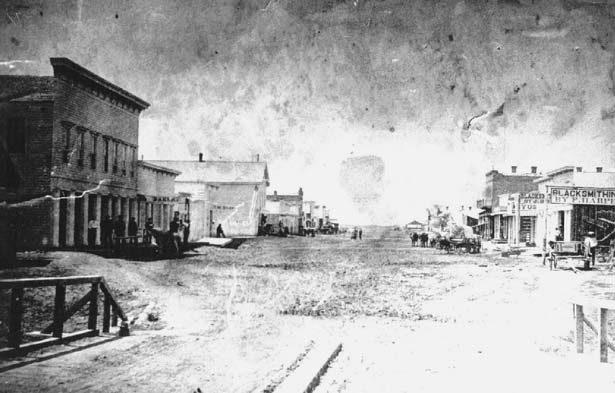
Early picture of Main Street, Bozeman, Montana (circa 1860s).
The beauty and fertility of the valley caught the attention of early immigrants. The rich river bottom-land and timber resources that surrounded them told early pioneers that this valley could be used to supply the mines of Virginia City and Helena and anybody else who chose to settle in the area. On August 9, 1864, a group of men met to formalize a town with the intent of protecting their interests in the area. The minutes of the meeting record that John M. Bozeman was elected chairmen and recorder of land claims. On nomination by Reverend William White Alderson, the town was named Bozeman. The cost of filing a claim was $1 and required the claimant to become a resident within 10 days in order to hold the claim. The next day, there were seven claims recorded and more followed that autumn. The meeting also established the town boundaries in order to organize land claims. The town was not formally platted until 1870 and was then incorporated by the state legislature in 1874.
...
- American Indians
- American Indian Migration to Phoenix, Arizona Apache
- Arapaho
- Assiniboine
- Blackfoot Nation
- Bureau of Indian Affairs
- Cahuilla Nation
- California Indians of the North Coast and Northwestern Coast
- California Indians of the Northern Mountains
- California Indians of the Northern Valley
- Chemehuevi
- Cheyennes
- Creek Nation
- Crow Nation
- Cupeños
- Gabrielino
- Gros Ventre
- Hopi
- Juaneños
- Kumeyaay (Diegueño, I'ipay, and Tipai)
- Lakotas
- Luiseño
- Maidu
- Mojave
- Nez Perce
- Northern Pueblo
- Palouse Indians
- Trail of Tears
- Upland Yumans
- Utes
- Washoe
- Yakama
- Yokuts
- Biography
- Austin, Stephen Fuller
- Bartleson, John
- Bass, Charlotta A. Spear(s)
- Bidwell, John
- Bloom, Jessie S.
- Brent, Joseph Lancaster
- Carr, Jeanne Carver Smith
- Chapman, Joseph
- Dellums, Cottrell Lawrence
- Duniway, Abigail Scott
- Feldenheimer, Edith
- Foltz, Clara Shortridge
- Foote, Mary Hallock
- Frank, Ray
- Fremont, John Charles
- Gale, William Alden
- Gianforte, Greg
- Hartnell, William
- Harvey, Frederick Henry
- Irvine, James Harvey
- Jacks, David Baird
- Percival, Olive May
- Pittman, Tarea Hall
- Reed, John Thomas
- Singleton, Benjamin
- Strauss, Levi
- Sutter, Johann August
- Thrall, William H.
- Van Nuys, Isaac Newton
- Wilson, Benjamin Davis
- Winnemucca, Sarah
- Cities and Towns
- Billings, Montana
- Bisbee and Douglas, Arizona
- Boise, Idaho
- Boyle Heights, California
- Bozeman, Montana
- Brigham City, Utah
- Butte, Montana
- China Lake, Inyokern, and Ridgecrest, California
- Cody, Wyoming
- Dearfield, Colorado
- Denver, Pueblo, Boulder, Fort Collins, and Colorado Springs, Colorado
- Fort Worth, Texas
- Fresno, California
- Gilead, Kansas
- Goldfield, Nevada
- Grass Valley, California
- Great Falls, Montana
- Helena, Montana
- Huntington Beach, California
- Jackson, Wyoming
- Julian, California
- Kalispell, Montana
- Lake Havasu City, Arizona
- Las Vegas, Nevada
- Last Chance Gulch, Montana
- Leadville, Colorado
- Lewiston and Coeur d'Alene, Idaho
- Libby, Montana
- Lincoln, Nebraska
- Los Angeles, California
- Miles City, Montana
- Mining Ghost Towns
- Missoula, Montana
- Moab, Utah
- Moscow, Idaho
- Nampa, Idaho
- Nicodemus, Kansas
- Northwood, North Dakota
- Omaha, Nebraska
- Park City, Utah
- Phoenix, Arizona
- Prescott, Arizona
- Price, Utah
- Rawhide, Nevada
- Rexburg, Idaho, and the Minidoka Project
- Rhyolite, Nevada
- Salt Lake City, Utah
- San Antonio, Texas
- San Diego, California
- San Dimas, California
- San Francisco, California
- Santa Ana River Valley
- Santa Ana, California
- Santa Fe, New Mexico
- St. George, Utah
- Sun City, Arizona
- Tacoma, Washington
- Temecula, California
- Tombstone, Arizona
- Tonopah, Nevada
- Topeka, Kansas
- Tucson, Arizona
- Virginia City, Montana
- Visalia, California
- Wichita, Kansas
- Economic Change and War
- Defense Industry
- Dry Farming
- Farming Families on the Oregon Frontier
- Iran-Iraq War and the Migration of Iranian Youth to California
- Military Base Closures
- United States Marine Corps Recruit Depot San Diego
- World War I Americanization Programs in California
- World War II Defense Industries
- World War II–Postwar Effects on Western Migration
- Ethnic and Racial Groups
- African American Communities in California
- Anglo Migration to Southern California Before the Depression
- Basque Americans
- Chileans and the California Gold Rush
- Chinese Immigration
- Czechs and Swedes in Saunders County, Nebraska
- Euro-American Migration on the Overland Trails
- French Basques of Bakersfield, California
- Frisians
- Irish in the West
- Koreatown
- Little Italy
- Little Tokyo and Japantown
- Mexican Migration to California
- Okies
- Pacific Islanders
- Slaves in California
- Vietnamese American Women
- Immigration Laws and Policies
- Asian Immigration Law
- Chinese Exclusion Act
- Forced Migration of Anarchists
- Forced Migration of Italians During World War II
- Gentleman's Agreement
- German and Italian Internment
- Immigration Act of 1965
- Immigration and Naturalization Service (INS)
- Immigration Reform and Control Act of 1986
- Indian Removal Act of 1830
- Japanese Internment
- Lawyers and Legislation
- Operation Wetback
- Proposition 187
- War Brides of Montana
- World War II Relocation Program
- Libraries
- Natural Resources Events and Laws
- Alien Land Law of 1913
- Arizona Copper Discoveries
- Black Hills Gold Rush of 1874
- Comstock Lode, 1859
- Enlarged Homestead Act of 1909
- Fraser River Gold Rush of 1858
- Frisco Mine, Beaver County, Utah
- Helena's Exploited Resources
- Homestead Act
- Idaho Silver Strikes
- Logging
- Mineral Land Policy
- Nevada's Mining Discoveries of the 20th Century
- Nineteenth-Century Land Policy
- Pick-Sloan Plan of 1944
- Pike's Peak Rush
- Rexburg, Idaho, and the Minidoka Project
- The Way West
- Loading...
Get a 30 day FREE TRIAL
-
 Watch videos from a variety of sources bringing classroom topics to life
 -
Read modern, diverse business cases
-
Explore hundreds of books and reference titles

Read next

More like this
Sage Recommends
We found other relevant content for you on other Sage platforms.
Have you created a personal profile? Login or create a profile so that you can save clips, playlists and searches