
Entry
Reader's guide
Entries A-Z
Subject index
Sex Ratio
The sex ratio (SR) is the most popular index of sex composition used in demographic and other scholarly analyses; it is defined as the number of males per 100 females:
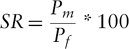
An SR above 100 indicates an excess of males, and an SR below 100 indicates an excess of females. In some countries including India, Iran, Pakistan, and Saudi Arabia, the SR is calculated as the number of females per 100 males, but the SR formula shown above is used by most demographers and international bodies such as the United Nations.
Henry Shryock, Jacob Siegel, and Associates have noted that SRs of nations are usually around 95 to 102 unless some major loss of life affects the country. A national SR lower than 90 or higher than 105 is extreme.
Marcia Guttentag and Paul Secord's Too Many Women? The SR Question is the best accounting of the SR in historical populations. In high SR societies, young adult women are decidedly valued. They might be permitted to choose their own marriage partners or to marry into superior socioeco-nomic classes. High SR societies might promote sexual morality, in particular the virginity of potential brides and the fidelity of women in marriage. Some cultures tend to endorse sexual exclusivity and love on the part of both sexes, while others accept promiscuity and infidelity on the part of men.
Many of the characteristics of low SR societies are the opposite of those in high SR societies. Women are likely regarded as sex objects, feeling immobilized and devalued by the society. Due to their oversupply, they are rarely able to marry into higher socioeconomic classes. Greater numbers of men and women tend to remain single, and those who marry are more prone to get divorced.
Most societies have SRs at birth (SRBs) between 104 and 106. This so-called biologically normal SRB is likely an evolutionary adaptation to the fact that females have higher survival probabilities than males. Since at every year of life males have higher age-specific death rates than females, slightly more males than females are required at birth for there to be around equal numbers of males and females when the groups reach their marriageable ages.
Biology thus dictates that the age-specific SR will be highest at the very young ages and should then decline with age, attaining a value of around 100 for persons in their late 20s and continuing to decline to levels around 50 or 60 in the oldest ages.
Dudley Poston and Karen Glover have shown that the SRB in the United States is invariant, at about 105 for every year. In contrast, China had an SRB only slightly above 107 in 1980, a ratio which began to increase in the late 1980s, reaching 115 in 1990, 120 in 2000, and 118 in 2005. This has occurred in China (and in Taiwan, South Korea, India, and several other Asian countries) for three main reasons: (1) fertility has declined very rapidly in China from six children per woman in the 1960s to around 1.7 at the start of the new millennium; (2) China is characterized by a Confucian patriarchal tradition where son preference is strong and pervasive. When Chinese women were having six children on average, the probability was very low (less than 2 percent) that none of the six children would be male. By comparison, Gilles Pison has written that when women have between one and two children, the probabilities are between 25 and 50 percent; and (3) ultrasound technology enabling the prenatal determination of sex has been widely available in China since the 1980s; thus, many Chinese use this technology to identify the sex of the fetus, and in many instances, if it is a female fetus, to then abort it.
...
- Cognitive Processes in Relationships
- Accounts
- Approach and Avoidance Orientations
- Attribution Processes in Relationships
- Beliefs about Relationships
- Beliefs, Destiny versus Growth
- Cognitive Processes in Relationships
- Comparison Levels
- Couple Identity
- Empathic Accuracy and Inaccuracy
- Empathy
- Expectation States Theory, Applied to Relationships
- Expectations about Relationships
- Fairness in Relationships
- First Impressions
- Gain-Loss Theory of Attraction
- Gender Stereotypes
- Gender-Role Attitudes
- Idealization
- Ideals about Relationships
- Information Seeking
- Language Usage in Relationships
- Lesser Interest, Principle of
- Love, Prototype Approach
- Marriage, Expectations About
- Memories and Relationships
- Misattribution
- Mood and Relationships
- Norms about Relationships
- Perspective Taking
- Physical Attractiveness Stereotype
- Reciprocity, Norm of
- Romanticism
- Rules of Relationships
- Satisfaction in Relationships
- Security in Relationships
- Self-Evaluation Maintenance Model
- Self-Expansion Model
- Self-Regulation in Relationships
- Social Comparison, Effects on Relationships
- Transference
- Unconditional Positive Regard
- Understanding
- Validation in Relationships
- Values and Relationships
- Communication Processes
- Accounts
- Accuracy in Communication
- Advice, Self-Help, and Media Advice about Relationships
- Affinity Seeking
- Arguing
- Communication Accommodation Theory
- Communication Processes, Verbal
- Communication Skills
- Communication, Gender Differences in
- Communication, Instant Messaging and Other New Media
- Communication, Nonverbal
- Communication, Norms and Rules
- Computer-Mediated Communication
- Conflict Patterns
- Conflict Resolution
- Criticism in Relationships
- Deception and Lying
- Dialectical Processes
- Discourse Analysis
- Display Rules
- Dissolution of Relationships, Breakup Strategies
- Dissolution of Relationships, Processes
- Dyssemia
- Embarrassment
- Emotional Communication
- Empathic Accuracy and Inaccuracy
- Empathy
- Equivocation
- Exchange Processes
- Facework
- Facial Expressions
- Family Communication
- Flirting
- Gossip
- Information Seeking
- Ingratiation
- Interaction Analysis
- Internet and Social Connectedness
- Interpersonal Influence
- Interpersonal Sensitivity
- Interruptions, Conversational
- Language Usage in Relationships
- Lies in Close and Casual Relationships
- Listening
- Media Depictions of Relationships
- Media Influences on Relationships
- Metacommunication
- Negative Affect Reciprocity
- Negotiation
- Nonverbal Communication, Status Differences
- Nonverbal Involvement
- Openness and Honesty
- Parent-Adolescent Communication
- Personal Idioms
- Perspective Taking
- Persuasion
- Positive Affectivity
- Rapport
- Relationship Messages
- Responsiveness
- Secret Relationships
- Secrets
- Self-Disclosure
- Sexual Communication between Partners
- Social Networks, Dyad Effects on
- Social Networks, Effects on Developed Relationships
- Social Networks, Role in Relationship Initiation
- Social Skills in Childhood
- Social Skills, Adults
- Social Support, Nature of Storytelling
- Taboo Topics
- Touch
- Understanding
- Validation in Relationships
- Warmth, Interpersonal
- Creating and Maintaining Closeness
- Accommodation
- Acquaintance Process
- Affection and Affectionate Behavior
- Affiliation
- Affirmation
- Approach and Avoidance Orientations
- Arousal and Attraction
- Capitalization
- Closeness
- Commitment, Predictors and Outcomes
- Commitment, Theories and Typologies
- Comparison Levels
- Compatibility
- Complementarity
- Connectedness, Tension with Autonomy
- Couple Identity
- Courtship and Dating, Cross-Cultural Differences in
- Courtship, Models and Processes of
- Dependence
- Developing Relationships
- Early Years of Marriage Project
- Familiarity Principle of Attraction
- First Impressions
- Food and Relationships
- Forgiveness
- Friendship Formation and Development
- Fun in Relationships
- Idealization
- Ingratiation
- Initiating Relationships
- Internet and Social Connectedness
- Interpersonal Attraction
- Interpersonal Dependency
- Interpersonal Process Model of Intimacy
- Intimacy
- Investment Model
- Lesser Interest, Principle of
- Liking
- Long-Distance Relationships
- Maintaining Relationships
- Marriage, Transition to
- Matching Hypothesis
- Minding the Relationship
- Mutual Cyclical Growth
- Openness and Honesty
- Personal Space
- Physical Attractiveness, Role in Relationships
- Proximity and Attraction
- Respect
- Responsiveness
- Rewards and Costs in Relationships
- Risk in Relationships
- Secret Tests of Relationship Status
- Secrets
- Self-Disclosure
- Sex and Love
- Sex in Established Relationships
- Sexuality and Attachment
- Shared Activities
- Similarity in Ongoing Relationships
- Similarity Principle of Attraction
- Social Penetration Theory
- Social Support, Nature of
- Stage Theories of Relationship Development
- Transformation of Motivation
- Trust
- Turning Points in Relationships
- Understanding
- Validation in Relationships
- Warmth, Interpersonal
- Willingness to Sacrifice
- The Dark Side of Relationships
- Abuse and Violence in Relationships
- Abused Women Remaining in Relationships
- AIDS, Effects on Relationships
- Alcohol and Sexual Assault
- Alcoholism, Effects on Relationships
- Alienation and Anomie
- Alzheimer's Disease and Relationships
- Ambivalence
- Arguing
- Batterers
- Bereavement
- Betrayal
- Borderline Psychopathology in Relationships
- Boredom in Relationships
- Bullying
- Child Abuse and Neglect
- Conflict Patterns
- Conflict Prevalence and Sources
- Conflict, Family
- Conflict, Marital
- Criticism in Relationships
- Dark Side of Relationships
- Deception and Lying
- Depression and Relationships
- Deteriorating Relationships
- Disillusionment in Marriage
- Dissolution of Relationships, Breakup Strategies
- Dissolution of Relationships, Causes
- Dissolution of Relationships, Coping and Aftermath
- Divorce, Children and
- Divorce, Effects on Adults
- Divorce, Prevalence and Trends
- Elder Abuse and Neglect
- Enemies
- Envy
- Expressed Emotion
- Extradyadic Sex
- Fatal Attraction
- Friendship, Conflict and Dissolution
- Hostility
- Incest
- Intergenerational Transmission of Abuse
- Intergenerational Transmission of Divorce
- Interpersonal Dependency
- Isolation, Health Effects
- Jealousy
- Lies in Close and Casual Relationships
- Loneliness
- Loneliness, Children
- Loss
- Love, Unreciprocated
- Negative Affect Reciprocity
- Negative Interactions during Late Life
- Obsessive Love
- Obsessive Relational Intrusion
- Ostracism
- Prejudice
- Psychopathology, Genetic Transmission of
- Psychopathology, Influence on Family Members
- Rape
- Rejection
- Rejection Sensitivity
- Relational Aggression
- Relationship Distress and Depression
- Revenge
- Sexual Aggression
- Sexual Dysfunctions
- Sexual Harassment
- Sexually Transmitted Diseases and Relationships
- Shyness
- Social Allergies
- Social Anxiety
- Social Isolation
- Stalking
- Stress and Relationships
- Substance Use and Abuse in Relationships
- Suicide and Relationships
- Transgressions
- Vengeance
- Vulnerability-Stress-Adaptation Model
- Work-Family Conflict
- Dating, Courtship, and Marriage
- Adolescence, Romantic Relationships in
- Age at First Marriage
- American Couples Study
- Arranged Marriages
- Assessment of Couples
- Assortative Mating
- Attraction, Sexual
- Bank Account Model
- Barrier Forces to Relationship Dissolution
- Biological Systems for Courtship, Mating, Reproduction, and Parenting
- Boston Couples Study
- Cohabitation
- Commercial Channels for Mate Seeking
- Computer Matching Services
- Conflict, Marital
- Couples in Later Life
- Couples in Middle Age
- Courtship and Dating, Cross-Cultural Differences in
- Courtship, Models and Processes of
- Covenant Marriage
- Dating and Courtship in Midlife and Later Life
- Dating Relationships in Adolescence and Young Adulthood
- Dating, First Date
- Disillusionment in Marriage
- Division of Labor in Households
- Early Years of Marriage Project
- Engagement as a Relationship Stage
- Evolutionary Perspectives on Women's Romantic Interests
- Evolutionary Psychology and Human Relationships
- Falling in Love
- Field of Eligibles and Availables
- Flirting
- Gender Roles in Relationships
- Hard-to-Get Phenomenon
- Honeymoons
- Ideals about Relationships
- Infatuation
- Internet Dating
- Internet, Attraction on
- Long-Distance Relationships
- Longitudinal Studies of Marital Satisfaction and Dissolution
- Marital Satisfaction and Quality
- Marital Stability, Prediction of
- Marital Typologies
- Marketplace Approaches to Courtship, Love, and Sex
- Marriage and Health
- Marriage and Sex
- Marriage Markets
- Marriage, Benefits of
- Marriage, Expectations About
- Marriage, Historical and Cross-Cultural Trends
- Marriage, Transition to
- Matching Hypothesis
- Mate Guarding and Poaching
- Mate Preferences
- Mate Selection
- Money and Couple Relationships
- Newlyweds
- Opening Lines
- Physical Attractiveness Stereotype
- Physical Attractiveness, Role in Relationships
- Polygamy
- Predicting Success or Failure of Marital Relationships
- Prevention and Enrichment Programs for Couples
- Process of Adaptation in Intimate Relationships (PAIR)
- Rape
- Remarriage
- Risk in Relationships
- Secret Relationships
- Sex in Established Relationships
- Shared Activities
- Social Networks, Dyad Effects on
- Speed Dating
- Vulnerability-Stress-Adaptation Model
- Weddings
- Emotion Processes in Relationships
- Anger in Relationships
- Arousal and Attraction
- Boredom in Relationships
- Compassionate Love
- Criticism in Relationships
- Dependency Paradox
- Depression and Relationships
- Display Rules
- Dyssemia
- Embarrassment
- Emotion in Relationships
- Emotion Regulation in Relationships
- Emotion Regulation, Developmental Influences
- Emotional Communication
- Emotional Contagion
- Emotional Intelligence
- Emotionally Focused Couple Therapy
- Empathic Accuracy and Inaccuracy
- Empathy
- Envy
- Excitation Transfer Theory
- Expectation States Theory, Applied to Relationships
- Expressed Emotion
- Facial Expressions
- Falling in Love
- Fun in Relationships
- Gratitude
- Guilt and Shame
- Happiness and Relationships
- Hostility
- Hurt Feelings
- Interpersonal Sensitivity
- Jealousy
- Loss
- Love, Companionate and Passionate
- Love, Prototype Approach
- Love, Typologies
- Lust
- Misattribution of Arousal
- Mood and Relationships
- Negative Affect Reciprocity
- Nostalgia
- Positive Affectivity
- Rapport
- Reassurance Seeking
- Reciprocity, Norm of
- Rejection
- Relationship Distress and Depression
- Romanticism
- Satisfaction in Relationships
- Security in Relationships
- Self-Expansion Model
- Self-Regulation in Relationships
- Unconditional Positive Regard
- Warmth, Interpersonal
- Family
- Adoption
- Adulthood, Sibling Relationships in
- African-American Families
- Alzheimer's Disease and Relationships
- Arranged Marriages
- Asian-American Families
- Assessment of Families
- Aunts and Uncles, Relationships With
- Behavioral Parent Training
- Biological Systems for Courtship, Mating, Reproduction, and Parenting
- Caregiver Role
- Child Abuse and Neglect
- Conflict, Family
- Conflict, Marital
- Coupling Policies
- Covenant Marriage
- Discipline in Families
- Divorce, Children and
- Divorce, Prevalence and Trends
- Dual-Earner Couples
- Employment Effects on Relationships
- Empty Nest, Effects on Marriage
- End-of-Life, Relationship Issues During
- Ex-Partner and Ex-Spouse Relationships
- Extended Families
- Families, Coping with Cancer
- Families, Definitions and Typologies
- Families, Demographic Trends
- Families, Intergenerational Relationships in
- Families, Public Policy Issues and
- Family Communication
- Family Data, Analysis of
- Family Functioning
- Family Life Cycle
- Family Relationships in Adolescence
- Family Relationships in Childhood
- Family Relationships in Late Adulthood
- Family Relationships in Middle Adulthood
- Family Relationships in Young Adulthood
- Family Routines and Rituals
- Family Therapy
- Father-Child Relationships
- Fictive Kinship
- Foster Care, Relationships in
- Grandparent-Grandchild Relationship
- Health, Relationships as a Factor in Treatment
- Holidays and Relationships
- In-laws, Relationships With
- Incest
- Infant-Caregiver Communication
- Intergenerational Family Relationships
- Intergenerational Transmission of Abuse
- Intergenerational Transmission of Divorce
- Iowa Family Transitions Project
- Kin Relationships
- Kin Selection
- Kinkeeping
- Mother-Child Relationships in Adolescence and Adulthood
- Mother-Child Relationships in Early Childhood
- Multigenerational Households
- Nostalgia
- Parent-Adolescent Communication
- Parent-Child Communication about Sex
- Parent-Child Relationships
- Parental Investment Theory
- Parenthood, Transition to
- Parenting
- Postdivorce Relationships
- Pregnancy and Relationships
- Psychopathology, Genetic Transmission of
- Psychopathology, Influence on Family Members
- Retirement, Effects on Relationships
- Sibling Relationships
- Single-Parent Families
- Socialization
- Storytelling
- Work-Family Conflict
- Work-Family Spillover
- Friendship and Caregiving in Adulthood
- Adult Attachment, Individual Differences
- Adulthood, Sibling Relationships in
- Aging Processes and Relationships
- Alzheimer's Disease and Relationships
- Caregiver Role
- Caregiving across the Life Span
- Couples in Later Life
- Couples in Middle Age
- Dating and Courtship in Midlife and Later Life
- Disabilities, Chronic Illness, and Relationship Functioning
- Divorce, Effects on Adults
- Elder Abuse and Neglect
- Empty Nest, Effects on Marriage
- End-of-Life, Relationship Issues During
- Families, Intergenerational Relationships in
- Family Relationships in Late Adulthood
- Family Relationships in Middle Adulthood
- Family Relationships in Young Adulthood
- Friendship Formation and Development
- Friendship, Conflict and Dissolution
- Friendships in Late Adulthood
- Friendships in Middle Adulthood
- Friendships in Young Adulthood
- Friendships, Cross-Sex
- Friendships, Sex Differences and Similarities
- Intergenerational Family Relationships
- Leisure Activity
- Life Review, Role of Relationships
- Life-Span Development and Relationships
- Marriage, Benefits of
- Negative Interactions during Late Life
- Postdivorce Relationships
- Retirement, Effects on Relationships
- Similarity in Ongoing Relationships
- Social Isolation
- Socioemotional Selectivity Theory
- Health and the Biology of Relationships
- AIDS, Effects on Relationships
- Alzheimer's Disease and Relationships
- Families, Coping with Cancer
- Health and Relationships
- Health Behaviors, Relationships and Interpersonal Spread of
- Health, Relationships as a Factor in Treatment
- Hormones Related to Relationships
- Illness, Effects on Relationships
- Isolation, Health Effects
- Marriage and Health
- Mental Health and Relationships
- Parent-Child Communication about Sex
- Physicians, Relationships With
- Psychopathology, Genetic Transmission of
- Psychopathology, Influence on Family Members
- Psychotherapists, Relationships With
- Sexually Transmitted Diseases and Relationships
- Social Neuroscience
- Social Support and Health
- Social Support Interventions
- Stress and Relationships
- Substance Use and Abuse in Relationships
- Suicide and Relationships
- Methods for Studying Relationships
- Accounts
- Adult Attachment Interview
- Archival Methods
- Assessment of Couples
- Assessment of Families
- Bogus Stranger Paradigm
- Coding Systems for Observing Interactions
- Conflict Measurement and Assessment
- Daily Diary Methods
- Developmental Designs
- Discourse Analysis
- Dyadic Data Analysis
- Ethical Issues in Relationship Research
- Experimental Designs for Relationship Research
- Family Data, Analysis of
- Interaction Analysis
- Longitudinal Studies of Marital Satisfaction and Dissolution
- Marital Satisfaction, Assessment of
- Observational Methods
- Peer Report Methods
- Personal Relationships Journals
- Qualitative Methods in Relationship Research
- Quantitative Methods in Relationship Research
- Questionnaires, Design and Use of, in Relationship Research
- Rochester Interaction Record
- Social Relations Model
- Sociometric Methods
- Speed Dating
- Strange Situation
- Survey Methods in Relationship Research
- Personality and Individual Differences
- Adult Attachment, Individual Differences
- Aging Processes and Relationships
- Agreeableness
- Approach and Avoidance Orientations
- Attachment Typologies, Childhood
- Belonging, Need for
- Body Image, Relationship Implications
- Borderline Psychopathology in Relationships
- Communication Skills
- Communication, Gender Differences in
- Connectedness, Tension with Autonomy
- Conscientiousness, Effects on Relationships
- Coping, Developmental Influences
- Dyssemia
- Emotional Intelligence
- Exchange Orientation
- Extraversion and Introversion
- Fear of Death, Relational Implications
- Friendships, Sex Differences, and Similarities
- Gender Roles in Relationships
- Gender-Role Attitudes
- Interpersonal Sensitivity
- Intimacy, Individual Differences Related to
- Life Review, Role of Relationships
- Loneliness
- Motivation and Relationships
- Narcissism, Effects on Relationships
- Neuroticism, Effects on Relationships
- Openness and Honesty
- Optimism, Effects on Relationships
- Personal Idioms
- Personality Traits, Effects on Relationships
- Physical Attractiveness, Defining Characteristics
- Reassurance Seeking
- Rejection Sensitivity
- Resilience
- Self-Concept and Relationships
- Self-Esteem, Effects on Relationships
- Self-Monitoring and Relationships
- Sex Differences in Relationships
- Sex-Role Orientation
- Sexual Dysfunctions
- Sexual Motives
- Sexual Prejudice
- Shyness
- Social Allergies
- Social Anxiety
- Social Skills in Childhood
- Social Skills, Adults
- Sociometer Theory
- Sociosexual Orientation
- Temperament
- Trust
- Unmitigated Communion
- Waist-to-Hip Ratio and Attraction
- Prevention and Repair of Relationship Problems
- Accommodation
- Adult Attachment, Individual Differences
- Advice, Self-Help, and Media Advice about Relationships
- Apologies
- Attachment Typologies, Childhood
- Behavioral Couple Therapy
- Behavioral Parent Training
- Cognitive Behavioral Couple Therapy
- Conflict Resolution
- Couple Therapy
- Couple Therapy for Substance Abuse
- Divorce and Preventive Interventions for Children and Parents
- Emotionally Focused Couple Therapy
- Family Therapy
- Family Therapy for ADHD in Children and Adolescents
- Family Therapy for Adult Psychopathology
- Family Therapy for Noncompliance in Children and Adolescents
- Family Therapy for Substance Abuse in Adolescents
- Forgiveness
- Insight-Oriented Couple Therapy
- Integrative Behavioral Couple Therapy
- Interpersonal Psychotherapy
- Intervention Programs, Domestic Violence
- Intervention Programs, Satisfaction and Stability
- Loneliness, Interventions
- Maintaining Relationships
- Mediation, Marriage Dissolution
- Mentoring Programs
- Predicting Success or Failure of Marital Relationships
- Prevention and Enrichment Programs for Couples
- Prevention and Relationship Enhancement Programs (PREP)
- Repairing Relationships
- Sexuality and Attachment
- Social Support Interventions
- Vulnerability-Stress-Adaptation Model
- Willingness to Sacrifice
- Psychological Processes
- Accommodation
- Affiliation
- Affiliation in Nonhuman Animals
- Affirmation
- Approach and Avoidance Orientations
- Arousal and Attraction
- Attachment Theory
- Belonging, Need for
- Body Image, Relationship Implications
- Capitalization
- Cohesiveness in Groups
- Collectivism, Effects on Relationships
- Commitment, Predictors and Outcomes
- Commitment, Theories and Typologies
- Communal Relationships
- Compatibility
- Complementarity
- Connectedness, Tension with Autonomy
- Cooperation and Competition
- Coping, Developmental Influences
- Dependence
- Dependency Paradox
- Dissolution of Relationships, Causes
- Dissolution of Relationships, Coping and Aftermath
- Dissolution of Relationships, Processes
- Equity Theory
- Exchange Processes
- Excitation Transfer Theory
- Goal Pursuit, Relationship Influences
- Goals in Relationships
- Group Dynamics
- Helping Behaviors in Relationships
- Individuation
- Interdependence Theory
- Interpersonal Attraction
- Interpersonal Dependency
- Interpersonal Influence
- Leadership
- Liking
- Marital Satisfaction and Quality
- Mental Health and Relationships
- Morality and Relationships
- Motivation and Relationships
- Need Fulfillment in Relationships
- Negotiation
- Ostracism
- Persuasion
- Power Distribution in Relationships
- Power, Predictors of
- Prejudice
- Proximity and Attraction
- Responsiveness
- Satisfaction in Relationships
- Security in Relationships
- Self-Concept and Relationships
- Self-Presentation
- Self-Regulation in Relationships
- Self-Verification
- Social Identity Theory
- Social Learning Theory
- Socialization
- Sociometer Theory
- Transference
- Transformation of Motivation
- Sexuality
- Abortion
- Affection and Affectionate Behavior
- Alcohol and Sexual Assault
- Arousal and Attraction
- Attraction, Sexual
- Biological Systems for Courtship, Mating, Reproduction, and Parenting
- Birth Control, Relational Aspects
- Casual Sex
- Double Standard in Relationships
- Evolutionary Perspectives on Women's Romantic Interests
- Extradyadic Sex
- Fatal Attraction
- Flirting
- Friends with Benefits
- Hooking Up, Hookups
- Jealousy
- Kissing
- Lust
- Marriage and Sex
- Parent-Child Communication about Sex
- Polygamy
- Pornography, Effects on Relationships
- Pregnancy and Relationships
- Rape
- Safe Sex
- Sex and Love
- Sex in Established Relationships
- Sexual Aggression
- Sexual Communication between Partners
- Sexual Dysfunctions
- Sexual Harassment
- Sexual Intent, Perceptions of
- Sexual Intercourse, First Experience of
- Sexual Motives
- Sexual Prejudice
- Sexual Standards
- Sexuality
- Sexuality and Attachment
- Sexuality in Adolescent Relationships
- Sexually Transmitted Diseases and Relationships
- Sociosexual Orientation
- Stalking
- Touch
- Virginity and Virginity Loss
- Social Context of Relationships
- Advice, Self-Help, and Media Advice about Relationships
- African-American Families
- Asian-American Families
- Barrier Forces to Relationship Dissolution
- Collectivism, Effects on Relationships
- Communication, Instant Messaging and Other New Media
- Communication, Norms and Rules
- Community Involvement
- Computer-Mediated Communication
- Contextual Influences on Relationships
- Convoy Model of Social Relations
- Coupling Policies
- Courtship and Dating, Cross-Cultural Differences in
- Culture and Relationships
- Deviance, Relationship Effects
- Division of Labor in Households
- Double Standard in Relationships
- Dual-Earner Couples
- Economic Pressures, Effects on Relationships
- Employment Effects on Relationships
- Families, Demographic Trends
- Families, Public Policy Issues and
- Field of Eligibles and Availables
- Hispanic/Latino Families
- Homelessness and Relationships
- Internet and Social Connectedness
- Interracial and Interethnic Relationships
- Job Stress, Relationship Effects
- Marketplace Approaches to Courtship, Love, and Sex
- Marriage Markets
- Marriage, Historical and Cross-Cultural Trends
- Materialism and Relationships
- Media Depictions of Relationships
- Media Influences on Relationships
- Military and Relationships
- Neighbor Relations
- Norms about Relationships
- Physical Environment and Relationships
- Popularity
- Privacy
- Public Policy and Relationships
- Reciprocity, Norm of
- Religion, Spirituality, and Relationships
- Secret Relationships
- Sex Ratio
- Sexual Harassment
- Social Capital
- Social Inequalities and Relationships
- Social Networks, Dyad Effects on
- Social Networks, Effects on Developed Relationships
- Social Networks, Role in Relationship Initiation
- Socioeconomic Status
- Stress and Relationships
- Technology and Relationships
- Social Relations in Childhood and Adolescence
- Adolescence, Romantic Relationships in
- Attachment Typologies, Childhood
- Bullying
- Children's Peer Groups
- Coping, Developmental Influences
- Dating Relationships in Adolescence and Young Adulthood
- Divorce and Preventive Interventions for Children and Parents
- Divorce, Children and
- Emotion Regulation, Developmental Influences
- Family Relationships in Adolescence
- Family Relationships in Childhood
- Family Therapy for Noncompliance in Children and Adolescents
- Fatal Attraction
- Father-Child Relationships
- Fictive Kinship
- Foster Care, Relationships in
- Friendships in Adolescence
- Friendships in Childhood
- Grandparent-Grandchild Relationship
- Imaginary Companions
- Infant-Caregiver Communication
- Interracial Friendships, in Adolescence
- Life-Span Development and Relationships
- Loneliness, Children
- Mentoring Programs
- Mother-Child Relationships in Adolescence and Adulthood
- Mother-Child Relationships in Early Childhood
- Parent-Adolescent Communication
- Parent-Child Relationships
- Parenting
- Play Fighting
- Popularity
- Sexuality in Adolescent Relationships
- Sibling Relationships
- Social Skills in Childhood
- Socialization, Role of Peers
- Strange Situation
- Theoretical Approaches to Studying Relationships
- Aristotle and Plato on Relationships
- Attachment Theory
- Commitment, Theories and Typologies
- Communication Accommodation Theory
- Comparison Levels
- Convoy Model of Social Relations
- Equity Theory
- Evolutionary Psychology and Human Relationships
- Exchange Processes
- Excitation Transfer Theory
- Expectation States Theory, Applied to Relationships
- Feminist Perspectives on Relationships
- Gain-Loss Theory of Attraction
- Interdependence Theory
- Investment Model
- Justice Norms Applied to Relationships
- Matching Hypothesis
- Parental Investment Theory
- Personal Relationships, Defining Characteristics
- Psychodynamic Theories of Relationships
- Psychotherapists, Relationships With
- Relationship Science, Disciplines Contributing to
- Resource Theory
- Rewards and Costs in Relationships
- Role Theory and Relationships
- Self-Evaluation Maintenance Model
- Self-Expansion Model
- Social Exchange Theory
- Social Identity Theory
- Social Learning Theory
- Social Penetration Theory
- Socioemotional Selectivity Theory
- Sociometer Theory
- Symbolic Interaction Theories
- Systems Theories
- Uncertainty Reduction Theory
- Vulnerability-Stress-Adaptation Model
- Weak Ties
- Types of Relationships
- Alternative Relationship Lifestyles
- Arranged Marriages
- Aunts and Uncles, Relationships With
- Change in Romantic Relationships over Time
- Closeness
- Cohabitation
- Commitment, Theories and Typologies
- Communal Relationships
- Community Involvement
- Cooperation and Competition
- Egalitarian Relationships
- Engagement as a Relationship Stage
- Families, Definitions and Typologies
- Father-Child Relationships
- Friendships in Adolescence
- Friendships in Childhood
- Friendships in Late Adulthood
- Friendships in Middle Adulthood
- Friendships in Young Adulthood
- Friendships, Cross-Sex
- Gay, Lesbian, and Bisexual Relationships
- God, Relationships With
- Grandparent-Grandchild Relationship
- Interracial and Interethnic Relationships
- Kin Relationships
- Love, Companionate and Passionate
- Love, Typologies
- Marital Typologies
- Mentoring Relationships
- Mother-Child Relationships in Early Childhood
- Neighbor Relations
- Personal Relationships, Defining Characteristics
- Pet-Human Relationships
- Physicians, Relationships With
- Polygamy
- Relationship Science, Disciplines Contributing to
- Relationship Types and Taxonomies
- Rules of Relationships
- Sibling Relationships
- Singlehood
- Stage Theories of Relationship Development
- Stepfamilies
- Teacher-Student Relationships
- Workplace Relationships
- Loading...
Get a 30 day FREE TRIAL
-
 Watch videos from a variety of sources bringing classroom topics to life
 -
Read modern, diverse business cases
-
Explore hundreds of books and reference titles

Read next

More like this
Sage Recommends
We found other relevant content for you on other Sage platforms.
Have you created a personal profile? Login or create a profile so that you can save clips, playlists and searches