
Entry
Reader's guide
Entries A-Z
Subject index
Neonatal Deaths
A neonatal death is death of an infant prior to the 28th day of life. Demographers and epidemiologists define the neonatal mortality rate (NMR) as:
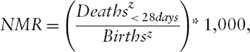
where
Deathsz<28days refers to deaths to infants younger than 28 days old, in year z; and
Birthsz is the number of live births in year z.
Neonatal deaths are usually examined separately from other infant deaths occurring during the first year of life. This distinction is made because (a) there is very high mortality during the first minutes, hours, days, and weeks of life, and (b) the causes of death in the neonatal period tend to differ from the causes in the postneonatal period (28 days to 364 days after birth).
Primary Causes of Neonatal Mortality
In 2005, about 30#x0025; of all neonatal deaths occurring in the United States were due to prematurity, or being born before 37 weeks of gestation. Generally, the more premature the infant, the more likely death will occur. Only about 20#x0025; to 35#x0025; of babies born at 23 weeks of pregnancy survive, compared to 50#x0025; to 70#x0025; of those born at 24 to 25 weeks. Survival increases to more than 90#x0025; at 26 to 27 weeks' gestation, whereas births before 32 weeks' gestation, comprising about 2#x0025; of all births, account for most neonatal deaths and disorders.
Premature births occur after spontaneous premature labor (50#x0025; of cases), a spontaneous rupture of the membranes (30#x0025; of cases), and intentional delivery of a premature infant for the benefit of the infant and/or mother (20#x0025; of cases). Causes of preterm birth that are the consequences of the mother's health include high blood pressure, placental problems, a previous preterm delivery, a multiple birth, and abnormalities in the uterus or cervix.
Neonatal deaths also result from structural and genetic birth defects such as spina bifida, anencephaly, and heart or kidney defects. Birth defects account for around 21#x0025; of all deaths to infants in the United States recorded during 2005. Defects where the heart and lungs do not develop fully are the most common cause of neonatal death. Abnormalities in which the infant has more or less than the normal 46 chromosomes represent a common cause of neonatal death. It is rare for embryos with chromosomal abnormalities to survive the pregnancy, but those who do will likely die within the first few weeks of life. Other less prominent causes that account for the almost 40#x0025; of remaining neonatal deaths include pregnancy related problems, such as complications involving the placenta or problems with the umbilical cord and membranes.
Variation in Neonatal Mortality
Every year four million infant deaths occur during the neonatal period. Globally, 99#x0025; of neonatal deaths are in lowor middle-income countries. The largest numbers of neonatal deaths occur in southcentral Asian countries with the highest rates in sub-Saharan Africa. Worldwide, the main cause of neonatal deaths is preterm birth (28#x0025;), severe infections (26#x0025;), and asphyxia (23#x0025;).
In developed countries, around two-thirds of all infant deaths occur during the neonatal period and are often due to preterm delivery or birth defects. There has been a dramatic decline in the NMR due to low birth weight mortality, whereby almost 80#x0025; of the deaths are to birth weights of less than 750 grams. This decline is believed to be due to technical strides in obstetrics, neonatal intensive care, and policies that provide health care access to disadvantaged groups.
...
- Death, Anthropological Perspectives
- Death, Clinical Perspectives
- Death, Humanistic Perspectives
- Death, Philosophical Perspectives
- Death, Psychological Perspectives
- Death, Sociological Perspectives
- Defining and Conceptualizing Death
- Eschatology
- Forensic Anthropology
- Forensic Science
- Medicalization of Death and Dying
- Thanatology
- Dance of Death (Danse Macabre)
- Death-Related Music
- Depictions of Death in Art Form
- Depictions of Death in Sculpture and Architecture
- Depictions of Death in Television and the Movies
- Elegy
- Literary Depictions of Death
- Loved One, The
- Museums of Death
- Photography of the Dead
- Popular Culture and Images of Death
- Pornography, Portrayals of Death in
- Taxidermy
- Video Games
- Wax Museums
- Abortion
- Accidental Death
- Acute and Chronic Diseases
- Alcohol Use and Death
- Alzheimer's Disease
- Anorexia and Bulimia
- Autoerotic Asphyxia
- Cancer and Oncology
- Capital Punishment
- Cardiovascular Disease
- Causes of Death, Contemporary
- Causes of Death, Historical Perspectives
- Cult Deaths
- Databases
- Death, Line of Duty
- Disasters, Man-Made
- Disasters, Natural
- Drug Use and Abuse
- Dueling
- Food Poisoning and Contamination
- HIV/AIDS
- Karoshi
- Medical Malpractice
- Medical Mistakes
- Military Executions
- Miscarriage and Stillbirth
- Neonatal Deaths
- Prison Deaths
- Spontaneous Combustion
- Subintentional Death
- Sudden Death
- Sudden Infant Death Syndrome (SIDS)
- Tobacco Use
- War Deaths
- After-Death Communication
- Ambiguous Loss and Unresolved Grief
- Anniversary Reaction Phenomenon
- Bereavement, Grief, and Mourning
- Chronic Sorrow
- Communal Bereavement
- Communicating with the Dead
- Condolences
- Coping with the Loss of Loved Ones
- Death Anxiety
- Death Education
- Denial of Death
- Disenfranchised Grief
- Elegy
- Friends, Impact of Death of
- Gold Star Mothers
- Grief, Bereavement, and Mourning in Cross-Cultural Perspective
- Grief, Bereavement, and Mourning in Historical Perspective
- Grief, Types of
- Grief and Bereavement Counseling
- Grief and Dementia
- Humor and Fear of Death
- Instrumental Grieving: Gender Differences
- Lamentations
- Memorials
- Memorials, Quilts
- Memorials, Roadside
- Memorials, War
- Missing in Action (MIA)
- Monuments
- Orphans
- Postself
- Spontaneous Shrines
- Suicide, Counseling and Prevention
- Survivor Guilt
- Widows and Widowers
- African Beliefs and Traditions
- American Indian Beliefs and Traditions
- Ancient Egyptian Beliefs and Traditions
- Australian Aboriginal Beliefs and Traditions
- Chinese Death Taboos
- Death Care Industry
- Egyptian Perceptions of Death in Antiquity
- Funerals and Funeralization in Cross-Cultural Perspective
- Kamikaze Pilots
- Mesoamerican Pre-Columbian Beliefs and Traditions
- Social Functions of Death, Cross-Cultural Perspectives
- Suicide, Cross-Cultural Perspectives
- Tibetan Book of Living and Dying, The
- Totemism
- Adolescence and Death
- Adulthood and Death
- Aging, the Elderly, and Death
- Appropriate Death
- Childhood, Children, and Death
- Databases
- Demographic Transition Model
- Economic Evaluation of Life
- Economic Impact of Death on the Family
- Gender and Death
- Infant Mortality
- Life Cycle and Death
- Life Expectancy
- Malthusian Theory of Population Growth
- Middle Age and Death
- Mortality Rates, Global
- Mortality Rates, U.S.
- Race and Death
- Sex and Death
- Social Class and Death
- Body Disposition
- Body Farms
- Burial, Paleolithic
- Burial at Sea
- Burial Insurance
- Burial Laws
- Buried Alive
- Cannibalism
- Cemeteries
- Cemeteries, Ancient (Necropolises)
- Cemeteries, Pet
- Cemeteries, Unmarked Graves and Potter's Field
- Cemeteries, Virtual
- Cemeteries and Columbaria, Military and Battlefield
- Columbarium
- Cremation
- Cryonics
- Decomposition
- Exhumation
- Funeral Pyre
- Grave Robbing
- Green Burials
- Mummies of Ancient Egypt
- Mummification, Contemporary
- Necrophilia
- Neomort
- Putrefaction Research
- Second Burial
- Tomb of the Unknowns
- Tombs and Mausoleums
- Tombstones
- Caskets and the Casket Industry
- Clothing and Fashion, Death-Related
- Commodification of Death
- Cosmetic Restoration
- Cyberfunerals
- Death Care Industry, Economics of
- Death Mask
- Death Notification Process
- Embalming
- Epitaphs
- Eulogy
- Funeral Director
- Funeral Home
- Funeral Industry
- Funeral Industry, Unethical Practices
- Mortuary Science Education
- Obituaries, Death Notices, and Necrology
- Pre-Need Arrangements
- Coroner
- Coroner's Jury
- Death Certificate
- Death-Related Crime
- Economic Evaluation of Life
- Equivocal Death
- Estate Planning
- Estate Tax
- Fatwa
- Forensic Anthropology
- Forensic Science
- Hate Crimes and Death Threats
- Inheritance
- Last Will and Testament
- Legalities of Death
- Life Insurance
- Life Insurance Fraud
- Living Wills and Advance Directives
- Medical Examiner
- Posthumous Reproduction
- Psychological Autopsy
- Viatical Settlements
- Wrongful Death
- Angel Makers
- Atrocities
- Epidemics and Plagues
- Famine
- Genocide
- Holocaust
- Massacres
- Megadeath and Nuclear Annihilation
- School Shootings
- Terrorism, Domestic
- Terrorism, International
- War Deaths
- Appropriate Death
- Art of Dying, The (Ars Moriendi)
- Awareness of Death in Open and Closed Contexts
- Brain Death
- Caregiver Stress
- Caregiving
- Deathbed Scene
- Discretionary Death
- End-of-Life Decision Making
- Halo Nurses Program
- Hospice, Contemporary
- Hospice, History of
- Informed Consent
- Isolation
- KÜBler-Ross's Stages of Dying
- Life Review
- Life Support Systems and Life-Extending Technologies
- Make-A-Wish Foundation
- Medicalization of Death and Dying
- Near-Death Experiences
- Organ and Tissue Donation and Transplantation
- Palliative Care
- Pediatric Palliative Care
- Persistent Vegetative State
- Quality of Life
- Resuscitation
- Terminal Care
- Terminal Illness and Imminent Death
- Ancestor Veneration, Japanese
- Angels
- Animism
- Apocalypse
- Armageddon
- Atheism and Death
- Baptism for the Dead
- Buddhist Beliefs and Traditions
- Christian Beliefs and Traditions
- Clergy
- Confucian Beliefs and Traditions
- Daoist Beliefs and Traditions
- Deities of Life and Death
- Devil
- Eschatology
- Eschatology in Major Religious Traditions
- Funerals and Funeralization in Major Religious Traditions
- Ghost Dance
- Heaven
- Hell
- Hindu Beliefs and Traditions
- Jewish Beliefs and Traditions
- Jihad
- Last Judgment, The
- Martyrs and Martyrdom
- Muslim Beliefs and Traditions
- Mythology
- Necromancy
- Reincarnation
- Resurrection
- Shinto Beliefs and Traditions
- Soul
- Spiritualist Movement
- Spirituality
- Transcending Death
- Valhalla
- Day of the Dead
- Funeral Conveyances
- Funeral Music
- Funerals
- Funerals, Military
- Funerals, State
- Ghost Month
- Halloween
- Holidays of the Dead
- Immortality
- Living a Legacy
- Memorial Day
- Mortuary Rites
- Mythology
- Postself
- Sin Eating
- Symbolic Immortality
- Symbols of Death and Memento Mori
- Wakes and Visitation
- Altruistic Suicide
- Assassination
- Assisted Suicide
- Death Squads
- Domestic Violence
- Euthanasia
- Familicide
- Homicide
- Honor Killings
- Infanticide
- Lynching and Vigilante Justice
- Manslaughter
- Mass Suicide
- Neonaticide
- Psychache
- Serial Murder
- Sex and Death
- Sexual Homicide
- Suicide
- Suicide Survivors
- Ariès's Social History of Death
- Bioethics, History of
- Cloning
- Commodification of Death
- Cremation Movements
- Death, Philosophical Perspectives
- Death Awareness Movement
- Death Education
- Death in the Future
- Death Superstitions
- Defining and Conceptualizing Death
- Demographic Transition Model
- Deviance, Dying as
- Disengagement Theory
- Economic Evaluation of Life
- Economic Impact of Death on the Family
- Freudian Theory
- Good Death
- Language of Death
- Life Expectancy
- Malthusian Theory of Population Growth
- Personifications of Death
- Right-to-Die Movement
- Stephenson's Historical Ages of Death in the United States
- Terror Management Theory
- Thanatology
- Banshee
- Curses and Hexes
- Death Superstitions
- Frankenstein
- Ghost Photography
- Ghosts
- Halloween
- Mythology
- Witches
- Zombies, Revenants, Vampires, and Reanimated Corpses
- Loading...
Get a 30 day FREE TRIAL
-
 Watch videos from a variety of sources bringing classroom topics to life
 -
Read modern, diverse business cases
-
Explore hundreds of books and reference titles

Read next

More like this
Sage Recommends
We found other relevant content for you on other Sage platforms.
Have you created a personal profile? Login or create a profile so that you can save clips, playlists and searches