
Entry
Reader's guide
Entries A-Z
Subject index
Nuclear Politics
The term nuclear politics encompasses two broad areas: nuclear weapons and civilian nuclear technologies. Those areas are linked in a number of ways, and disputes regarding their linkages are themselves part of nuclear politics. Political issues surround the development, manufacturing, testing, deployment, proliferation, and policies for use of nuclear weapons. Civilian nuclear energy is political in terms of regulation, public health and safety implications, environmental impact, waste disposal, financing and risk insurance, competition with other energy sources, and connections to weapons development and proliferation. Other industrial and medical applications of nuclear energy present less prominent controversies.
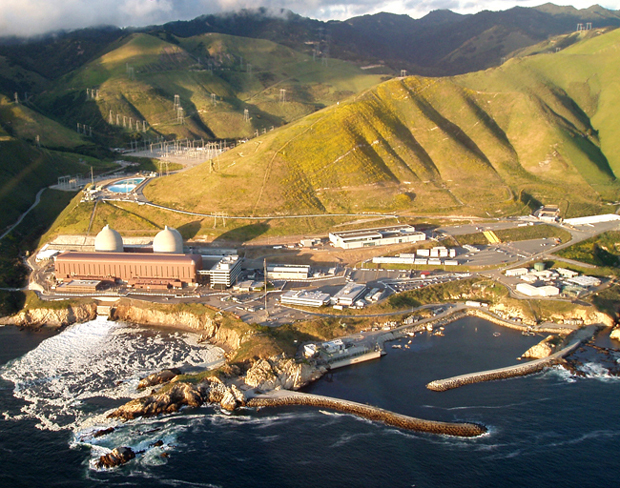
The controversial Diablo Canyon nuclear power plant drew years of protests and civil disobedience, including a blockade, before it eventually opened in 1982.
Scientists first alerted government officials to the military potential of atomic energy in the late 1930s. Internal policy decisions then led to weapons programs in a number of nations that would become principal actors in World War II. Nuclear energy received little public attention until the end of the war, when the bombings of Hiroshima and Nagasaki dramatically opened a public conversation. Throughout the Cold War period, the nuclear arms race between the United States and the Soviet Union was a primary driver of international politics and of domestic politics within the industrialized nations. Political controversies encompassed the development, testing, and deployment of nuclear weapons; proposals and negotiations for test-ban, arms control, and nonproliferation treaties; civil defense programs; antiballistic missile defense systems; and the Reagan administration's Strategic Defense Initiative (known colloquially as the “Star Wars” program). The end of the Cold War shifted attention to concerns including further nuclear weapons proliferation, tensions between other nuclear-armed nations such as India and Pakistan, and the growing potential for nuclear terrorism. International and domestic tensions now surround possibilities for new nuclear weapons development, existing and proposed missile defense systems, and the future of weapons deployments by the various nuclear-armed nations.
There are important links between nuclear weapons and environmental politics. Concerns about the health effects of fallout from nuclear tests emerged in the mid-1950s, leading to widespread public protests that helped motivate the Limited Test Ban Treaty of 1963. In his 1982 manifesto The Fate of the Earth, Jonathan Schell argued that a full-scale nuclear war would produce profound environmental devastation that might render the planet unfit for human life. “Nuclear winter” scenarios derived from computer models soon reinforced Schell's troubling forecast. After the end of the Cold War, public awareness increased regarding the environmental damages and health risks resulting from the industrial processes of nuclear weapons production. Along with those material hazards, the culture of secrecy and expertise surrounding nuclear weapons has had broader consequences for democracy, inhibiting public access to information and participation in policy debates. Those influences have contributed to a technocratic and expertise-driven model of decision making that has affected environmental politics beyond the nuclear domain.
Civilian nuclear energy programs emerged as a by-product of military applications, and public perceptions of civilian nuclear energy remain haunted by that connection. Some nuclear technologies are dual-use technologies that can support weapons production, as well as civilian power programs. The United States has avoided developing some technologies that would facilitate expanded, long-term commitments to nuclear power, such as breeder reactors, because of their potential for increasing the proliferation of nuclear weapons. Mixed-oxide reactor fuels remain controversial in the United States because of their mixed implications for proliferation: Although they provide an approach to disposing of excess plutonium by using it as reactor fuel, they also open possibilities for increased circulation of plutonium in the global nuclear economy. Some critics argue that virtually all civilian nuclear power technologies can contribute to proliferation.
...
- Politics and Ecology
- Politics and People
- Politics Challenges
- Acid Rain
- Afforestation
- Anti-Toxics Movement
- Appropriate Technology
- Biodiversity
- Decentralization
- Deforestation
- Domination of Nature
- Endocrine Disrupters
- Environmental Justice
- Environmental Management
- Equity
- Future Generations
- Global Climate Change
- Globalization
- Groundwater
- Industrial Revolution
- Innovation, Environmental
- Kuznets Curve
- Limits to Growth
- Malthusianism
- Megacities
- Millennium Development Goals
- Nonviolence
- North–South Issues
- Nuclear Politics
- PCBs
- Precautionary Principle
- Regulatory Approaches
- Resource Curse
- Revolving Door
- Risk Assessment
- Risk Society
- Silent Spring
- Structural Adjustment
- Suburban Sprawl
- Sustainable Development
- Technology
- Toxics Release Inventory
- Tragedy of the Commons
- Transportation
- Uncertainty
- Urban Planning
- Wetlands
- Wilderness
- Agenda 21
- Bhopal
- Brundtland Commission
- Bureau of Land Management, U.S.
- Clean Air Act
- Clean Water Act
- Club of Rome
- Copenhagen Summit
- Corporate Responsibility
- Department of Energy, U.S.
- Endangered Species Act
- Environmental Nongovernmental Organizations
- Environmental Protection Agency, U.S.
- Fish and Wildlife Service, U.S.
- Forest Service, U.S.
- Institutions
- Intergovernmental Panel on Climate Change
- Kyoto Protocol
- Land Ethic
- Marine Mammal Protection Act
- Montreal Protocol
- NIMBY
- North American Free Trade Agreement Organizations
- Sagebrush Rebellion
- Stockholm Convention
- Transnational Advocacy Organizations
- Wise Use Movement
- World Trade Organization
- Politics Parties, Systems, and Economics
- Anarchism
- Basel Convention
- Biophilia
- Capitalism
- Citizen Juries
- Commodification
- Common Property Theory
- Conservation Enclosures
- Conservation Movement
- Consumer Politics
- Convention on Biodiversity
- Cost-Benefit Analysis
- Death of Environmentalism
- Democratic Party
- Ecocapitalism
- Ecofascism
- Ecosocialism
- Environmental Movement
- Federalism
- Gaia Hypothesis
- Gender
- Governmentality
- Green Discourse
- Green Neoliberalism
- Green Parties
- Green Washing
- International Whaling Commission
- Intrinsic Value
- Iron Triangle
- Participatory Democracy
- Petro-Capitalism
- Policy Process
- Political Ideology
- Politics of Scale
- Postmaterialism
- Power
- Pragmatism
- Skeptical Environmentalism
- Steady State Economy
- Transnational Capitalist Class
- UN Conference on Environment and Development
- UN Framework Convention on Climate Change
- Utilitarianism
- Water Politics
- Loading...
Get a 30 day FREE TRIAL
-
 Watch videos from a variety of sources bringing classroom topics to life
 -
Read modern, diverse business cases
-
Explore hundreds of books and reference titles

Read next

More like this
Sage Recommends
We found other relevant content for you on other Sage platforms.
Have you created a personal profile? Login or create a profile so that you can save clips, playlists and searches