
Entry
Reader's guide
Entries A-Z
Subject index
Endangered Species Act
The Endangered Species Act (ESA), enacted in its current form in 1973, is the boldest, most protective U.S. federal environmental law ever written. To forestall massive extinction of species by human activity, it seeks to prevent extinction of any plant or animal species in the United States by protecting both the species and the ecosystems on which they depend. In addition, in restricting the import and export of endangered and threatened species and possession of illegally taken wildlife, the statute implements the protections given to animal and plant species worldwide by the Convention on International Trade in Endangered Species of Wild Fauna and Flora, restricting international commerce in plant and animal species harmed by trade. Although the ESA has been amended four times since 1973, the essential protections provided by the act remain largely undiminished.
The ESA identifies species to be protected by listing them as endangered or threatened (E&T) species. Species in the ESA include species, subspecies, or distinct populations of a species. Endangered species are species that are in danger of extinction throughout all or a significant part of their range. Threatened species are species that are likely to become endangered in the foreseeable future. All plant and animal species, except pest insects, are eligible for listing.
Listing of a species as endangered or threatened may be initiated by the agencies that administer the ESA—the National Atmospheric and Oceanic Administration National Fisheries (NOAA Fisheries), which protects marine species, and the U.S. Fish & Wildlife Service (FWS), which protects all other species—or by a citizen petition. When considering whether to list a species, the agency focuses solely on the biological status of the species and threats to the species' continued existence. The agency considers five factors: (1) damage or destruction of the species' habitat; (2) human overuse of the species; (3) nonhuman dangers to the species, such as disease and predation; (4) the inadequacy of existing protection of the species; and (5) other human and natural factors that affect the continued existence of the species. Listing decisions are made through notice and comment rulemaking, using the best available scientific and commercial information. The benefits and costs of listing a species as endangered or threatened cannot be considered in making the listing decision. Within the agency, listing documents are subject to peer review of other scientists. During the second term of President George W. Bush, the FWS was racked by scandal when a political official in the Interior Department intervened in listing and other decisions that must be based on science. Ultimately, after an internal investigation, the official resigned and FWS was forced to revise dozens of FWS decisions.
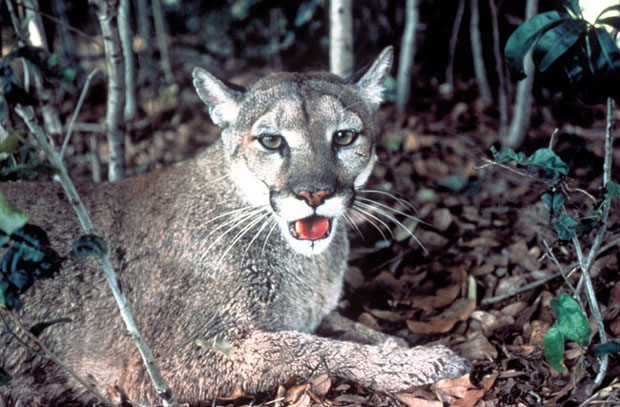
Because of habitat loss, the Florida panther has become one of the most endangered animals in the United States, with an estimated population of only 90–100 left in the wild.
Of the nearly 1,900 species listed worldwide as endangered or threatened, over 1,300 reside in the United States. There are an additional 69 species currently proposed for listing.
Candidate Species
Candidate species are species for which the agencies have sufficient information to propose listing, but that have not been listed because higher-priority listing actions are consuming the agencies' limited resources. FWS and NOAA Fisheries cooperate with state and local governments, tribes, private landowners, environmental groups, and other nongovernmental organizations to encourage voluntary actions to reduce the threats to over 250 species that are currently candidate species. Nonfederal landowners can enter into candidate conservation agreements with FWS and NOAA Fisheries to implement measures that reduce or remove threats to candidate species and other at-risk species so that the need to list those species is avoided. In return, landowners may receive regulatory assurances that if a species covered by the agreement is subsequently listed, the landowners will not be required to take any actions other than those specified in the agreement. In the event of listing, the landowners are also given an enhancement of survival permit, allowing an incidental take for activities authorized by the agreement.
...
- Politics and Ecology
- Politics and People
- Politics Challenges
- Acid Rain
- Afforestation
- Anti-Toxics Movement
- Appropriate Technology
- Biodiversity
- Decentralization
- Deforestation
- Domination of Nature
- Endocrine Disrupters
- Environmental Justice
- Environmental Management
- Equity
- Future Generations
- Global Climate Change
- Globalization
- Groundwater
- Industrial Revolution
- Innovation, Environmental
- Kuznets Curve
- Limits to Growth
- Malthusianism
- Megacities
- Millennium Development Goals
- Nonviolence
- North–South Issues
- Nuclear Politics
- PCBs
- Precautionary Principle
- Regulatory Approaches
- Resource Curse
- Revolving Door
- Risk Assessment
- Risk Society
- Silent Spring
- Structural Adjustment
- Suburban Sprawl
- Sustainable Development
- Technology
- Toxics Release Inventory
- Tragedy of the Commons
- Transportation
- Uncertainty
- Urban Planning
- Wetlands
- Wilderness
- Agenda 21
- Bhopal
- Brundtland Commission
- Bureau of Land Management, U.S.
- Clean Air Act
- Clean Water Act
- Club of Rome
- Copenhagen Summit
- Corporate Responsibility
- Department of Energy, U.S.
- Endangered Species Act
- Environmental Nongovernmental Organizations
- Environmental Protection Agency, U.S.
- Fish and Wildlife Service, U.S.
- Forest Service, U.S.
- Institutions
- Intergovernmental Panel on Climate Change
- Kyoto Protocol
- Land Ethic
- Marine Mammal Protection Act
- Montreal Protocol
- NIMBY
- North American Free Trade Agreement Organizations
- Sagebrush Rebellion
- Stockholm Convention
- Transnational Advocacy Organizations
- Wise Use Movement
- World Trade Organization
- Politics Parties, Systems, and Economics
- Anarchism
- Basel Convention
- Biophilia
- Capitalism
- Citizen Juries
- Commodification
- Common Property Theory
- Conservation Enclosures
- Conservation Movement
- Consumer Politics
- Convention on Biodiversity
- Cost-Benefit Analysis
- Death of Environmentalism
- Democratic Party
- Ecocapitalism
- Ecofascism
- Ecosocialism
- Environmental Movement
- Federalism
- Gaia Hypothesis
- Gender
- Governmentality
- Green Discourse
- Green Neoliberalism
- Green Parties
- Green Washing
- International Whaling Commission
- Intrinsic Value
- Iron Triangle
- Participatory Democracy
- Petro-Capitalism
- Policy Process
- Political Ideology
- Politics of Scale
- Postmaterialism
- Power
- Pragmatism
- Skeptical Environmentalism
- Steady State Economy
- Transnational Capitalist Class
- UN Conference on Environment and Development
- UN Framework Convention on Climate Change
- Utilitarianism
- Water Politics
- Loading...
Get a 30 day FREE TRIAL
-
 Watch videos from a variety of sources bringing classroom topics to life
 -
Read modern, diverse business cases
-
Explore hundreds of books and reference titles

Read next

More like this
Sage Recommends
We found other relevant content for you on other Sage platforms.
Have you created a personal profile? Login or create a profile so that you can save clips, playlists and searches