
Entry
Reader's guide
Entries A-Z
Subject index
Biophilia
Biophilia is the natural tendency to focus on living things and lifelike processes. It is a theory developed by Edward O. Wilson in his book by the same name. Wilson argues that there is an instinctive bond that humans feel for living things, suggesting that biophilia is genetic in origin, a result of evolution, and enables greater survivability. This innate intelligence shapes cognition, emotions, values, and culture. Biophilia fosters a conservation ethic, and elements of modern society that alienate people from the natural world may frustrate innate intelligence and threaten continued evolution.
Relating to life is a biological need—an innate process—and is deeply connected to our mental and physical development. Humans are instinctually drawn to living things, processes, and such, which are aligned with our cognitive development and reason. Humans' ability to understand other organisms is related to our ability to value those organisms, life in general, and ourselves. When we understand other life-forms, we appreciate and understand ourselves more. Humanity is what it is largely because of the unique way we affiliate with and use other organisms. Advances in moral reasoning and development of a deeper conservation ethic are dependent on people's understanding of other organisms and the interconnectivity of life. Greater reporting, observing, and intimacy are required to advance understanding. Personal freedom and a conservation ethic are not at odds with each other; a conservation ethic and affiliation with the biosphere is what secures the stability of our own species.
The biophilia hypothesis proposes that humankind's instinctual interest in other organisms and need to protect and care for them may be the result of evolution.
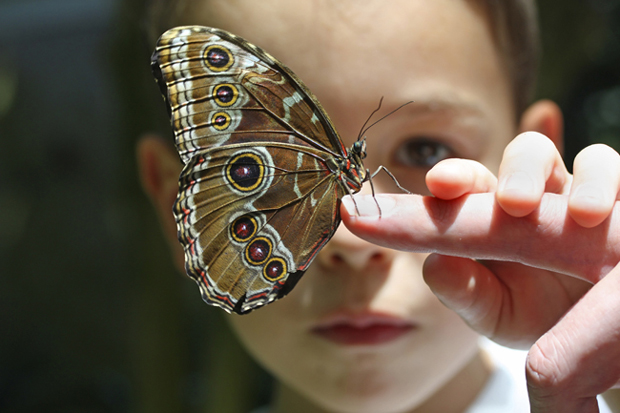
Humans prefer certain animals because of a kinship feeling: Animals are related life. Humans may relate to animals as if they are people. The observation of the continuity of life with humanity encourages a desire for the protection and continued existence of those other organisms. This desire advances the value of other creatures without diminishing humanity. The insight of relatedness enlarges the circle of ethics beyond our own species to other life. This ethic is not necessarily altruistic. In simple economic measures, species diversity is one of humanity's greatest resources. People completely depend on other living things for their own existence. The more the natural world is explored and cataloged, the more resources people will appreciate and use for their own development. Existing organisms are the result of evolution and are already a very select group. They are our biological inheritance and a natural base for other developments and yet-undiscovered uses. Extinction is a great loss to our own species because we permanently lose that advanced life-form and the gifts it may have offered us.
An Evolutionary Development
The biophilia hypothesis goes beyond just dependence on the natural world for the consumptive physical and material needs people have and extends to the human need for cognitive, intellectual, aesthetic, and even spiritual satisfaction and meaning. The hypothesis suggests that a need for intimate and deep association with living things is born from evolutionary development. The hypothesis compels an examination of why humans protect and cherish life—even life other than their own. It suggests that biophilia is a built-in ethic to protect and care for a broad diversity of life and that it naturally increases the likelihood of personal fulfillment and attaining individual meaning. Innate care for life is part of humanity's evolutionary heritage, and it is inherent and associated with our own genetic fitness and sense of competitive advantage.
...
- Politics and Ecology
- Politics and People
- Politics Challenges
- Acid Rain
- Afforestation
- Anti-Toxics Movement
- Appropriate Technology
- Biodiversity
- Decentralization
- Deforestation
- Domination of Nature
- Endocrine Disrupters
- Environmental Justice
- Environmental Management
- Equity
- Future Generations
- Global Climate Change
- Globalization
- Groundwater
- Industrial Revolution
- Innovation, Environmental
- Kuznets Curve
- Limits to Growth
- Malthusianism
- Megacities
- Millennium Development Goals
- Nonviolence
- North–South Issues
- Nuclear Politics
- PCBs
- Precautionary Principle
- Regulatory Approaches
- Resource Curse
- Revolving Door
- Risk Assessment
- Risk Society
- Silent Spring
- Structural Adjustment
- Suburban Sprawl
- Sustainable Development
- Technology
- Toxics Release Inventory
- Tragedy of the Commons
- Transportation
- Uncertainty
- Urban Planning
- Wetlands
- Wilderness
- Agenda 21
- Bhopal
- Brundtland Commission
- Bureau of Land Management, U.S.
- Clean Air Act
- Clean Water Act
- Club of Rome
- Copenhagen Summit
- Corporate Responsibility
- Department of Energy, U.S.
- Endangered Species Act
- Environmental Nongovernmental Organizations
- Environmental Protection Agency, U.S.
- Fish and Wildlife Service, U.S.
- Forest Service, U.S.
- Institutions
- Intergovernmental Panel on Climate Change
- Kyoto Protocol
- Land Ethic
- Marine Mammal Protection Act
- Montreal Protocol
- NIMBY
- North American Free Trade Agreement Organizations
- Sagebrush Rebellion
- Stockholm Convention
- Transnational Advocacy Organizations
- Wise Use Movement
- World Trade Organization
- Politics Parties, Systems, and Economics
- Anarchism
- Basel Convention
- Biophilia
- Capitalism
- Citizen Juries
- Commodification
- Common Property Theory
- Conservation Enclosures
- Conservation Movement
- Consumer Politics
- Convention on Biodiversity
- Cost-Benefit Analysis
- Death of Environmentalism
- Democratic Party
- Ecocapitalism
- Ecofascism
- Ecosocialism
- Environmental Movement
- Federalism
- Gaia Hypothesis
- Gender
- Governmentality
- Green Discourse
- Green Neoliberalism
- Green Parties
- Green Washing
- International Whaling Commission
- Intrinsic Value
- Iron Triangle
- Participatory Democracy
- Petro-Capitalism
- Policy Process
- Political Ideology
- Politics of Scale
- Postmaterialism
- Power
- Pragmatism
- Skeptical Environmentalism
- Steady State Economy
- Transnational Capitalist Class
- UN Conference on Environment and Development
- UN Framework Convention on Climate Change
- Utilitarianism
- Water Politics
- Loading...
Get a 30 day FREE TRIAL
-
 Watch videos from a variety of sources bringing classroom topics to life
 -
Read modern, diverse business cases
-
Explore hundreds of books and reference titles

Read next

More like this
Sage Recommends
We found other relevant content for you on other Sage platforms.
Have you created a personal profile? Login or create a profile so that you can save clips, playlists and searches