
Entry
Reader's guide
Entries A-Z
Subject index
Waterborne Diseases
Waterborne diseases is the grouping term for those human diseases that are caused by organisms that can be transmitted by contaminated food and water (waterborne transmission). Such diseases include amebiasis, cholera, cryptosporidiosis, enteroviroses, giardiasis, hepatitis A and E, leptospirosislisteriosis, salmonellosis, and typhoid fever. Another potential source of waterborne infection is contaminated recreational water (e.g., important for schistosomiasis transmission). In some special cases, other transmission ways can occur (e.g., by skin in leptospirosis, Chagas disease). Waterborne diseases represent an important environmental threat that is currently a relevant aspect for the global public health, which should be considered in the new perspectives of a more ecologically green world in which such risks should be significantly reduced or even eliminated. The safety of food, drink, and drinking water depends mainly on the standards of hygiene applied locally in their growth, preparation, and handling. There is a high risk of contracting such organisms or microbial agents in countries with low standards of hygiene and sanitation as well as poor infrastructure for controlling the safety of food, drink, and drinking water.
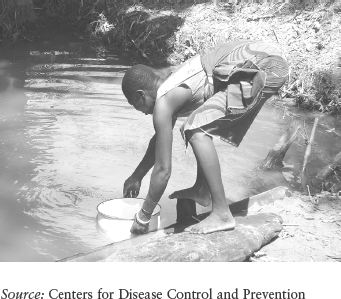
Guinea worm disease is a parasitic infection that can be spread through contaminated drinking water. This pond in Ogi, Nigeria, which served as a source of water for this woman in 2004, had been treated to prevent breeding by water fleas, which harbor Guinea worm larvae.
Water quality is regulated by a complex system of federal and state legal provisions and agencies, which has been poorly studied. Some authors have surveyed state and territorial agencies responsible for water quality about their laws, regulations, policies, and practices related to water quality and surveillance of cryptosporidiosis related to drinking water. The development and current status of federal drinking water regulations and identification of conflicts or gaps in legal authority between federal agencies and state and territorial agencies have been assessed in some studies. However, it is important to consider the court-imposed limitations on federal authority with regard to regulation of water quality. Recommendations are made for government actions that would increase the efficiency of efforts to ensure water quality, protect watersheds, strengthen waterborne disease surveillance, and protect the health of vulnerable populations.
The etiological organisms related to waterborne diseases can be bacteria (including enteric and aquatic bacteria), fungi, viruses (enteric), and parasites (enteric protozoa).
Of these, bacteria are considered among the most important. Fortunately, waterborne outbreaks of bacterial origin (particularly typhoid fever) in developing countries have declined dramatically in the last decades. Therefore, some early bacterial agents such as Shigella sonnei remain prevalent, and new pathogens of fecal origin such as zoonotic Campylobacter jejuni and Escherichia coli O157:H7 may contaminate pristine waters through wildlife or domestic animal feces. The common feature of these bacteria is the low inoculum (a few hundred cells) that may trigger disease. The emergence in early 1992 of serotype O139 of Vibrio cholerae with epidemic potential in southeast Asia suggests that serotypes other than V. cholerae O1 also could initiate an epidemic. Cholera significantly affected some countries in the Americas in the same decade (e.g., Peru, Ecuador, and Colombia).
...
- Animal Products
- Biological Control of Pests
- Chemical Pesticides
- Fast Food
- Fertilizers
- Food Allergies
- Genetically Engineered Crops
- Home-Grown Food
- Obesity
- Organic Produce
- Supplements
- Wine and Other Alcohols
- Airborne Diseases
- Air Filters/Scrubbers
- Asthma
- Climate Change
- Indoor Air Quality
- Ozone
- Particulate Matter
- Regional Dust
- Smog
- Smoking
- Ultraviolet Radiation
- Cities
- Fungi and Sick Building Syndrome
- Highways
- Occupational Hazards
- Radon and Basements
- Recreational Space
- Rural Areas
- Solid Waste Management
- Suburbs
- Topophilia
- Urban Green
- Automobiles (Emissions)
- Cell Phones
- Computers and Printers (Ink)
- Dry Cleaning
- Ergonomics
- Fabrics
- Hobby Products
- Lighting
- Microwave Ovens
- Paper Products
- Pest Control
- Plastics in Daily Use
- Radiation Sources
- Alternative Energy Resources (Solar)
- Biodiesel
- Clean Coal
- Electricity
- Firewood and Charcoal
- Hydroelectricity
- Lead Sources and Health
- Light Bulbs
- Manganese Sources and Health
- Mercury Sources and Health
- Methane/Biogas
- Nuclear Power
- Petrochemicals
- Cost-Benefit Analysis for Alternative Products
- Emergency Rooms
- Healthcare Delivery
- Health Disparities
- Health Insurance Reform
- Nursing, Lack of
- Pharmaceutical Industry Reform
- Cancers
- Cardiovascular Diseases
- Degenerative Diseases
- Immune System Diseases
- Injuries
- Kidney Diseases
- Liver Diseases
- Lung Diseases
- Mental Exercises
- Metabolic Syndrome Diseases
- Musculoskeletal Diseases
- Neurobehavioral Diseases
- Oral Diseases
- Physical Activity and Health
- Reproductive System Diseases
- Skin Disorders
- Acquired Immune Deficiency Syndrome
- Biological Weapons
- Bird Flu
- Gastroenteritis
- International Travel
- Malaria
- Methicillin-Resistant Staphylococcus Aureus
- Seasonal Flu
- Severe Acute Respiratory Syndrome
- Sexually Transmitted Diseases
- Stomach Ulcers and Helicobacter Pylori
- Streptococcus Infections
- Tuberculosis
- Vaccination/Herd Immunity
- Antiseptics
- Children's Health
- Dental Mercury Amalgams
- Health Insurance Industry
- Hospitals (Carbon Footprints)
- Infectious Waste
- Low-Level Radioactive Waste
- Men's Health
- Mental Health
- Nosocomial Infections
- Women's Health
- Biomedicine
- California's Green Chemistry Initiative
- Calorie Labeling for Restaurants
- Centers for Disease Control and Prevention (U.S.)
- Education and Green Health
- Environmental Protection Agency (U.S.)
- Fast Food Warnings
- Government Role in Green Health
- Green Chemistry
- Industrial Ecology
- International Policies
- Metrics of Green Health
- Personal Consumer Role in Green Health
- Phaseout of Toxic Chemicals
- Private Industry Role in Green Health
- Taxation of Unhealthy Products
- United Nations Environment Programme
- World Health Organization's Environmental Burden of Disease
- Advertising and Marketing
- Antibiotic Resistance
- Antibiotics
- Anti-Cholesterol Drugs
- Anti-Depressant Drugs
- Caffeine
- Hormone Therapy
- Pain Medication
- Pharmaceutical Industry
- Prescription Drug Addiction
- Arsenic Pollution
- Bottled Water
- Carbon Filters
- Chlorination By-Products
- Dehydration
- Groundwater
- Ozonation By-Products
- Recycled Water
- Reverse Osmosis
- Supplying Water
- Swimming Pools
- Tap Water/Fluoride
- Waterborne Diseases
- Water Scarcity
- Loading...
Get a 30 day FREE TRIAL
-
 Watch videos from a variety of sources bringing classroom topics to life
 -
Read modern, diverse business cases
-
Explore hundreds of books and reference titles

Read next

More like this
Sage Recommends
We found other relevant content for you on other Sage platforms.
Have you created a personal profile? Login or create a profile so that you can save clips, playlists and searches