
Entry
Reader's guide
Entries A-Z
Subject index
Rural Areas
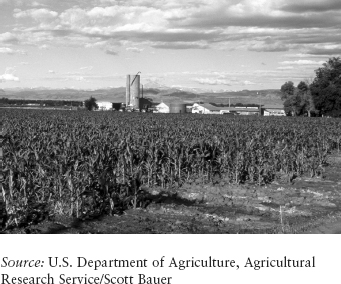
Rural areas are commonly characterized as large isolated regions in which there is a low ratio of inhabitants to open land. As numerous studies indicate, rural areas are difficult to define with great precision. While the transition from urban city to rural countryside is usually abrupt in low-income countries, it is much more gradual in high-income countries, making it difficult to define urban-rural boundaries. An additional challenge is that nations do not use the same statistical criteria for rural and urban populations because there is no consensus on such boundaries. For instance, in Japan, a population of fewer than 30,000 people is considered rural, whereas Albania classifies a group of more than 400 inhabitants as an urban population. The main economic activities associated with rural areas involve the production of agriculture and raw materials.
With the onset of climate change, farmers and rural communities are feeling a large portion of these environmental changes as many viable agricultural businesses are failing to yield produce.
Over the past few decades, the rural countryside in high-income countries has slowly been depopulated. To mitigate this process, agricultural development specialists have suggested methods of increasing productivity within rural areas in order to limit migration of large numbers of farm workers off the land.
Classification of Rural Areas
There remains limited consensus on the specific classification of what defines a rural area, although such a term often conjures up images of small towns, farms, and open spaces. Defining rural parameters can have major implications on provision of healthcare services and development of national policies, laws, and research. Researchers and government agencies use such definitions for statistical consistency and accuracy when conducting their studies. To date, a number of definitions have been identified that emphasize different variables, such as population density, geographic isolation, and/or economic output. When defining a rural area, four salient considerations include its administrative boundaries, land-use patterns, population density, and overall economic influence.
When defining a rural area, the key is to identify a rural-urban definition that best fits the needs of a specific activity. For instance, an administrative definition of rural emphasizes defining urban along municipal and other jurisdictional boundaries for determining program eligibility. On the other hand, land-use and population density data are more ideal when developing infrastructure and water and sewer services. For programs requiring the coordination of efforts within broader market areas, such as area-wide transportation planning assistance, a definition based on economic concepts may be more appropriate.
In the United States, there are three government agencies whose rural definitions and classifications are in wide use—the U.S. Census Bureau, the Office of Management and Budget, and the Economic Research Service of the U.S. Department of Agriculture. Of the three, the Census Bureau has taken the lead in developing a working definition of rural by defining what is urban, and then defining rural by exclusion. Based on this rationale, the Census Bureau defines an urbanized area as consisting of adjacent, densely settled census block groups that meet a minimum population density of at least 50,000 people. Subsequently, the Census Bureau defines all other areas as rural. Similar to this, the Organisation for Economic Co-operation and Development (OECD) defines a rural area based merely on the population density. However, a wide variety of literature has alluded to the inadequacy of such classification, suggesting that other variables, such as rural-urban commuting area (RUCA) codes, be considered for the urban-rural typology rather than a focus on population density calculations.
...
- Animal Products
- Biological Control of Pests
- Chemical Pesticides
- Fast Food
- Fertilizers
- Food Allergies
- Genetically Engineered Crops
- Home-Grown Food
- Obesity
- Organic Produce
- Supplements
- Wine and Other Alcohols
- Airborne Diseases
- Air Filters/Scrubbers
- Asthma
- Climate Change
- Indoor Air Quality
- Ozone
- Particulate Matter
- Regional Dust
- Smog
- Smoking
- Ultraviolet Radiation
- Cities
- Fungi and Sick Building Syndrome
- Highways
- Occupational Hazards
- Radon and Basements
- Recreational Space
- Rural Areas
- Solid Waste Management
- Suburbs
- Topophilia
- Urban Green
- Automobiles (Emissions)
- Cell Phones
- Computers and Printers (Ink)
- Dry Cleaning
- Ergonomics
- Fabrics
- Hobby Products
- Lighting
- Microwave Ovens
- Paper Products
- Pest Control
- Plastics in Daily Use
- Radiation Sources
- Alternative Energy Resources (Solar)
- Biodiesel
- Clean Coal
- Electricity
- Firewood and Charcoal
- Hydroelectricity
- Lead Sources and Health
- Light Bulbs
- Manganese Sources and Health
- Mercury Sources and Health
- Methane/Biogas
- Nuclear Power
- Petrochemicals
- Cost-Benefit Analysis for Alternative Products
- Emergency Rooms
- Healthcare Delivery
- Health Disparities
- Health Insurance Reform
- Nursing, Lack of
- Pharmaceutical Industry Reform
- Cancers
- Cardiovascular Diseases
- Degenerative Diseases
- Immune System Diseases
- Injuries
- Kidney Diseases
- Liver Diseases
- Lung Diseases
- Mental Exercises
- Metabolic Syndrome Diseases
- Musculoskeletal Diseases
- Neurobehavioral Diseases
- Oral Diseases
- Physical Activity and Health
- Reproductive System Diseases
- Skin Disorders
- Acquired Immune Deficiency Syndrome
- Biological Weapons
- Bird Flu
- Gastroenteritis
- International Travel
- Malaria
- Methicillin-Resistant Staphylococcus Aureus
- Seasonal Flu
- Severe Acute Respiratory Syndrome
- Sexually Transmitted Diseases
- Stomach Ulcers and Helicobacter Pylori
- Streptococcus Infections
- Tuberculosis
- Vaccination/Herd Immunity
- Antiseptics
- Children's Health
- Dental Mercury Amalgams
- Health Insurance Industry
- Hospitals (Carbon Footprints)
- Infectious Waste
- Low-Level Radioactive Waste
- Men's Health
- Mental Health
- Nosocomial Infections
- Women's Health
- Biomedicine
- California's Green Chemistry Initiative
- Calorie Labeling for Restaurants
- Centers for Disease Control and Prevention (U.S.)
- Education and Green Health
- Environmental Protection Agency (U.S.)
- Fast Food Warnings
- Government Role in Green Health
- Green Chemistry
- Industrial Ecology
- International Policies
- Metrics of Green Health
- Personal Consumer Role in Green Health
- Phaseout of Toxic Chemicals
- Private Industry Role in Green Health
- Taxation of Unhealthy Products
- United Nations Environment Programme
- World Health Organization's Environmental Burden of Disease
- Advertising and Marketing
- Antibiotic Resistance
- Antibiotics
- Anti-Cholesterol Drugs
- Anti-Depressant Drugs
- Caffeine
- Hormone Therapy
- Pain Medication
- Pharmaceutical Industry
- Prescription Drug Addiction
- Arsenic Pollution
- Bottled Water
- Carbon Filters
- Chlorination By-Products
- Dehydration
- Groundwater
- Ozonation By-Products
- Recycled Water
- Reverse Osmosis
- Supplying Water
- Swimming Pools
- Tap Water/Fluoride
- Waterborne Diseases
- Water Scarcity
- Loading...
Get a 30 day FREE TRIAL
-
 Watch videos from a variety of sources bringing classroom topics to life
 -
Read modern, diverse business cases
-
Explore hundreds of books and reference titles

Read next

More like this
Sage Recommends
We found other relevant content for you on other Sage platforms.
Have you created a personal profile? Login or create a profile so that you can save clips, playlists and searches