
Entry
Reader's guide
Entries A-Z
Subject index
Petrochemicals
Petrochemicals are derived from a variety of sources, including coal and natural gas, though the majority of the petrochemicals we use today are made from petroleum. Understanding how petroleum—also known as crude oil—is transformed into petrochemicals begins with a basic understanding of petroleum itself. Petroleum is found deep in the Earth's crust, beneath land and ocean alike, and it is formed from decaying plant and animal matter. While not considered a chemical compound in and of itself, petroleum is instead composed of scores of individual chemical compounds, all of which contain carbon and hydrogen atoms, which are referred to as hydrocarbons. These hydrocarbons can either be simple or quite complex, ranging from a few atoms to nearly 100 atoms. Once petroleum is extracted from the Earth, it is sent, via pipeline or ship, to refineries. Through various physical and chemical processes, such as fractional distillation—which is the heating of petroleum to different temperatures in order to “boil off” specific hydrocarbons—refineries alter the petroleum so that the more complex hydrocarbons can be separated from the less complex ones. The resulting compounds are known as fractions, and it is from these fractions that petrochemicals are derived.
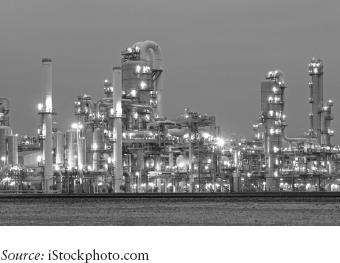
Petrochemicals are derived from coal, natural gas, and petroleum and converted into useful compounds in refineries like this one. A mere handful of petrochemicals contains the building blocks for creating more than 4,000 other compounds and products.
These initial fractions, often referred to as feedstocks, include gasoline, kerosene, diesel oil, lubricating oils, and heavy gas oils. In the fractional distillation tower, the lighter, shorter-chained hydrocarbons, like gasoline and kerosene, make their way to the top, while the heavier, longer-chained hydrocarbons settle near the bottom. These heavier hydrocarbons—the lubricating and heavy gas oils—are converted into other chemical compounds through a process known as cracking. Cracking uses heat and steam, and sometimes a catalyst, to alter the molecular structure of these heavier fractions into an assortment of simpler fractions, or petrochemicals; these petrochemicals now become the feedstocks used for creating an astounding array of other chemical compounds and products. Petrochemical feedstocks fall into one of three following classes:
- Olefins: propylene, ethylene, and butadiene
- Aromatics: benzene, toluene, and xylene
- Synthesis gas: used to make ammonia and methanol
This handful of petrochemicals, in combination with each other or with other chemicals, contains the building blocks for creating more than 4,000 other compounds and products. In the nearly 100 years since petrochemical manufacture began in earnest, these petroleum-derived compounds have profoundly impacted almost everything we interact with in our daily lives, including clothes, food, cosmetics, plywood, water hoses, food packaging, artificial limbs, paint, disposable diapers, crayons, water and soda bottles, toothpaste, flooring, blankets, building insulation, heart valves, candles, fertilizers, surgical gloves, kitchenware, toys—the list goes on and on. It is no exaggeration to say that petrochemicals are found in nearly every conventionally made product found inside and outside our homes.
History
Recovering petrochemicals from crude oil and manipulating the molecular structure of hydrocarbons was under way by the 1860s, by which time crude oil had been discovered in the United States, giving rise to refineries that used fractional distillation to recover kerosene for heating. Though initially ignored by oil refineries as useless, by about 1900, as electric lighting replaced kerosene and as automobiles became more and more prevalent, gasoline soon gained demand, and by 1913, refineries were utilizing thermal cracking to increase the yield of gasoline recovered in fractional distillation. Not wanting to waste the chemical by-products created in the cracking process, oil refineries began to produce petrochemicals.
...
- Animal Products
- Biological Control of Pests
- Chemical Pesticides
- Fast Food
- Fertilizers
- Food Allergies
- Genetically Engineered Crops
- Home-Grown Food
- Obesity
- Organic Produce
- Supplements
- Wine and Other Alcohols
- Airborne Diseases
- Air Filters/Scrubbers
- Asthma
- Climate Change
- Indoor Air Quality
- Ozone
- Particulate Matter
- Regional Dust
- Smog
- Smoking
- Ultraviolet Radiation
- Cities
- Fungi and Sick Building Syndrome
- Highways
- Occupational Hazards
- Radon and Basements
- Recreational Space
- Rural Areas
- Solid Waste Management
- Suburbs
- Topophilia
- Urban Green
- Automobiles (Emissions)
- Cell Phones
- Computers and Printers (Ink)
- Dry Cleaning
- Ergonomics
- Fabrics
- Hobby Products
- Lighting
- Microwave Ovens
- Paper Products
- Pest Control
- Plastics in Daily Use
- Radiation Sources
- Alternative Energy Resources (Solar)
- Biodiesel
- Clean Coal
- Electricity
- Firewood and Charcoal
- Hydroelectricity
- Lead Sources and Health
- Light Bulbs
- Manganese Sources and Health
- Mercury Sources and Health
- Methane/Biogas
- Nuclear Power
- Petrochemicals
- Cost-Benefit Analysis for Alternative Products
- Emergency Rooms
- Healthcare Delivery
- Health Disparities
- Health Insurance Reform
- Nursing, Lack of
- Pharmaceutical Industry Reform
- Cancers
- Cardiovascular Diseases
- Degenerative Diseases
- Immune System Diseases
- Injuries
- Kidney Diseases
- Liver Diseases
- Lung Diseases
- Mental Exercises
- Metabolic Syndrome Diseases
- Musculoskeletal Diseases
- Neurobehavioral Diseases
- Oral Diseases
- Physical Activity and Health
- Reproductive System Diseases
- Skin Disorders
- Acquired Immune Deficiency Syndrome
- Biological Weapons
- Bird Flu
- Gastroenteritis
- International Travel
- Malaria
- Methicillin-Resistant Staphylococcus Aureus
- Seasonal Flu
- Severe Acute Respiratory Syndrome
- Sexually Transmitted Diseases
- Stomach Ulcers and Helicobacter Pylori
- Streptococcus Infections
- Tuberculosis
- Vaccination/Herd Immunity
- Antiseptics
- Children's Health
- Dental Mercury Amalgams
- Health Insurance Industry
- Hospitals (Carbon Footprints)
- Infectious Waste
- Low-Level Radioactive Waste
- Men's Health
- Mental Health
- Nosocomial Infections
- Women's Health
- Biomedicine
- California's Green Chemistry Initiative
- Calorie Labeling for Restaurants
- Centers for Disease Control and Prevention (U.S.)
- Education and Green Health
- Environmental Protection Agency (U.S.)
- Fast Food Warnings
- Government Role in Green Health
- Green Chemistry
- Industrial Ecology
- International Policies
- Metrics of Green Health
- Personal Consumer Role in Green Health
- Phaseout of Toxic Chemicals
- Private Industry Role in Green Health
- Taxation of Unhealthy Products
- United Nations Environment Programme
- World Health Organization's Environmental Burden of Disease
- Advertising and Marketing
- Antibiotic Resistance
- Antibiotics
- Anti-Cholesterol Drugs
- Anti-Depressant Drugs
- Caffeine
- Hormone Therapy
- Pain Medication
- Pharmaceutical Industry
- Prescription Drug Addiction
- Arsenic Pollution
- Bottled Water
- Carbon Filters
- Chlorination By-Products
- Dehydration
- Groundwater
- Ozonation By-Products
- Recycled Water
- Reverse Osmosis
- Supplying Water
- Swimming Pools
- Tap Water/Fluoride
- Waterborne Diseases
- Water Scarcity
- Loading...
Get a 30 day FREE TRIAL
-
 Watch videos from a variety of sources bringing classroom topics to life
 -
Read modern, diverse business cases
-
Explore hundreds of books and reference titles

Read next

More like this
Sage Recommends
We found other relevant content for you on other Sage platforms.
Have you created a personal profile? Login or create a profile so that you can save clips, playlists and searches