
Entry
Reader's guide
Entries A-Z
Subject index
Nursing, Lack of
Nursing has long recognized the importance of the environment on health, hence its current focus on green health. The profession of nursing approaches health and illness from an integrated and holistic perspective and considers the health determinants to be critical factors that interact with one another to affect the health of individuals and populations. The environment—the physical, psychosocial, and biological environment—is a primary determinant of health and one that nurses are particularly well suited to address. As the largest and most trusted group of healthcare providers globally, nurses are in a unique position to promote and protect health and to reduce environmental hazards in homes, hospital settings, and the community. The nursing profession actively works to address green health through new initiatives in education, research, and practice.
Historical Perspective
Florence Nightingale, the founder of nursing, believed in a holistic approach to health promotion and disease prevention, and that adequate light, clean air and water, and sanitary living conditions were essential to health. Lillian Wald, who founded the Visiting Nurse Service in the late 1800s, recognized the importance of proper hygiene and sanitation and taught new immigrants—who lived in cramped, squalid conditions in New York tenement buildings—the relationship between cleanliness and health. However, nursing's emphasis on living conditions and the immediate environment gradually changed throughout the 1900s.
Environmental health was particularly relevant to nursing at the turn of the century, when nurses worked primarily in the community and living conditions were not to today's standards. However, as public health improved, most notably after World War II, nursing became more hospital based and patient focused. In the 1960s, authors such as Paul Ehrlich, who wrote The Population Bomb, and Rachel Carson, who wrote Silent Spring, precipitated a shift in attitudes by bringing public attention to issues of overpopulation and environmental degradation. Slowly, the general public became aware of the importance of taking personal responsibility for the impact of its behavior on human health and the environment, and the environmental movement was born. As the environmental movement became more mainstream, the healthcare industry became aware of its role in contributing to environmental pollution.
As the largest group of healthcare providers globally, nurses are in a unique position to promote and protect health and to reduce environmental hazards in homes, hospital settings, and communities. The nursing profession actively works to address green health through new initiatives in education, research, and practice.
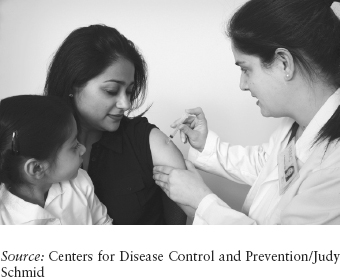
Within the last 25 years, nursing has renewed its interest in the environment and acknowledged the significant role the profession has to play in improving health in this area. Since the 1980s, when the terms green health and sustainable development first came into common usage, the profession of nursing has gradually evolved to define its role more broadly in addressing environmental health through nursing practice, research, education, and advocacy at the individual and population levels.
Nursing's Renewed Focus on Environmental Health
In 1986, the International Council of Nurses issued a position statement, “The Nurse's Role in Safeguarding the Human Environment.” The statement defined the nurse's role as helping to detect the ill effects of the environment on human health and vice versa. However, it was not until the Institute of Medicine (IOM) released Nursing, Health, & the Environment: Strengthening the Relationship to Improve the Public's Health, in 1995 that guidelines were established that began to define the role of nursing in addressing chemical, physical, biological, and psychosocial environmental health hazards. The report called for the inclusion of environmental content in nursing education at all levels, and that general competencies should be achieved by all nurses related to (1) basic knowledge and concepts of environmental health, (2) assessment and referral for conditions with suspected environmental causes, (3) knowledge of the role of advocacy, ethics, and risk communication in patient care and community intervention, and (4) an understanding of policy and legislation and regulation related to environmental health.
...
- Animal Products
- Biological Control of Pests
- Chemical Pesticides
- Fast Food
- Fertilizers
- Food Allergies
- Genetically Engineered Crops
- Home-Grown Food
- Obesity
- Organic Produce
- Supplements
- Wine and Other Alcohols
- Airborne Diseases
- Air Filters/Scrubbers
- Asthma
- Climate Change
- Indoor Air Quality
- Ozone
- Particulate Matter
- Regional Dust
- Smog
- Smoking
- Ultraviolet Radiation
- Cities
- Fungi and Sick Building Syndrome
- Highways
- Occupational Hazards
- Radon and Basements
- Recreational Space
- Rural Areas
- Solid Waste Management
- Suburbs
- Topophilia
- Urban Green
- Automobiles (Emissions)
- Cell Phones
- Computers and Printers (Ink)
- Dry Cleaning
- Ergonomics
- Fabrics
- Hobby Products
- Lighting
- Microwave Ovens
- Paper Products
- Pest Control
- Plastics in Daily Use
- Radiation Sources
- Alternative Energy Resources (Solar)
- Biodiesel
- Clean Coal
- Electricity
- Firewood and Charcoal
- Hydroelectricity
- Lead Sources and Health
- Light Bulbs
- Manganese Sources and Health
- Mercury Sources and Health
- Methane/Biogas
- Nuclear Power
- Petrochemicals
- Cost-Benefit Analysis for Alternative Products
- Emergency Rooms
- Healthcare Delivery
- Health Disparities
- Health Insurance Reform
- Nursing, Lack of
- Pharmaceutical Industry Reform
- Cancers
- Cardiovascular Diseases
- Degenerative Diseases
- Immune System Diseases
- Injuries
- Kidney Diseases
- Liver Diseases
- Lung Diseases
- Mental Exercises
- Metabolic Syndrome Diseases
- Musculoskeletal Diseases
- Neurobehavioral Diseases
- Oral Diseases
- Physical Activity and Health
- Reproductive System Diseases
- Skin Disorders
- Acquired Immune Deficiency Syndrome
- Biological Weapons
- Bird Flu
- Gastroenteritis
- International Travel
- Malaria
- Methicillin-Resistant Staphylococcus Aureus
- Seasonal Flu
- Severe Acute Respiratory Syndrome
- Sexually Transmitted Diseases
- Stomach Ulcers and Helicobacter Pylori
- Streptococcus Infections
- Tuberculosis
- Vaccination/Herd Immunity
- Antiseptics
- Children's Health
- Dental Mercury Amalgams
- Health Insurance Industry
- Hospitals (Carbon Footprints)
- Infectious Waste
- Low-Level Radioactive Waste
- Men's Health
- Mental Health
- Nosocomial Infections
- Women's Health
- Biomedicine
- California's Green Chemistry Initiative
- Calorie Labeling for Restaurants
- Centers for Disease Control and Prevention (U.S.)
- Education and Green Health
- Environmental Protection Agency (U.S.)
- Fast Food Warnings
- Government Role in Green Health
- Green Chemistry
- Industrial Ecology
- International Policies
- Metrics of Green Health
- Personal Consumer Role in Green Health
- Phaseout of Toxic Chemicals
- Private Industry Role in Green Health
- Taxation of Unhealthy Products
- United Nations Environment Programme
- World Health Organization's Environmental Burden of Disease
- Advertising and Marketing
- Antibiotic Resistance
- Antibiotics
- Anti-Cholesterol Drugs
- Anti-Depressant Drugs
- Caffeine
- Hormone Therapy
- Pain Medication
- Pharmaceutical Industry
- Prescription Drug Addiction
- Arsenic Pollution
- Bottled Water
- Carbon Filters
- Chlorination By-Products
- Dehydration
- Groundwater
- Ozonation By-Products
- Recycled Water
- Reverse Osmosis
- Supplying Water
- Swimming Pools
- Tap Water/Fluoride
- Waterborne Diseases
- Water Scarcity
- Loading...
Get a 30 day FREE TRIAL
-
 Watch videos from a variety of sources bringing classroom topics to life
 -
Read modern, diverse business cases
-
Explore hundreds of books and reference titles

Read next

More like this
Sage Recommends
We found other relevant content for you on other Sage platforms.
Have you created a personal profile? Login or create a profile so that you can save clips, playlists and searches