
Entry
Reader's guide
Entries A-Z
Subject index
Microwave Ovens
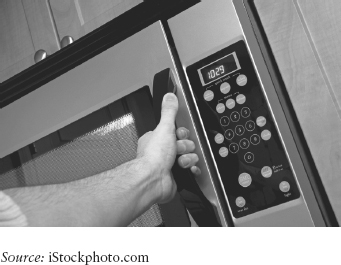
Microwaves are a form of electromagnetic radiation; that is, they are waves of electrical and magnetic energy moving together through space. While microwaves are used in numerous applications, including detecting speeding cars, sending telephone and television communications, and drying plywood and curing rubber, the most common consumer use of microwave energy is in microwave ovens. Microwaves have the three following characteristics that allow them to be used in cooking:
- They are reflected by metal.
- They pass through glass, paper, plastic, and similar materials.
- They are absorbed by foods.
Microwaves are produced inside the oven by an electron tube called a magnetron. The microwaves are reflected within the metal interior of the oven and absorbed by food, causing the water molecules inside the food to vibrate, which produces the heat that cooks the food. Although heat is produced directly in the food, microwave ovens do not cook food from the inside out. When thick foods are cooked, the outer layers are heated and cooked primarily by microwaves, while the inside is cooked mainly by the conduction of heat from the outer layers. In the decades since microwave ovens started becoming a common feature of modern kitchens, there have been many claims made about the dangers of using microwaves for heating and cooking food. Much of the research cited to support these claims is based on work done by Russian, Japanese, and Swiss scientists, though some American researchers, including those at Stanford University and Penn State University, have suggested that the “microwave effect” does, indeed, exist. In addition to the “microwave effect”—the notion that certain dangerous transformations, which cannot be replicated with conventional heating methods, occur in both microwaved food and in the humans who eat it—there are other claims about microwaves and microwaved foods, including the following:
- Microwaves leak radiation.
- Microwaved food causes cancer.
- Microwaved food loses some of its nutritional value.
- Microwaved food causes “microwave sickness,” which is marked by symptoms including insomnia, night sweats, headaches, dizziness, impaired cognition, depression, and nausea.
While some of the claims of the dangers of microwave ovens are based on a misunderstanding of the differences between ionizing radiation (the nuclear, dangerous kind, such as that used in X-rays and gamma rays) and nonionizing radiation (the kind that is used in microwave ovens), many believe that the debate over the safety of microwave ovens is one that has yet to be settled. Still, according to the World Health Organization (WHO) and the U.S. Food and Drug Administration (FDA), which has regulated the manufacture of microwave ovens since 1971, microwave ovens that meet the FDA standard and are used according to the manufacturer's instructions are safe for human use. The FDA requires that all microwave ovens have a label stating that they meet the FDA safety standard. To ensure the standard is met, the FDA tests microwave ovens in its own laboratory and also evaluates manufacturers’ radiation testing and quality control programs at their factories.
The Food and Drug Administration admits that less is known about the dangers of exposure to low levels of microwave radiation than is known about high levels. The U.S. federal government limits the allowable amount of microwave radiation that can leak from an oven throughout its lifetime.
...
- Animal Products
- Biological Control of Pests
- Chemical Pesticides
- Fast Food
- Fertilizers
- Food Allergies
- Genetically Engineered Crops
- Home-Grown Food
- Obesity
- Organic Produce
- Supplements
- Wine and Other Alcohols
- Airborne Diseases
- Air Filters/Scrubbers
- Asthma
- Climate Change
- Indoor Air Quality
- Ozone
- Particulate Matter
- Regional Dust
- Smog
- Smoking
- Ultraviolet Radiation
- Cities
- Fungi and Sick Building Syndrome
- Highways
- Occupational Hazards
- Radon and Basements
- Recreational Space
- Rural Areas
- Solid Waste Management
- Suburbs
- Topophilia
- Urban Green
- Automobiles (Emissions)
- Cell Phones
- Computers and Printers (Ink)
- Dry Cleaning
- Ergonomics
- Fabrics
- Hobby Products
- Lighting
- Microwave Ovens
- Paper Products
- Pest Control
- Plastics in Daily Use
- Radiation Sources
- Alternative Energy Resources (Solar)
- Biodiesel
- Clean Coal
- Electricity
- Firewood and Charcoal
- Hydroelectricity
- Lead Sources and Health
- Light Bulbs
- Manganese Sources and Health
- Mercury Sources and Health
- Methane/Biogas
- Nuclear Power
- Petrochemicals
- Cost-Benefit Analysis for Alternative Products
- Emergency Rooms
- Healthcare Delivery
- Health Disparities
- Health Insurance Reform
- Nursing, Lack of
- Pharmaceutical Industry Reform
- Cancers
- Cardiovascular Diseases
- Degenerative Diseases
- Immune System Diseases
- Injuries
- Kidney Diseases
- Liver Diseases
- Lung Diseases
- Mental Exercises
- Metabolic Syndrome Diseases
- Musculoskeletal Diseases
- Neurobehavioral Diseases
- Oral Diseases
- Physical Activity and Health
- Reproductive System Diseases
- Skin Disorders
- Acquired Immune Deficiency Syndrome
- Biological Weapons
- Bird Flu
- Gastroenteritis
- International Travel
- Malaria
- Methicillin-Resistant Staphylococcus Aureus
- Seasonal Flu
- Severe Acute Respiratory Syndrome
- Sexually Transmitted Diseases
- Stomach Ulcers and Helicobacter Pylori
- Streptococcus Infections
- Tuberculosis
- Vaccination/Herd Immunity
- Antiseptics
- Children's Health
- Dental Mercury Amalgams
- Health Insurance Industry
- Hospitals (Carbon Footprints)
- Infectious Waste
- Low-Level Radioactive Waste
- Men's Health
- Mental Health
- Nosocomial Infections
- Women's Health
- Biomedicine
- California's Green Chemistry Initiative
- Calorie Labeling for Restaurants
- Centers for Disease Control and Prevention (U.S.)
- Education and Green Health
- Environmental Protection Agency (U.S.)
- Fast Food Warnings
- Government Role in Green Health
- Green Chemistry
- Industrial Ecology
- International Policies
- Metrics of Green Health
- Personal Consumer Role in Green Health
- Phaseout of Toxic Chemicals
- Private Industry Role in Green Health
- Taxation of Unhealthy Products
- United Nations Environment Programme
- World Health Organization's Environmental Burden of Disease
- Advertising and Marketing
- Antibiotic Resistance
- Antibiotics
- Anti-Cholesterol Drugs
- Anti-Depressant Drugs
- Caffeine
- Hormone Therapy
- Pain Medication
- Pharmaceutical Industry
- Prescription Drug Addiction
- Arsenic Pollution
- Bottled Water
- Carbon Filters
- Chlorination By-Products
- Dehydration
- Groundwater
- Ozonation By-Products
- Recycled Water
- Reverse Osmosis
- Supplying Water
- Swimming Pools
- Tap Water/Fluoride
- Waterborne Diseases
- Water Scarcity
- Loading...
Get a 30 day FREE TRIAL
-
 Watch videos from a variety of sources bringing classroom topics to life
 -
Read modern, diverse business cases
-
Explore hundreds of books and reference titles

Read next

More like this
Sage Recommends
We found other relevant content for you on other Sage platforms.
Have you created a personal profile? Login or create a profile so that you can save clips, playlists and searches