
Entry
Reader's guide
Entries A-Z
Subject index
Methane/Biogas
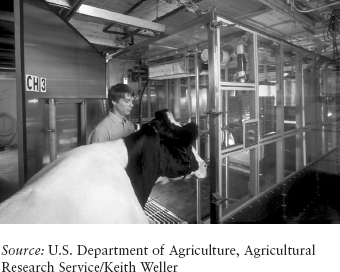
Animal manure, human sewage, or food waste can produce methane during anaerobic digestion. Here, an animal scientist measures a cow for respiration of oxygen and carbon dioxide and production of heat and methane.
Biogas is a renewable natural gas containing approximately 70 percent methane (CH4) and roughly 30 percent carbon dioxide and trace amounts of other gases. Potential agricultural feedstocks for biogas production include manure (hog, dairy, beef, and poultry), food processing (byproducts of meat processing, potato, dairy, cheese whey, sugar beet, and vegetables), and energy crops cut as silage (wheat, barley, triticale, clover, alfalfa, ryegrass, turnips, and corn). Commercial products from biogas production include methane, electricity, heat, steam, fertilizer, chemical recovery, odor reduction, water recycling, carbon dioxide, and, potentially, carbon credits and greenhouse gas credits.
Anaerobic digestion of wastes provides biogas. Biogas contains about 70 percent methane that can be used to generate electricity or as fuel for vehicles or for heating. Any animal manure, human sewage, or food waste can produce methane during anaerobic digestion. Biogas can also be “cleaned” to yield purified methane that can be used in natural gas pipelines. Methane from biogas is an excellent alternative energy source. Using methane for energy helps the environment by replacing the use of nonrenewable fossil fuels with renewable energy and by taking methane out of the atmosphere. Methane is a greenhouse gas (GHG) with 21 times the heating effect of carbon dioxide. Biogas methane is renewable, unlike natural gas that is mined from underground wells and is a nonrenewable fossil fuel. Methane yields from agricultural feedstocks are in the range of 50 to 70 percent. Manure has the lowest yield, while energy crops and food processing have the highest yields. Blending feedstocks can achieve desirable methane yields while solving environmental issues.
Incentivizing the production of renewable natural gas, or biomethane, from sources that include animal manure, landfills, renewable biomass, and agricultural wastes will support expanding the role of renewable energy sources in the existing energy sector, where little opportunity exists today. It will also create new business investment prospects for renewable project developers and the potential to expand rural economies while supporting existing industrial jobs and dramatically reducing carbon emissions. The benefits of using biomethane are as follows:
- Renewable biomethane is a versatile form of bio-energy. It can be used directly at the site of production or placed in the pipeline to support a variety of residential, commercial, or industrial applications.
- Renewable biomethane produced from renewable sources including animal manure, landfills, renewable biomass, and agricultural wastes can be produced at high efficiencies ranging from 60 to 70 percent. Additionally, the technology components to produce renewable gas from this variety of sources exist today.
- Renewable biomethane can be delivered to potential customers via any existing pipeline infrastructure.
- Renewable biomethane can provide a renewable option for many heavy industries, which could save existing industrial jobs in a carbon-constrained economy while creating new rural green jobs to produce renewable biomethane.
- Renewable biomethane production in digesters provides the agricultural sector additional environmental benefits by improving waste management and nutrient control.
Biogas is produced from organic wastes by concerted action of various groups of anaerobic bacteria. Anaerobic biodigesters can be either wet fermentation or dry fermentation. Wet biodigesters, with a life expectancy of approximately 10 years, need to be cleaned out every one to three years. Dry biodigesters, however, do not require cleaning as frequently as wet biodigesters and have a life expectancy of approximately 20 years. Capital cost for a biogas facility that produces one megawatt of power is in the range of $4 to $6 million, depending on the level of infrastructure at the site. Both solid and liquid systems need to develop the infrastructure to increase manure collection and handling to feed the digesters. The frequencies of manure collection need to increase to at least four times a year to feed digesters with relatively fresh material. However, the availability of turnkey technology, expected to develop in the future, will help to reduce the costs involved.
...
- Animal Products
- Biological Control of Pests
- Chemical Pesticides
- Fast Food
- Fertilizers
- Food Allergies
- Genetically Engineered Crops
- Home-Grown Food
- Obesity
- Organic Produce
- Supplements
- Wine and Other Alcohols
- Airborne Diseases
- Air Filters/Scrubbers
- Asthma
- Climate Change
- Indoor Air Quality
- Ozone
- Particulate Matter
- Regional Dust
- Smog
- Smoking
- Ultraviolet Radiation
- Cities
- Fungi and Sick Building Syndrome
- Highways
- Occupational Hazards
- Radon and Basements
- Recreational Space
- Rural Areas
- Solid Waste Management
- Suburbs
- Topophilia
- Urban Green
- Automobiles (Emissions)
- Cell Phones
- Computers and Printers (Ink)
- Dry Cleaning
- Ergonomics
- Fabrics
- Hobby Products
- Lighting
- Microwave Ovens
- Paper Products
- Pest Control
- Plastics in Daily Use
- Radiation Sources
- Alternative Energy Resources (Solar)
- Biodiesel
- Clean Coal
- Electricity
- Firewood and Charcoal
- Hydroelectricity
- Lead Sources and Health
- Light Bulbs
- Manganese Sources and Health
- Mercury Sources and Health
- Methane/Biogas
- Nuclear Power
- Petrochemicals
- Cost-Benefit Analysis for Alternative Products
- Emergency Rooms
- Healthcare Delivery
- Health Disparities
- Health Insurance Reform
- Nursing, Lack of
- Pharmaceutical Industry Reform
- Cancers
- Cardiovascular Diseases
- Degenerative Diseases
- Immune System Diseases
- Injuries
- Kidney Diseases
- Liver Diseases
- Lung Diseases
- Mental Exercises
- Metabolic Syndrome Diseases
- Musculoskeletal Diseases
- Neurobehavioral Diseases
- Oral Diseases
- Physical Activity and Health
- Reproductive System Diseases
- Skin Disorders
- Acquired Immune Deficiency Syndrome
- Biological Weapons
- Bird Flu
- Gastroenteritis
- International Travel
- Malaria
- Methicillin-Resistant Staphylococcus Aureus
- Seasonal Flu
- Severe Acute Respiratory Syndrome
- Sexually Transmitted Diseases
- Stomach Ulcers and Helicobacter Pylori
- Streptococcus Infections
- Tuberculosis
- Vaccination/Herd Immunity
- Antiseptics
- Children's Health
- Dental Mercury Amalgams
- Health Insurance Industry
- Hospitals (Carbon Footprints)
- Infectious Waste
- Low-Level Radioactive Waste
- Men's Health
- Mental Health
- Nosocomial Infections
- Women's Health
- Biomedicine
- California's Green Chemistry Initiative
- Calorie Labeling for Restaurants
- Centers for Disease Control and Prevention (U.S.)
- Education and Green Health
- Environmental Protection Agency (U.S.)
- Fast Food Warnings
- Government Role in Green Health
- Green Chemistry
- Industrial Ecology
- International Policies
- Metrics of Green Health
- Personal Consumer Role in Green Health
- Phaseout of Toxic Chemicals
- Private Industry Role in Green Health
- Taxation of Unhealthy Products
- United Nations Environment Programme
- World Health Organization's Environmental Burden of Disease
- Advertising and Marketing
- Antibiotic Resistance
- Antibiotics
- Anti-Cholesterol Drugs
- Anti-Depressant Drugs
- Caffeine
- Hormone Therapy
- Pain Medication
- Pharmaceutical Industry
- Prescription Drug Addiction
- Arsenic Pollution
- Bottled Water
- Carbon Filters
- Chlorination By-Products
- Dehydration
- Groundwater
- Ozonation By-Products
- Recycled Water
- Reverse Osmosis
- Supplying Water
- Swimming Pools
- Tap Water/Fluoride
- Waterborne Diseases
- Water Scarcity
- Loading...
Get a 30 day FREE TRIAL
-
 Watch videos from a variety of sources bringing classroom topics to life
 -
Read modern, diverse business cases
-
Explore hundreds of books and reference titles

Read next

More like this
Sage Recommends
We found other relevant content for you on other Sage platforms.
Have you created a personal profile? Login or create a profile so that you can save clips, playlists and searches