
Entry
Reader's guide
Entries A-Z
Subject index
Malaria
Malaria is a life-threatening disease caused by Plasmodium parasites that are transmitted to people exclusively through the bites of infected anopheles mosquitoes. These mosquitoes are referred to as malaria vectors; vector used in this context refers to an organism that transfers a pathogen from reservoir to host. There are four types of human malaria:
- Plasmodium falciparum
- Plasmodium vivax
- Plasmodium malariae
- Plasmodium ovale
Malaria is a life-threatening disease caused by parasites that are transmitted to people exclusively through the bites of infected anopheles mosquitoes. Approximately half of the world's population is at risk of malaria, with most malaria cases occurring in sub-Saharan Africa.
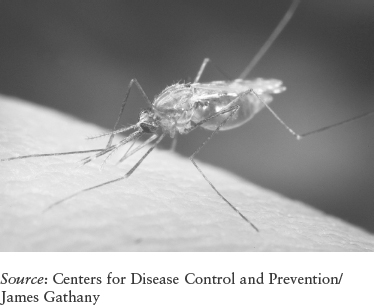
Plasmodium falciparum and Plasmodium vivax are the most common types, and Plasmodium falciparum is also the most deadly. Approximately half of the world's population is at risk of malaria. Most malaria cases occur in sub-Saharan Africa; however, Asia, Latin America, and to a lesser extent the Middle East and parts of Europe are also affected. In 2008, malaria was present in 108 countries and territories.
In the human body, the Plasmodium parasites multiply in the liver and then infect red blood cells. Symptoms of malaria include fever, headache, and vomiting and usually appear within 10 to 15 days of the mosquito bite. If not treated within 24 hours, malaria can quickly become life threatening by disrupting blood supply to vital organs. In 2008, there were 247 million cases of malaria and nearly 1 million deaths, mostly among young children in sub-Saharan Africa, where the disease claims the life of a child every 45 seconds. Factors related to the parasite, the vector, the human host, and the environment influence the intensity of malaria transmission. All of the main vector species bite at night, and they breed in shallow collections of freshwater. Transmission is more intense in places where the mosquito has a long life span, which allows the parasite time to reach maturity inside the mosquito. Further, vectors that prefer to bite humans rather than other animals also add to the intensity of transmission. Human immunity, developed over years of exposure, never provides complete protection, though it does reduce the risk that malaria infection will cause severe disease. For this reason, most malaria deaths in Africa occur in young children, although in areas with less transmission and low immunity, all age groups are at risk. Transmission also depends on climate conditions that may affect the abundance and survival of mosquitoes, including rainfall patterns, temperature, and humidity.
Growing resistance to antimalarial medicines has spread rapidly, undermining malaria control efforts. The best available malaria treatment is artemisinin-based combination therapy (ACT); when treated with an artemisinin-based monotherapy, some patients may discontinue treatment early, after the malaria symptoms disappear. This results in partial treatment, with persistent parasites remaining in the patient's blood. Without a second drug given as part of a combination (as is done with an ACT), these resistant parasites persist and can be passed on to a mosquito and then to another person. Monotherapies are therefore the primary force behind the spread of artemisinin resistance. If resistance to artemisinins develops and spreads to other large geographical areas, the public health consequences could be devastating because no alternative antimalarial medicines are expected to be available in the near future.
...
- Animal Products
- Biological Control of Pests
- Chemical Pesticides
- Fast Food
- Fertilizers
- Food Allergies
- Genetically Engineered Crops
- Home-Grown Food
- Obesity
- Organic Produce
- Supplements
- Wine and Other Alcohols
- Airborne Diseases
- Air Filters/Scrubbers
- Asthma
- Climate Change
- Indoor Air Quality
- Ozone
- Particulate Matter
- Regional Dust
- Smog
- Smoking
- Ultraviolet Radiation
- Cities
- Fungi and Sick Building Syndrome
- Highways
- Occupational Hazards
- Radon and Basements
- Recreational Space
- Rural Areas
- Solid Waste Management
- Suburbs
- Topophilia
- Urban Green
- Automobiles (Emissions)
- Cell Phones
- Computers and Printers (Ink)
- Dry Cleaning
- Ergonomics
- Fabrics
- Hobby Products
- Lighting
- Microwave Ovens
- Paper Products
- Pest Control
- Plastics in Daily Use
- Radiation Sources
- Alternative Energy Resources (Solar)
- Biodiesel
- Clean Coal
- Electricity
- Firewood and Charcoal
- Hydroelectricity
- Lead Sources and Health
- Light Bulbs
- Manganese Sources and Health
- Mercury Sources and Health
- Methane/Biogas
- Nuclear Power
- Petrochemicals
- Cost-Benefit Analysis for Alternative Products
- Emergency Rooms
- Healthcare Delivery
- Health Disparities
- Health Insurance Reform
- Nursing, Lack of
- Pharmaceutical Industry Reform
- Cancers
- Cardiovascular Diseases
- Degenerative Diseases
- Immune System Diseases
- Injuries
- Kidney Diseases
- Liver Diseases
- Lung Diseases
- Mental Exercises
- Metabolic Syndrome Diseases
- Musculoskeletal Diseases
- Neurobehavioral Diseases
- Oral Diseases
- Physical Activity and Health
- Reproductive System Diseases
- Skin Disorders
- Acquired Immune Deficiency Syndrome
- Biological Weapons
- Bird Flu
- Gastroenteritis
- International Travel
- Malaria
- Methicillin-Resistant Staphylococcus Aureus
- Seasonal Flu
- Severe Acute Respiratory Syndrome
- Sexually Transmitted Diseases
- Stomach Ulcers and Helicobacter Pylori
- Streptococcus Infections
- Tuberculosis
- Vaccination/Herd Immunity
- Antiseptics
- Children's Health
- Dental Mercury Amalgams
- Health Insurance Industry
- Hospitals (Carbon Footprints)
- Infectious Waste
- Low-Level Radioactive Waste
- Men's Health
- Mental Health
- Nosocomial Infections
- Women's Health
- Biomedicine
- California's Green Chemistry Initiative
- Calorie Labeling for Restaurants
- Centers for Disease Control and Prevention (U.S.)
- Education and Green Health
- Environmental Protection Agency (U.S.)
- Fast Food Warnings
- Government Role in Green Health
- Green Chemistry
- Industrial Ecology
- International Policies
- Metrics of Green Health
- Personal Consumer Role in Green Health
- Phaseout of Toxic Chemicals
- Private Industry Role in Green Health
- Taxation of Unhealthy Products
- United Nations Environment Programme
- World Health Organization's Environmental Burden of Disease
- Advertising and Marketing
- Antibiotic Resistance
- Antibiotics
- Anti-Cholesterol Drugs
- Anti-Depressant Drugs
- Caffeine
- Hormone Therapy
- Pain Medication
- Pharmaceutical Industry
- Prescription Drug Addiction
- Arsenic Pollution
- Bottled Water
- Carbon Filters
- Chlorination By-Products
- Dehydration
- Groundwater
- Ozonation By-Products
- Recycled Water
- Reverse Osmosis
- Supplying Water
- Swimming Pools
- Tap Water/Fluoride
- Waterborne Diseases
- Water Scarcity
- Loading...
Get a 30 day FREE TRIAL
-
 Watch videos from a variety of sources bringing classroom topics to life
 -
Read modern, diverse business cases
-
Explore hundreds of books and reference titles

Read next

More like this
Sage Recommends
We found other relevant content for you on other Sage platforms.
Have you created a personal profile? Login or create a profile so that you can save clips, playlists and searches