
Entry
Reader's guide
Entries A-Z
Subject index
Light Bulbs
The use of more energy-efficient light bulbs is a definitive step toward reducing energy consumption, thereby moving to more sustainable resource use. According to the U.S. Energy Information Administration, lighting accounts for 38 percent of end-use electricity consumption in commercial buildings and about 10 percent in residential and manufacturing buildings. A 2006 study by the International Energy Agency estimated that grid-based electric lighting accounted for 19 percent of all global electricity consumption. Consequently, replacing general-purpose incandescent light bulbs can significantly reduce energy consumption; currently, compact fluorescent bulbs are the most economically viable option, and light-emitting diodes (LEDs) are even more energy efficient. In choosing an appropriate light bulb, the application, light intensity, energy efficiency, cost, resource depletion of source materials, and proper end-of-life disposal all need to be taken into account.
The top light bulb technologies include incandescent, compact fluorescent (CFL), tubular fluorescent, high-intensity discharge (HID), and LEDs. Incandescent light bulbs are widely used in residential, commercial, and portable lighting. Compact fluorescent light bulbs are typically used in residential and lodging applications, replacing incandescent bulbs to reduce energy costs. Tubular fluorescent bulbs are used in commercial applications, particularly office buildings, due to their large area of light coverage. Halogen bulbs are used in display and retail lighting due to their preferred color and spotlight properties. HID bulbs are used for outdoor and streetlight applications due to their high brightness output. LEDs are used for indicator lights, signs, displays, and decorative lighting due to their low light output, color variability, low maintenance, low power consumption, and long lifetime. Recently, advances in high-intensity LED technologies have made them a viable and desirable option for a broader range of lighting applications.
Compact fluorescent light bulbs (CFLs) have an energy efficiency of 20 percent and usually last between 6,000 and 15,000 hours. One drawback is that CFLs contain mercury, which can leach out in landfills and contaminate soil and water resources.
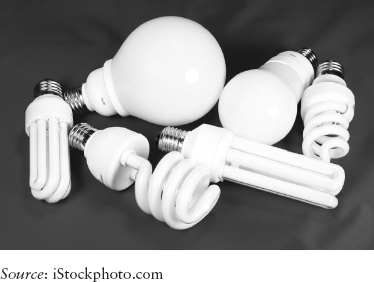
Incandescent light bulbs have not changed substantially in over 100 years and are preferred by consumers due to their familiarity, low cost, and high quality of light. An incandescent bulb uses electricity to heat a filament, typically tungsten, which produces light. An incandescent bulb emits a broad spectrum of radiation, with the light produced rendering colors well. However, incandescent bulbs have low energy efficiency, converting only about 5 to 10 percent of the electricity input into visible light, and the rest emitted as heat. Due to this energy inefficiency, many governments have passed legislation that has either specifically banned certain types of incandescent bulbs, such as the European Union's ban of general-purpose, nondirectional incandescent bulbs, or have passed legislation that requires an increased energy efficiency in general-purpose light bulbs, such as the U.S. Energy Independence and Security Act of 2007, which requires all general-purpose light bulbs to be 25 to 30 percent more energy efficient by 2012 and greater improvements starting in 2020.
CFLs consist of a glass tube filled with an inert gas, usually argon, and small amounts of mercury. Light is created when electricity excites electrons in the mercury vapor, creating UV light that excites phosphors coating the inner surface of the glass tube, which then emits visible light. CFLs have an energy efficiency of 20 percent, compared to the 5 percent of incandescent bulbs. Moreover, CFLs usually have a lifetime between 6,000 and 15,000 hours. However, this lifetime is significantly reduced if they are turned on for only a few minutes at a time. By replacing incandescent bulbs, the increased efficiency and longer lifetime of CFLs can lead to substantial electricity savings, resulting in related reductions in air pollutants and greenhouse gas emissions. While CFLs can benefit householders by reducing electricity costs, as well as reducing overall residential electricity consumption, CFLs have environmental drawbacks because they contain mercury, a toxic heavy metal that can cause brain, kidney, and respiratory system damage. Due to inadequate consumer education, CFLs are typically disposed of with normal household waste and are subsequently broken by the trash compactors in garbage trucks. Consequently, the mercury spills out and contaminates the waste, which customarily is either landfilled or incinerated. In landfills, the mercury can leach out and contaminate soil and water resources, and in incinerators the mercury can enter the atmosphere through smokestack emissions.
...
- Animal Products
- Biological Control of Pests
- Chemical Pesticides
- Fast Food
- Fertilizers
- Food Allergies
- Genetically Engineered Crops
- Home-Grown Food
- Obesity
- Organic Produce
- Supplements
- Wine and Other Alcohols
- Airborne Diseases
- Air Filters/Scrubbers
- Asthma
- Climate Change
- Indoor Air Quality
- Ozone
- Particulate Matter
- Regional Dust
- Smog
- Smoking
- Ultraviolet Radiation
- Cities
- Fungi and Sick Building Syndrome
- Highways
- Occupational Hazards
- Radon and Basements
- Recreational Space
- Rural Areas
- Solid Waste Management
- Suburbs
- Topophilia
- Urban Green
- Automobiles (Emissions)
- Cell Phones
- Computers and Printers (Ink)
- Dry Cleaning
- Ergonomics
- Fabrics
- Hobby Products
- Lighting
- Microwave Ovens
- Paper Products
- Pest Control
- Plastics in Daily Use
- Radiation Sources
- Alternative Energy Resources (Solar)
- Biodiesel
- Clean Coal
- Electricity
- Firewood and Charcoal
- Hydroelectricity
- Lead Sources and Health
- Light Bulbs
- Manganese Sources and Health
- Mercury Sources and Health
- Methane/Biogas
- Nuclear Power
- Petrochemicals
- Cost-Benefit Analysis for Alternative Products
- Emergency Rooms
- Healthcare Delivery
- Health Disparities
- Health Insurance Reform
- Nursing, Lack of
- Pharmaceutical Industry Reform
- Cancers
- Cardiovascular Diseases
- Degenerative Diseases
- Immune System Diseases
- Injuries
- Kidney Diseases
- Liver Diseases
- Lung Diseases
- Mental Exercises
- Metabolic Syndrome Diseases
- Musculoskeletal Diseases
- Neurobehavioral Diseases
- Oral Diseases
- Physical Activity and Health
- Reproductive System Diseases
- Skin Disorders
- Acquired Immune Deficiency Syndrome
- Biological Weapons
- Bird Flu
- Gastroenteritis
- International Travel
- Malaria
- Methicillin-Resistant Staphylococcus Aureus
- Seasonal Flu
- Severe Acute Respiratory Syndrome
- Sexually Transmitted Diseases
- Stomach Ulcers and Helicobacter Pylori
- Streptococcus Infections
- Tuberculosis
- Vaccination/Herd Immunity
- Antiseptics
- Children's Health
- Dental Mercury Amalgams
- Health Insurance Industry
- Hospitals (Carbon Footprints)
- Infectious Waste
- Low-Level Radioactive Waste
- Men's Health
- Mental Health
- Nosocomial Infections
- Women's Health
- Biomedicine
- California's Green Chemistry Initiative
- Calorie Labeling for Restaurants
- Centers for Disease Control and Prevention (U.S.)
- Education and Green Health
- Environmental Protection Agency (U.S.)
- Fast Food Warnings
- Government Role in Green Health
- Green Chemistry
- Industrial Ecology
- International Policies
- Metrics of Green Health
- Personal Consumer Role in Green Health
- Phaseout of Toxic Chemicals
- Private Industry Role in Green Health
- Taxation of Unhealthy Products
- United Nations Environment Programme
- World Health Organization's Environmental Burden of Disease
- Advertising and Marketing
- Antibiotic Resistance
- Antibiotics
- Anti-Cholesterol Drugs
- Anti-Depressant Drugs
- Caffeine
- Hormone Therapy
- Pain Medication
- Pharmaceutical Industry
- Prescription Drug Addiction
- Arsenic Pollution
- Bottled Water
- Carbon Filters
- Chlorination By-Products
- Dehydration
- Groundwater
- Ozonation By-Products
- Recycled Water
- Reverse Osmosis
- Supplying Water
- Swimming Pools
- Tap Water/Fluoride
- Waterborne Diseases
- Water Scarcity
- Loading...
Get a 30 day FREE TRIAL
-
 Watch videos from a variety of sources bringing classroom topics to life
 -
Read modern, diverse business cases
-
Explore hundreds of books and reference titles

Read next

More like this
Sage Recommends
We found other relevant content for you on other Sage platforms.
Have you created a personal profile? Login or create a profile so that you can save clips, playlists and searches