
Entry
Reader's guide
Entries A-Z
Subject index
Dry Cleaning
Dry cleaning, the process by which clothing is cleaned using organic chemical solvents rather than water, is a major source of hazardous waste and air pollution, at least when traditional methods are used. Since the 1980s, those concerned with environmental risks of dry cleaning have sought to increasingly regulate individual operations and to create green alternatives to toxic solvents traditionally used in the process. Efforts to create green substitutes to traditional dry cleaning practices have involved the development of strategies to balance environmentally friendly practices with effectiveness and efficiency for a diversified and decentralized industry.
Dry cleaning dates to the mid-19th century, when French industrialist Jean Baptiste Jolly began using petroleum-based solvents such as kerosene and gasoline to clean clothes and other fabrics. The dry cleaning process was especially popular with garments that otherwise required hand laundering, and the practice became very popular. The use of flammable solvents caused many fires and explosions in dry cleaning establishments, and local governments soon began regulating the industry. By the 1920s, dry cleaners had begun using chlorinated solvents instead of petroleum-based alternatives. Chlorinated solvents were much less likely to cause fires or explosions and provided superior cleaning capacity. As early as the 1930s, the solvent perchloroethylene (perc) had been adopted as the industry standard, and perc is still commonly used today. Although dry cleaning traditionally had garments dropped off at local shops and then taken to a central facility for processing, after World War II, in-store equipment became the norm. Dry cleaning machines are similar to washing machines, and garments are placed in a chamber that is then filled to about one-third capacity with perc. The perc is forced into the chamber and then passed through a filtration chamber and reused. The typical dry cleaning “wash” cycle lasts between 8 and 16 minutes, depending on the type, quantity, and soiling of the garments. After the wash cycle, perc is recovered and distilled for reuse. The garments are air dried, deodorized, and pressed.
Traditional methods of dry cleaning are a major source of hazardous waste and air pollution, because clothes are cleaned using chemical solvents rather than water. Since the 1980s, there has been a push to regulate the industry and to create greener alternatives to standard dry cleaning.
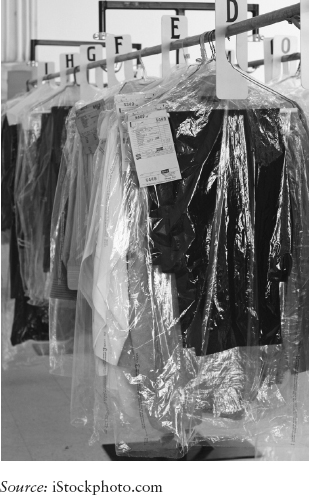
The use of perc in dry cleaning has proven problematic from an environmental perspective. During the 1970s, the U.S. Consumer Product Safety Commission (CPSC) classified perc as a carcinogen. Although this classification was later withdrawn, perc's status as the first chemical so designated caused it to receive a great deal of negative attention. The International Agency for Research on Cancer, a subagency of the United Nations’ World Health Organization (WHO), has designated perc as a member of its Group 2A category, meaning perc is probably carcinogenic to humans. Perc also is a common soil contaminant and is toxic at low levels when found in groundwater. Perc from dry cleaning operations is also a major source of airborne particles and classified by the U.S. Environmental Protection Agency (EPA) as a hazardous air contaminant. State and local authorities also have taken action to reduce the amount of perc used in dry cleaning operations. For example, concerns about perc led the California Air Resources Board (CARB) to identify perc as a toxic air contaminant in 1991. As a result of this identification, regulations regarding the equipment, operations, and maintenance of dry cleaning machines, record keeping, and reporting requirements for perc were put into place in California. As of 2003, perc emissions had been reduced by over 70 percent, but CARB determined that further action was needed. In 2007, CARB instituted new regulations that would eliminate the use of perc by 2023.
...
- Animal Products
- Biological Control of Pests
- Chemical Pesticides
- Fast Food
- Fertilizers
- Food Allergies
- Genetically Engineered Crops
- Home-Grown Food
- Obesity
- Organic Produce
- Supplements
- Wine and Other Alcohols
- Airborne Diseases
- Air Filters/Scrubbers
- Asthma
- Climate Change
- Indoor Air Quality
- Ozone
- Particulate Matter
- Regional Dust
- Smog
- Smoking
- Ultraviolet Radiation
- Cities
- Fungi and Sick Building Syndrome
- Highways
- Occupational Hazards
- Radon and Basements
- Recreational Space
- Rural Areas
- Solid Waste Management
- Suburbs
- Topophilia
- Urban Green
- Automobiles (Emissions)
- Cell Phones
- Computers and Printers (Ink)
- Dry Cleaning
- Ergonomics
- Fabrics
- Hobby Products
- Lighting
- Microwave Ovens
- Paper Products
- Pest Control
- Plastics in Daily Use
- Radiation Sources
- Alternative Energy Resources (Solar)
- Biodiesel
- Clean Coal
- Electricity
- Firewood and Charcoal
- Hydroelectricity
- Lead Sources and Health
- Light Bulbs
- Manganese Sources and Health
- Mercury Sources and Health
- Methane/Biogas
- Nuclear Power
- Petrochemicals
- Cost-Benefit Analysis for Alternative Products
- Emergency Rooms
- Healthcare Delivery
- Health Disparities
- Health Insurance Reform
- Nursing, Lack of
- Pharmaceutical Industry Reform
- Cancers
- Cardiovascular Diseases
- Degenerative Diseases
- Immune System Diseases
- Injuries
- Kidney Diseases
- Liver Diseases
- Lung Diseases
- Mental Exercises
- Metabolic Syndrome Diseases
- Musculoskeletal Diseases
- Neurobehavioral Diseases
- Oral Diseases
- Physical Activity and Health
- Reproductive System Diseases
- Skin Disorders
- Acquired Immune Deficiency Syndrome
- Biological Weapons
- Bird Flu
- Gastroenteritis
- International Travel
- Malaria
- Methicillin-Resistant Staphylococcus Aureus
- Seasonal Flu
- Severe Acute Respiratory Syndrome
- Sexually Transmitted Diseases
- Stomach Ulcers and Helicobacter Pylori
- Streptococcus Infections
- Tuberculosis
- Vaccination/Herd Immunity
- Antiseptics
- Children's Health
- Dental Mercury Amalgams
- Health Insurance Industry
- Hospitals (Carbon Footprints)
- Infectious Waste
- Low-Level Radioactive Waste
- Men's Health
- Mental Health
- Nosocomial Infections
- Women's Health
- Biomedicine
- California's Green Chemistry Initiative
- Calorie Labeling for Restaurants
- Centers for Disease Control and Prevention (U.S.)
- Education and Green Health
- Environmental Protection Agency (U.S.)
- Fast Food Warnings
- Government Role in Green Health
- Green Chemistry
- Industrial Ecology
- International Policies
- Metrics of Green Health
- Personal Consumer Role in Green Health
- Phaseout of Toxic Chemicals
- Private Industry Role in Green Health
- Taxation of Unhealthy Products
- United Nations Environment Programme
- World Health Organization's Environmental Burden of Disease
- Advertising and Marketing
- Antibiotic Resistance
- Antibiotics
- Anti-Cholesterol Drugs
- Anti-Depressant Drugs
- Caffeine
- Hormone Therapy
- Pain Medication
- Pharmaceutical Industry
- Prescription Drug Addiction
- Arsenic Pollution
- Bottled Water
- Carbon Filters
- Chlorination By-Products
- Dehydration
- Groundwater
- Ozonation By-Products
- Recycled Water
- Reverse Osmosis
- Supplying Water
- Swimming Pools
- Tap Water/Fluoride
- Waterborne Diseases
- Water Scarcity
- Loading...
Get a 30 day FREE TRIAL
-
 Watch videos from a variety of sources bringing classroom topics to life
 -
Read modern, diverse business cases
-
Explore hundreds of books and reference titles

Read next

More like this
Sage Recommends
We found other relevant content for you on other Sage platforms.
Have you created a personal profile? Login or create a profile so that you can save clips, playlists and searches