
Entry
Reader's guide
Entries A-Z
Subject index
Nanotechnology and Food
The use of nanotechnology in food is among the fastest growing in consumer markets. Nanotechnology includes a wide range of materials, systems, and processes that are used at the scale of 100 nanometers or less. Nanotechnology is increasingly being used in agricultural production, food manufacturing, food packaging, and foods themselves. Nanomaterials can help make agricultural production more efficient, enhance foods with nutrients and dietary additives, extend the longevity of packaged foods, and protect consumers from spoiled foods. Despite these benefits, the use of nanotechnology in food may have highly uncertain yet serious toxicological and ecological risks.
Industry is quickly moving to introduce nanomaterials in the food supply chain. Most large food companies, including Nestle, Altria, Kraft, Heinz, and Unilever, are researching nanotechnology. However, relatively little information is currently available regarding products on the market, and companies tend not to label or advertise products as containing nanomaterial. Analysts estimate that, for example, over 400 nanotechnology packaging applications may already be in use.
Specific applications include packaging that maintains the freshness and longevity of foods. Food packaging is the largest single application. “Smart packages” are being developed to extend shelf life by detecting spoilage and bacteria contamination, monitoring internal temperature and humidity, warning consumers through indicators, repairing package leaks, and releasing antimicrobial substances, colors, and flavors in response to triggers. Nanomaterials can also strengthen package barriers to gas, moisture, and ultraviolet light. DuPont is marketing a new nanoscale titanium dioxide light stabilizer. Clay nanoparticles also are used in plastic beer bottles to reduce breakage.
In turn, functional foods (or foods designed to provide health benefits to consumers) are becoming more important. Manufacturers are exploring the use of nanosized capsules to deliver active ingredients such as vitamins, omega-3 fish oil, minerals, and carotenoids. Such nanocapsules are said to increase bioavailability, solubility, and potency. The German company Aquanova has introduced a NoveSol capsule system. Other companies, such as Kraft, are interested in developing foods that can change their nutritional properties to reflect individual needs.
Industrial food production tends to process foods in ways that reduce their nutrition values. Nanotechnology may aid food processing by enhancing flavors, textures, and nutrition. Unilever is developing a nanoemulsion ice cream with lower fat content that still tastes “fatty.” Nanoparticles also may be used to selectively remove pathogens and chemicals from foods, and nanocapsules may be used to replace cholesterol in meat with plant steroids. Nanotechnology may also help reduce processing costs.
Nanotechnology is also being introduced to agricultural production. To date, most such applications center on the use of nanocapsules to deliver pesticides, herbicides, and plant growth regulators. Syngenta, for example, markets a PrimoMAXX plant growth regulator. Capsules can be engineered to control delivery rate and respond to triggers such as moisture in soil or contact with plant surfaces. Industry asserts that nanocapsules will strengthen active ingredients, reduce worker exposures, minimize harm to biodiversity, and lead to safer pesticide handling practices.
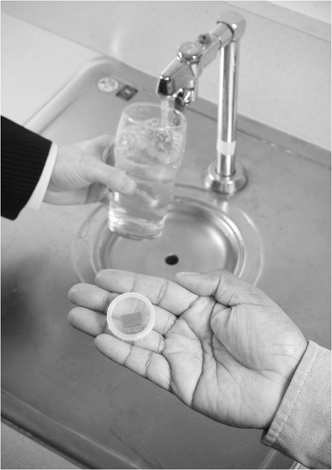
Although controversial, nanotechnology has the potential to improve detection of contaminated food and water. This chip uses nanotechnology-based biosensors developed by NASA to detect microorganisms that cause waterborne illness and infectious diseases.
...
- Food Challenges
- Animal Welfare
- Beyond Organic
- Cheap Food Policy
- Crop Genetic Diversity
- DDT
- Debt Crisis
- Disappearing Middle
- Export Dependency
- Famine
- Farm Crisis
- Fast Food
- Food Processing Industry
- Food Safety
- Food Security
- Genetically Modified Organisms
- Grain-Fed Beef
- High Fructose Corn Syrup
- Integrated Pest Management
- Irradiation
- Mad Cow Disease
- Malthusianism
- Mechanization
- Millennium Development Goals
- Modernization
- Nitrogen Fixation
- Organochlorines
- Origin Labeling
- Peasant
- Pesticide
- Productionism
- Proletarianization
- Recombinant Bovine Growth Hormone
- Roundup Ready Crops
- Salmonella
- Sewage Sludge
- Soil Erosion
- Sustainable Agriculture
- Swidden Agriculture
- Weed Management
- Food Economics and Trade
- Food Farm and Industry
- Agrarian Question
- Agrarianism
- Agribusiness
- Agricultural Commodity Programs
- Agricultural Extension
- Agrodiversity
- Agroecology
- Agrofood System (Agrifood)
- Aquaculture
- Biodynamic Agriculture
- Biological Control
- Bt
- Composting
- Confined Animal Feeding Operation
- Contract Farming
- Cooperative
- Corn
- Cover Cropping
- Crop Rotation
- Dairy
- Dioxins
- Factory Farm
- Family Farm
- Fertilizer
- Fruits
- Grazing
- Hunting
- Intercropping
- Irrigation
- Legume Crops
- Low-Input Agriculture
- Meats
- Nanotechnology and Food
- Organic Farming
- Plantation
- Rice
- Salmon
- Seed Industry
- Soil Nutrient Cycling
- Soybeans
- Substitutionism
- Sugarcane
- Urban Agriculture
- Vegetables
- Wheat
- Yeoman Farmer
- Food Laws, Agreements, and Organizations
- Archer Daniels Midland
- California Certified Organic Farmers
- Certified Humane
- Certified Organic
- Codex Alimentarius
- Commons ConAgra
- Department of Agriculture, U.S
- Diamond v. Chakrabarty
- Doha Round, World Trade Organization
- Fair Labor Association
- Fair Trade
- Farm Bill
- Federal Insecticide, Fungicide, and Rodenticide Act
- Food and Agriculture Organization
- Food and Drug Administration
- Food First
- Food Justice Movement
- Food Quality Protection Act
- Food Sovereignty
- Institute for Agriculture and Trade Policy
- International Coffee Agreement
- Land Grant University
- National Organic Program
- North American Free Trade Agreement
- Northeast Organic Farming Association
- Ogallala Aquifer
- Public Law 480, Food Aid
- Sustainable Fisheries Act
- United Farm Workers
- Wal-Mart
- Foods and Lifestyle
- Loading...
Get a 30 day FREE TRIAL
-
 Watch videos from a variety of sources bringing classroom topics to life
 -
Read modern, diverse business cases
-
Explore hundreds of books and reference titles

Read next

More like this
Sage Recommends
We found other relevant content for you on other Sage platforms.
Have you created a personal profile? Login or create a profile so that you can save clips, playlists and searches