
Entry
Reader's guide
Entries A-Z
Subject index
Homegardens
The term homegardens refers, generally speaking, to small-scale, domestic agricultural plots. They consist of combinations of vegetable, herb, and flower production and can include small fruit orchards, as well as various decorative features. Though seemingly peripheral, homegardens have historically played a central role in food production and availability in regions across the world. At this time, semisubsistence domestic garden plots serve as key components to burgeoning slow, local, urban, and sustainable agriculture movements, as well to food security and food sovereignty initiatives. Homegardens encompass a range of horticultural and agricultural endeavors, ranging from organic, subsistence vegetable plots to biocide-saturated floral borders, from native plant reservoirs to manicured lawns in the desert. They have come to represent the model of sustainability and the crux of ecological awareness and activism; they also continue to represent an artificial, constrained, constraining, and even colonizing relationship with the natural world.
Epitomizing both simple living and consumerism, homegardens embody a host of compelling environmental and social paradoxes. They span the gamut of being innocuous and revolutionary, the most conspicuous site of bourgeois consumption and leisure, and the most fervent site of subsistence-as-resistance production and labor. This tension permeates the history and current environmental interest in homegardens, which are at times considered harbingers of human manipulation, modification, and control of their environment, and at times, spaces of interaction, harmony, and reciprocity between the human and nonhuman worlds. Michael Pollan's Second Nature reflects on this paradox and the intricate interdependence at work in a garden between plants and their growers.
Among its various political ecologies and economies, the household garden also brings forth issues of gender. Similar to domesticity in general, the homegarden has been feminized—and delegitimatized—as the place for quaint, decorative projects and the realm of social reproduction in general. For instance, early archaeological and anthropological accounts of Native American history did not consider their extensive horticulture systems as true agriculture because they were matrilineal “women's work,” and so undervalued the ecological, economic, and cultural importance of this small-scale, agribiodiversity-rich mode of growing: “practices associated with modest-scale production were used in the native Southeast for expansive large-scale ‘garden-agriculture’ in systems for which we lack contemporary parallels” (Scarry and Scarry). Agrarian writers and environmentalists have since worked to counter the secondary status of gardens. (For example, see Gene Logsdon's essay “A Farm is a Large Garden (or a Garden is a Small Farm)”.)
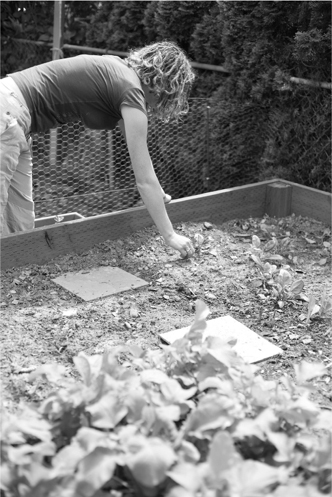
Although homegardens like this one have played a crucial role in world food production and may contribute to soil conservation, biodiversity, and habitat creation, their importance has often been overlooked.
Feminists—and now environmentalists—have nevertheless noted and lauded the treasury of local ecological and social knowledge at work in subsistence and semisubsistence gardening traditions. In her collection of essays In Search Of Our Mothers' Gardens, Alice Walker offers the metaphor of the household garden to describe all the skills, knowledge, and wisdom she and other women have gained from their mothers and grandmothers. This revaluation of the previously marginalized yet highly valuable knowledge embedded within gardening heritages overcomes and helps uproot long-held biases of the “poverty” of subsistence production. Successful gardening is skilled, highly diversified craft work, incorporating scientific knowledge of the local ecosystem as well as artistic expression.
...
- Food Challenges
- Animal Welfare
- Beyond Organic
- Cheap Food Policy
- Crop Genetic Diversity
- DDT
- Debt Crisis
- Disappearing Middle
- Export Dependency
- Famine
- Farm Crisis
- Fast Food
- Food Processing Industry
- Food Safety
- Food Security
- Genetically Modified Organisms
- Grain-Fed Beef
- High Fructose Corn Syrup
- Integrated Pest Management
- Irradiation
- Mad Cow Disease
- Malthusianism
- Mechanization
- Millennium Development Goals
- Modernization
- Nitrogen Fixation
- Organochlorines
- Origin Labeling
- Peasant
- Pesticide
- Productionism
- Proletarianization
- Recombinant Bovine Growth Hormone
- Roundup Ready Crops
- Salmonella
- Sewage Sludge
- Soil Erosion
- Sustainable Agriculture
- Swidden Agriculture
- Weed Management
- Food Economics and Trade
- Food Farm and Industry
- Agrarian Question
- Agrarianism
- Agribusiness
- Agricultural Commodity Programs
- Agricultural Extension
- Agrodiversity
- Agroecology
- Agrofood System (Agrifood)
- Aquaculture
- Biodynamic Agriculture
- Biological Control
- Bt
- Composting
- Confined Animal Feeding Operation
- Contract Farming
- Cooperative
- Corn
- Cover Cropping
- Crop Rotation
- Dairy
- Dioxins
- Factory Farm
- Family Farm
- Fertilizer
- Fruits
- Grazing
- Hunting
- Intercropping
- Irrigation
- Legume Crops
- Low-Input Agriculture
- Meats
- Nanotechnology and Food
- Organic Farming
- Plantation
- Rice
- Salmon
- Seed Industry
- Soil Nutrient Cycling
- Soybeans
- Substitutionism
- Sugarcane
- Urban Agriculture
- Vegetables
- Wheat
- Yeoman Farmer
- Food Laws, Agreements, and Organizations
- Archer Daniels Midland
- California Certified Organic Farmers
- Certified Humane
- Certified Organic
- Codex Alimentarius
- Commons ConAgra
- Department of Agriculture, U.S
- Diamond v. Chakrabarty
- Doha Round, World Trade Organization
- Fair Labor Association
- Fair Trade
- Farm Bill
- Federal Insecticide, Fungicide, and Rodenticide Act
- Food and Agriculture Organization
- Food and Drug Administration
- Food First
- Food Justice Movement
- Food Quality Protection Act
- Food Sovereignty
- Institute for Agriculture and Trade Policy
- International Coffee Agreement
- Land Grant University
- National Organic Program
- North American Free Trade Agreement
- Northeast Organic Farming Association
- Ogallala Aquifer
- Public Law 480, Food Aid
- Sustainable Fisheries Act
- United Farm Workers
- Wal-Mart
- Foods and Lifestyle
- Loading...
Get a 30 day FREE TRIAL
-
 Watch videos from a variety of sources bringing classroom topics to life
 -
Read modern, diverse business cases
-
Explore hundreds of books and reference titles

Read next

More like this
Sage Recommends
We found other relevant content for you on other Sage platforms.
Have you created a personal profile? Login or create a profile so that you can save clips, playlists and searches