
Entry
Reader's guide
Entries A-Z
Subject index
Sports
In recent years, sports organizations have made a more concerted effort toward sustainability and green living in response to economic crisis, consumer interest, and unstable energy costs. A 2008 survey found that about three-quarters of professional sports teams were implementing, developing, or actively planning a sustainability plan for their team and/or stadium. Both Chicago and Tokyo included comprehensive sustainability plans in their unsuccessful bids to host the 2016 Olympics, further demonstrating the growing interest in sustainability in the sporting and athletic world. One especially intriguing part of Chicago's plan was to recycle stadium seats, after the close of the Olympics, into wheelchair seats—a plan that could certainly be adopted by other parts of the sporting world.
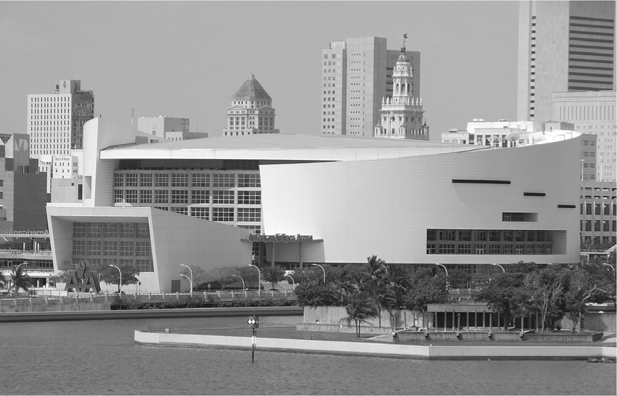
As of 2009, the NBA's Atlanta Hawks and Miami Heat, baseball's Washington Nationals, and hockey's Atlanta Thrashers became the first four professional teams to play in LEED-certified venues. Shown here is the Miami Heat's downtown Miami venue, the American Airlines Arena
As of 2009, the National Basketball Association teams the Miami Heat and the Atlanta Hawks, the Major League Baseball team the Washington Nationals, and the National Hockey League team the Atlanta Thrashers became the first four professional sports teams to play in Leadership in Energy and Environmental Design (LEED)-certified venues. The LEED Green Building Rating System was developed by the U.S. Green Building Council, a nonprofit organization, in 1998; LEED standards go above and beyond mandatory building codes, emphasizing a healthy working environment (avoiding “sick building syndrome”), energy efficiency, and sustainable construction practices. One criticism of LEED is that, although focusing on energy efficiency, it comes at the problem from a fossil-fuels perspective, with too little encouragement for alternative energy sources.
For instance, these venues use compact fluorescent lightbulbs and water-conservation methods to cut down on the typically massive utility bills ($3 million a year in the case of Miami's American Airlines Arena) associated with operating a sports stadium. Atlanta's Philips Arena also uses carpeting made of recycled materials.
From the start of spring training in the 2008 season, Major League Baseball has been advising its 30 teams, in collaboration with the Natural Resources Defense Council, on environmental stewardship and sustainable resource management, with each team being asked to develop a plan with clearly defined goals for reducing waste and achieving greater sustainability and energy efficiency. Beginning with the 2010 season, teams will issue regular sustainability reports to track their progress.
The National Football League (NFL) environmental program has no current plans to involve the individual teams. Instead, it aims to offset the impacts of the Super Bowl, the NFL Kickoff, and the Pro Bowl—events with huge attendance and equally huge waste and resources usage. The NFL works with the host cities of these events on carbon offsets, use of local renewable energy capabilities when possible, and recycling of as much waste as possible. The Philadelphia Eagles have led the way in green sports, actively improving the sustainability of their stadium and training facilities since 2003, including the use of solar energy and even the recycling of cooking fat to make biodiesel. In 2005, Philadelphia hosted the first carbon-neutral NFL game and remains ahead of the curve in sustainable sports.
...
- Green Consumer Challenges
- Affluenza
- Air Travel
- Carbon Emissions
- Commuting
- Conspicuous Consumption
- Disparities in Consumption
- Dumpster Diving
- Durability
- E-Waste
- Electricity Usage
- Energy Efficiency of Products and Appliances
- Food Additives
- Food Miles
- Genetically Modified Products
- Greenwashing
- Healthcare
- Insulation
- Lawns and Landscaping
- Materialism
- Needs and Wants
- Overconsumption
- Pesticides and Fertilizers
- Pets
- Pharmaceuticals
- Positional Goods
- Poverty
- Pricing
- Quality of Life
- Resource Consumption and Usage
- Solid and Human Waste
- Super-Rich
- Symbolic Consumption
- Waste Disposal
- Windows
- Beverages
- Bottled Beverages (Water)
- Coffee
- Confections
- Dairy Products
- Fish
- Meat
- Poultry and Eggs
- Slow Food
- Tea
- Vegetables and Fruits
- Water
- Green Consumer Products and Services
- Adhesives
- Apparel
- Audio Equipment
- Automobiles
- Baby Products
- Books
- Car Washing
- Certified Products (Fair Trade or Organic)
- Cleaning Products
- Computers and Printers
- Cosmetics
- Disposable Plates and Plastic Implements
- Floor and Wall Coverings
- Fuel
- Funerals
- Furniture
- Garden Tools and Appliances
- Grains
- Home Appliances
- Home Shopping and Catalogs
- Homewares
- Internet Purchasing
- Lighting
- Linen and Bedding
- Magazines
- Malls
- Mobile Phones
- Packaging and Product Containers
- Paper Products
- Personal Products
- Recyclable Products
- Seasonal Products
- Services
- Shopping
- Shopping Bags
- Sports
- Supermarkets
- Swimming Pools and Spas
- Television and DVD Equipment
- Tools
- Toys
- Green Consumer Solutions
- Biodegradable
- Carbon Credits
- Carbon Offsets
- Certification Process
- Composting
- Consumer Activism
- Downshifting
- Ecolabeling
- Ecological Footprint
- Ecotourism
- Environmentally Friendly
- Ethically Produced Products
- Fair Trade
- Gardening/Growing
- Gifting (Green Gifts)
- Green Communities
- Green Consumer
- Green Consumerism Organizations
- Green Design
- Green Discourse
- Green Food
- Green Gross Domestic Product
- Green Homes
- Green Marketing
- Green Politics
- Local Exchange Trading Schemes
- Locally Made
- Markets (Organic/Farmers)
- Morality (Consumer Ethics)
- Organic
- Plants
- Product Sharing
- Public Transportation
- Recycling
- Regulation
- Secondhand Consumption
- Simple Living
- Sustainable Consumption
- Vege-Box Schemes
- Green Consumerism Organizations, Movements, and Planning
- Advertising
- Commodity Fetishism
- Consumer Behavior
- Consumer Boycotts
- Consumer Culture
- Consumer Ethics
- Consumer Society
- Consumerism
- Demographics
- Diderot Effect
- Environmentalism
- Fashion
- Final Consumption
- Finance and Economics
- Frugality
- Government Policy and Practice (Local and National)
- Heating and Cooling
- International Regulatory Frameworks
- Kyoto Protocol
- Leisure and Recreation
- Lifestyle, Rural
- Lifestyle, Suburban
- Lifestyle, Sustainable
- Lifestyle, Urban
- Organisation for Economic Co-operation and Development (OECD)
- Production and Commodity Chains
- Psychographics
- Social Identity
- Taxation
- United Nations Human Development Report 1998
- Websites and Blogs
- Loading...
Get a 30 day FREE TRIAL
-
 Watch videos from a variety of sources bringing classroom topics to life
 -
Read modern, diverse business cases
-
Explore hundreds of books and reference titles

Read next

More like this
Sage Recommends
We found other relevant content for you on other Sage platforms.
Have you created a personal profile? Login or create a profile so that you can save clips, playlists and searches