
Entry
Reader's guide
Entries A-Z
Subject index
Lifestyle, Rural
Rural lifestyles may be characterized by the term simplicity: just as the level of interaction and impact on the environment is limited, it manifests a high degree of variability. Notwithstanding the varying definitions of rural life, a relatively low population, occupations dependent on working the land, lower-than-average per capita income, and a general inadequacy or outright lack of basic facilities and services are some of the distinguishing features of rural lifestyles. These features are also important determinants of the level and pattern of consumption of environmental resources, as well as fundamental environmental conservation and preservation factors.
What is a Rural Dweller?
Globally, there is great variation in what it means to be a rural dweller, both within and between nations, and experiences of rural dwelling vary according to age, gender, sexuality, ethnicity, and culture. In many “developed nations,” rural dwellers may be dependent on rural areas for their livelihoods (e.g., they are employed in primary industries such as agriculture, horticulture, or resource extraction, or craft and/or service industries in rural communities). They may choose to live in rural communities for lifestyle reasons, working from home for an employer based elsewhere, or commuting to urban areas for employment. In developing countries rural dwellers may be involved in agriculture or petty trading and may walk or cycle to daily work and recreational activities. In rural communities with strong social and family networks, rural dwellers can exist in communities in which every other member is known, and the emphasis for many may be on material survival, rather than on spending disposable income. Many rural dwellers in developing countries now earn a salaried income that is often a consequence of employment as unskilled labor in an urban area.
There are many forms of rural lifestyles, ranging from the most simple or rather primitive to the most modern (equaling urban lifestyles with respect to facilities and services). The various forms reflect the relative location and accessibility of the rural community to the nearest city, as well as the way in which the rural locality, economy, and culture are linked to urban life. The remainder of this article reflects primarily on rural communities in developing countries.
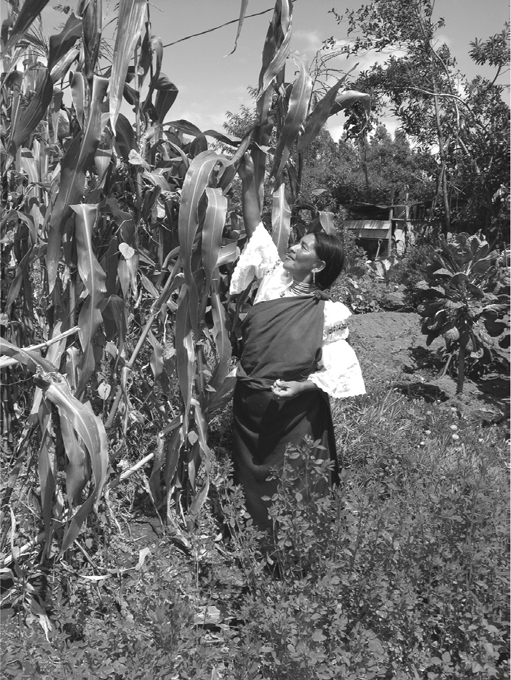
One rural consumption pattern consists of subsistence agriculture, particularly farming, fishing, and livestock rearing. Here, the owner of a lodge in Ecuador picks maize from her garden
Rural and Urban Lifestyles Compared
If we conceive of lifestyles as a continuum, rural and urban lifestyles can be two extremes. Rural lifestyle is essentially a land-based or land-related culture, in which land (including natural resources) and the family (its size and composition) form the major assets. This differs from the urban lifestyle, including ownership of means of production, movable and disposable assets, and a living and livelihood revolving around home, work/business, and recreation. Although the rural lifestyle can be characterized by a high level of interpersonal relationships, and well-defined individual and group roles and responsibilities, the urban lifestyle is often characterized by alienation, freedom from traditional bonds, and anonymity. The social network in the rural lifestyle is simple and defined largely by kinship relationship; in urban lifestyles, it could be a dense pattern defined along occupational, class, religious, and even ethnic lines. The majority of rural lifestyle culture depends on consumption of firewood and coal as sources of residential energy, whereas its urban counterpart relies on electricity and household gas and oil. Although urban lifestyle is more economically successful, it is more environmentally destructive, with a large ecological footprint and cultural artifacts.
...
- Green Consumer Challenges
- Affluenza
- Air Travel
- Carbon Emissions
- Commuting
- Conspicuous Consumption
- Disparities in Consumption
- Dumpster Diving
- Durability
- E-Waste
- Electricity Usage
- Energy Efficiency of Products and Appliances
- Food Additives
- Food Miles
- Genetically Modified Products
- Greenwashing
- Healthcare
- Insulation
- Lawns and Landscaping
- Materialism
- Needs and Wants
- Overconsumption
- Pesticides and Fertilizers
- Pets
- Pharmaceuticals
- Positional Goods
- Poverty
- Pricing
- Quality of Life
- Resource Consumption and Usage
- Solid and Human Waste
- Super-Rich
- Symbolic Consumption
- Waste Disposal
- Windows
- Beverages
- Bottled Beverages (Water)
- Coffee
- Confections
- Dairy Products
- Fish
- Meat
- Poultry and Eggs
- Slow Food
- Tea
- Vegetables and Fruits
- Water
- Green Consumer Products and Services
- Adhesives
- Apparel
- Audio Equipment
- Automobiles
- Baby Products
- Books
- Car Washing
- Certified Products (Fair Trade or Organic)
- Cleaning Products
- Computers and Printers
- Cosmetics
- Disposable Plates and Plastic Implements
- Floor and Wall Coverings
- Fuel
- Funerals
- Furniture
- Garden Tools and Appliances
- Grains
- Home Appliances
- Home Shopping and Catalogs
- Homewares
- Internet Purchasing
- Lighting
- Linen and Bedding
- Magazines
- Malls
- Mobile Phones
- Packaging and Product Containers
- Paper Products
- Personal Products
- Recyclable Products
- Seasonal Products
- Services
- Shopping
- Shopping Bags
- Sports
- Supermarkets
- Swimming Pools and Spas
- Television and DVD Equipment
- Tools
- Toys
- Green Consumer Solutions
- Biodegradable
- Carbon Credits
- Carbon Offsets
- Certification Process
- Composting
- Consumer Activism
- Downshifting
- Ecolabeling
- Ecological Footprint
- Ecotourism
- Environmentally Friendly
- Ethically Produced Products
- Fair Trade
- Gardening/Growing
- Gifting (Green Gifts)
- Green Communities
- Green Consumer
- Green Consumerism Organizations
- Green Design
- Green Discourse
- Green Food
- Green Gross Domestic Product
- Green Homes
- Green Marketing
- Green Politics
- Local Exchange Trading Schemes
- Locally Made
- Markets (Organic/Farmers)
- Morality (Consumer Ethics)
- Organic
- Plants
- Product Sharing
- Public Transportation
- Recycling
- Regulation
- Secondhand Consumption
- Simple Living
- Sustainable Consumption
- Vege-Box Schemes
- Green Consumerism Organizations, Movements, and Planning
- Advertising
- Commodity Fetishism
- Consumer Behavior
- Consumer Boycotts
- Consumer Culture
- Consumer Ethics
- Consumer Society
- Consumerism
- Demographics
- Diderot Effect
- Environmentalism
- Fashion
- Final Consumption
- Finance and Economics
- Frugality
- Government Policy and Practice (Local and National)
- Heating and Cooling
- International Regulatory Frameworks
- Kyoto Protocol
- Leisure and Recreation
- Lifestyle, Rural
- Lifestyle, Suburban
- Lifestyle, Sustainable
- Lifestyle, Urban
- Organisation for Economic Co-operation and Development (OECD)
- Production and Commodity Chains
- Psychographics
- Social Identity
- Taxation
- United Nations Human Development Report 1998
- Websites and Blogs
- Loading...
Get a 30 day FREE TRIAL
-
 Watch videos from a variety of sources bringing classroom topics to life
 -
Read modern, diverse business cases
-
Explore hundreds of books and reference titles

Read next

More like this
Sage Recommends
We found other relevant content for you on other Sage platforms.
Have you created a personal profile? Login or create a profile so that you can save clips, playlists and searches