
Entry
Reader's guide
Entries A-Z
Subject index
Green Homes
A green home is one that aims to minimize environmental and health impacts. More specifically, building a green home means using a holistic design and construction process that takes into consideration the size of the home, appropriate site selection and orientation, energy- and water-efficient design, and the effect of materials used, as well as minimizing waste and optimizing the environmental health of the home, such as indoor air quality. Some proponents of green homes argue that a better term for a green home is a “healthy home”—healthy for the planet and healthy for the household.
Homes also give us a sense of place and are a reflection of who we are—as an individual, a neighborhood, and a society. The architectural literature on green buildings discusses the relationship between the design of a home and the environment. On one end of the continuum, a home can be designed to coexist with nature, and on the other end, man-made objects and nature act as opposing forces. The design of a home is a holistic reflection of who we are and how we see the world. Although green home design often focuses on materials and technological innovations that reduce the environmental impact of the home, the larger relationship between a home and its surrounding ecosystem should not be overlooked.
Over the past 50 years, the average size of housing in North America increased from 1,100 square feet in 1950 to 2,300 square feet in 2003. Larger houses mean more resources are used in terms of energy, water, and building materials
Environmental and Health Impacts of Homes
The environmental and health impacts of homes are both numerous and far-reaching. In Canada it is estimated that 17 percent of all energy used goes toward running homes, whereas the U.S. Department of Energy reports that 20 percent of all fossil fuel use in the United States is from the residential sector. The implications of this are increased greenhouse gas emissions and other air quality issues. According to Natural Resources Canada, homes that are more than 25 years old have the potential to save an average of 35 percent of their energy use.
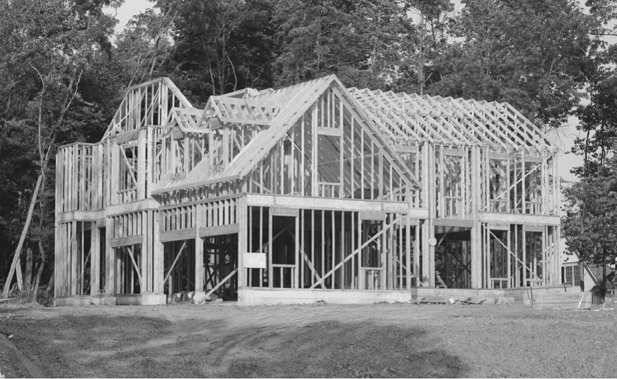
The effect of buildings in the residential sector is also increasing as a result of the increased average size of houses in North America. Larger houses mean more resources are used in terms of energy, water, and building materials. Over the past 50 years, the average size of housing has more than doubled, from 1,100 square feet in 1950 to 2,300 square feet in 2003. Furthermore, as the number of people per household decreases, average square footage per person has tripled from 290 square feet in the 1950s to 893 square feet in 2003.
From a health perspective, both new homes and older ones can have an effect on the individuals living in the home in terms of indoor air quality (e.g., from toxins in building materials, poor air flow, and lack of natural light). The impacts on the environment include waste from construction (estimated at 25–30 percent of the municipal waste stream), deforestation for wood products, and energy used in construction. A typical wood-frame house produces somewhere between three and seven tons of solid waste from the construction process alone.
...
- Green Consumer Challenges
- Affluenza
- Air Travel
- Carbon Emissions
- Commuting
- Conspicuous Consumption
- Disparities in Consumption
- Dumpster Diving
- Durability
- E-Waste
- Electricity Usage
- Energy Efficiency of Products and Appliances
- Food Additives
- Food Miles
- Genetically Modified Products
- Greenwashing
- Healthcare
- Insulation
- Lawns and Landscaping
- Materialism
- Needs and Wants
- Overconsumption
- Pesticides and Fertilizers
- Pets
- Pharmaceuticals
- Positional Goods
- Poverty
- Pricing
- Quality of Life
- Resource Consumption and Usage
- Solid and Human Waste
- Super-Rich
- Symbolic Consumption
- Waste Disposal
- Windows
- Beverages
- Bottled Beverages (Water)
- Coffee
- Confections
- Dairy Products
- Fish
- Meat
- Poultry and Eggs
- Slow Food
- Tea
- Vegetables and Fruits
- Water
- Green Consumer Products and Services
- Adhesives
- Apparel
- Audio Equipment
- Automobiles
- Baby Products
- Books
- Car Washing
- Certified Products (Fair Trade or Organic)
- Cleaning Products
- Computers and Printers
- Cosmetics
- Disposable Plates and Plastic Implements
- Floor and Wall Coverings
- Fuel
- Funerals
- Furniture
- Garden Tools and Appliances
- Grains
- Home Appliances
- Home Shopping and Catalogs
- Homewares
- Internet Purchasing
- Lighting
- Linen and Bedding
- Magazines
- Malls
- Mobile Phones
- Packaging and Product Containers
- Paper Products
- Personal Products
- Recyclable Products
- Seasonal Products
- Services
- Shopping
- Shopping Bags
- Sports
- Supermarkets
- Swimming Pools and Spas
- Television and DVD Equipment
- Tools
- Toys
- Green Consumer Solutions
- Biodegradable
- Carbon Credits
- Carbon Offsets
- Certification Process
- Composting
- Consumer Activism
- Downshifting
- Ecolabeling
- Ecological Footprint
- Ecotourism
- Environmentally Friendly
- Ethically Produced Products
- Fair Trade
- Gardening/Growing
- Gifting (Green Gifts)
- Green Communities
- Green Consumer
- Green Consumerism Organizations
- Green Design
- Green Discourse
- Green Food
- Green Gross Domestic Product
- Green Homes
- Green Marketing
- Green Politics
- Local Exchange Trading Schemes
- Locally Made
- Markets (Organic/Farmers)
- Morality (Consumer Ethics)
- Organic
- Plants
- Product Sharing
- Public Transportation
- Recycling
- Regulation
- Secondhand Consumption
- Simple Living
- Sustainable Consumption
- Vege-Box Schemes
- Green Consumerism Organizations, Movements, and Planning
- Advertising
- Commodity Fetishism
- Consumer Behavior
- Consumer Boycotts
- Consumer Culture
- Consumer Ethics
- Consumer Society
- Consumerism
- Demographics
- Diderot Effect
- Environmentalism
- Fashion
- Final Consumption
- Finance and Economics
- Frugality
- Government Policy and Practice (Local and National)
- Heating and Cooling
- International Regulatory Frameworks
- Kyoto Protocol
- Leisure and Recreation
- Lifestyle, Rural
- Lifestyle, Suburban
- Lifestyle, Sustainable
- Lifestyle, Urban
- Organisation for Economic Co-operation and Development (OECD)
- Production and Commodity Chains
- Psychographics
- Social Identity
- Taxation
- United Nations Human Development Report 1998
- Websites and Blogs
- Loading...
Get a 30 day FREE TRIAL
-
 Watch videos from a variety of sources bringing classroom topics to life
 -
Read modern, diverse business cases
-
Explore hundreds of books and reference titles

Read next

More like this
Sage Recommends
We found other relevant content for you on other Sage platforms.
Have you created a personal profile? Login or create a profile so that you can save clips, playlists and searches