
Entry
Reader's guide
Entries A-Z
Subject index
Fashion
The greening of the fashion industry presents a number of challenges. The industry is immense, worth over $1 trillion worldwide. Its global influence on sustainability results from its long extended chain of activities, including production and supply of raw and man-made materials (e.g., cotton, polyester), clothing manufacture, distribution and sale of finished goods, fashion goods purchase and usage by the public, and final disposal after use. As a result, the fashion industry has multiple, significant sustainability effects on society at every stage of the clothing life cycle—environmentally, economically, and socially. In recent times, High Street fashion retailers have exacerbated the unsustainable aspects of the sector. The advent of fast fashion—the shortening of the lead times between the appearance of a garment on the catwalk and its availability in the High Street store—has resulted in encouraging more intense consumption of fashion. Shortening lead times has effectively shortened the life cycle of fashion, increasing the frequency of purchase, and the accompanying reduction of quality of garments has made fashion disposable in the mind of the consumer. Many consumers, particularly in younger age groups with less disposable income, purchase fast fashion from a growing number of budget fashion retailers, despite knowing that the product will not last long in good condition. The fashion industry has received constant criticism for its environmental performance, as well as for its societal impacts.
More than any other crop, the mass cultivation of cotton is associated with the overuse of pesticides and results in the misuse of water supplies in some countries
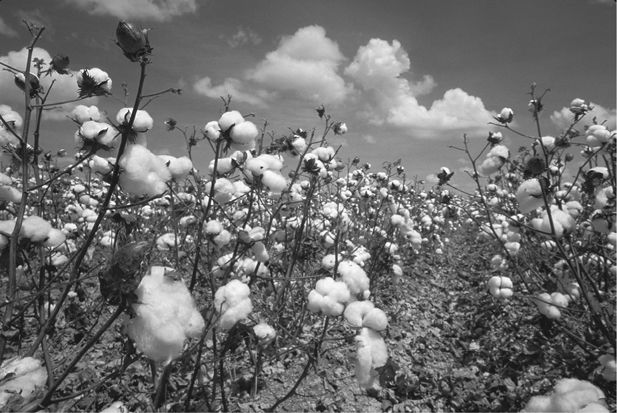
Environmental impacts of fashion occur throughout the life cycle. For example, the mass cultivation of cotton is associated with the overuse of pesticides, more than any other crop worldwide, and also results in the misuse of water supplies in some countries. The treatment of material in preparation for dyeing and the dyeing process itself uses water and energy, but it is the toxicity of the chemicals used that causes serious problems for the workers who are exposed to them; the environment also suffers, as untreated effluent is dumped in the local water supply. Fierce High Street competition has led to brands seeking to reduce costs by moving production to India and China, adding to the fashion miles and carbon footprint of fashion, as material and clothes are transported around the world. However, the energy use and carbon footprint associated with washing, drying, and ironing garments once bought is far greater than that of transport. At the end of the life cycle, synthetic materials can take decades to biodegrade, and not enough clothes are reused or recycled, so many end up in landfills.
Economic and social effects of fashion are particularly evident in the materials sourcing and manufacturing stages of the fashion garment life cycle. Poor, unsafe working conditions; low wages; and sweatshop and child labor practices have all been present in the fashion industry as brands have sought to reduce costs through outsourcing production to developing countries.
The nature of consumer behavior and consumption with regard to fashion is associated with the building of the consumer's self-identity and the consumer's pursuit of pleasure. Both of these motivations are likely to encourage consumption for the sake of consumption and are not compatible with a green consumerism that would be better served by less consumption and more restraint to reduce carbon footprints, reduce pollution, and protect natural resources. The alternative option in green fashion, the ecochic niche, is growing but has not fully entered the mainstream. The extent to which something is fashionable and its price dominate consumer decision making in most segments, and even proenvironmental segments consider fashion, self-identity, and price ahead of sustainability impacts.
...
- Green Consumer Challenges
- Affluenza
- Air Travel
- Carbon Emissions
- Commuting
- Conspicuous Consumption
- Disparities in Consumption
- Dumpster Diving
- Durability
- E-Waste
- Electricity Usage
- Energy Efficiency of Products and Appliances
- Food Additives
- Food Miles
- Genetically Modified Products
- Greenwashing
- Healthcare
- Insulation
- Lawns and Landscaping
- Materialism
- Needs and Wants
- Overconsumption
- Pesticides and Fertilizers
- Pets
- Pharmaceuticals
- Positional Goods
- Poverty
- Pricing
- Quality of Life
- Resource Consumption and Usage
- Solid and Human Waste
- Super-Rich
- Symbolic Consumption
- Waste Disposal
- Windows
- Beverages
- Bottled Beverages (Water)
- Coffee
- Confections
- Dairy Products
- Fish
- Meat
- Poultry and Eggs
- Slow Food
- Tea
- Vegetables and Fruits
- Water
- Green Consumer Products and Services
- Adhesives
- Apparel
- Audio Equipment
- Automobiles
- Baby Products
- Books
- Car Washing
- Certified Products (Fair Trade or Organic)
- Cleaning Products
- Computers and Printers
- Cosmetics
- Disposable Plates and Plastic Implements
- Floor and Wall Coverings
- Fuel
- Funerals
- Furniture
- Garden Tools and Appliances
- Grains
- Home Appliances
- Home Shopping and Catalogs
- Homewares
- Internet Purchasing
- Lighting
- Linen and Bedding
- Magazines
- Malls
- Mobile Phones
- Packaging and Product Containers
- Paper Products
- Personal Products
- Recyclable Products
- Seasonal Products
- Services
- Shopping
- Shopping Bags
- Sports
- Supermarkets
- Swimming Pools and Spas
- Television and DVD Equipment
- Tools
- Toys
- Green Consumer Solutions
- Biodegradable
- Carbon Credits
- Carbon Offsets
- Certification Process
- Composting
- Consumer Activism
- Downshifting
- Ecolabeling
- Ecological Footprint
- Ecotourism
- Environmentally Friendly
- Ethically Produced Products
- Fair Trade
- Gardening/Growing
- Gifting (Green Gifts)
- Green Communities
- Green Consumer
- Green Consumerism Organizations
- Green Design
- Green Discourse
- Green Food
- Green Gross Domestic Product
- Green Homes
- Green Marketing
- Green Politics
- Local Exchange Trading Schemes
- Locally Made
- Markets (Organic/Farmers)
- Morality (Consumer Ethics)
- Organic
- Plants
- Product Sharing
- Public Transportation
- Recycling
- Regulation
- Secondhand Consumption
- Simple Living
- Sustainable Consumption
- Vege-Box Schemes
- Green Consumerism Organizations, Movements, and Planning
- Advertising
- Commodity Fetishism
- Consumer Behavior
- Consumer Boycotts
- Consumer Culture
- Consumer Ethics
- Consumer Society
- Consumerism
- Demographics
- Diderot Effect
- Environmentalism
- Fashion
- Final Consumption
- Finance and Economics
- Frugality
- Government Policy and Practice (Local and National)
- Heating and Cooling
- International Regulatory Frameworks
- Kyoto Protocol
- Leisure and Recreation
- Lifestyle, Rural
- Lifestyle, Suburban
- Lifestyle, Sustainable
- Lifestyle, Urban
- Organisation for Economic Co-operation and Development (OECD)
- Production and Commodity Chains
- Psychographics
- Social Identity
- Taxation
- United Nations Human Development Report 1998
- Websites and Blogs
- Loading...
Get a 30 day FREE TRIAL
-
 Watch videos from a variety of sources bringing classroom topics to life
 -
Read modern, diverse business cases
-
Explore hundreds of books and reference titles

Read next

More like this
Sage Recommends
We found other relevant content for you on other Sage platforms.
Have you created a personal profile? Login or create a profile so that you can save clips, playlists and searches