
Entry
Reader's guide
Entries A-Z
Subject index
Composting
Composting is an important agricultural practice of returning nutrients to agricultural soils. It is also a method for both maintaining and improving soil health and fertility in agricultural fields. Composting has specific goals and a relatively concise set of practices, and many international monographs and journal articles advocate its adoption for soil and farm health. By focusing on composting's goals and practices, this article outlines the role and rationale of composting in ecoagricultural regimes.
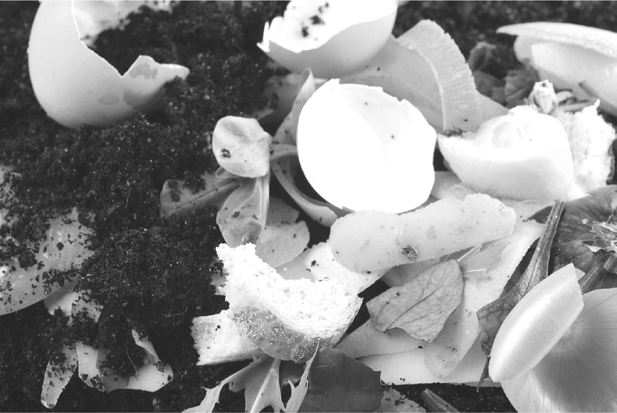
Turning consumer food waste into compost for organic agricultural soils is one way in which food consumption can go green
There are two ways humans have added necessary nutrients to agricultural fields over human history. One is the method developed during World War II in which chemicals used in weaponry were applied to agricultural fields and were found to help boost agricultural productivity, speed up plant growth, increase yields, and reduce the need for various agricultural inputs, especially labor and compost. The result of this method of adding chemicals to agricultural fields, coupled with the development of high-yielding hybrid seeds, increased inputs of pesticides and herbicides, increasing the commercialization and consolidation of farming under national and international trade regimes that help subsidize such chemical-based farming, as well as the ascendant popularity of this farming method and the research and teaching of this method in agricultural land grant universities throughout the world, has come to be known as the “Green Revolution.” The Green Revolution is coming under increasing criticism from eco-agriculture advocates because of this dependence on fossil fuels and the deleterious effect these chemicals have on soil health.
The other way humans have added necessary nutrients to agricultural fields is by composting. Composting is the process of combining organic items that are rich in carbon, such as animal manure or dried leaves, with organic items that are rich in nitrogen, such as grass and food waste, into humus. One practice of composting is to make sure there is a correct ratio between these “brown” and “green” components; the ratio that is traditionally sought is a chemical ratio of 30 parts carbon to 1 part nitrogen. These organic matters are transformed in a compost pile by the presence of microorganisms, especially bacteria, which use enzymes to chemically break down the organic matter. Invertebrates then help to physically break down the compost.
The method of creating compost entails gathering the organic matter into a large enough pile or bin and adding water; after this, heat from the sun and naturally occurring oxygen mix with the pile, and the process of decomposition begins. It is important for the compost pile to achieve a high enough temperature—over 100 degrees Fahrenheit—for seeds and harmful bacteria and blights to be successfully killed and broken down; otherwise, they are spread back onto agricultural fields. If the compost pile becomes warmer than 140 degrees Fahrenheit, then the beneficial bacteria and organisms in the compost can be killed and the compost loses its life and health-giving properties. Finding a successful mix and ratio of carbon/nitrogen and maintaining a proper temperature and moistness level must be learned. Thus, making compost is part art form and part agricultural practice.
...
- Green Consumer Challenges
- Affluenza
- Air Travel
- Carbon Emissions
- Commuting
- Conspicuous Consumption
- Disparities in Consumption
- Dumpster Diving
- Durability
- E-Waste
- Electricity Usage
- Energy Efficiency of Products and Appliances
- Food Additives
- Food Miles
- Genetically Modified Products
- Greenwashing
- Healthcare
- Insulation
- Lawns and Landscaping
- Materialism
- Needs and Wants
- Overconsumption
- Pesticides and Fertilizers
- Pets
- Pharmaceuticals
- Positional Goods
- Poverty
- Pricing
- Quality of Life
- Resource Consumption and Usage
- Solid and Human Waste
- Super-Rich
- Symbolic Consumption
- Waste Disposal
- Windows
- Beverages
- Bottled Beverages (Water)
- Coffee
- Confections
- Dairy Products
- Fish
- Meat
- Poultry and Eggs
- Slow Food
- Tea
- Vegetables and Fruits
- Water
- Green Consumer Products and Services
- Adhesives
- Apparel
- Audio Equipment
- Automobiles
- Baby Products
- Books
- Car Washing
- Certified Products (Fair Trade or Organic)
- Cleaning Products
- Computers and Printers
- Cosmetics
- Disposable Plates and Plastic Implements
- Floor and Wall Coverings
- Fuel
- Funerals
- Furniture
- Garden Tools and Appliances
- Grains
- Home Appliances
- Home Shopping and Catalogs
- Homewares
- Internet Purchasing
- Lighting
- Linen and Bedding
- Magazines
- Malls
- Mobile Phones
- Packaging and Product Containers
- Paper Products
- Personal Products
- Recyclable Products
- Seasonal Products
- Services
- Shopping
- Shopping Bags
- Sports
- Supermarkets
- Swimming Pools and Spas
- Television and DVD Equipment
- Tools
- Toys
- Green Consumer Solutions
- Biodegradable
- Carbon Credits
- Carbon Offsets
- Certification Process
- Composting
- Consumer Activism
- Downshifting
- Ecolabeling
- Ecological Footprint
- Ecotourism
- Environmentally Friendly
- Ethically Produced Products
- Fair Trade
- Gardening/Growing
- Gifting (Green Gifts)
- Green Communities
- Green Consumer
- Green Consumerism Organizations
- Green Design
- Green Discourse
- Green Food
- Green Gross Domestic Product
- Green Homes
- Green Marketing
- Green Politics
- Local Exchange Trading Schemes
- Locally Made
- Markets (Organic/Farmers)
- Morality (Consumer Ethics)
- Organic
- Plants
- Product Sharing
- Public Transportation
- Recycling
- Regulation
- Secondhand Consumption
- Simple Living
- Sustainable Consumption
- Vege-Box Schemes
- Green Consumerism Organizations, Movements, and Planning
- Advertising
- Commodity Fetishism
- Consumer Behavior
- Consumer Boycotts
- Consumer Culture
- Consumer Ethics
- Consumer Society
- Consumerism
- Demographics
- Diderot Effect
- Environmentalism
- Fashion
- Final Consumption
- Finance and Economics
- Frugality
- Government Policy and Practice (Local and National)
- Heating and Cooling
- International Regulatory Frameworks
- Kyoto Protocol
- Leisure and Recreation
- Lifestyle, Rural
- Lifestyle, Suburban
- Lifestyle, Sustainable
- Lifestyle, Urban
- Organisation for Economic Co-operation and Development (OECD)
- Production and Commodity Chains
- Psychographics
- Social Identity
- Taxation
- United Nations Human Development Report 1998
- Websites and Blogs
- Loading...
Get a 30 day FREE TRIAL
-
 Watch videos from a variety of sources bringing classroom topics to life
 -
Read modern, diverse business cases
-
Explore hundreds of books and reference titles

Read next

More like this
Sage Recommends
We found other relevant content for you on other Sage platforms.
Have you created a personal profile? Login or create a profile so that you can save clips, playlists and searches