
Entry
Reader's guide
Entries A-Z
Subject index
Coffee
Coffee is a beverage made from roasted and ground beans grown in tropical climates. Coffee's origins can be traced back at least as far as the 9th century to areas of Africa, where it was initially consumed for religious rituals. Coffee consumption spread rapidly throughout Africa, from Egypt to Yemen, reaching the Middle East by the 15th century. Coffee trade and consumption spread to Europe, particularly Italy, from where it was introduced to the rest of the continent. The British East India and Dutch East India companies, as part of colonization, extracted coffee from many Asian and African countries. Coffee came to America during colonization but did not become widely popular until tea became unavailable during the War of 1812. The popularity of coffee grew considerably during the Civil War, when new and improved methods of production and consumption became available. Thereafter, coffee became an everyday American beverage. Worldwide, more than 500 million cups of coffee are served.
The primary coffee-importing countries are the United States, Germany, Japan, Italy, and France. The U.S. coffee market is valued at $19 billion annually, serving approximately 161 million consumers by 150,000 full- and part-time workers. More than half of Americans aged 18 or older each drink on average 3.5 cups of coffee daily. Scandinavia has the highest coffee consumption, at more than four cups per day per person.
Nearly 125 million people around the globe depend on the cultivation and sale of coffee, including these fair trade coffee growers in El Salvador. After oil, coffee is the world's second most valuable commodity
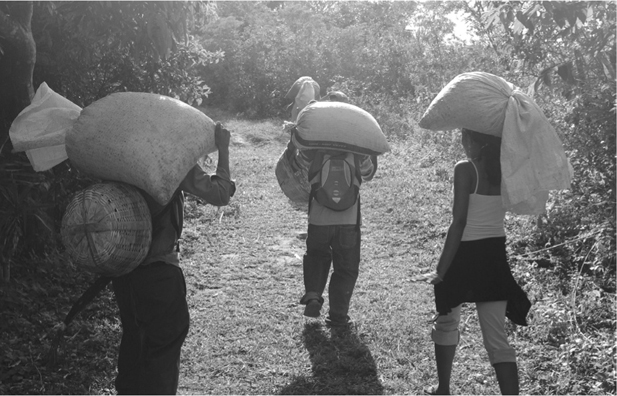
Nearly 125 million people around the globe depend on the cultivation and sale of coffee. After oil, coffee is the world's second-most-valuable commodity, worth approximately $60 billion annually to the world economy. However, less than 10 percent of that money ends up with the farmers who grow the beans. The world's coffee markets are dominated by four major corporations: Nestlé, Philip Morris, Procter & Gamble, and Sara Lee, accounting for 60 percent of the U.S. coffee trade and 40 percent of the global coffee trade. According to the World Bank, 25 million small producers of coffee depend on the trade for their livelihood. More than 500 million people are involved in coffee and coffee-related industries around the globe. Coffee is grown in more than 50 countries. The top coffee producing countries are, in order, Brazil, Vietnam, Colombia, Indonesia, India, Mexico, Ethiopia, Guatemala, Ivory Coast, and Uganda. Global production exceeds 16 billion pounds. This equals nearly 125 million bags in 2007, an increase of 3 percent from 2006.
The political economy of coffee is complex. There are significant inequities in compensation for those who do the labor of cultivation and destructive effects on the environment. The price that coffee brings does not keep up with the price of production, and it is small farmers who pay the price. At present, global revenue for coffee is in the range of $55 billion, of which only $7 billion (approximately 13 percent) actually is returned to the exporting countries. Since its high in 1997, the average price paid for coffee has fallen 80 percent. The poverty and political unrest resulting from inequities in profit and pay have shaken many coffee countries. In addition, the cultivation of coffee takes a tremendous toll on the environment, including degradation of water quality and soil through pesticide use and loss of biodiversity above and below ground. Of particular import is the effect that coffee cultivation has on loss of rainforest habitat.
...
- Green Consumer Challenges
- Affluenza
- Air Travel
- Carbon Emissions
- Commuting
- Conspicuous Consumption
- Disparities in Consumption
- Dumpster Diving
- Durability
- E-Waste
- Electricity Usage
- Energy Efficiency of Products and Appliances
- Food Additives
- Food Miles
- Genetically Modified Products
- Greenwashing
- Healthcare
- Insulation
- Lawns and Landscaping
- Materialism
- Needs and Wants
- Overconsumption
- Pesticides and Fertilizers
- Pets
- Pharmaceuticals
- Positional Goods
- Poverty
- Pricing
- Quality of Life
- Resource Consumption and Usage
- Solid and Human Waste
- Super-Rich
- Symbolic Consumption
- Waste Disposal
- Windows
- Beverages
- Bottled Beverages (Water)
- Coffee
- Confections
- Dairy Products
- Fish
- Meat
- Poultry and Eggs
- Slow Food
- Tea
- Vegetables and Fruits
- Water
- Green Consumer Products and Services
- Adhesives
- Apparel
- Audio Equipment
- Automobiles
- Baby Products
- Books
- Car Washing
- Certified Products (Fair Trade or Organic)
- Cleaning Products
- Computers and Printers
- Cosmetics
- Disposable Plates and Plastic Implements
- Floor and Wall Coverings
- Fuel
- Funerals
- Furniture
- Garden Tools and Appliances
- Grains
- Home Appliances
- Home Shopping and Catalogs
- Homewares
- Internet Purchasing
- Lighting
- Linen and Bedding
- Magazines
- Malls
- Mobile Phones
- Packaging and Product Containers
- Paper Products
- Personal Products
- Recyclable Products
- Seasonal Products
- Services
- Shopping
- Shopping Bags
- Sports
- Supermarkets
- Swimming Pools and Spas
- Television and DVD Equipment
- Tools
- Toys
- Green Consumer Solutions
- Biodegradable
- Carbon Credits
- Carbon Offsets
- Certification Process
- Composting
- Consumer Activism
- Downshifting
- Ecolabeling
- Ecological Footprint
- Ecotourism
- Environmentally Friendly
- Ethically Produced Products
- Fair Trade
- Gardening/Growing
- Gifting (Green Gifts)
- Green Communities
- Green Consumer
- Green Consumerism Organizations
- Green Design
- Green Discourse
- Green Food
- Green Gross Domestic Product
- Green Homes
- Green Marketing
- Green Politics
- Local Exchange Trading Schemes
- Locally Made
- Markets (Organic/Farmers)
- Morality (Consumer Ethics)
- Organic
- Plants
- Product Sharing
- Public Transportation
- Recycling
- Regulation
- Secondhand Consumption
- Simple Living
- Sustainable Consumption
- Vege-Box Schemes
- Green Consumerism Organizations, Movements, and Planning
- Advertising
- Commodity Fetishism
- Consumer Behavior
- Consumer Boycotts
- Consumer Culture
- Consumer Ethics
- Consumer Society
- Consumerism
- Demographics
- Diderot Effect
- Environmentalism
- Fashion
- Final Consumption
- Finance and Economics
- Frugality
- Government Policy and Practice (Local and National)
- Heating and Cooling
- International Regulatory Frameworks
- Kyoto Protocol
- Leisure and Recreation
- Lifestyle, Rural
- Lifestyle, Suburban
- Lifestyle, Sustainable
- Lifestyle, Urban
- Organisation for Economic Co-operation and Development (OECD)
- Production and Commodity Chains
- Psychographics
- Social Identity
- Taxation
- United Nations Human Development Report 1998
- Websites and Blogs
- Loading...
Get a 30 day FREE TRIAL
-
 Watch videos from a variety of sources bringing classroom topics to life
 -
Read modern, diverse business cases
-
Explore hundreds of books and reference titles

Read next

More like this
Sage Recommends
We found other relevant content for you on other Sage platforms.
Have you created a personal profile? Login or create a profile so that you can save clips, playlists and searches