
Entry
Reader's guide
Entries A-Z
Subject index
Mexico City, Mexico
Mexico City is going green. Particularly after Mexico decided to participate in Agenda 21, government agencies, businesses, citizens’ groups, academic programs, and national and international nonprofit organizations have been working to make the city greener. Programs changing the ways people live, work, and think range from legislative reforms and the greening of government agency practices to sustainable building and comprehensive waste treatment. Green is in, but significant challenges must be overcome to make the sustainable city movement more powerful, while ma king ongoing socioeconomic development more equitable.
Mexico City is the metropolitan area that encompasses the country's capital, Mexico D.F. (the Federal District), and surrounding areas in the state of Mexico. Mexico City is among the 10 wealthiest cities of the world by gross domestic product. With a population of more than 20 million, the metropolitan area is also one of the world's largest. Mexico City's population growth exploded when industrialization engulfed the country in the 1930s. In 1930, the city's population was just over 1 million. Population growth has slowed since the 1970s, but settlement has continued to advance into surrounding areas of the state of Mexico, with immigrants to the city establishing settlements on the fringes of the metropolitan area. The urban sprawl that accompanies population growth, coupled with the inability of efforts to keep up with worsening environmental problems overwhelm attempts by the city's governmental authorities to make the city greener.
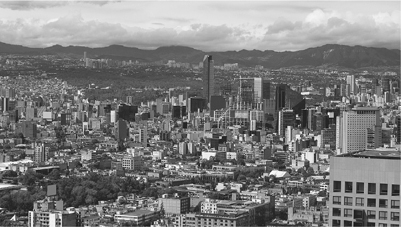
Among Mexico City's most pressing challenges are increasing energy demands, a water shortage, ineffective waste management, pollution, and urban sprawl, which is apparent in this view of the city
Although many political leaders and policy makers are beginning to address challenges to sustainable development in Mexico City, greening the city is not yet a comprehensive administrative endeavor. The report published by the Ministry of Finance and Public Credit on the country's 2010 Economic Program illustrates that Mexican policy makers are still compelled to focus on increasing the growth of the economy, productivity (especially in sectors that promise to help alleviate unemployment), and more immediate means of combating poverty. For Mexico City's policy makers, addressing such pressing concerns is also the primary agenda. Comprehensive planning, effective governance, and reconciling individual and collective interests in the megacity have always been major challenges, so dealing with the complexity of interrelated causes of environmental problems will be a daunting task for the municipal government. Nonetheless, some municipal government programs are already making progress in solving environmental problems as the movement to make the city greener gains momentum. Policy makers and planners recognize that demands are on the rise for solutions to environmental problems; green products and services; energy-efficient housing; more cost-effective, safe, and environmentally sustainable public transport systems; green jobs; and pleasant and enjoyable public spaces.
An Environmental Agenda
Policy initiatives are spearheaded by city government administrations elected every six years. The current administration of Marcelo Luis Ebrard Casaubón of the Party of the Democratic Revolution has set an environmental agenda for 2007–2012 to be coordinated and carried out by the Federal District Government's Environment Secretariat (SMA). The other key government agency responsible for implementing green city initiatives is the Secretariat of Urban Development and Housing. Aware that their city's worsening environmental problems and growing population necessitate significant economic reform and that municipal government alone cannot handle the gargantuan task, Mexico City policy makers are organizing educational outreach and supporting cooperative initiatives. For example, the SMA coordinates a new effort called the Green Plan. Its council is made up of 30 representatives of other governing bodies, educational institutions, consulting firms, industry groups, and organizations representing citizens and businesses. The Green Plan addresses urban mobility, land conservation, green spaces, the city's drinking water shortage, air quality, solid waste management, and greenhouse gas emissions. The SMA has also established a Mexico City Center for Environmental Information and a Directorate of Environmental Education to provide easy access to information about SMA programs and initiatives of national and international organizations dealing with environmental problems, as well as to facilitate educational outreach.
...
- City Organizations, Movements, and Planning
- Agenda 21
- Brownfields
- Carrying Capacity
- Charrette
- City Politics
- Civic Space
- Ecoindustrial Parks
- Environmental Impact Assessment
- Environmental Planning
- Green Communities and Neighborhood Planning
- Green Design, Construction and Operations
- Greenfield Sites
- Infrastructure
- Intermodal Transportation
- Millennium Development Goals
- Mitigation
- NIMBY
- Personal Rapid Transit
- Resilience
- Sustainability Indicators
- Sustainable Development
- Transit-Oriented Development
- Transportation Demand Management
- City Profiles
- Austin, Texas
- Bahía de Caráquez, Ecuador
- Bangkok, Thailand
- Barcelona, Spain
- Beijing, China
- Bogotá, Colombia
- Chattanooga, Tennessee
- Chernobyl, Ukraine
- Chicago, Illinois
- Copenhagen, Denmark
- Curitiba, Brazil
- Dongtan, China
- Dzerzhinsk, Russia
- Hamburg, Germany
- Kabwe, Zambia
- Kampala, Uganda
- La Oroya, Peru
- Linfen, China
- London, England
- Los Angeles, California
- Malmö, Sweden
- Mexico City, Mexico
- New York City, New York
- Norilsk, Russia
- Portland, Oregon
- Reykjavik, Iceland
- Rio de Janeiro, Brazil
- San Francisco, California
- Seattle, Washington
- Stockholm, Sweden
- Sukinda, India
- Sumgayit, Azerbaijan
- Sydney, Australia
- Tianying, China
- Vancouver, Canada
- Vapi, India
- Green City Challenges
- Adaptation, Climate Change
- Adaptive Reuse
- Air Quality
- Biodiversity
- Carbon Footprints
- Coastal Zone Management
- Combined Sewer Overflow
- Commuting
- Construction and Demolition Waste
- Denitrification
- Density
- Ecological Footprint
- Ecosystem Restoration
- Embodied Energy
- Energy Efficiency
- Environmental Justice
- Environmental Risk
- Food Deserts
- Food Security
- Garbage
- Greywater
- Gridlock
- Heat Island Effect
- Indoor Air Quality
- Landfills
- Light Pollution
- Natural Capital
- Nonpoint Source Pollution
- Ports
- Power Grids
- Recycling in Cities
- Sea Level Rise
- Stormwater Management
- Transit
- Waste Disposal
- Water Conservation
- Water Pollution
- Water Treatment
- Water, Sources and Delivery
- Watershed Protection
- Wetlands
- Green City Solutions
- Bicycling
- Biophilia
- Bioregion
- Bluebelts
- Bus Rapid Transit
- Carbon Neutral
- Carbon Trading
- Carpooling
- Cities for Climate Protection
- Citizen Participation
- Combined Heat and Power (Cogeneration)
- Community Gardens
- Compact Development (New Urbanism)
- Composting
- Congestion Pricing
- Conservation Subdivision
- Daylighting
- Distributed Generation
- District Energy
- Ecovillages
- Green Belt
- Green Energy
- Green Fleets (Vehicles)
- Green Housing
- Green Infrastructure
- Green Jobs
- Green Landscaping
- Green Procurement and Purchasing
- Green Roofs
- Greening Suburbia
- Greyfield Development
- Habitat Conservation and Restoration
- Healthy Cities
- Historic Preservation
- Infill Development
- LEED (Leadership in Energy and Environmental Design)
- Location-Efficient Mortgage
- Masdar Ecocity
- Mayors Climate Protection Agreement
- Parks, Greenways, and Open Space
- Renewable Energy
- Smart Growth
- Traffic Calming
- Universal Design
- Urban Agriculture
- Urban Forests
- Walkability (Pedestrian-Friendly Streets)
- Xeriscaping
- Loading...
Get a 30 day FREE TRIAL
-
 Watch videos from a variety of sources bringing classroom topics to life
 -
Read modern, diverse business cases
-
Explore hundreds of books and reference titles

Read next

More like this
Sage Recommends
We found other relevant content for you on other Sage platforms.
Have you created a personal profile? Login or create a profile so that you can save clips, playlists and searches